January 2023

Brand Markeing, Digital Marketing, digital marketing for healthcare sector, email marketing, Healthcare Marketing, Heathcare Marketing, Search Engines, SEO Marketing, social media marketing, social meia marketing

Why Adopt The Content Creation Strategy?

What Is A Content Creation Strategy? Adopting a content creation strategy means becoming your media by producing all types of content: blog articles, videos, infographics, product pages, podcasts, and content for social networks… These contents will treat well sure of your products and services but not only. You will also have to address topics related to your activity but not directly related to your business. The objective: to give more visibility to your company on the Internet to obtain contacts or orders depending on the type of site you manage, to simplify we are talking about leads.  Content creation allows you to get out of the classic scheme of digital advertising campaigns (AdWords, Bing Ads, Facebook Ads, etc.) to promote your business. These channels have the advantage of giving you immediate visibility, but they require constant investment. Why Is Content Creation An Alternative To Advertising? By implementing a content creation strategy with your website or blog, you position your content on specific keywords on which it will appear for a certain time without you needing to spend money on it.  If we were to integrate the creation of content into your company’s balance sheet, it would be a long-term asset since it would bring you visibility over time. If the search volume remains the same or even increases, you will be able to capitalize on this content. Your only problem is maintaining the relevance of your content about the theme it addresses; all you have to do is remember to refresh it according to developments in the news in your sector. The purchasing behavior of all consumers has changed with the advent of digital. Your future buyer wants us to help him and accompany him in his purchase, not to be bothered with intrusive advertisements. Today, we find its leads on search engines or social networks. This is the whole principle of the content creation strategy: to be found on the Internet (social networks and search engines combined) thanks to the production of useful content and the sharing of interesting information. Rest assured, adopting content marketing does not require you to completely revise your business strategy overnight. You can start producing content by continuing to communicate as you did before. And above all, you can be accompanied in this new orientation by an agency (like your favorite agency 🙂 ) to avoid pitfalls and put in place good practices from the start. If the adventure tempts you, know that you will have to be patient and diligent because the first results of your efforts will not begin to be felt until at least 6 months after your debut. But it is in your best interest to look into the subject because studies have shown that a contact generated through this method costs 60% less than a contact from traditional advertising. If you are well organized, the ROI can be calculated to develop your strategy and find the best balance.
Brand Markeing, Digital Marketing, digital marketing for healthcare sector, email marketing, Healthcare Marketing, Heathcare Marketing, Search Engines, SEO Marketing, social media marketing, social meia marketing

How To Improve Company’s Social Media Strategy?

You regularly post on all your social media platforms and respond now and then. You schedule several messages, but you have no idea what these messages are intended for. You get the feeling that the success of social media is not for you. Have you reached this stage? Don’t grieve! In this article, we’ll give you several tips on how to improve your company’s social media strategy. What Is A Social Media Strategy? A social media strategy ensures that you gain more insight into which channels and content best match the objective of your company and your target group. When you are going to draw up a social media strategy for your company, it is important to follow the following steps A Step-By-Step Plan For Creating A Social Media Strategy : Determine Your Platforms : Perhaps not all social media platforms are suitable for your objective and the content you want to share with your target group. Instagram and Pinterest, for example, are very suitable for sharing images, LinkedIn’s approach is mainly networking and sharing articles, and Facebook is the easiest way to build a valuable connection with your followers. Decide in advance which platforms you want to use. Get To Know Your Target Audience : You want to address your target group personally on your social media platforms. You don’t want to write a message that is intended for everyone, but you want your target group to feel addressed. One of the most important things you want to know about your target audience is where the pain points are. What problems and frustrations are there among the target group? They don’t have to be serious problems, as long as you can offer a solution with your product or service. Once you know who your target audience is and what pain points are at stake, you can start sharing content on social media. Think carefully about which values ​​you want to convey in your posts and whether these contribute positively to the experience of your target group. Determine Your Objective : Without a clear objective, you don’t know what you’re measuring. This makes it difficult to gain insight into the results of your social media strategy and to realize success. Examples of objectives are an x ​​number of followers, bringing in leads, intensive contact with your target group, etc. Determine an objective before your strategy and make sure it is SMART (Specific, Measurable, Acceptable, Realistic, and Time-bound). Do not think in terms of the number of likes, but rather in percentages. The number of likes is much less important, as long as the likes are relevant. The involvement of your target group is much more important. For example, a good goal could be: I want 10% of all my followers to click on the link in my post. Determine Your Budget : Determine what the budget is and how you intend to use this budget before your social media strategy. Do not let the number of conversions depend on your budget, but determine the expected budget based on your objective. In this way you optimize based on the costs per conversion instead of based on the budget, you provide more insight into the costs and you have a clear picture of whether the budget contributes to the previously formulated objective. Set Up Your Social Media Strategy : There are several tools you can use when setting up your social media strategy. For example, a content calendar is a good basis for planning social media messages and determining the content. You can also fill a content calendar with relevant holidays or events and respond to this on social media. Make sure your content is easy to consume by your target audience and above all, keep it accessible and fun. Interact With Your Target Audience : When you receive a lot of likes and comments on your social media post, you know that it is successful. Do you want to increase its chances of success? Then interact with your target group and try to respond to as many reactions as possible. This ensures a better connection with your target group and you may be able to get a conversion from it. Analyze And Optimize : After you have posted content on social media, it is important to analyze and then optimize these posts. When you’ve done A/B testing, you’ll notice that one version works better than the other. You can use this knowledge to optimize your next social media post. The more you post, the more you will learn and the more you can optimize your next posts.

Brand Markeing, Digital Marketing, digital marketing for healthcare sector, email marketing, Healthcare Marketing, Heathcare Marketing, Search Engines, SEO Marketing, social media marketing, social meia marketing

What Are The 6 Pillars Of Digital Marketing?

The phrase “digital marketing” has become popular. However, few of those who know what it is! Read the rest of this article to find out if you know the 6 main pillars of digital marketing. STRATEGY This is the first step to take when setting up digital marketing in a company. The strategy will indeed determine all the actions that will follow. A digital marketing strategy is based on an analysis of the market, the competition as well as a SWOT of your company to determine how it will be able to position itself. This is also the step where you must precisely determine the nature of your target audience, in particular using personas. You can then choose the digital channels you will use to reach and interact with this audience. THE WEBSITE The website is a must for any company that wants to embark on a digital strategy. Indeed, the site serves as a showcase for your business and allows you to collect leads and convert them. For your site to perform its functions properly, you must ensure that you follow certain recommendations such as: Adaptation to mobile: more and more Internet users are surfing from their phones. Your site must therefore be adapted to avoid losing prospects. Loading speed: a site that takes more than 3 seconds to load loses more than half of its traffic! VISIBILITY Once you have a site, you need to drive traffic to it. The Internet is vast, to have results you must have good visibility. This visibility can be achieved in different ways: Search Engine Optimization Online advertisements Use of social networks Content strategy  Offline Promotion The best way to be visible on the internet at a lower cost is to combine all these techniques. CONVERSION Attracting Internet users to your site is good, but you still need to be able to convert them! For example, you can offer the visitor to subscribe to your newsletter, download a white paper or give you a call. There are many types of conversions, the most ideal of which is of course buying or ordering. Performance Analysis To know your results, you need to be able to analyze them. Thanks to online tools, you can collect a lot of data that interests you on the behavior and characteristics of your visitors to be able to detect what works well on your site and in your advertisements as well as what works less well. Optimization With the data from Step 5, you can take action to improve your site and test new advertising strategies. This will allow you to get better results in the next period, which will bring you new data that will allow you to improve (and so on).

Brand Markeing, Digital Marketing, digital marketing for healthcare sector, email marketing, Healthcare Marketing, Heathcare Marketing, Search Engines, SEO Marketing, social media marketing, social meia marketing

What Are The Three Main SEO Techniques?

 SEO techniques improve the natural referencing of your website. These are actions that ensure both good indexing of your web pages and optimal positioning. Among all the SEO techniques, three of them represent the main levers for acquiring qualified traffic as part of your SEO strategy. You will find them below. 1st SEO Technique: Content Optimization Optimizing the editorial content on the pages of your website is one of the most important SEO techniques, if not the most important. During a question-and-answer session during the presentation by Google, Andrey Lipattsev, Search Quality Senior Strategist for the search engine notably cited it first among the criteria that define search results. It is indeed the content that tells search engines what each page of a website is about. It is therefore necessary to exclude from your site all content optimized only for search engines. To meet both the needs of SEO and the expectations of Internet users, content optimization then requires real editorial skills. A web editor can help you perform this task brilliantly. 2nd SEO Technique: External Linking Or Not Linking Netlinking is a strategy of exchanging and collecting links (backlinks) between several websites. This SEO technique allows you to increase the relevance index that a search engine has about your website.  Search engines assess your popularity based on what other sites think and say about you. The Google algorithm asks itself the following questions: How many sites talk about you? Are the sites that talk about you popular sites themselves? To acquire links to your site, you have the option of doing it the natural way. That is, to let other sites come to you over time and through the quality of your content. This SEO technique is called link baiting and it is the one to be preferred. Otherwise, you can start a proactive search for backlinks, with link exchanges or the creation of sponsored links. 3rd SEO Technique: Google Rankbrain And Keywords RankBrain is an artificial intelligence (AI) algorithm used by Google to sort search results. RankBrain refines Google’s algorithm by itself and thus allows the search engine to better process and understand Internet users’ queries by having part of its automated code. The main objective of RankBrain is in particular to better understand the meaning of keywords in the content of websites. It also analyzes the search queries and search intentions of the Internet user. RankBrain is also able to measure user satisfaction with the search engine. One of the main SEO techniques then consists of properly targeting your keywords for each of the pages of your website to be referenced. You must choose your keywords well using different strategies, but also avoid using keywords that are too different on the same page. This natural referencing technique represents a lot of work and therefore represents a strong investment. However, this investment will be largely rewarded by the increase in the level of traffic generated. To make these referencing techniques effective and sustainable over time, you must first ensure that the technical basis of your site complies with Google’s recommendations. Do not hesitate to carry out a technical audit of your website before embarking on a referencing campaign. Only an SEO-friendly site will allow you to fulfill your objectives!

Brand Markeing, Digital Marketing, digital marketing for healthcare sector, email marketing, Healthcare Marketing, Heathcare Marketing, Search Engines, SEO Marketing, social media marketing, social meia marketing

Things You Need to Know About B2B Lead Generation.

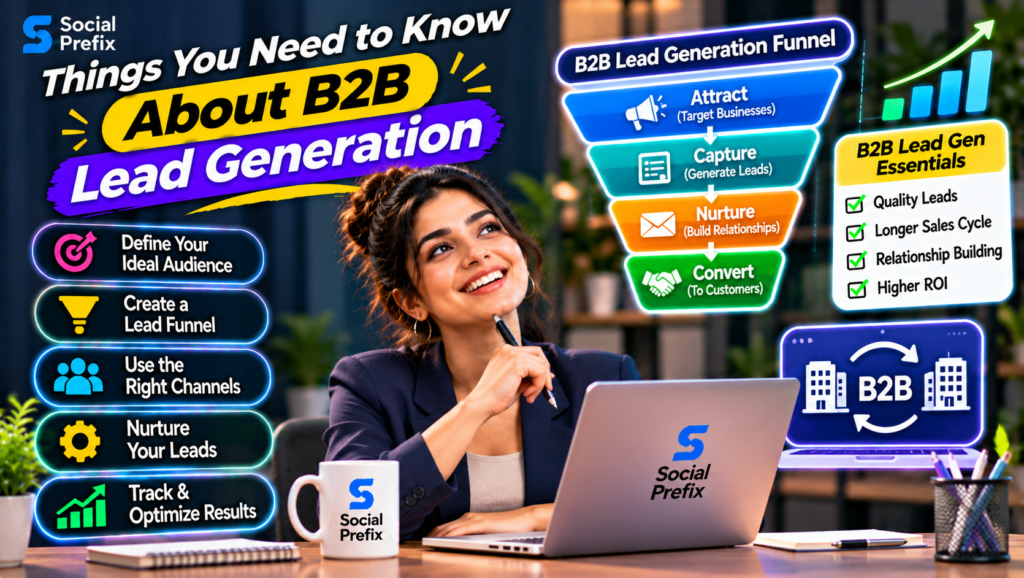
B2B lead generation is one of your main challenges as a marketing manager. Let’s find out everything you need to know for lead generation in your company! The term “lead” has become legion in the vocabulary of marketers. But do you know what this illustrious Anglicism contains? A lead is a commercial contact between your company and a potential prospect. To be so qualified, the company must have its name, first name, email address, and telephone number. This is an essential condition to be able to use it. Have you managed to obtain the identity and contact details of a person or company potentially interested in your services? Congratulations, you have just acquired a lead! The very web expression ” lead generation ” refers to all the techniques whose objective is to generate leads. But this cannot be improvised and requires a structured method to be effective. As soon as your business is created, it is advisable to put in place a well-defined strategy, to be applied over the long term. Let’s discover together everything you need to know to optimize the number of B2B leads! Lead Generation Through An Inbound Marketing Strategy Creating an Inbound Marketing strategy is essential if you want to increase the number of leads generated. Simple and formidable, it is the ideal solution to transform your website and social networks into a real sales force. It should allow you to achieve the following objectives: Attract visitors to your website and your social networks (Facebook, Twitter, LinkedIn, etc.) Generate qualified leads Set up a lead nurturing strategy (we will detail this point below) Start by taking inventory of your needs, and the various channels through which you want to communicate. To create content in a structured way, and not disperse yourself, we recommend that you create an editorial plan. It allows you to ensure the consistency of your editorial line, and to anticipate the production of the content necessary for the smooth running of your marketing plan. But what should be included inside? Start by doing some keyword research using a tool. Identify all the priority keywords defined according to search volumes and competition on Google. This will allow you to optimize your natural referencing for free, to appear at the top of Internet searches. Once on your website, the qualified lead is not yet acquired! It is necessary to direct the visitor to fill in a form or any other means that could lead him to communicate his personal information to you: Subscription to a newsletter Sending premium content or your brochure to their email address Subscribe to news alerts To order a product Filling out a “Contact us” form requiring you to mention your information, etc. Attend Trade Shows The stand is a contact space par excellence. Pay particular attention to visitors who provide you with their contact information, or who want more details about your product and service offering. The key lies in your ability to cause demand generation. To do this, anticipate them! Before welcoming attendees to your stand, you must ensure that the leads need your products. Create the maximum of added value around the event: explain the reason for your presence, what you expect there and what visitors will be able to find on your stand. Finally, it is important to know how to qualify leads after the show. First, they must correspond to your real target customers. Be aware that not every customer is necessarily an added value for your brand or company. Generate contacts after the show by sending him more information, or by distributing your newsletter for example. Create A Real Lead Nurturing Strategy Lead nurturing consists of delivering tailor-made content to your prospects to create or improve a privileged relationship with them. This will make it easier for you to gain their trust and build your credibility. For example, we advise you to offer the download of presentations, e-books, infographics, etc. Some customers appreciate receiving invitations to special events or free trials. This naturally depends on your company profile, your product and service offering, and your target customers. To track your results over time, don’t forget to compile a list of KPIs ( Key Performance Indicators ) to measure the profitability of your lead acquisition strategies. Adjust them over time, and thus optimize your performance in the long term to acquire new customers! So, what are you waiting for to take the plunge?

Brand Markeing, Digital Marketing, digital marketing for healthcare sector, email marketing, Healthcare Marketing, Heathcare Marketing, Search Engines, SEO Marketing, social media marketing, social meia marketing

Why SEO And Web Marketing Are Important For Dentists?

Looking for new customers? You are in the right place, SEO is The solution for your industry. As an expert in Digital Marketing Strategy. We, Social Prefix can assure you that SEO is the best marketing strategy for dentists. Here’s why… Potential customers search for services like you offer on Google every day. It’s no wonder your potential customers search Google for the services you provide. It would be a good idea to rank on the first page and in Google Maps, right? A multitude of keywords to target for dentistry = increased visibility on the web. As you offer several types of services, it will be easy to target a multitude of keywords. This way, your business will be easy to find on the web. An incomparable return on investment thanks to the longevity of an effective SEO campaign. The Digital Marketing and SEO campaign that we will put forward will guarantee you a very interesting return on investment. Unlike other types of campaigns, SEO works in the long term. That’s All That, But What Is SEO? Search Engine Optimization or SEO is the process of optimizing a website to rank well in search engines. The goal is to build and maintain your website in a way that is easy for Google to find. But SEO isn’t just for search engines. It’s also important to optimize your website for the people searching. Because ranking well is one thing, getting someone to click through to your page is another. Powerful SEO Campaigns For Dentists. Our web marketing and SEO services for dentists are the most comprehensive in the industry. Our campaigns not only get you the best search engine results, but each of our marketing campaigns generates leads and new business on its own to create a highly synergistic marketing effort. We also conduct competitive strategic research in your dentist market, allowing us to customize a dentist’s SEO and marketing strategy for you. More diverse campaigns will not only generate more short-term and long-term customers but also protect your business against changes from Google and your competitors. Frequently Asked Questions Why Is SEO Important For Small Businesses? You can get qualified leads on the same day they search for your products and services, so you can sell to them right away. Many business owners we network with tell us that they have always obtained their potential customers through their network and referrals. These are leads for potential customers. Inbound online searches are another type of lead: a lead that brings you customers who have never heard of you before. How Much Should Small Businesses Invest In SEO? It depends on the goals and needs of the business. For most local businesses that have done little to no SEO in the past. It’s also possible to do it cheaply if companies want to go slower as they tackle each step.

Brand Markeing, Digital Marketing, email marketing, Search Engines, SEO Marketing, social media marketing, social meia marketing

SEO And PPC: Which Strategy Should You Use?

SEO (Search Engine Optimization) or natural referencing, and PPC (Pay-Per-Click), are two essential elements of digital marketing. Although different, they are used for the same purpose: to increase incoming traffic to a website. The Definition Of SEO SEO – Search Engine Optimization – brings together a set of good practices to be carried out to optimize the natural, and therefore free, referencing of a website. The main goal of SEO is to improve the positioning of its website and to achieve the best possible positions on strategic keywords in the results pages of search engines like Google. SEO, or natural referencing, is therefore non-paying and is based on a strategy based on natural results linked to the quality content offered on a website, and technical optimizations to make a site more understandable to the user’s search engine. The Definition Of PPC PPC – Pay-per-Click – is based on paid advertising campaigns on search engines and social networks, to display advertisements for your website on target keywords. It is therefore a marketing technique, with a determined budget and spent according to your objectives.  The more your budget will be, the more likely you will be to win the auction, and to see your advertisement displayed on your strategic keywords. Thanks to this paid model, it is possible to gain visibility and increase traffic to your website much faster than with SEO. These two elements, SEO and PPC, can prove to be a real opportunity for your website in terms of increasing traffic and interactions with Internet users, and their use will mainly depend on the financial capacity. With SEO, you will get results at a lower cost, but over the medium to long term. With the PPC, observe immediate results, but with a much larger budget to plan. Competition On The Results Pages Appearing on the first page of Google results, and even better in the first 3 results, is a goal sought by all existing websites, and represents a real opportunity in terms of visibility and the number of incoming visitors. These positions represent the best possible positioning, after position 0 of course, the ultimate place on search engines. Natural Referencing And PPC: What To Choose? SEO and PPC have very different advantages, especially in terms of the objectives set and the resources available. For example, if your business is relatively new, and you want to get your brand out there as quickly as possible, then launching a PPC advertising campaign would be a better fit. On the other hand, if you have a fairly limited budget, this type of campaign will be much more difficult to execute. In this case, it will be preferable to bet on the optimization of SEO practices, with less spontaneous but effective results in the long term. You are of course the one who knows your needs and your objectives best, and only you can determine what would best suit you and your structure. According to an article by Moz, for 1 click made on a paid search result, that’s 8.5 clicks made on organic search results. The difference is therefore substantial. One might then wonder why PPC still plays a major role in digital marketing if the numbers are so stark. It’s quite simple if you have a sufficient budget, and your objective is to make yourself known to the general public, or a new target, well the PPC system will allow you to reach a maximum of people in a minimum. of time. With this type of campaign, if the click rates and conversions are high, then the objective has been achieved! And so it is a viable strategy for your business. The Comparative Advantages Of Natural Referencing Compared To PPC The studies are clear, SEO would have a more positive impact on your website. Indeed, 80% of the traffic would come from natural results on search engines, and clicks would generate 20% on paid ads. In addition, 86% of Internet users would trust organic ads more than sponsored ads. The recurring problem with sponsored ads and therefore PPC is that the results offered to Internet users are often not relevant enough. The ad’s title may very well match the query, but on closer inspection, we may see that it is not specific enough to answer it correctly. With the use of PPC campaigns, it will therefore be necessary to ensure that the content is adapted to the search intent of the Internet user, and the different requests. Competitors Or Allies? Although catering to different goals and needs, combining SEO and PPC can be a real asset to your website. A mixed strategy could be a good compromise. Indeed, a PPC campaign is difficult to achieve in the long term financially speaking, it could be wise to start there for a while to boost traffic and then continue only with SEO to optimize SEO on search engines. This would allow you to benefit from optimized traffic, good referencing thanks to SEO optimizations, and high click-through and conversion rates. Social Prefix, will help you to choose the best for your company. It would be Seo or PPC, Social Prefix will make sure that you gain more clients using SEO or PPC.

Brand Markeing, Digital Marketing, email marketing, Search Engines, SEO Marketing, social media marketing, social meia marketing

What Changes Did The Google Page Experience Update Produce?

 To be able to discuss the changes produced by this update within Google and its impact on web pages, it is important to explain the basics. Page experience is a collection of indicators that analyze how users perceive their interactions with a web page on a smartphone or desktop. This aspect is analyzed beyond the informational content of that page. It uses Core Web Vitals, a set of factors that analyze user experiences in terms of loading time, interactivity, and web page fluency. They also influence the SEO optimization part. Changes Produced By Google Page Experience Update Most sites should not notice drastic differences following this update, according to Google’s statements. Any sudden changes should be capped by the gradual implementation of the update. Before going into more detail about what this update entails, we want to explain the following notions: How Does Page Experience Affect Ranking? Although the page experience part is relevant for SEO, Google still aims to rank pages with the most relevant content as high as possible. This is even if the user experience is mediocre in some cases. A positive experience of using the web page cannot replace relevant content. However, in the case of web pages with approximately equally relevant content, user page experience analysis becomes increasingly relevant to gain visibility in search engines. Other Indicators Used In Analyzing Google Page Experience Providing a pleasant user experience within Google Search also depends on these indicators: Largest Contentful Paint (LCP) LCP measures web page load time. For a more positive user experience, the LCP should be approximately 2.5 seconds to load. First Input Delay (FID) FID is an indicator of the effectiveness of interactivity within your page. More precisely, the reaction time of the site is analyzed from the moment of the user’s action (clicking on a button, accessing a section, subscribing to the newsletter, etc.) until the moment when the browser responds to that action. For best results, the FID should last less than 100 milliseconds. What Does The Update Entail? In November 2020, Google announced that page experience ranking changes were coming the following year, which happened in the summer of 2021. The page experience update also involves the aforementioned analytics indicators, such as Core Web Vitals metrics, LCP, and FID. In addition, the top stories carousel in Google Search has been optimized to include news that meets Google News standards. This means that using the AMP (Accelerated Mobile Pages) format is no longer necessary for web pages. Moreover, regardless of the results of the Core Web Vitals metrics or the type of user experience, they can appear in the Top Stories carousel in Google Search. As part of this update, Google expanded the use of non-AMP content and stopped displaying the specific badge. The ultimate goal is to highlight web pages with a positive user experience. What is AMP? The AMP (Accelerated Mobile Pages) format is an open-source framework in HTML. It was created by Google to compete with Apple News and Facebook Instant Articles. It is optimized for mobile web browsing and designed to load web pages faster. The changes brought by the search engines can cause some confusion or problems managing the performance of the site, and the Google page experience update is only the tip of the iceberg. Social Prefix will ensure that your website works at optimal parameters.

Scroll to Top