Digital Advertising

Ad optimization, Ad Security, affiliate marketing, AI Adoption, AI ROI, AI Support, Content Marketing, content strategy, Data Visualization, Digital Advertising, Digital Marketing, digital PR, digital transformation, E-commerce, Ecommerce Marketing 2026

How Do You Audit Your Brand for AI Search? Ultimate Guide

AI Search Visibility Audit: 25 Things Every Business Should Check AI search tools are changing how customers find businesses. Instead of scrolling through ten blue links, people now ask AI tools direct questions. If your brand does not appear in those answers, you lose visibility. This is why an AI search visibility audit matters more than ever. An AI search audit, sometimes called a GEO audit, checks whether your business shows up correctly across AI-driven search tools. This guide walks through 25 things every business should check, organized into clear categories. Use it to strengthen your AI SEO audit process and stay visible as search behavior evolves. Website & Technical Signals in brand with AI AI search tools rely heavily on clean, crawlable websites. If your site has technical issues, AI tools may struggle to understand or trust your content. Start your AI search audit here, since technical problems can block everything else. Check your site speed first. Slow-loading pages often get deprioritized by both traditional and AI-driven search systems. Next, confirm your site uses secure HTTPS across every page. Security signals matter for trust, which directly affects AI visibility. Additionally, review your mobile experience. Most users, and many AI crawlers, evaluate mobile versions of your site closely. Broken links, duplicate content, and poor site architecture also weaken your overall AI SEO audit results. Fixing these basics creates a stronger foundation for everything that follows. Content & Topical Authority with AI in Brands AI tools favor content that demonstrates clear expertise. This means your content should answer questions directly and thoroughly. Vague or overly promotional content often gets skipped in AI-generated answers. Review your existing content for topical depth. Does your website cover your core subject areas comprehensively? Thin, scattered content weakens topical authority, which is essential for AI visibility. Similarly, outdated content can confuse AI tools about your current expertise. Furthermore, check whether your content answers common questions directly. AI search tools often pull concise, clear answers from well-structured pages. Content written in a natural, conversational tone tends to perform better than overly technical or jargon-heavy writing. Entity & Brand Signals with AI AI search tools rely on entity recognition to understand who you are. This means consistent business information across the web matters significantly. Inconsistent names, addresses, or descriptions can confuse AI systems about your brand identity. Check your business listings across major platforms for consistency. Your business name, industry description, and key details should match everywhere. Additionally, review your “About” page to ensure it clearly explains what your business does and who it serves. Brand mentions across the web also strengthen entity signals. The more consistently and accurately your brand appears across trusted sources, the easier it becomes for AI tools to recognize and recommend you confidently. Structure the Data with AI Structured data helps AI tools understand your content more precisely. Without it, AI systems must guess at context, which increases the risk of misrepresentation or being overlooked entirely. Check whether your website uses schema markup for key content types. This includes organization schema, FAQ schema, and product schema where relevant. Each of these helps AI tools extract accurate information quickly and confidently. Moreover, validate your structured data regularly using available testing tools. Errors in markup can prevent AI systems from reading your data correctly, even if the code appears present. Clean, error-free structured data significantly strengthens your AI search audit results. Digital PR & Third-Party Mentions with AI AI tools weigh third-party validation heavily. Mentions from credible external sources signal trustworthiness in ways your own website cannot achieve alone. This makes digital PR an important part of any AI visibility audit. Review recent media mentions, guest articles, and industry publications referencing your business. A lack of external mentions weakens your visibility, regardless of how strong your own content is. Consequently, businesses should actively pursue credible coverage opportunities. Additionally, check how your brand is discussed across forums, review sites, and industry directories. Consistent, positive third-party mentions build the kind of trust signals that AI tools increasingly prioritize. Video and Social Visibility of brand with AI AI search tools increasingly pull from video and social content, not just traditional web pages. This means your video and social presence directly affects your overall AI visibility audit results. Check whether your video content includes clear titles, descriptions, and captions. These elements help AI tools understand and index your video content accurately. Similarly, review your social media profiles for consistency with your website information. Engagement matters too. Active, well-maintained social profiles signal relevance and credibility. Neglected or inconsistent social presence can weaken the overall trust signals AI tools use when evaluating your brand. AI Citation Monitoring The final technical piece involves monitoring how AI tools actually mention your brand. This is a newer but increasingly important part of any AI SEO audit process. Regularly search relevant AI tools using questions your customers might ask. Note whether your brand appears, how it is described, and whether the information is accurate. Incorrect or outdated citations should be addressed through updated content and consistent entity signals. Tracking this over time helps you understand which improvements actually move the needle. As AI citation monitoring tools mature, businesses that start tracking early will have a clearer picture of their progress. The 25-Point AI Visibility Checklist Conclusion An AI search visibility audit is no longer optional for businesses that want to stay discoverable. As AI tools reshape how customers search, brands need consistent, accurate, and well-structured signals across every channel. Use this 25-point checklist regularly to strengthen your AI SEO audit and GEO audit efforts. Businesses that invest in this now will likely stay ahead as AI search continues to grow. Frequently Asked Questions 1. What is the difference between an SEO audit and an AI search audit? A traditional SEO audit focuses on search engine rankings, while an AI search audit also checks visibility within AI-generated answers. 2. How often should I run an AI visibility audit? Most businesses benefit from running a full […]


Ad optimization, Ad Security, affiliate marketing, AI Adoption, AI Marketing, AI Personalization, AI ROI, AI Search SEO, AI Support, Blogging, Brand Awareness, Brand Markeing, Brand Protection, Community marketing, Consumer Engagement, Content Marketing, Data Insights, Data Privacy, data protection, Data Visualization, Digital Advertising, Engagement

Which Google AI Mode SEO Mistakes Hurt Brands? Complete Guide

Google AI Mode SEO: How Businesses Can Get Discovered in AI Search Search is changing fast. People now ask long questions and get full answers on the results page. Google AI Mode leads this shift. It gives rich, conversational replies and links to a few trusted sources. For businesses, this creates a new question. How do you get picked as one of those sources? This guide explains Google AI Mode SEO in simple words. You will learn how AI search works and what makes a site worth citing. You will also get a clear checklist to act on. What Is Google AI Mode? Google AI Mode is a search experience built on generative AI. You type or speak a question, and it replies with a written answer. The answer often includes links, images, and follow-up ideas. Users can keep asking questions in one long thread. It feels more like a chat than a list of blue links. Behind the scenes, the system breaks a complex question into smaller searches. It runs them at once and then combines what it finds. Google has described this method as query fan-out. The result is a fuller answer than one search could give. Your page may be used for one small part of that answer. This is different from classic results. A ten-link page rewards the best match for one query. AI Mode rewards pages that answer many related needs clearly. Therefore, your content must be helpful across a whole topic, not just one keyword. Google AI search features are still growing, and details change often. Treat any advice as a moving target. Even so, the core ideas stay steady. Clear, useful, trusted content wins. How AI Mode Changes Traditional Search Behaviour Search habits are shifting. People used to type short phrases such as “CRM software.” Now they ask, “Which CRM suits a ten-person online store with a small budget?” These long questions carry rich intent. They show what the buyer needs and how far along they are. Follow-up questions are common too. A user may start with a broad topic and then narrow it in three or four steps. Each step can bring new sources into view. Your brand can appear at any point in that journey. It may also be missed if your content covers only the first step. Many users also read the answer and stop. This can mean fewer clicks for some pages. However, the visits that do happen often come from people who are more informed. They know what they want and arrive closer to a decision. Quality of traffic can matter more than quantity. For businesses, the message is clear. Think about the full customer journey. Answer the first question, the follow-up, and the doubt behind it. AI search optimization starts with understanding real questions. Ranking vs Being Cited in AI Search In classic SEO, you aim for position one. In AI search, you aim to be referenced. A citation is a link inside the AI answer that points to your page. It also builds brand trust, since people see your name next to the answer. The two goals overlap, but they are not the same. A page can rank well and still be skipped by AI Mode. Another page may rank lower and still be cited because it explains one point better. Google has said that strong core SEO remains the foundation. Pages must be indexed and eligible to appear in search snippets. What does this mean in practice? You need pages that give direct, well-structured answers. AI systems look for passages they can quote or summarize with confidence. Clear headings, short paragraphs, and plain language help a lot. Vague and padded pages get passed over. Brand mentions matter as well. Even when users do not click, they see who supplied the answer. Repeat exposure builds familiarity. Later, they may search for your brand by name. That direct search is a very strong buying signal. What Makes a Website More Likely to Be Referenced? No one outside Google knows the exact formula. Still, patterns are visible. Sites that get cited tend to share four traits. Topical Authority Cover your subject deeply, not thinly. Build a cluster of pages around one theme. Link them together in a logical way. For example, a payments firm might publish guides on fees, security, and compliance. Depth signals that you truly know the field. Original Information AI answers already contain common facts. They need fresh value. Share your own data, case studies, surveys, and expert views. Explain what you learned from real projects. Original insight gives Google a reason to cite you instead of a copy. Clear Entities and Relationships Entities are people, brands, products, and places. Make them easy to identify. Use consistent names across your site and profiles. Add structured data, called schema markup, so machines can read your details. Explain how things connect, such as which product solves which problem. Trust and Expertise Trust is the base of everything. Show real authors with clear credentials. Include an about page, contact details, and customer reviews. Cite reliable sources and keep facts current. Strong security, such as HTTPS, supports trust. Google calls this idea E-E-A-T, which stands for experience, expertise, authoritativeness, and trust. How to Optimize Existing Content for AI Search You do not need to start from scratch. Improve your best pages first. Follow these steps. Begin with an audit. List your top pages by traffic and by business value. Check which questions each page answers. Note gaps, weak sections, and outdated facts. This gives you a clear work list. Next, lead with answers. Put a short, direct answer near the top of each section. Follow it with detail and examples. Use question-style headings that match real searches. This format suits both readers and AI systems. Then, add depth and proof. Include numbers, examples, and expert quotes from your own team. Add short FAQs for follow-up questions. Update dates and remove stale claims. Fresh, accurate pages earn more trust. […]

Ad optimization, Ad Security, affiliate marketing, ai content, AI investment, AI Marketing, AI Personalization, AI Search SEO, AI Support, Analytics, Data Visualization, Digital Advertising, Digital Marketing, Influencer, Instagram, Social Media

How Do You Report Social Media Analytics? Ultimate Guide

Advanced Social Media Analytics & Reporting Posting content without measuring results is like driving with your eyes closed. A strong social media analytics strategy tells you exactly what works and what wastes budget. Yet many marketing teams still rely on vanity metrics that look impressive but mean little. This guide moves beyond likes and follower counts. It focuses on building marketing dashboards that reveal real business impact. You will learn which numbers actually matter, how to track them, and how to present results that stakeholders trust. Whether you manage one brand or several channels, this social media analytics strategy will help you report with confidence. Let us dive into the details. KPIs That Matter for Analytics Not every metric deserves your attention. A focused social media analytics strategy starts with choosing the right key performance indicators. Engagement rate remains valuable, but only when viewed alongside context. A high engagement rate on a small audience means less than steady engagement across a growing one. Therefore, always compare engagement against audience size and content type. Reach and impressions show visibility, yet they rarely reveal business impact alone. Instead, pair these numbers with conversion metrics like click-through rate and website traffic. This combination shows whether visibility actually translates into meaningful action. Conversion-focused metrics deserve central attention in any serious marketing dashboard. Track lead generation, sign-ups, or sales directly attributed to social channels. Additionally, monitor cost per result to understand efficiency across different platforms and campaigns. Customer sentiment matters too, though it is harder to quantify. Social listening tools can measure sentiment trends over time. This data often predicts brand health before it shows up in sales numbers. Similarly, response time and customer service metrics reflect brand reputation directly. Finally, track follower quality, not just follower count. Growth means little if new followers never engage or convert. A smaller, highly engaged audience often outperforms a large, passive one in real business terms. Custom Reporting Dashboards for Social Media Analytics Generic reports rarely satisfy every stakeholder. A well-built marketing dashboard should present data clearly for different audiences within your organization. Start by identifying who will actually use each dashboard. Executives usually want high-level trends and business impact. Marketing managers need deeper detail on campaign performance and channel comparisons. Therefore, build separate dashboard views tailored to each audience. Choose visualization types that make data easy to understand quickly. Line charts work well for trends over time. Bar charts suit comparisons between channels or campaigns. Meanwhile, avoid cluttering dashboards with too many charts on a single screen. Automation saves significant time when building marketing dashboards. Tools that pull data directly from social platforms eliminate manual data entry errors. This also ensures your dashboard reflects real-time performance rather than outdated snapshots. Consistency matters greatly across reporting periods. Use the same metrics, timeframes, and formatting each time you report. This consistency makes it easier to spot trends and changes over multiple reporting cycles. Consider building a single source of truth dashboard that combines all channels. Comparing Instagram, LinkedIn, and other platforms side by side reveals which channels deserve more investment. Consequently, this approach supports smarter budget allocation across your entire social strategy. Attribution Tracking for Analytics Attribution tracking answers the hardest question in marketing. Which social media efforts actually drive revenue? Multi-touch attribution models offer the most realistic picture for most brands. Customers rarely convert after a single interaction. Instead, they often see several posts or ads before finally taking action. Multi-touch models credit each touchpoint appropriately along that journey. UTM parameters remain one of the simplest attribution tools available. Adding tracking tags to every social media link lets you trace traffic back to specific posts and campaigns accurately. This data feeds directly into your broader marketing dashboards for cleaner reporting. Platform-native analytics tools provide useful data but rarely tell the complete story. Each platform tracks performance within its own ecosystem only. Therefore, combining platform data with website analytics gives a more accurate attribution picture overall. Conversion tracking pixels add another valuable layer of insight. These tools track user actions after they leave social platforms and visit your website. As a result, you can connect specific social content directly to sign-ups, purchases, or other conversions. Attribution windows also deserve careful consideration. Some purchases happen quickly after seeing an ad, while others take weeks. Adjusting your attribution window to match your typical customer journey improves reporting accuracy significantly. Presenting Reports to Stakeholders for Social Media Analytics Even great data fails to matter if stakeholders cannot understand or act on it. Presentation skills matter just as much as analysis skills here. Lead with business impact, not raw numbers. Executives care more about revenue influence than impressions or reach alone. Therefore, always connect social media performance back to broader business goals early in your presentation. Keep reports visual and scannable rather than text-heavy. Charts and summary statements communicate faster than long paragraphs of data. Similarly, highlight three to five key takeaways instead of overwhelming stakeholders with every available metric. Context makes numbers meaningful. A twenty percent increase means little without comparison to previous periods or industry benchmarks. Always include this context so stakeholders can properly judge performance. Address challenges honestly alongside successes. Stakeholders trust reports more when they include both wins and areas needing improvement. This transparency builds credibility for your entire social media analytics strategy over time. Finally, end every report with clear next steps. Data without action feels incomplete. Explain what you plan to adjust based on the findings and why that change should improve results going forward. Building this level of reporting maturity takes the right tools and expertise. Get actionable insights with Social Prefix and turn your social media data into confident business decisions. Conclusion A strong social media analytics strategy transforms scattered data into clear business direction. Choosing the right KPIs, building thoughtful marketing dashboards, and tracking attribution accurately all work together toward this goal. Reporting should never feel like an afterthought. It deserves the same strategic attention as content creation and campaign planning. When done […]

Ad optimization, Ad Security, affiliate marketing, AI Adoption, AI Advertising, AI Chatbots, AI Marketing, AI Personalization, AI ROI, AI Search SEO, AI Support, AI Tools, AI Trends, data protection, Data Visualization, Digital Advertising, Digital Marketing, digital transformation, email marketing

How Do You Test AI Ad Creatives Cheaply? Ultimate Guide

AI-Powered Creative Testing Framework Ad performance depends heavily on creative quality. Even the best targeting cannot fix a weak ad. This is why a strong creative testing strategy matters so much today. AI now makes this process faster, cheaper, and far more accurate than traditional methods. This guide introduces a practical AI-powered creative testing framework. It covers how to generate AI ad creatives, test them effectively, and scale the ones that work. Marketers, founders, and growth teams can apply this framework immediately. Whether you manage a small budget or a large one, the same principles apply. Structured testing beats guesswork every time. This framework gives you a repeatable process instead of a one-off experiment. Using AI for Ad Variations Creating multiple ad variations manually takes significant time. Designers and copywriters often struggle to produce enough versions for proper testing. AI changes this equation completely. AI tools can generate dozens of AI ad creatives within minutes. These variations might include different headlines, images, or calls to action. Additionally, AI can adjust tone, length, and format automatically for different platforms. This speed allows marketing teams to test more ideas without expanding their creative team. As a result, campaigns launch faster and testing cycles shorten considerably. Generating AI Variations at Scale Start by defining a strong creative brief. Include your product benefits, target audience, and brand voice. AI tools use this input to generate relevant, on-brand variations quickly. Review each variation before publishing. AI-generated content still benefits from human oversight. Small edits often improve clarity and brand alignment significantly. Keep a simple checklist during review. Confirm accurate claims, correct branding, and appropriate tone for the platform. This quick check prevents embarrassing mistakes from reaching a live campaign. Balancing AI Volume With Quality More variations do not always mean better results. Focus on meaningful differences between versions. Testing five distinct concepts often outperforms testing twenty minor tweaks. Therefore, prioritize variety in messaging over small visual changes. This approach produces clearer insights during the testing phase. Matching Formats to AI Platforms Different platforms favor different formats. Short vertical videos often outperform static images on some networks. Meanwhile, carousel formats work well for product-focused campaigns elsewhere. AI tools can automatically resize and reformat a single concept for multiple platforms. This saves significant production time. It also ensures your AI ad creatives look native on every channel, rather than stretched or cropped awkwardly. Testing Hooks & Angles The opening seconds of an ad determine most of its performance. Strong hooks capture attention immediately. Weak hooks lose viewers before the message even lands. A solid creative testing strategy isolates hooks as a specific testing variable. This means testing different opening lines, questions, or visuals while keeping other elements consistent. Identifying Winning AI Hooks AI tools can analyze past ad performance to identify hook patterns. For example, question-based hooks might outperform statement-based ones for certain audiences. Similarly, urgency-driven hooks might work better for time-sensitive offers. Use these insights to prioritize which hooks to test next. This data-driven approach reduces guesswork significantly. Pay attention to audience-specific patterns as well. A hook that performs well with younger audiences might fall flat with an older demographic. Segmenting your analysis by audience group often uncovers these differences quickly. Testing Different Angles Beyond hooks, test different overall angles. One version might emphasize price savings. Another might highlight convenience or social proof. Meanwhile, a third might focus on solving a specific pain point. Running these angles simultaneously reveals what resonates most with your audience. Consequently, future campaigns can lean into proven angles rather than starting from scratch. Keep a running log of angle performance by audience segment. Patterns often shift between seasons or promotions, so last quarter’s winning angle may need a refresh next quarter. Scaling Winning Creatives Once a creative shows strong performance, scaling becomes the next priority. However, scaling too quickly can sometimes reduce effectiveness. A structured approach prevents this issue. Gradual Budget Increases Increase budget gradually rather than all at once. Sudden spikes can disrupt algorithm learning phases on ad platforms. Instead, raise spend in small increments while monitoring performance closely. This method protects your return on ad spend during the scaling phase. It also gives you time to catch performance dips early. A common approach raises budget by twenty to thirty percent every few days. This pace keeps the algorithm stable while still growing reach steadily over time. Expanding Across Placements Winning creatives often perform well across multiple placements. Test the same AI ad creatives across different platforms and formats. Some creatives may perform better as short videos, while others work well as static images. This cross-platform testing extends the lifespan of a single winning concept. As a result, your team gets more value from each successful creative. Documenting What Makes a Creative Win Before scaling further, document why a creative performed well. Was it the hook, the offer, or the visual style? This analysis helps replicate success in future campaigns rather than relying on luck. Share these findings with your entire creative team. Over time, this shared knowledge base speeds up future ideation and reduces repeated testing of concepts that already failed once. Avoiding Creative Fatigue Even top-performing ads lose effectiveness over time. Audiences see the same creative repeatedly, and engagement drops. This decline is known as creative fatigue. A strong creative testing strategy includes a plan for refreshing content regularly. Waiting until performance drops significantly often means lost revenue during the decline period. Signs of Creative Fatigue Watch for rising costs per result and declining click-through rates. These metrics often signal fatigue before performance collapses completely. Monitoring dashboards weekly helps catch these signals early. Frequency metrics also matter here. When the same audience sees an ad too many times, engagement naturally drops. Setting frequency caps can delay fatigue, but fresh creative remains the most reliable long-term fix. Refreshing Creatives Proactively Use AI to generate fresh variations before fatigue sets in fully. Small changes, like updated visuals or new hooks, can extend a creative’s lifespan. Meanwhile, completely new concepts […]

Clinic SEO Strategy, Digital Advertising, health digital marketing, Healthcare Growth, Heathcare Marketing, Local SEO

How to Win healthcare digital marketing with Ethics

The world of healthcare digital marketing is changing very fast. Every clinic needs a clear plan to reach more patients today. It is not just about a website anymore. You must build trust and show your care online. A strong clinic SEO strategy helps people find you easily. However, you must also follow many strict legal rules. Growth and safety must go hand in hand for success. This guide will show you how to win in 2026. Your medical practice can grow while staying safe and ethical. Ethical & Legal Considerations Privacy is the most important part of any medical plan. Patients trust you with their most private health details. Therefore, you must protect this data with great care. Laws like HIPAA set very high bars for digital safety. Every piece of your healthcare digital marketing must be safe. You cannot share patient stories without clear written permission. Also, your website needs strong locks to stop data leaks. Safe marketing builds a bond that lasts for many years. It proves that you put your patients first every day. Being honest is the next big rule for your practice. Never make big promises that you cannot actually keep. Your clinic SEO strategy should focus on real medical facts. Avoid using words that might mislead a sick person. Instead, share clear and helpful tips for better health. Clear communication is the best way to gain new leads. Professional boards watch how clinics act on social media closely. By being ethical, you protect your license and your name. Trust is the currency of the modern medical world. Local SEO for Clinics Most patients search for a doctor near their home. This is why local search is so vital for you. Your clinic SEO strategy must start with your local area. Make sure your name and phone number are correct everywhere. Google uses this data to show you in local maps. If your data is wrong, you will lose new patients. Consistently update your hours and your physical street address online. This simple step makes your practice look more reliable. Local visibility is the key to a busy waiting room. Keywords help you show up when someone needs help fast. Use words that your neighbors actually type into search bars. Mention your city and your specific neighborhood often on pages. This tells search engines exactly where you are located physically. A smart clinic SEO strategy uses local landmarks in content. You can write about local health events in your community. These small details help you stand out from big brands. Being a local leader makes patients feel much more comfortable. They want a doctor who is part of their life. Review Management Happy patients are your best voices for new growth. Most people read reviews before they book a visit. Because of this, you must manage your online stars well. Ask your happy guests to share their kind words. However, never pay for a fake review on any site. Real stories from real people carry the most weight online. Your healthcare digital marketing thrives on these honest social proofs. Positive feedback acts like a digital referral for your team. It shows that your clinic provides excellent and kind care. You must also handle bad reviews with a calm mind. Never argue with an angry patient in a public space. This looks bad to anyone else reading the thread later. Instead, offer to talk about the issue in private. This shows that you care about making things right again. Privacy rules still apply even when you respond to comments. Avoid sharing any health facts in your public replies online. A professional response can turn a bad situation around. It proves that your clinic listens to every single voice. Appointment Funnels A great website must lead to a real booking. This path is often called an appointment funnel online. Your healthcare digital marketing should make booking very simple. Use large buttons that say “Book Now” on every page. Most patients want to book a visit after hours. An online system lets them do this with ease. This reduces the work for your front desk team too. A smooth path leads to more visitors and less stress. Convenience is a top priority for the modern busy patient. Follow up with your leads to keep them coming. Send a kind email or a text after they book. This reminds them of the date and the time. You can also share tips on how to prepare well. This extra care makes the patient feel very special. Your clinic SEO strategy brings them in, but care keeps them. Use automation to handle these small but vital tasks fast. A smart funnel turns a simple click into a visit. It ensures that your practice stays full and very healthy. Frequently Asked Questions 1 How does clinic SEO strategy help my medical practice? It helps local patients find your services when they search. 2 Is healthcare digital marketing safe for patient privacy? Yes, if you follow HIPAA rules and keep data very safe. 3 Should I reply to every single online review? Yes, professional replies show that you value every patient’s voice. 4 What is the best way to get more appointments? Use a simple online booking tool on your main website. 5 Can I use patient photos in my clinic marketing? Only if you have clear, written consent from the patient. Read More: Real Estate SEO & Social Ads: 2026 Complete Guide How to Turn Marketing Data into Real Revenue

Creative Testing, Digital Advertising, Digital Marketing, Full-Funnel Marketing, Marketing Strategy, performance marketing, SEO

How to Capture marketing Results with a Proven Funnel

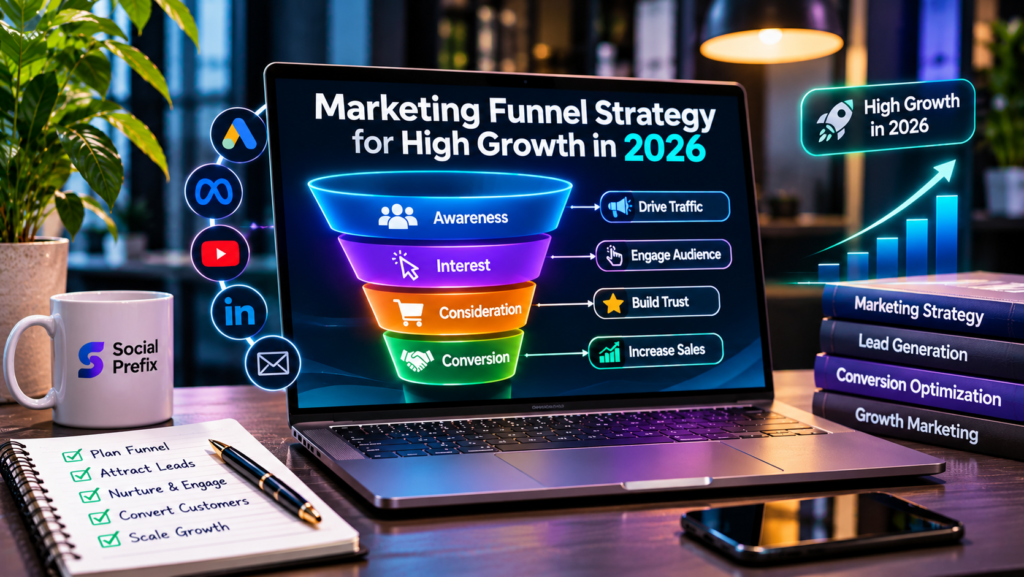
The world of digital marketing in 2026 is faster than ever before. Therefore, you must have a clear plan to grow your brand. Scaling to 10X is not just about spending more money. Instead, it is about using a smart system that works at every level. To achieve this, you need a blueprint that handles the data and the creative side at the same time. Consequently, this blog shows you the exact steps to scale your results. By following these rules, you can turn a small budget into a huge success. Ultimately, this is how you dominate your market and stay ahead of others. Full-Funnel Campaign Structure A great marketing plan must cover the whole journey of a buyer. First, you need to find new people who do not know your brand yet. Second, you must nurture those who have seen you but did not buy. In addition, you should focus on your past customers to bring them back. This is because a full-funnel approach ensures that no lead is lost. For example, your top ads should build awareness with a strong message. Subsequently, your middle ads should prove your value with real results. As a result, you build a path that leads every guest toward a sale. Budget Allocation Strategy How you spend your money is just as important as how much you spend. Specifically, you should split your marketing funds into different pools. Initially, put a large part of your budget into your proven winners. At the same time, keep a smaller part for testing new ideas every week. Moreover, you should always have a set amount for retargeting high-intent leads. In light of this, you protect your main revenue while looking for the next big hit. By doing so, you ensure that your growth never stops. Clearly, a balanced budget is the key to safe and fast scaling. Creative Testing Framework In 2026, the best ads are the ones that feel real and fresh. Therefore, you must use a strong framework for testing your creative ideas. Instead of guessing, use data to see what people like. First, test different hooks to see which one grabs the most attention. Next, try different styles of video or images for your marketing messages. Once you find a winner, you can double down on that specific style. Furthermore, this process helps you avoid wasting money on ads that do not work. In short, constant testing is the only way to find the best way to speak to your fans. Scaling Winning Ads After you find an ad that works, it is time to scale it to the max. However, you should not just triple the budget in one day. Rather, increase the spend slowly to keep the results stable. Specifically, watch your data every day to ensure the cost stays low. In fact, you can also scale by reaching new groups of people with the same winning ad. In addition, use your marketing tools to automate these small budget jumps. By following this path, you can reach the 10X goal without breaking your system. Thus, smart scaling leads to long-term profit and fame. Frequently Asked Questions 1 How fast can I scale my marketing? You can start right away, but you should increase your spend by 20% each time to stay safe. 2 Is testing more important than spending? Yes, because testing ensures that your marketing money is only spent on things that work. 3 What if my winning ad stops working? Then, you must go back to your testing framework to find the next fresh idea for your audience. 4 Do I need a big team for this? Not necessarily, as many modern tools can handle the data and the scaling for you automatically. 5 Does this work for all niches? Indeed, every business can use this blueprint to grow their sales and reach. Read More: How to Find high ticket leads and Scale Fast The Best CRO Trends to Follow in 2026

AI Marketing, AI Support, AI Tools, AI Trends, Automation Tools, Brand Markeing, Content Marketing, Digital Advertising, Digital Marketing, Marketing, Marketing Strategy, Marketing Tech

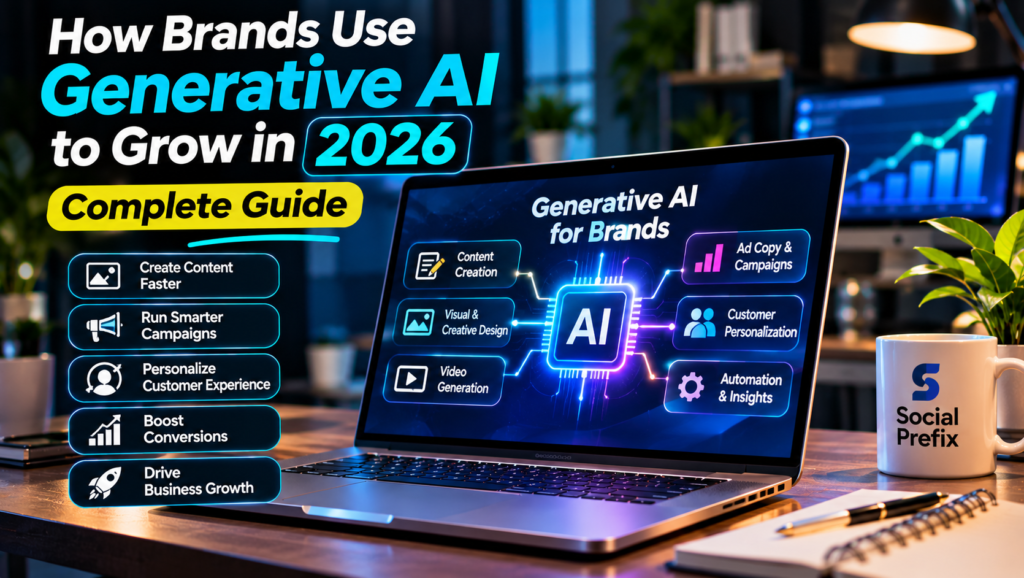
How Brands use Generative AI to Grow in 2026: Complete Guide

The digital marketing world in 2026 is shifting fast. It is no longer just about new tools. Instead, it is a big change in how brands talk to people. Generative AI is now the main engine for all marketing tasks. Because of this, companies can offer experiences that were once impossible. Marketers use generative AI to see deep patterns in how we act. Consequently, they can create content that fits every need right away. This year is also the start of smart systems. These systems do not just follow rules. They work hard to meet specific goals for growth. What Generative AI Means for Brands For brands today, generative AI is a bridge. It connects huge sets of data to real human feelings. Furthermore, it allows for deep personal touches at a very large scale. Manual teams simply cannot keep up with this speed. As a result, every chat with a brand feels special. This is because generative AI can change web pages and emails in real time. Brands also use these tools to guess what a user wants next. Therefore, marketing is no longer just a loud shout to a crowd. It is now a set of quiet, helpful talks. Companies that use generative AI well see much more love from their fans. AI + Human Collaboration Model The best marketing teams in 2026 use a shared model. In this setup, AI and humans work as a single team. First, generative AI does the heavy work. It looks at data and writes the first drafts. It also tests many versions of an ad at once. Meanwhile, human marketers focus on the big plan. They also bring the heart and the brand voice to the work. Although AI can make a thousand ads in a blink, it still needs a human touch. Humans set the rules to keep things fair and safe. This teamwork makes sure every plan is smart but still feels real. Most work now starts with AI ideas that humans turn into art. Risks of Over-Automation However, there are big risks if you use too much automation. Brands must not forget the human side of the job. If you lean too hard on generative AI, the work can feel flat. People call this “AI slop.” This is content that feels like a robot wrote it. Most fans in 2026 can spot this a mile away. If they do, they might stop trusting the brand. Also, AI tools can learn bad habits from old data. This happens if humans do not watch them closely. There is also a risk of losing your way. This occurs when a computer makes every choice. To stay strong, brands must be open about how they use AI. Building an AI-Enhanced Marketing Engine Building a strong engine today needs a clear map. You must link generative AI into every part of your plan. First, get your own data ready. This gives the AI a good base to learn from. Next, start using smart tools for small tasks. These tools can handle ads, lists, and basic notes. After that, focus on groups of content. These should answer the exact questions people ask. It is also vital to keep a human in the loop. This person checks every AI post for quality. They make sure it fits the brand. Finally, teach your team well. Everyone should know how to talk to and lead these new systems. Frequently Asked Questions 1 How does generative AI help with SEO in 2026? It helps sites show up in AI chat results. It does this by giving clear and short answers. 2 Will generative AI take away all marketing jobs? No, it just changes the work. Marketers now lead smart systems instead of doing dull tasks. 3 What is a big mistake to avoid with AI? The biggest error is letting AI do everything. This makes your brand look just like everyone else. 4 Can generative AI create video ads? Yes, it can make custom videos for each user. It can change the music and the script in a flash. 5 How do I keep my AI blog posts feeling human? Use AI for the main facts and the first draft. Then, add your own stories and feelings to finish it. Read More: How to Master web vitals for Better SEO Easily? Is your digital marketing ready for the post-cookie world? How to use cybersecurity to build ultimate customer trust?

AR/VR Marketing, Audience Engagement, Brand Trust, Consumer Engagement, Digital Advertising, Google, Interactive Content, Marketing Strategy, Virtual Reality

Why Is New Marketing Using Immersive Tech?

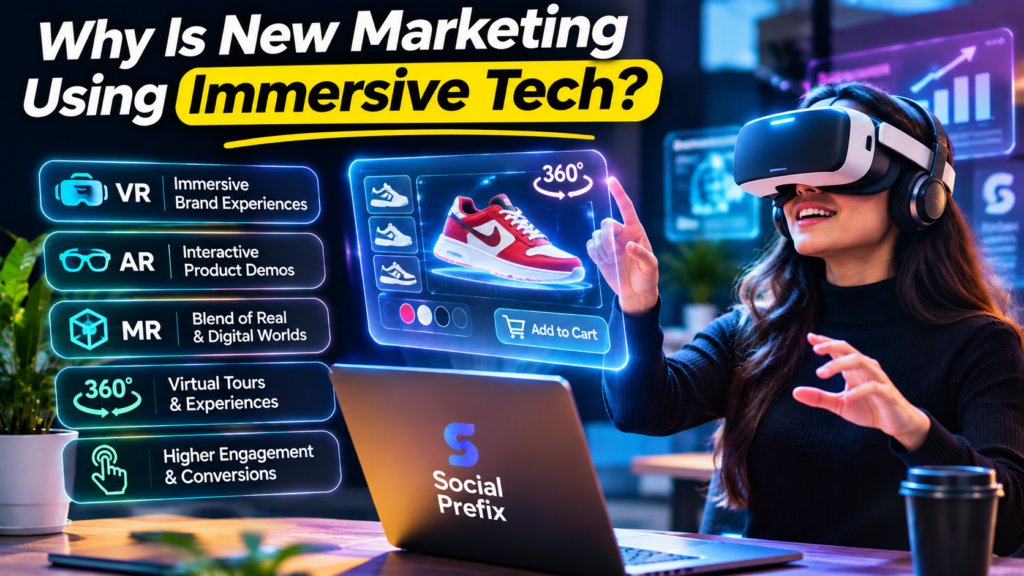
The digital world is currently moving at a very fast pace. Most people feel a deep sense of data fatigue today. They are tired of seeing the same old ads on their screens every single hour. Because of this, many leaders now ask if traditional methods still work. However, the data shows that using AR/VR in marketing is the only way to stay ahead. This guide looks at why this shift is happening now. It also shows how you can use these tools to build deep trust with your fans. The Old Style vs. The New Experience In the past, brands used simple photos and long text to sell their goods. But this old style often leads to a massive wall of text. Specifically, it bores the modern user very quickly. Because of this, the privacy hawk customer will leave your site in seconds. Consequently, your bounce rate goes up. This tells Google that your page is not helpful. Thus, your rank begins to drop. In contrast, using AR/VR in marketing creates a whole new world for the user. Instead of just looking at a flat image, the user can touch and feel the product. For instance, they can see a new sofa in their own room using a phone. Therefore, they feel much more sure about the brand. In fact, statistics from the last 12 months show that this style can double your sales. Furthermore, it gives a direct answer to the user’s biggest questions. Using the 80/20 Rule for Growth Many small shops fear that new tech costs too much money. They think it is only a tool for giant firms. Nevertheless, this is no longer the case. Specifically, you should follow the 80/20 rule to save time and cash. You can use AI tools to build 80% of your virtual world for free. This includes things like 3D shapes and basic code. Thus, you only pay for the 20% that is unique to your brand. Moreover, the return on this marketing path is very high. Because users stay on your page for a long time, search engines see you as a leader. This is a major E-E-A-T signal. In addition, it helps your site get cited in AI answers like Gemini or Perplexity. This is because you are providing specific, interactive data that AI loves to use. So, the cost is actually a smart investment in your future reach. How to Fight Data Fatigue with Trust People today are very careful about their private info. They act like privacy hawks. They hate when a brand tracks them in secret. Yet, they love when a brand is helpful and clear. This is where AR/VR in marketing wins the heart of the user. It gives the user a real choice. Instead of hiding your goals, you show them in the light. For example, you should always tell the user why you need to use their camera. This simple act of honesty builds deep trust. As a result, the user feels safe and happy. In fact, providing a “try-before-you-buy” trial is the best way to prove your value. It moves the focus from selling to helping. Finally, this trust makes the user a loyal fan for life. This is the best way to grow a brand in 2026. Breaking the Wall of Text with Visuals No one wants to read a long, dry manual anymore. To fix this, you can use AR to show people how a product works in real life. Instead of words, use a virtual guide that floats in the air. This makes your marketing much more fun and easy to use. Specifically, it helps the user learn in a natural way. When people learn fast, they feel more confident. Because of this, they are more likely to finish their purchase today. Moreover, this keeps people on your site for a very long time. This high “dwell time” tells Google that your marketing is the best in your field. Consequently, you will rank higher in the local 3 pack and in global search results. The Verdict on Your Future Strategy Some people might say that immersive tech is just a short fad. But the recent data says the exact opposite. We are moving toward a world of total immersion very soon. If you ignore this marketing path now, you will lose your spot at the top. You must adapt to stay relevant to the modern buyer. To conclude, the shift to a virtual world is real and it is here to stay. You must change your plan to survive. Start small by using simple AR filters or 3D views. Then, grow into full VR worlds as your team learns more. If you lead with value and honesty, your marketing will always find the right audience. This is how you win in a data-fatigued world. FAQs Q1: Why should I avoid bold words in my blog? Ans. Keeping the text clean helps the reader stay in a flow state. It also makes the page look more professional and easy to scan. Q2: What is an AI citation? Ans. This is when an AI like Gemini uses your blog as a source for its answer. Providing specific data helps you get cited more often. Q3: Does AR help with product returns? Ans. Yes, because users can see the product in their own space first. This leads to a 25% drop in returns for most brands. Q4: How do I handle a privacy hawk? Ans. Always ask for permission before using any data. Be clear about how the data helps the user experience. Q5: Is this strategy good for local SEO? Ans. Yes, it is great. Virtual tours and AR trials keep local users on your profile longer. This helps you stay in the Google 3 pack. READ MORE: Is Your Affiliate Strategy Built for High ROI Growth? 10 Secret Webinar Hacks for High Quality Leads Today Steps to Master WhatsApp Marketing in 30 Days: Ultimate Guide

Scroll to Top