Google

AI Chatbots, ai content, AI Marketing, AI Personalization, AI ROI, AI Search SEO, Clinic SEO Strategy, Customer Service, Data Analytics, Data Insights, Data Privacy, Data Visualization, data-driven marketing, digital transformation, Google, Marketing, Marketing Automation, Marketing ROI, Search Engines, Semantic SEO, SEO, SEO Marketing

How Do Brands Execute a Global SEO Strategy? Ultimate Guide

International SEO Strategy for Global Brands An international SEO strategy is essential for any brand expanding beyond its home market. Global SEO helps businesses reach new audiences, build trust, and rank well in different countries. However, expanding internationally is not as simple as translating a website. It requires careful planning across technical, content, and cultural factors. Brands that succeed internationally tend to treat each new market almost like a fresh SEO campaign. They do not simply copy their existing strategy and hope it transfers. Instead, they research, test, and adjust based on what each specific audience responds to best. This guide covers the key building blocks of a strong international SEO strategy. We will explore technical setup, keyword research, content adaptation, and tracking. By the end, you will understand how to approach global SEO with confidence. Expanding into new markets is exciting, but it also introduces new complexity. Search engines like Google treat each country and language as a distinct audience. Therefore, a strategy that works well at home may need significant adjustments abroad. Taking a structured approach from the start helps avoid costly missteps later. Why International SEO Strategy Matters Global brands often assume that a strong domestic SEO strategy will naturally translate overseas. Unfortunately, this rarely happens. Search engines evaluate relevance differently across regions. Local competitors, language nuances, and cultural expectations all affect rankings. Consider a brand that ranks first for its category at home but struggles to appear on the second page abroad. This gap usually is not caused by weak products or poor branding. Instead, it often reflects missing technical signals, unresearched local keywords, or content that simply does not resonate with the new audience. Without a dedicated international SEO strategy, brands risk poor visibility in new markets. This can lead to wasted marketing spend and missed growth opportunities. On the other hand, a well-executed global SEO strategy builds long-term visibility and trust with international audiences. Additionally, search engines reward websites that clearly indicate their target audience. Proper technical setup helps search engines serve the right content to the right users. This foundation supports every other part of your international SEO efforts. Global brands that skip this step often see confusing results. They may rank well in one country but remain invisible in another, despite offering the same products. Understanding the root causes early prevents wasted effort and helps teams focus on the strategies that actually move the needle in each market. Hreflang & Technical Setup for Global SEO Technical setup forms the backbone of any successful international SEO strategy. Hreflang tags tell search engines which language and region each page targets. Without proper hreflang implementation, search engines may show the wrong version of your site to users. Start by deciding on your website structure. Common options include country-specific domains, subdomains, or sub-folders. Each option has trade-offs in terms of cost, control, and SEO impact. Subfolders are often the easiest to manage for mid-sized global brands. Next, implement hreflang tags correctly across all relevant pages. Even small errors can confuse search engines and hurt rankings. Therefore, testing your hreflang setup regularly is essential. Tools are available to help identify and fix implementation issues quickly. Finally, ensure your website loads quickly across all target regions. Slow load times in certain countries can hurt both rankings and user experience. Consider using a content delivery network to improve global site speed. Mobile performance deserves special attention as well. In many international markets, mobile devices account for the majority of web traffic. A site that performs well on desktop but lags on mobile can quietly lose ground to local competitors. Regularly testing your site from different regions and devices helps catch these issues before they affect rankings. Localized Keyword Research for Global SEO Localized keyword research is a critical part of any global SEO strategy. Simply translating your existing keywords rarely works well. Search behavior varies significantly across languages and cultures. Start by researching how people in each target market actually search for your products or services. Local search volume, phrasing, and intent can differ dramatically from your home market. Native speakers or local SEO experts can provide valuable insight here. Additionally, consider regional spelling differences and slang. Even within the same language, countries often use different terms. For example, British and American English include several notable vocabulary differences. Ignoring these nuances can weaken your keyword targeting. Voice search and mobile search patterns can also differ across regions. Some markets rely heavily on voice assistants, which favor longer, conversational phrases. Others still search primarily through short, typed queries. Understanding these habits helps you shape content that matches how people in each market actually search. Once you gather localized keywords, integrate them naturally into your content. Avoid forcing translated keywords that sound unnatural to native speakers. Authentic, well-researched keywords improve both rankings and user engagement. It also helps to study local competitors directly. Reviewing which keywords they target and how they structure their content reveals valuable market insight. This research often uncovers opportunities your home-market strategy would never have surfaced, since search habits and competitive gaps vary so widely between regions. Cultural Content Adaptation for Global SEO Cultural content adaptation goes beyond translation. It means adjusting tone, examples, imagery, and messaging to fit each target audience. What resonates in one country may feel irrelevant or even inappropriate in another. Consider cultural preferences around communication style. Some markets prefer direct, concise messaging. Others respond better to detailed, relationship-focused content. Understanding these differences helps your brand build stronger local trust. Visual elements also matter significantly. Colors, symbols, and imagery carry different meanings across cultures. Reviewing these details carefully can prevent unintended messaging issues. Local marketing consultants often provide helpful guidance in this area. Furthermore, consider local regulations and industry standards. Some markets have specific legal requirements around advertising claims or disclosures. Adapting content to meet these requirements protects your brand and builds credibility. Local case studies and testimonials can also strengthen your content’s relevance. When potential customers see examples from their own […]

campaigns, Google, Google Ads Optimization, Google Advertising, Google Performance Max, PMax Campaigns, Pmax Optimization, PMax Strategy

Google Performance Max Guide: Run Better PMax Campaigns

Google Performance Max (PMax) is one of the most powerful — and most misunderstood — campaign types in Google Ads. It uses Google’s machine learning to serve ads across Search, Display, YouTube, Gmail, Maps, and Discover — all from a single campaign. This Performance Max guide covers everything you need to run PMax campaigns successfully. From when to use it, to asset optimisation, PMax strategy, budget planning, and tracking results. Read this guide before you launch your next campaign. What Is Performance Max? Performance Max is a goal-based campaign type. You provide assets — images, headlines, videos, and descriptions. Google’s AI then assembles and serves ads across its full network. Unlike traditional campaigns, PMax does not let you choose placements manually. Instead, Google decides where, when, and to whom your ads appear. This automation is powerful, but it requires the right setup to work well. Moreover, PMax uses your conversion data to optimise delivery. The more quality data you feed it, the smarter it becomes. This is why proper tracking is not optional — it is essential. When to Use PMax Not every advertiser should run PMax. Understanding when it fits your goals is the first step in a solid PMax strategy. PMax works best when: PMax may not be the right fit when: In short, PMax campaigns reward advertisers who have good data, clear goals, and patience. However, if your data foundation is weak, fix that first. Asset Optimisation Your assets are the fuel for PMax. Poor assets mean poor performance. Google uses every asset combination to find what works best. Therefore, giving the algorithm more to work with improves results. Headlines and Descriptions Write at least five unique headlines. Each should highlight a different benefit. Avoid repeating the same message across headlines. Additionally, include your target keyword naturally in at least two headlines. Descriptions should be clear and action-focused. Use active language. Tell users exactly what to do next. Also, include a value proposition — free shipping, money-back guarantee, or a unique feature. Images Upload images in all recommended formats: landscape, square, and portrait. Use real photos where possible — stock images underperforms consistently. Furthermore, test images with people versus product-only shots. Make sure key content is not too close to the edges. Google crops images automatically for different placements. Safe zones matter more in PMax than in standard display campaigns. Videos Video assets are often overlooked. But they are critical for YouTube placements. If you do not upload a video, Google creates one automatically — and it is rarely good. Upload at least one 15-second and one 30-second video. Your video should hook attention in the first three seconds. Show your product, state the benefit, and include a clear call-to-action. Mobile-first framing works better than traditional widescreen for most placements. Asset Group Strategy Use separate asset groups for different product categories or audiences. Each asset group should be themed — messaging, visuals, and audience signals should align. This helps Google match the right creative to the right user. Monitor your asset performance ratings: Poor, Good, Best, Learning. Replace Poor-rated assets regularly. Rotate in fresh creative every four to six weeks to avoid fatigue. Budget Strategy Budgeting for PMax is different from standard campaigns. The algorithm needs spend to learn. Too low a budget starves the machine learning and leads to poor optimisation. Setting Your Starting Budget Start with a budget that can generate at least five to ten conversions per week. This gives Google enough data to optimise effectively. For most advertisers, this means a minimum of £20-50 per day. During the learning phase — typically the first two to four weeks — expect fluctuating results. Do not pause or significantly change the campaign during this time. Let the algorithm complete its learning cycle. Bidding Strategy PMax supports two main bidding strategies: Maximise Conversions and Maximise Conversion Value. Start with Maximise Conversions if you want volume. Switch to a Target CPA (tCPA) or Target ROAS once you have at least 30 days of conversion data. Set realistic targets. A target CPA that is too aggressive limits delivery. Start with a target 20-30 percent higher than your actual CPA, then tighten it gradually. Additionally, review your bid targets every two weeks during scaling. Budget Allocation Across Campaign Types PMax should complement your existing campaigns, not replace them all. Keep brand Search campaigns running separately. PMax will cannibalise brand traffic if left unchecked. A common split is 60-70 percent budget to PMax and 30-40 percent to brand and high-intent Search campaigns. Adjust based on performance data. Furthermore, use campaign-level seasonality adjustments for peak periods like Black Friday. Tracking Results Tracking is the backbone of any PMax strategy. Without accurate data, the algorithm cannot optimise — and you cannot make informed decisions. Set this up before launching your campaign. Conversion Tracking Setup Use Google tag or Google Tag Manager for conversion tracking. Set primary conversions for actions that directly drive revenue — purchases, form submissions, calls. Set secondary conversions for softersignals like page views or add-to-cart events. Enhanced conversions improve accuracy by hashing first-party data. Enable enhanced conversions in your Google Ads settings. Also, connect Google Analytics 4 for additional behavioural insights. Reading PMax Reports PMax reporting is limited compared to standard campaigns. You cannot see keyword-level or placement-level data easily. However, you can analyse asset performance, audience insights, and the search terms report. Use the Insights tab in Google Ads to understand which audience segments are converting. Also, check the search categories report to see what intent signals are driving your traffic. This data informs your asset messaging and audience signal strategy. Key Metrics to Monitor Audience Signals These signals help PMax find the right people faster. Add your customer match lists, website visitors, and custom intent audiences as signals. These are not targeting restrictions — they are hints that guide the algorithm. The better your audience signals, the faster the learning phase completes. Update your customer match lists monthly with fresh purchaser data. Moreover, create separate signals […]

Core web vitals, Google, page load, Search Engines, SEO, User trust, web vitals

How to Master web vitals for Better SEO Easily?

In the competitive world of online business, your website is your digital storefront. Yet, many founders focus only on how their site looks, neglecting how it feels to use. This is where Google’s web vitals come in. If your site is slow to load, frustrating to interact with, or jumps around unexpectedly, customers will leave before they even see your product. Understanding these metrics is no longer optional; it’s essential for your survival. This blog explores why a fast, seamless page experience is the ultimate growth hack for your brand. The Invisible Metrics Driving Your Profit You might think your site is fast, but Google is measuring it with precise web vitals. Specifically, they look at LCP (Largest Contentful Paint), which tracks how quickly the main content loads. If a user is forced to wait, they will click away. Furthermore, your FID (First Input Delay) measures responsiveness. Does your site react instantly when a customer clicks a button? Making a smart and safe choice early on ensures your digital experience is fluid. Similarly, a high FID score puts your brand on a steady path toward deeper user trust and loyalty. How Site Speed Directly Impacts Your SEO The journey to the top of Google search begins with excellent technical health. Starting in 2021, Google officially made web vitals a key part of their ranking algorithm. This means if two sites have great content, the faster, smoother site will rank higher. Specifically, Google is rewarding sites that prioritize user experience. Your strategy is unique and specific to what the modern market likes and expects from a leading brand. While a person might overlook a minor delay, Google’s bots use these safe and exact metrics to determine who wins the top spot. Consequently, a strong lead in SEO matches the needs of your growing customer base. Building Customer Trust Through Stability Data is the backbone of all smart and safe growth today. The way you handle web vitals specifically tracks how stable your page is as it loads. This is measured by CLS (Cumulative Layout Shift). You’ve seen sites where a button suddenly moves just as you’re about to click it. This is not only frustrating but it also feels unsafe. This path ensures your customer’s logic is respected from the very first step of their journey. A stable site prevents any bad risks from hurting your brand’s reputation. Smart technical leadership relies on real facts to build a real engine. Turning Core Vitals into a Major Business Value Your technical focus is too important to risk at any step today. The safe and simple lead that web vitals offer is that they translate directly into higher conversions. A faster site means more people complete their purchase or sign up for your service. Specifically, even a single second improvement can massively increase your ROI. The timing of these technical moves is key for your success. Furthermore, this sets a strong base for your future scaling in any competitive market. This puts your growth on a steady and predictable path for a long time. Such smart timing reveals who is truly ready for a big global win. Indeed, the right plan helps you find more fans and win more sales. A Safe Technical Roadmap for Your Scaling Startup You cannot fix what you do not track in a fast digital world. A smart web vitals strategy gives you very clear reports and facts to guide your technical team. You can see which pages are too slow and exactly what needs a fix right now. This is specific to what a technical founder needs to know to keep their technical debt low. Access to these expert skills keeps all your users very happy and engaged. Therefore, you can make safe and smart choices based on real expert facts. This constant check ensures your site gets better and faster every single day. Indeed, the right technical partnership helps you join the top shelf. FAQs 1 What are the three core web vitals? Specifically, they are LCP (Loading), FID (Interactivity), and CLS (Visual Stability). 2 How do I measure my site’s web vitals? You can use free Google tools like PageSpeed Insights or Search Console to track them. 3 Do web vitals affect my conversion rate? Indeed, a faster and smoother site always leads to more sales and sign-ups. 4 Is site stability really a security risk? While CLS is about visual jumps, a site that feels unsafe always causes users to leave. 5 Can my technical team fix this quickly? Access to these skills helps you build a solid roadmap. Consequently, you can achieve a huge win in just a few months. Read More: Is your digital marketing ready for the post-cookie world? How to use cybersecurity to build ultimate customer trust? Can new marketing automation tools give you more free time?

AR/VR Marketing, Audience Engagement, Brand Trust, Consumer Engagement, Digital Advertising, Google, Interactive Content, Marketing Strategy, Virtual Reality

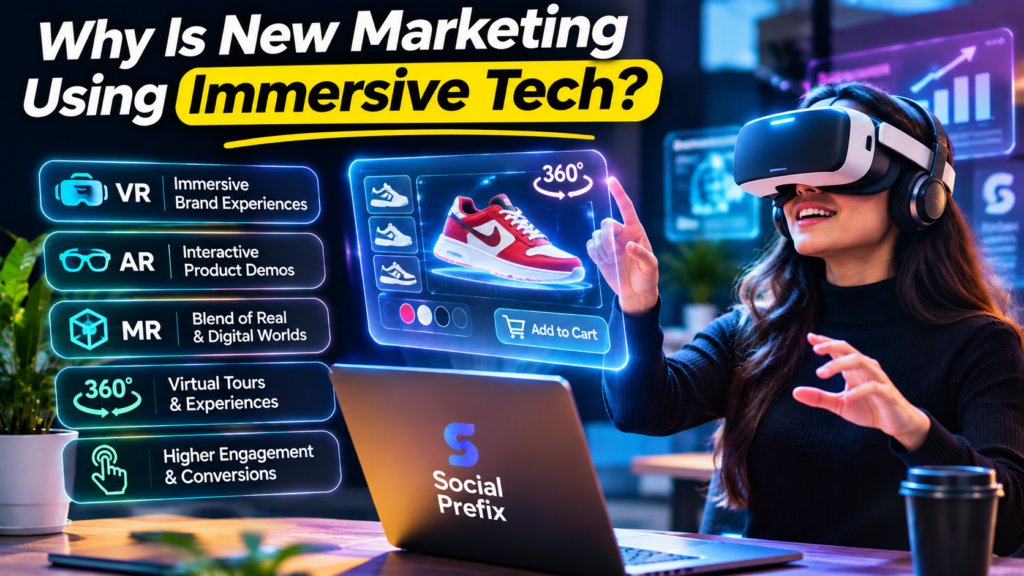
Why Is New Marketing Using Immersive Tech?

The digital world is currently moving at a very fast pace. Most people feel a deep sense of data fatigue today. They are tired of seeing the same old ads on their screens every single hour. Because of this, many leaders now ask if traditional methods still work. However, the data shows that using AR/VR in marketing is the only way to stay ahead. This guide looks at why this shift is happening now. It also shows how you can use these tools to build deep trust with your fans. The Old Style vs. The New Experience In the past, brands used simple photos and long text to sell their goods. But this old style often leads to a massive wall of text. Specifically, it bores the modern user very quickly. Because of this, the privacy hawk customer will leave your site in seconds. Consequently, your bounce rate goes up. This tells Google that your page is not helpful. Thus, your rank begins to drop. In contrast, using AR/VR in marketing creates a whole new world for the user. Instead of just looking at a flat image, the user can touch and feel the product. For instance, they can see a new sofa in their own room using a phone. Therefore, they feel much more sure about the brand. In fact, statistics from the last 12 months show that this style can double your sales. Furthermore, it gives a direct answer to the user’s biggest questions. Using the 80/20 Rule for Growth Many small shops fear that new tech costs too much money. They think it is only a tool for giant firms. Nevertheless, this is no longer the case. Specifically, you should follow the 80/20 rule to save time and cash. You can use AI tools to build 80% of your virtual world for free. This includes things like 3D shapes and basic code. Thus, you only pay for the 20% that is unique to your brand. Moreover, the return on this marketing path is very high. Because users stay on your page for a long time, search engines see you as a leader. This is a major E-E-A-T signal. In addition, it helps your site get cited in AI answers like Gemini or Perplexity. This is because you are providing specific, interactive data that AI loves to use. So, the cost is actually a smart investment in your future reach. How to Fight Data Fatigue with Trust People today are very careful about their private info. They act like privacy hawks. They hate when a brand tracks them in secret. Yet, they love when a brand is helpful and clear. This is where AR/VR in marketing wins the heart of the user. It gives the user a real choice. Instead of hiding your goals, you show them in the light. For example, you should always tell the user why you need to use their camera. This simple act of honesty builds deep trust. As a result, the user feels safe and happy. In fact, providing a “try-before-you-buy” trial is the best way to prove your value. It moves the focus from selling to helping. Finally, this trust makes the user a loyal fan for life. This is the best way to grow a brand in 2026. Breaking the Wall of Text with Visuals No one wants to read a long, dry manual anymore. To fix this, you can use AR to show people how a product works in real life. Instead of words, use a virtual guide that floats in the air. This makes your marketing much more fun and easy to use. Specifically, it helps the user learn in a natural way. When people learn fast, they feel more confident. Because of this, they are more likely to finish their purchase today. Moreover, this keeps people on your site for a very long time. This high “dwell time” tells Google that your marketing is the best in your field. Consequently, you will rank higher in the local 3 pack and in global search results. The Verdict on Your Future Strategy Some people might say that immersive tech is just a short fad. But the recent data says the exact opposite. We are moving toward a world of total immersion very soon. If you ignore this marketing path now, you will lose your spot at the top. You must adapt to stay relevant to the modern buyer. To conclude, the shift to a virtual world is real and it is here to stay. You must change your plan to survive. Start small by using simple AR filters or 3D views. Then, grow into full VR worlds as your team learns more. If you lead with value and honesty, your marketing will always find the right audience. This is how you win in a data-fatigued world. FAQs Q1: Why should I avoid bold words in my blog? Ans. Keeping the text clean helps the reader stay in a flow state. It also makes the page look more professional and easy to scan. Q2: What is an AI citation? Ans. This is when an AI like Gemini uses your blog as a source for its answer. Providing specific data helps you get cited more often. Q3: Does AR help with product returns? Ans. Yes, because users can see the product in their own space first. This leads to a 25% drop in returns for most brands. Q4: How do I handle a privacy hawk? Ans. Always ask for permission before using any data. Be clear about how the data helps the user experience. Q5: Is this strategy good for local SEO? Ans. Yes, it is great. Virtual tours and AR trials keep local users on your profile longer. This helps you stay in the Google 3 pack. READ MORE: Is Your Affiliate Strategy Built for High ROI Growth? 10 Secret Webinar Hacks for High Quality Leads Today Steps to Master WhatsApp Marketing in 30 Days: Ultimate Guide

CTA, Customer Engagement, Engagement, Google, Leads Generation, Marketing, Site Traffic, Social Commerce, social media engagement

10 Secret Webinar Hacks for High Quality Leads Today

Traditional lead generation often feels very impersonal because it lacks the direct engagement of a real conversation with potential customers. However, once you learn how to leverage webinar, you will see much higher engagement and a significant boost in qualified leads. I have used these exact strategies to help brands slash their advertising costs while seeing a massive boost in conversions. The Problem With Cold Outreach Many businesses still rely on cold emails or generic content that people often ignore. This approach creates a massive disconnect because these methods lack the personal feel of a real interaction. You might feel frustrated when your expensive ad campaigns fail to bring in genuinely interested prospects. Cold outreach is like shouting at a crowd and hoping one person looks your way; it’s inefficient and often ineffective. The solution lies in creating a highly engaging, interactive experience where potential customers willingly invest their time to learn from you. Webinars allow you to demonstrate your expertise, build trust, and address pain points in a live, dynamic setting. Once you apply these personal touchpoints, you will see your sales pipeline fill with genuinely interested prospects. I have seen small B2B companies double their lead quality by simply hosting well-structured webinars. Strategy 1: Define Your Target Audience and Their Pain Points Before anything else, clearly identify who you want to attract and what problems they are trying to solve. A focused webinar topic that directly addresses a specific pain point will attract a more qualified audience. For example, instead of “Digital Marketing Basics,” choose “How B2B SaaS Companies Can Double Leads in Q2.” This precision ensures you’re speaking to the right people. Strategy 2: Create Compelling, Solution-Oriented Content Your webinar content should not just inform but also inspire and provide actionable solutions. Focus on delivering immense value, showcasing your expertise, and subtly positioning your product or service as the ultimate solution. Use case studies, live demos, and interactive polls to keep the audience engaged and illustrate real-world success. Strategy 3: Optimize Your Registration Page for Conversions Your registration page is your first conversion point. It needs to be clear, concise, and persuasive, highlighting the key benefits attendees will gain. Use strong headlines, bullet points, testimonials, and a clear call-to-action (CTA). Only ask for essential information (name, email, company) to minimize friction. Strategy 4: Promote Your Webinar Across Multiple Channels Don’t just rely on one channel. Promote your webinar heavily across email lists, social media (LinkedIn, Twitter, Facebook), your website, and even paid ads if budget allows. Craft different messages for each platform to resonate with that audience’s specific context. Consistent promotion is key to maximizing attendance. Strategy 5: Engage Your Audience with Live Interaction A static presentation won’t generate high-quality leads. Encourage questions, run polls, and use chat features to create a dynamic and interactive experience. Addressing audience questions directly builds trust and allows you to understand their specific needs, which is invaluable for lead qualification. Strategy 6: Implement Strategic Call-to-Actions (CTAs) Your webinar should have clear, well-placed CTAs. This isn’t just about selling; it’s about guiding interested prospects to the next logical step. Offer a free resource, a demo, a consultation, or a special discount for attendees. Make it easy for them to take action right at the point of highest interest. Strategy 7: Utilize Post-Webinar Follow-Up Sequences The real lead generation often happens after the live event. Send a series of automated emails to attendees, those who registered but didn’t attend, and those who downloaded resources. Provide the recording, additional resources, and reiterate your CTA, nurturing them further down the funnel. Strategy 8: Segment Leads Based on Engagement and Behavior Not all leads are created equal. Track who attended, who asked questions, who clicked on CTAs, and who downloaded resources. Use this data to segment your leads into different groups (e.g., highly engaged, moderately engaged) and tailor your follow-up messages accordingly. This allows your sales team to prioritize the hottest prospects. Strategy 9: Repurpose Your Webinar Content Extensively One webinar can generate a wealth of content. Turn the recording into an on-demand resource, extract key clips for social media, transcribe it into blog posts, and create infographics from your data. This multiplies the value of your initial effort and continues to generate leads long after the live event. Strategy 10: Integrate Webinars with Your CRM and Sales Team Ensure seamless integration between your webinar platform and your CRM. Automatically pass lead data, engagement scores, and attendee behavior directly to your sales team. This provides them with crucial context for their outreach and ensures no hot lead falls through the cracks, leading to more efficient sales cycles. Conclusion and Next Steps By implementing these 10 strategies, you can transform your webinars into powerful lead generation machines, delivering high-quality prospects directly to your sales pipeline. Don’t forget to continuously analyze your performance, iterate, and optimize your approach. FAQs 1 What makes a webinar high-quality for lead generation? High-quality webinars offer immense value, solve specific audience problems, and include clear, strategic calls-to-action. 2 How often should I host webinars? The ideal frequency depends on your industry and resources, but consistency (e.g., monthly or quarterly) is often effective. 3 Should I charge for webinars? Generally, for lead generation, free webinars attract a larger audience. Charging is more common for in-depth training or premium content. 4 What’s the most important part of webinar promotion? Targeted promotion across multiple channels with compelling messaging that highlights attendee benefits is crucial. 5 How do I measure webinar success for lead generation? Key metrics include registration-to-attendance rate, engagement during the event, CTA clicks, and the number of qualified leads generated post-webinar. Also Read: Steps to Master WhatsApp Marketing in 30 Days: Ultimate Guide

Engagement, Google, Google Ads, Google Ads Optimization, Leads Generation, PPC Ads, Search Engines, SEO, Site Traffic, Strategies, Viral Campaigns

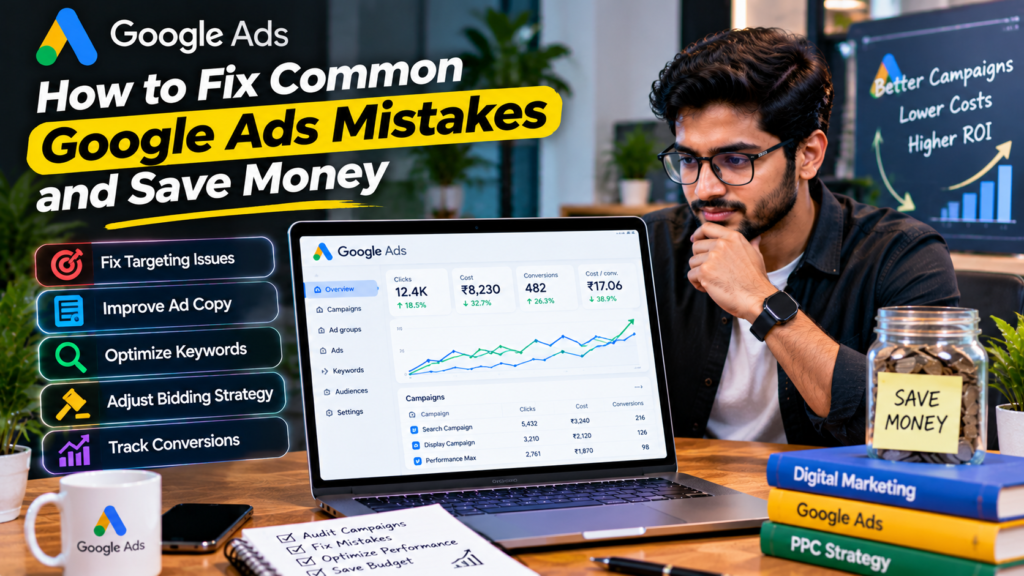
How to fix common Google Ads mistakes and save money

You must be very careful with every dollar you spend on marketing today. Therefore, you should learn about common Google Ads mistakes that drain your budget. Truly, many businesses lose thousands of dollars because of tiny setting errors. Consequently, you can protect your profits by fixing these hidden leaks in 2026. Many people think that spending more money always leads to more sales. But, the reality is that smart settings work much better than a huge budget. Always remember, a clean and high-performing ad is a strong signal for any search engine. This ensures that your brand stays visible and your cost per click stays very low. This approach requires you to look at your keywords, your ads, and your landing pages. It helps you build a much more profitable business for the long term. It makes your daily digital marketing feel much more secure and very effective. Fixing Broad Match and Keyword Leaks First, you must look at which words are triggering your ads right now. Why does Google show your ad to people who have no interest in buying? Clearly, using “Broad Match” keywords without a plan is a major budget killer. Therefore, you must use more specific match types to save your cash in 2026. How to Stop Irrelevant Keyword Spending Here are several ways to tighten your keyword list today: Truly, these steps solve the problem of wasted clicks in just a few minutes. But, you must also check your keyword list every single week to find new leaks. This keeps your ad spend low and prevents any sudden losses for your firm. It creates a very high and professional standard for your daily ad management. Improving Your Low Quality Score So, how do you pay less for a top spot on the search results page? Truly, Google rewards ads that are helpful and very relevant to the user. Consequently, you should focus on your “Quality Score” to lower your costs in 2026. It acts as a direct fix for high prices and helps your ads perform much better. Simple Ways to Boost Your Quality Score Here is how you can make Google love your ads more: Furthermore, this improves your search engine performance by showing you are a quality pro. It makes your company look very reliable and ready for 2026 digital growth. This ensures that you get the best value for every cent you spend on ads. It creates a very fast and clear path for your professional marketing success. Optimizing Your Landing Pages for Conversion The third phase involves looking at where your customers go after they click. Clearly, sending traffic to a generic home page is a very big mistake today. Therefore, you should use dedicated landing pages to turn clicks into real sales. Creating Pages That Turn Browsers Into Buyers Firstly, create a unique page for every different ad campaign you run in 2026. This allows you to give the user exactly what they were looking for right away. Secondly, use a single, clear “Call to Action” so people know how to buy today. Furthermore, remove any distracting links that might lead people away from your offer. Also, use transition words in your page copy to keep it very easy to read. Lastly, remember that a high conversion rate helps your search engine authority and trust. Truly, a great landing page is the best partner for a great ad campaign. It allows you to prove your value and close the sale without any confusion. This is why top marketers spend so much time on their web pages right now. Measuring and Refining Your Ad Success The fourth phase is where you use data to see if your changes are working. Clearly, you must know if your ads are truly helping your bottom line in 2026. Therefore, you must track your “Return on Ad Spend” (ROAS) every single month. Metrics for a Profitable Ad Account Firstly, track the “Conversion Rate” to see how many people actually buy from you. This helps you see which Google ads are working and which ones are just wasting money. Secondly, calculate your “Cost Per Acquisition” to know what a new customer costs. Furthermore, look for any “Dead Ads” that have many clicks but zero real sales. Also, use your data to see if certain times of day bring more profit for you. Lastly, check your search engine ranking to see if ad success helps your web traffic. Truly, a smart ad plan is a journey that leads to a much stronger brand. It turns a risky budget into a series of smart, secure wins for your whole team. This ensures your business stays strong while others face empty bank accounts. Best Practices: Staying Ahead of Google Ads Trends Finalizing your plan requires you to stay informed about new Google features. It needs you to review your account and update your strategy every single month. Clearly, winning at Google Ads is a team effort in 2026. Therefore, follow these simple tips to keep your ads fresh and your budget safe. Simple Tips for Lifelong Ad Success Firstly, try out new “Smart Bidding” tools to let AI help you find the best prices. This helps you stay one step ahead of your rivals without a lot of manual work. Secondly, keep your ad copy updated to match the current trends and seasons today. Furthermore, use transition words in your ad text to keep it very clear and helpful. Also, remind yourself that ad safety helps the company earn more search engine trust. Lastly, check your search engine data to see if your Google ads help your web traffic grow. Truly, a safe path is a journey that leads to a much better brand in 2026. It builds a path of trust that lets your whole team grow very fast. This secures your future in the digital world for a long time. Frequently Asked Questions (FAQs) Q1: Why is my Google Ads budget finishing so fast? This usually […]

Content Marketing, content strategy, Copywriting Hacks, CTA, Digital Marketing, E-commerce, Engagement, Google, Leads Generation, Search Engines, SEO Copywriting, Site Traffic, social media engagement, Strategies

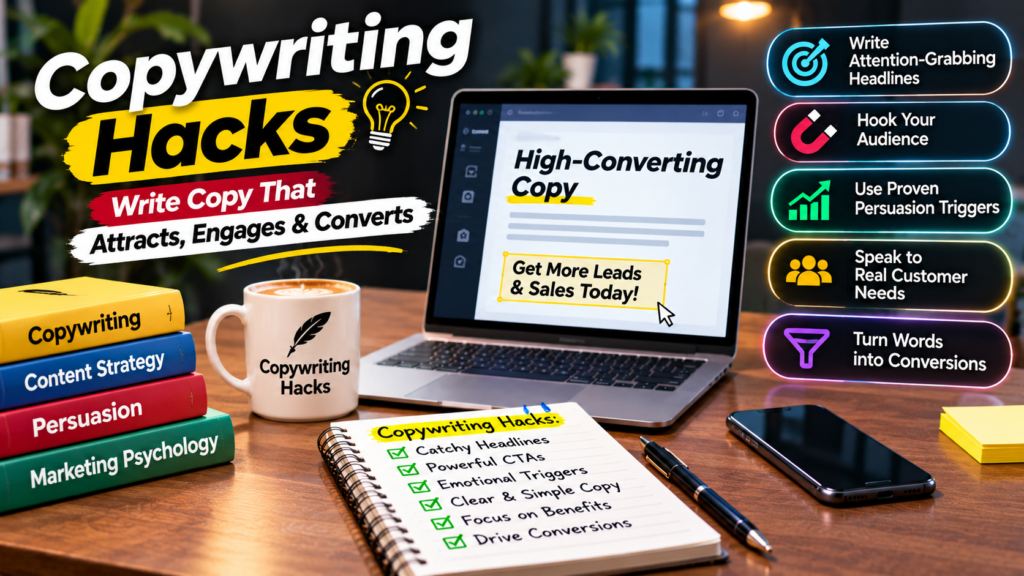
Copywriting Hacks: Why Your Ads Are Being Ignored Now

You must grab attention fast when people first see your ads today. Therefore, you should learn copywriting hacks that turn cold traffic into paying customers. Truly, a great product means nothing if your words do not sell it. Consequently, you can boost your sales by using words that compel people to buy. Many people think that copywriting is just about sounding very smart or clever. But, the reality is that it is about solving problems for your reader. Always remember, clear and helpful copy is a strong signal for any search engine. This ensures that your brand stays relevant and your website gets more clicks. This approach requires you to understand your customer’s deep desires. It helps you build a much more powerful marketing message for the long term. It makes your daily writing feel much more strategic and very effective. Phase 1: Crafting Irresistible Headlines and Hooks First, you must create a headline that stops people scrolling right now. Why does a good headline lead to a much higher click-through rate? Clearly, the first few words are your only chance to earn a read. Therefore, you must use strong power words to grab instant attention in 2026. Headline Secrets for Cold Audiences Here are several ways to write headlines that hook new buyers: Truly, a strong headline is the gatekeeper to your sales page. But, you must also ensure that your headline matches your ad. This keeps your message clear and prevents any confusion for your readers. It creates a very professional and high standard for your ad copy. Phase 2: Highlighting Benefits, Not Just Features in Copywriting So, how do you make your product sound truly amazing to a new person? Truly, people buy what your product does for them, not just what it is. Consequently, you should focus on the benefits your customer will gain in 2026. It acts as a direct link between your item and their improved life. Turning Features into Desirable Benefits Here is how you can transform dull facts into exciting promises: Furthermore, this improves your search engine performance by making your content more valuable. It makes your company look very customer-focused and ready for 2026 growth. This ensures that your buyers always see how your product solves their specific problems. It creates a very fast and clear path for your sales message. Phase 3: Building Trust and Overcoming Objections The third phase involves making your cold audience feel safe buying from you. Clearly, new visitors have many doubts and fears about a new brand. Therefore, you should use social proof and guarantees to build instant trust. Easing Fears and Closing the Sale Firstly, add strong testimonials and customer reviews right on your sales page. This allows new buyers to see that real people love your product. Secondly, use a clear money-back guarantee to remove any purchase risk in 2026. Furthermore, answer common questions in a small FAQ section on your page. Also, use simple language that everyone can understand without a dictionary. Lastly, remember that a trustworthy site helps your search engine authority and conversion rate. Truly, trust is the best bridge from a cold lead to a happy customer. It allows you to address doubts before they even become a reason to leave. This is why top sales pages focus on safety and social proof every time. Phase 4: Crafting a Clear Call to Action (CTA) The fourth phase is where you tell your customer exactly what to do next. Clearly, a great sales message is useless without a strong final command. Therefore, you must use clear and urgent calls to action at the end of every page. CTAs That Demand a Click Firstly, use active verbs like “Buy Now,” “Get Started,” or “Claim Your Discount.” This helps the reader know exactly what step to take next. Secondly, tell them what they will gain by clicking the button right away. Furthermore, use a contrast color for your CTA button so it stands out on the page. Also, repeat your CTA several times if your sales page is very long. Lastly, check your search engine ranking to see if clear CTAs boost your traffic. Truly, a powerful CTA is your best tool for getting those final clicks. It turns a “maybe later” into a “yes, right now!” for your brand. This ensures your business stays productive and your sales keep flowing. Best Practices: Continual Testing and Refinement Finalizing your plan requires you to never stop learning and improving. It needs you to test every word and every button to see what works best. Clearly, what sells well today might not work as well in 2026. Therefore, follow these simple tips to keep your copywriting sharp and effective. Simple Tips for Ongoing Copywriting Hacks Firstly, use A/B testing to compare different headlines or CTAs every month. This helps you find the words that bring you the most sales and clicks. Secondly, read your copy out loud to catch any awkward phrases or long sentences. Furthermore, study what your competitors are doing, but always make your own style unique. Also, use transition words in your sales copy to keep your readers engaged. Lastly, check your search engine data to see if good copy helps your organic rank. Truly, great copywriting is a journey that leads to a much better brand. It builds a path of value that lets your whole team grow very fast. This secures your future in the digital world for a long time. Frequently Asked Questions (FAQs) Q1: What is “cold traffic”? These are people who have never heard of your brand before and are seeing your ad for the first time. Q2: Is copywriting just for sales pages? No, good copywriting is vital for ads, emails, social media posts, and even product descriptions. Q3: How long should my headlines be in copywriting? Aim for 5-10 words, making them clear and impactful. Search engines often cut off longer ones. Q4: Should I use emojis in my copy? Use them sparingly […]

Audience Engagement, content strategy, Digital Marketing, Engagement, Google, Leads Generation, Site Traffic, Social Media ROI

How to measure social media ROI and grow sales

You must know if your social media efforts truly pay off today. Therefore, you should learn how to measure social media ROI with the right metrics. Truly, spending time and money on posts without clear results is a big waste. Consequently, you can grow your profits by linking your likes and shares directly to your sales. Many people think that social media is just for “brand awareness” or “engagement.” But, the reality is that every post can lead to a real business gain. Always remember, a highly engaged audience is a strong signal for any search engine. This ensures that your brand stays visible and your website gets more traffic. This approach requires you to focus on numbers that directly affect your money. It helps you build a much more powerful social strategy for the long term. It makes your daily marketing feel much more strategic and very effective. Phase 1: Understanding Your Core Business Goals First, you must define what “success” looks like for your business today. Why do some metrics matter more than others for your specific goals? Clearly, a big number of likes means nothing if it does not lead to a sale. Therefore, you must match your social media activity to your main business objectives. Connecting Social Media to Your Bottom Line Here are several ways social media can help your business grow: Truly, clear goals are the first step to measuring social media ROI effectively. But, you must also assign a dollar value to each of these actions. This helps you calculate how much money each share or click truly brings in. It creates a very high standard for your digital marketing efforts. Phase 2: Tracking Key Financial Metrics So, how do you turn a “like” into a “dollar” on your reports? Truly, you must use tools that track money, not just vanity metrics. Consequently, you should focus on actual revenue, lead generation, and customer acquisition costs. It acts as a direct line from your social post to your financial ledger. Direct Money-Making Metrics to Watch Here is how you can link your social media efforts to cash: Furthermore, this improves your search engine performance by showing a clear path to sales. It makes your company look very strategic and ready for 2026 growth. This ensures that you invest in social channels that truly bring you a profit. It creates a very fast and clear path for your financial success. Phase 3: Monitoring Engagement and Audience Growth The third phase involves looking at how people interact with your content. Clearly, engagement is not a direct sale, but it is a strong step toward one. Therefore, you should track metrics that show how much people care about your brand. Engagement Metrics That Drive Future Sales Firstly, monitor your “reach” to see how many unique eyes view your content. This helps you understand your potential audience size. Secondly, track your “engagement rate” to see what percentage of people interact with your posts. Furthermore, count how many times people share your posts with their friends. Also, measure the “sentiment” of comments to see if people like what you say. Lastly, remember that active engagement helps your search engine authority and trust. Truly, strong engagement builds the trust that eventually leads to a sale. It allows you to create a community that feels connected to your brand. This is why top brands focus so much on their social interaction. Phase 4: Using Analytics Tools for Deeper Insights The fourth phase is where you use technology to do the heavy lifting. Clearly, you cannot track all these numbers by hand every single day. Therefore, you must use smart analytics tools to measure social media ROI accurately. Essential Tools for Social Media ROI Firstly, use Google Analytics to see how social media traffic moves on your website. This helps you track conversions from the moment someone clicks your link. Secondly, leverage the built-in analytics dashboards of Facebook, Instagram, and TikTok. Furthermore, invest in a dedicated social media management tool like Sprout Social or Hootsuite. Also, use UTM parameters in all your social links to track clicks precisely. Lastly, check your search engine ranking to see if social traffic boosts your site. Truly, data tools are your best friend for understanding your social performance. They turn complex numbers into clear insights that guide your next moves. This ensures your team stays efficient while the machines handle the tracking. Best Practices: Continually Optimizing Your Strategy Finalizing your plan requires you to constantly adjust what you do on social media. It needs you to learn from your data and try new things often. Clearly, the social media world changes very fast every single day. Therefore, follow these simple tips to keep your social strategy fresh and profitable. Simple Tips for Ongoing Social Media Success Firstly, test different types of content to see which ones get the best ROI for you. This helps you find out if your audience likes videos, stories, or long posts more. Secondly, review your best-performing posts every month and try to make more like them. Furthermore, allocate more budget to the social channels that bring the most sales. Also, use transition words in your captions to keep people reading and engaging. Lastly, check your search engine data to see which social efforts lead to organic searches for your brand. Truly, great social media is a journey that leads to a much better brand. It builds a path of value that lets your whole team grow very fast. This secures your future in the digital world for a long time. Frequently Asked Questions (FAQs) Q1: What is social media ROI in simple terms? It means seeing how much money you earn for every dollar you spend on social media. Q2: Is engagement a good ROI metric? It’s a good leading indicator. High engagement often leads to sales, but it’s not a direct ROI number. Q3: How do I track website sales from social media? Use Google Analytics and UTM tags […]

Scroll to Top