SEO

Ad optimization, Ad Security, affiliate marketing, AI Adoption, AI Advertising, AI Chatbots, AI Trends, Analytics, Automation Tools, B2B marketing, Brand Visibility, Branding, Business Growth, Business Marketing Strategies, Business Scaling, Business Strategy, Digital Marketing, Marketing ROI, Marketing Strategy, Marketing Tech, Sales Automation, Search Engines, SEO

How Do SaaS Brands Optimize for Google AI Search? Ultimate Guide

Google AI Mode SEO: How Businesses Can Get Discovered in AI Search Search is changing fast. People now ask long questions and get full answers on the results page. Google AI Mode leads this shift. It gives rich, conversational replies and links to a few trusted sources. For businesses, this creates a new question. How do you get picked as one of those sources? This guide explains Google AI Mode SEO in simple words. You will learn how AI search works and what makes a site worth citing. You will also get a clear checklist to act on. What Is Google AI Mode? Google AI Mode is a search experience built on generative AI. You type or speak a question, and it replies with a written answer. The answer often includes links, images, and follow-up ideas. Users can keep asking questions in one long thread. It feels more like a chat than a list of blue links. Behind the scenes, the system breaks a complex question into smaller searches. It runs them at once and then combines what it finds. Google has described this method as query fan-out. The result is a fuller answer than one search could give. Your page may be used for one small part of that answer. This is different from classic results. A ten-link page rewards the best match for one query. AI Mode rewards pages that answer many related needs clearly. Therefore, your content must be helpful across a whole topic, not just one keyword. Google AI search features are still growing, and details change often. Treat any advice as a moving target. Even so, the core ideas stay steady. Clear, useful, trusted content wins. How AI Mode Changes Traditional Search Behaviour Search habits are shifting. People used to type short phrases such as “CRM software.” Now they ask, “Which CRM suits a ten-person online store with a small budget?” These long questions carry rich intent. They show what the buyer needs and how far along they are. Follow-up questions are common too. A user may start with a broad topic and then narrow it in three or four steps. Each step can bring new sources into view. Your brand can appear at any point in that journey. It may also be missed if your content covers only the first step. Many users also read the answer and stop. This can mean fewer clicks for some pages. However, the visits that do happen often come from people who are more informed. They know what they want and arrive closer to a decision. Quality of traffic can matter more than quantity. For businesses, the message is clear. Think about the full customer journey. Answer the first question, the follow-up, and the doubt behind it. AI search optimization starts with understanding real questions. Ranking vs Being Cited in AI Search In classic SEO, you aim for position one. In AI search, you aim to be referenced. A citation is a link inside the AI answer that points to your page. It also builds brand trust, since people see your name next to the answer. The two goals overlap, but they are not the same. A page can rank well and still be skipped by AI Mode. Another page may rank lower and still be cited because it explains one point better. Google has said that strong core SEO remains the foundation. Pages must be indexed and eligible to appear in search snippets. What does this mean in practice? You need pages that give direct, well-structured answers. AI systems look for passages they can quote or summarize with confidence. Clear headings, short paragraphs, and plain language help a lot. Vague and padded pages get passed over. Brand mentions matter as well. Even when users do not click, they see who supplied the answer. Repeat exposure builds familiarity. Later, they may search for your brand by name. That direct search is a very strong buying signal. What Makes a Website More Likely to Be Referenced? No one outside Google knows the exact formula. Still, patterns are visible. Sites that get cited tend to share four traits. Topical Authority Cover your subject deeply, not thinly. Build a cluster of pages around one theme. Link them together in a logical way. For example, a payments firm might publish guides on fees, security, and compliance. Depth signals that you truly know the field. Original Information AI answers already contain common facts. They need fresh value. Share your own data, case studies, surveys, and expert views. Explain what you learned from real projects. Original insight gives Google a reason to cite you instead of a copy. Clear Entities and Relationships Entities are people, brands, products, and places. Make them easy to identify. Use consistent names across your site and profiles. Add structured data, called schema markup, so machines can read your details. Explain how things connect, such as which product solves which problem. Trust and Expertise Trust is the base of everything. Show real authors with clear credentials. Include an about page, contact details, and customer reviews. Cite reliable sources and keep facts current. Strong security, such as HTTPS, supports trust. Google calls this idea E-E-A-T, which stands for experience, expertise, authoritativeness, and trust. How to Optimize Existing Content for AI Search You do not need to start from scratch. Improve your best pages first. Follow these steps. Begin with an audit. List your top pages by traffic and by business value. Check which questions each page answers. Note gaps, weak sections, and outdated facts. This gives you a clear work list. Next, lead with answers. Put a short, direct answer near the top of each section. Follow it with detail and examples. Use question-style headings that match real searches. This format suits both readers and AI systems. Then, add depth and proof. Include numbers, examples, and expert quotes from your own team. Add short FAQs for follow-up questions. Update dates and remove stale claims. Fresh, accurate pages earn more trust. […]

Ad optimization, Ad Security, affiliate marketing, AI Adoption, AI Chatbots, ai content, AI Marketing, AI ROI, AI Support, AI Tools, AI Trends, Audience Scaling, Business Strategy, Data Analytics, Data Privacy, data protection, Data Visualization, Digital Marketing, Marketing, SEO

How Do Indian Startups Market on a Budget? Ultimate Guide

Marketing For Indian Startups: 2026 Playbook Indian startups face a unique marketing landscape. Diverse languages, varied income levels, and fast-changing digital habits make this market both exciting and challenging. Founders need strategies that work without draining limited budgets. This playbook breaks down practical approaches for Indian startup marketing in 2026. From lean growth tactics to sustainable scaling, these strategies focus on real results. Let us explore what actually works for startup growth India in the current environment. Lean Growth Framework for Startups Most Indian startups operate with tight budgets, especially in the early stages. A lean growth framework helps founders achieve meaningful results without overspending. Focus On One Core Channel First Many founders try to be everywhere at once. However, spreading resources too thin often produces weak results across every channel. Instead, choose one platform where your audience is most active and master it first. For example, a B2B SaaS startup might focus entirely on LinkedIn and email outreach. Meanwhile, a consumer app might prioritize Instagram or YouTube. Depth beats width during the early growth stage. Use Data To Guide Every Decision for Startups Lean growth depends on constant testing and measurement. Track which messages, channels, and offers actually convert. This data-driven approach prevents wasted spending on tactics that simply do not work. Additionally, small experiments help startups learn quickly without major financial risk. Testing with small budgets first protects limited resources while still generating useful insights. Build Organic Content Early for Startups Organic content, such as blog posts and social media, builds long-term value. Unlike paid ads, this content continues attracting attention long after publication. Startups that invest early in organic content often see lower acquisition costs over time. Consistency matters more than perfection here. Publishing regularly, even with simple content, builds audience trust steadily. Paid Ads On Budget For Startups Paid advertising remains valuable, even for startups with limited funds. The key is spending wisely rather than spending heavily. Start Small And Scale What Works Begin paid campaigns with a modest daily budget. This limits financial risk while still generating useful performance data. Once a campaign shows strong results, gradually increase spending to scale that success. Furthermore, avoid launching too many campaigns simultaneously. Focused testing produces clearer insights than scattered, unfocused spending. Target Regional And Language Segments India’s diversity offers a unique advantage for targeted advertising. Startups can create campaigns tailored to specific regions or languages. This often produces stronger engagement than generic, nationwide messaging. For instance, ads in regional languages frequently outperform English-only campaigns in certain markets. Testing this approach can reveal valuable, underused opportunities. Retarget Warm Audiences Retargeting website visitors and app users typically costs less than acquiring new customers. These warm audiences already know your brand, making conversion more likely. Allocating part of the budget toward retargeting usually improves overall return on investment. Influencer And Community Growth for Startups Influencer marketing and community building offer cost-effective growth channels for Indian startups. Partner With Micro-Influencers Large celebrity endorsements are expensive and often out of reach for early-stage startups. Micro-influencers, however, offer strong engagement at a fraction of the cost. Their audiences tend to trust their recommendations more than typical celebrity endorsements. Choose influencers whose audience closely matches your target customer. Relevance matters more than follower count in most cases. Build An Active Community Communities create loyal customers who advocate for your brand naturally. Platforms like WhatsApp groups, Discord servers, and Telegram channels work well for Indian audiences specifically. Consistent engagement within these communities builds trust over time. Furthermore, community members often provide valuable feedback that improves the product itself. Encourage User-Generated Content User-generated content adds authenticity that traditional advertising cannot replicate. Encourage customers to share their experiences through reviews, photos, or videos. This content also serves as free, credible marketing material for future campaigns. Choosing The Right Marketing Tools For Startups Indian startups have access to a growing range of affordable marketing tools. Choosing the right ones can make lean growth far more manageable. Analytics Platforms For Small Teams Startups do not need enterprise-level analytics software right away. Free or low-cost tools can track website traffic, conversion rates, and user behavior effectively. This data helps founders make informed decisions without a large budget. Simple Email Marketing Software Email remains one of the most cost-effective channels available. Affordable email platforms allow startups to automate follow-ups and nurture leads over time. Consistent, relevant emails often outperform expensive one-time advertising pushes. Social Media Scheduling Tools Managing multiple social platforms manually consumes valuable time. Scheduling tools help maintain a consistent posting rhythm without daily manual effort. This consistency supports the organic growth strategies mentioned earlier in this playbook. Understanding The Indian Digital Consumer For Startups Successful marketing starts with understanding the audience deeply. Indian consumers show distinct behaviors that differ from other global markets. Mobile-First Behavior Most Indian internet users access content primarily through mobile devices. Therefore, every marketing asset should be optimized for mobile screens first. Slow-loading pages or poorly formatted content quickly lose potential customers. Value-Conscious Decision Making Indian consumers often research thoroughly before making purchase decisions. Highlighting clear value, rather than flashy branding alone, tends to resonate more strongly. Transparent pricing and honest messaging build trust faster in this market. Trust Signals Matter Reviews, testimonials, and word-of-mouth recommendations carry significant weight. Startups should actively collect and showcase genuine customer feedback. This social proof often influences purchase decisions more than traditional advertising claims. Scaling Sustainably Rapid growth without a solid foundation often leads to problems later. Sustainable scaling protects long-term success. Strengthen Customer Retention First Acquiring new customers costs more than retaining existing ones. Before scaling aggressively, ensure your product delivers consistent value to current users. Strong retention numbers make every future growth investment more effective. Automate Where Possible As a startup grows, manual marketing processes become harder to manage. Automation tools help maintain consistency across email campaigns, social posting, and customer follow-ups. This frees the team to focus on strategy rather than repetitive tasks. Diversify Growth Channels Gradually Once one channel proves successful, gradually test additional […]

AI Chatbots, ai content, AI Marketing, AI Personalization, AI ROI, AI Search SEO, Clinic SEO Strategy, Customer Service, Data Analytics, Data Insights, Data Privacy, Data Visualization, data-driven marketing, digital transformation, Google, Marketing, Marketing Automation, Marketing ROI, Search Engines, Semantic SEO, SEO, SEO Marketing

How Do Brands Execute a Global SEO Strategy? Ultimate Guide

International SEO Strategy for Global Brands An international SEO strategy is essential for any brand expanding beyond its home market. Global SEO helps businesses reach new audiences, build trust, and rank well in different countries. However, expanding internationally is not as simple as translating a website. It requires careful planning across technical, content, and cultural factors. Brands that succeed internationally tend to treat each new market almost like a fresh SEO campaign. They do not simply copy their existing strategy and hope it transfers. Instead, they research, test, and adjust based on what each specific audience responds to best. This guide covers the key building blocks of a strong international SEO strategy. We will explore technical setup, keyword research, content adaptation, and tracking. By the end, you will understand how to approach global SEO with confidence. Expanding into new markets is exciting, but it also introduces new complexity. Search engines like Google treat each country and language as a distinct audience. Therefore, a strategy that works well at home may need significant adjustments abroad. Taking a structured approach from the start helps avoid costly missteps later. Why International SEO Strategy Matters Global brands often assume that a strong domestic SEO strategy will naturally translate overseas. Unfortunately, this rarely happens. Search engines evaluate relevance differently across regions. Local competitors, language nuances, and cultural expectations all affect rankings. Consider a brand that ranks first for its category at home but struggles to appear on the second page abroad. This gap usually is not caused by weak products or poor branding. Instead, it often reflects missing technical signals, unresearched local keywords, or content that simply does not resonate with the new audience. Without a dedicated international SEO strategy, brands risk poor visibility in new markets. This can lead to wasted marketing spend and missed growth opportunities. On the other hand, a well-executed global SEO strategy builds long-term visibility and trust with international audiences. Additionally, search engines reward websites that clearly indicate their target audience. Proper technical setup helps search engines serve the right content to the right users. This foundation supports every other part of your international SEO efforts. Global brands that skip this step often see confusing results. They may rank well in one country but remain invisible in another, despite offering the same products. Understanding the root causes early prevents wasted effort and helps teams focus on the strategies that actually move the needle in each market. Hreflang & Technical Setup for Global SEO Technical setup forms the backbone of any successful international SEO strategy. Hreflang tags tell search engines which language and region each page targets. Without proper hreflang implementation, search engines may show the wrong version of your site to users. Start by deciding on your website structure. Common options include country-specific domains, subdomains, or sub-folders. Each option has trade-offs in terms of cost, control, and SEO impact. Subfolders are often the easiest to manage for mid-sized global brands. Next, implement hreflang tags correctly across all relevant pages. Even small errors can confuse search engines and hurt rankings. Therefore, testing your hreflang setup regularly is essential. Tools are available to help identify and fix implementation issues quickly. Finally, ensure your website loads quickly across all target regions. Slow load times in certain countries can hurt both rankings and user experience. Consider using a content delivery network to improve global site speed. Mobile performance deserves special attention as well. In many international markets, mobile devices account for the majority of web traffic. A site that performs well on desktop but lags on mobile can quietly lose ground to local competitors. Regularly testing your site from different regions and devices helps catch these issues before they affect rankings. Localized Keyword Research for Global SEO Localized keyword research is a critical part of any global SEO strategy. Simply translating your existing keywords rarely works well. Search behavior varies significantly across languages and cultures. Start by researching how people in each target market actually search for your products or services. Local search volume, phrasing, and intent can differ dramatically from your home market. Native speakers or local SEO experts can provide valuable insight here. Additionally, consider regional spelling differences and slang. Even within the same language, countries often use different terms. For example, British and American English include several notable vocabulary differences. Ignoring these nuances can weaken your keyword targeting. Voice search and mobile search patterns can also differ across regions. Some markets rely heavily on voice assistants, which favor longer, conversational phrases. Others still search primarily through short, typed queries. Understanding these habits helps you shape content that matches how people in each market actually search. Once you gather localized keywords, integrate them naturally into your content. Avoid forcing translated keywords that sound unnatural to native speakers. Authentic, well-researched keywords improve both rankings and user engagement. It also helps to study local competitors directly. Reviewing which keywords they target and how they structure their content reveals valuable market insight. This research often uncovers opportunities your home-market strategy would never have surfaced, since search habits and competitive gaps vary so widely between regions. Cultural Content Adaptation for Global SEO Cultural content adaptation goes beyond translation. It means adjusting tone, examples, imagery, and messaging to fit each target audience. What resonates in one country may feel irrelevant or even inappropriate in another. Consider cultural preferences around communication style. Some markets prefer direct, concise messaging. Others respond better to detailed, relationship-focused content. Understanding these differences helps your brand build stronger local trust. Visual elements also matter significantly. Colors, symbols, and imagery carry different meanings across cultures. Reviewing these details carefully can prevent unintended messaging issues. Local marketing consultants often provide helpful guidance in this area. Furthermore, consider local regulations and industry standards. Some markets have specific legal requirements around advertising claims or disclosures. Adapting content to meet these requirements protects your brand and builds credibility. Local case studies and testimonials can also strengthen your content’s relevance. When potential customers see examples from their own […]

AI Marketing, content strategy, Digital Marketing, digital marketing for dental, Digital Marketing for Restaurants, digital PR, digital transformation, Email Automation, email marketing, Marketing Automation, Semantic SEO, SEO

How Do Advanced Email Automations Work? Complete Guide

Advanced Email Automation Sequences Email remains one of the strongest marketing channels available today. However, sending random emails no longer works well. Businesses need a smart email automation strategy to stand out. Advanced email funnels help brands guide customers step by step. These funnels nurture leads, respond to behavior, and win back inactive users. Done right, they drive real revenue. This blog covers four key parts of a strong email automation strategy. You will learn how to build sequences that engage readers and grow your business. Marketers at every level, from small teams to large enterprises, can apply these ideas. The goal is simple: send the right message to the right person at the right time. Welcome & Nurture Sequences A welcome sequence is your first chance to impress new subscribers. This series should introduce your brand and set clear expectations. A strong welcome email often gets the highest open rates of any email you send. Start with a short thank-you email. Confirm the subscription and share what readers can expect. For example, mention how often you will send emails and what value they offer. Next, build a nurture sequence around education. Share helpful tips, product guides, or customer stories. This content builds trust before you ask for a sale. Avoid pushing offers too early in the sequence. Timing matters greatly here. Space emails a few days apart to avoid overwhelming new subscribers. Additionally, use simple language and clear calls to action throughout the sequence. Personalization strengthens this process further. Use the subscriber’s name and reference their sign-up source when possible. A tailored welcome sequence often leads to stronger long-term engagement. A strong welcome sequence typically spans three to five emails. The first builds excitement, the middle emails provide value, and the final email introduces a soft offer. This gradual approach feels natural rather than pushy. Segmentation can improve results even further. New subscribers from a webinar may need different content than those from a product page. Tailoring your nurture sequence to sign-up source often increases engagement significantly. Mobile-friendly design deserves attention too. Many subscribers open emails on their phones first. Short paragraphs, clear buttons, and simple layouts help your welcome sequence perform well across every device. Behavioral Triggers Behavioral triggers send emails based on specific actions. This approach makes your email automation strategy far more relevant. Instead of blasting the same message to everyone, you respond to real behavior. Cart abandonment emails are a common example. When a shopper leaves items in their cart, an automated email can remind them to complete the purchase. These emails often include a gentle nudge or a small incentive. Browse abandonment works similarly. If someone views a product but does not add it to their cart, a follow-up email can highlight that item. This keeps your brand visible without feeling pushy. Engagement-based triggers also work well. For instance, you might send a special offer after a subscriber clicks a specific link multiple times. This shows genuine interest, making them a strong candidate for a targeted offer. Setting up these triggers requires reliable automation software. Most modern email platforms support this feature. Once configured, these sequences run automatically, saving time while boosting conversions. Purchase-based triggers extend the relationship beyond the first sale. A follow-up email asking for product feedback, or suggesting a complementary item, keeps customers engaged. This approach often increases repeat purchases over time. Timing plays a critical role in trigger performance. Cart abandonment emails, for example, work best when sent within one to three hours. Waiting too long often means the shopper has already lost interest or bought elsewhere. Milestone triggers offer another creative option. A message celebrating a customer’s one-year anniversary, or a loyalty milestone, adds a personal touch. These small gestures often strengthen long-term brand loyalty. Re-Engagement Campaigns Every email list includes inactive subscribers over time. Re-engagement campaigns aim to win these people back before you remove them. This step protects your sender reputation and improves overall list health. Start by identifying inactive users. Most platforms let you filter subscribers who have not opened or clicked emails within a set period, such as 90 days. This group becomes your re-engagement target. Send a direct message asking if they still want to hear from you. Keep the subject line honest and simple. Phrases like “We miss you” or “Are you still interested?” often perform well. Offering an incentive can help too. A discount code or exclusive content may encourage inactive users to engage again. However, avoid discounting too heavily, as this can hurt your brand value. If subscribers remain inactive after the campaign, consider removing them from your list. This may feel counterintuitive, but it keeps your advanced email funnels efficient. A smaller, engaged list often performs better than a large, inactive one. A well-built re-engagement sequence usually includes two or three emails. The first email checks in casually. If there is no response, the second email can offer an incentive or ask for feedback directly. Sender reputation improves noticeably once inactive subscribers are removed. Internet service providers track engagement closely. A cleaner list often means better inbox placement for every future campaign you send. Timing your re-engagement campaign matters too. Sending it right before a major sale or product launch can give hesitant subscribers a reason to open your email again and stay on your list. Measuring Email Automation & ROI Tracking results is essential for any email automation strategy. Without clear metrics, you cannot know what works. Regular measurement helps you refine your advanced email funnels over time. Start with open rates and click-through rates. These numbers show how well your subject lines and content perform. Low open rates often signal a need to improve subject lines or sender reputation. Conversion rate matters even more. This metric tracks how many recipients complete a desired action, such as making a purchase. Compare conversion rates across different sequences to find your strongest performers. Revenue per email is another valuable metric. This number shows the direct financial impact of your campaigns. […]

AI Marketing, content strategy, Influencer, Influencer Commerce, Marketing Tech, SEO, social meia marketing

How to Build an Influencer Commerce Strategy? : Complete Guide

Influencer Commerce & Affiliate Hybrid Strategy Influencer Commerce has changed a lot in recent years. Brands no longer want just visibility. They want measurable sales results tied directly to every partnership, too. This shift has led to influencer commerce. It blends creator influence with affiliate-style performance tracking. As a result, brands get both reach and real revenue from the same partnership. This blog explains how influencer commerce and affiliate influencer marketing work together. We will cover tracking, commissions, and scaling strategies. By the end, you will know how to build your own hybrid approach that balances authentic content with measurable performance. Why This Shift Matters Right Now Ad costs on major platforms keep climbing every year. Brands need channels that deliver stronger, more trackable returns. Influencer commerce answers this need by tying spend directly to outcomes. At the same time, audiences trust creators more than traditional advertising. A recommendation from a familiar face feels more genuine than a banner ad. This trust translates into higher conversion rates when the partnership is structured well. Why Hybrid Models Work In Influencer Commerce Influencer commerce combines the best of two worlds. Influencers bring trust and audience connection. Affiliate marketing brings measurable, performance-based results. Traditional influencer deals often pay flat fees upfront. However, this does not always guarantee sales. Brands sometimes spend money without clear return on investment. Affiliate influencer marketing solves this problem directly. Influencers earn based on actual sales generated. Therefore, brands only pay for real results, not just exposure. This hybrid model also benefits influencers themselves. Successful promotions lead to higher earnings over time. As a result, influencers stay more motivated to create authentic content. Additionally, hybrid models reduce financial risk for brands. Instead of large upfront payments, spending scales with performance. This makes influencer commerce accessible even for smaller businesses. Consumers also respond well to this approach. Authentic recommendations feel more trustworthy than traditional ads. Consequently, conversion rates often improve with genuine influencer partnerships. Blending Reach With Results for Influencer Commerce Traditional advertising focuses heavily on impressions and visibility. However, impressions alone rarely tell the full story of business impact. Influencer commerce fills this gap by connecting content directly to purchases. This blend also helps brands justify marketing budgets more clearly. Leadership teams want to see revenue tied to spend. A hybrid model provides exactly that kind of clear, defensible reporting. Small and mid-sized brands benefit especially well from this approach. They often cannot afford large upfront influencer fees. Performance-based structures let them compete for attention without excessive financial risk. Tracking Influencer Sales Accurate tracking is essential for influencer commerce success. Without proper tracking, brands cannot measure true performance. This makes payment structures difficult to justify. Unique discount codes are a simple tracking method. Each influencer receives a personalized code. This makes it easy to attribute sales directly to their content. Affiliate links offer another reliable tracking option. These links use cookies to track customer purchases. Consequently, brands can measure clicks, conversions, and revenue accurately. Some brands use dedicated affiliate platforms for deeper insights. These platforms track performance across multiple influencers simultaneously. This data helps identify top-performing partners quickly. UTM parameters also support tracking efforts effectively. Marketers can see exactly which content drives the most traffic. This information helps refine future influencer commerce campaigns. Furthermore, tracking should include post-click behavior, not just clicks. Understanding what happens after a customer clicks matters greatly. This deeper insight improves overall campaign strategy over time. Common Tracking Pitfalls To Avoid Many brands rely on a single tracking method and miss important data. Combining discount codes with affiliate links often paints a fuller picture. Customers behave differently depending on the platform and device they use. Attribution windows also deserve careful attention. A sale that happens three days after a click should still count. Setting tracking windows too short can under-count an influencer’s real contribution to sales. Data privacy rules add another layer of complexity. Some regions restrict how long cookies can track customer behavior. Brands should choose tracking tools that stay compliant across every market they serve. Commission Structures Choosing the right commission structure shapes campaign success. Flat commission rates are the simplest option. Influencers earn a fixed percentage on every sale generated. Tiered commission structures reward top performers more generously. As sales increase, commission rates rise accordingly. This motivates influencers to push harder for better results. Some brands offer hybrid payments instead. This combines a small base fee with performance commissions. Influencers feel secure while still earning more through strong results. Bonus incentives can also boost performance further. Extra rewards for hitting sales milestones encourage consistent effort. Many successful influencer commerce programs use this tactic effectively. It is important to keep commission structures simple and clear. Complicated payment terms can confuse influencers easily. Simple structures build trust and encourage long-term collaboration. Brands should also review commission rates regularly. Market conditions and influencer performance change over time. Adjusting rates keeps partnerships fair and sustainable for everyone involved. Matching Commission Structure To Campaign Goals Different goals call for different commission approaches. A brand launching a new product might prioritize awareness over immediate sales. In that case, a slightly higher flat rate can encourage broader initial promotion. Meanwhile, a brand focused purely on revenue growth may prefer tiered commissions. This structure rewards influencers who consistently drive strong sales numbers. Over time, it naturally shifts spend toward the highest-performing partners. Testing different structures with smaller groups first is a smart approach. This allows brands to see what motivates their specific influencer network. Insights gained here can guide larger, more confident roll-outs later. Scaling Partnerships Once initial campaigns succeed, scaling becomes the next priority. Brands should identify their strongest influencer partnerships first. These relationships often provide the best foundation for growth. Expanding into micro-influencer partnerships can help scale efficiently. Micro-influencers often have highly engaged, niche audiences. Their promotions can feel more personal and trustworthy. Automating parts of the affiliate influencer marketing process supports scaling, too. Platforms can handle tracking, payments, and reporting automatically. This reduces manual work as […]

Content Automation, Entity SEO, Marketing Strategy, Semantic SEO, SEO, SEO Copywriting, SEO Marketing

How to Build an Enterprise SEO Strategy: Complete Guide

Large websites face unique SEO problems. A small business site might have twenty pages. An enterprise website can have twenty thousand, or even more. Managing SEO at this scale requires a different approach entirely. This is where enterprise SEO strategy becomes essential. In this article, we will cover the core pillars of large website SEO. We will look at technical SEO, page management, automation, and stakeholder reporting. By the end, you will have a clear roadmap for scaling SEO across a massive site. Technical SEO at Scale Technical SEO forms the foundation of any enterprise SEO strategy. On a large website, small technical issues multiply quickly. A single broken template can affect thousands of pages at once. Site speed is one of the biggest technical concerns. Large websites often have heavy images, scripts, and third-party tags. These slow down page load times. Consequently, both users and search engines may struggle with the experience. Regular performance audits help catch these issues early. Crawl budget is another key factor. Search engines only crawl a limited number of pages during each visit. On massive sites, this budget can run out before important pages get indexed. Therefore, enterprise SEO teams must guide crawlers toward high-value pages. This often means blocking low-value pages using robots.txt or noindex tags. Structured data also plays a major role at scale. Adding schema markup helps search engines understand page content. For large websites, this markup should be templated. Manual tagging of thousands of pages simply is not practical. Additionally, mobile optimization cannot be ignored. Most search traffic now comes from mobile devices. A large website SEO strategy must ensure every template performs well on smaller screens. Poor mobile experience can hurt rankings across the entire site. Log file analysis is a valuable technique for enterprise sites. By reviewing server logs, teams can see exactly how search engine bots crawl the site. This reveals which pages get crawled often and which ones get ignored. As a result, teams can adjust internal linking or sitemaps to guide crawlers more effectively. International SEO adds another layer of complexity for many large websites. Sites serving multiple countries or languages need proper hreflang tags. Without these tags, search engines may show the wrong language version to users. Getting this right protects both user experience and search visibility across regions. Managing Thousands of Pages Managing thousands of pages requires strong organization. Without a clear system, large websites often end up with duplicate content, thin pages, or conflicting URLs. These issues confuse both users and search engines. Content audits become essential at this scale. Regular audits identify outdated, duplicate, or low-performing pages. Teams can then update, merge, or remove these pages. This keeps the overall site quality high, which supports better rankings across the board. URL structure also needs careful planning. Consistent, logical URLs help both users and search engines navigate the site. For example, category and subcategory structures should follow clear, repeatable patterns. This consistency reduces confusion and strengthens internal linking. Internal linking deserves special attention on large sites. Strategic internal links help distribute authority across important pages. Meanwhile, orphan pages, or pages with no internal links pointing to them, often get ignored by search engines. Identifying and fixing orphan pages can unlock hidden ranking potential. Furthermore, pagination and faceted navigation create unique challenges for large websites. E-commerce sites, in particular, often generate many similar URLs through filters and sorting options. Without proper handling, this can create duplicate content problems. Canonical tags and careful indexing rules help manage this issue effectively. Content templates also need ongoing maintenance. As business needs change, older templates can become outdated across thousands of pages at once. Scheduling regular template reviews helps catch these issues before they spread site-wide. This proactive habit protects both rankings and user experience over time. Automation and Workflows Manual SEO processes simply do not scale for enterprise websites. Automation becomes necessary to manage thousands or millions of pages efficiently. This is a critical part of any modern large website SEO approach. Automated auditing tools can scan entire websites for technical issues. These tools flag broken links, missing meta tags, and duplicate content automatically. As a result, SEO teams can focus on fixing problems instead of finding them manually. Templated metadata is another powerful automation strategy. Instead of writing unique titles and descriptions for every single page, teams can create dynamic templates. These templates pull in relevant variables, like product names or categories. This approach saves enormous time while maintaining SEO best practices. Workflow integration also matters greatly. SEO requirements should be built into content management systems and development pipelines. For example, developers can set up automatic checks that prevent pages from going live without proper meta tags or alt text. This proactive approach catches issues before they ever reach the live site. Moreover, collaboration tools help large teams stay aligned. Enterprise SEO often involves multiple departments, including content, development, and marketing. Clear workflows and shared dashboards ensure everyone works from the same information. This reduces duplicated effort and speeds up implementation. Automated monitoring also protects against sudden ranking drops. Enterprise sites should track key pages daily for changes in rankings, traffic, or indexing status. Instant alerts help teams respond quickly to unexpected issues, such as a plugin update breaking meta tags across the site. Testing automation before full rollout is equally important. Large websites should test SEO changes on a small set of pages first. This approach limits risk. If results look positive, the change can then roll out across the wider site with confidence. Reporting to Stakeholders Clear reporting is essential for enterprise SEO success. Large organizations often include multiple stakeholders who need to understand SEO performance. However, not everyone needs the same level of detail. Executives typically want high-level metrics. These include organic traffic trends, revenue impact, and competitive positioning. Simple, visual dashboards work best for this audience. Overly technical reports can lose their attention quickly. Meanwhile, technical teams need more granular data. This might include crawl error trends, page speed metrics, […]

content strategy, conversion funnel, Digital Marketing, Full-Funnel Marketing, funnel leak diagnosis, Leads Generation, Local SEO, Marketing, Marketing Automation, Marketing Strategy, SEO

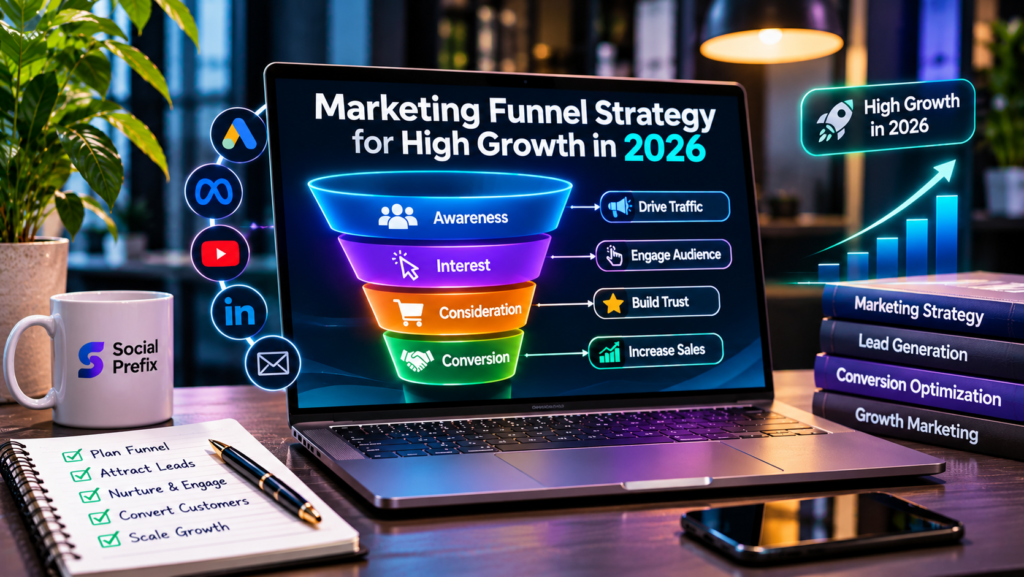
Marketing Funnel Strategy for High Growth in 2026

The marketing funnel has never been more important. Buyers are more informed. Competition is fiercer. Attention spans are shorter. In 2026, a poorly optimized funnel does not just underperform. It actively costs you customers and revenue. Marketing funnel strategy must now account for AI-driven buyer behavior, multi-channel touchpoints, and increasingly personalized expectations. Sales funnel optimization is no longer a quarterly project. It is a continuous discipline. This guide walks you through the four pillars of funnel optimization in 2026. You will learn how to map your customer journey, integrate automation intelligently, diagnose where your funnel is leaking, and scale what is already working. Awareness to Conversion Mapping Every successful marketing funnel starts with clarity. You need to know exactly how a customer moves from first discovering your brand to completing a purchase. This is called awareness to conversion mapping. It is one of the most underutilized practices in marketing funnel strategy. Begin by identifying every touchpoint a buyer encounters. This includes social media ads, organic search results, blog posts, email sequences, landing pages, and product pages. Map each one to a specific funnel stage. Awareness content attracts cold audiences. Consideration content helps them evaluate options. Decision content moves them to buy. Furthermore, use data to understand where most buyers enter and exit your funnel. Analytics platforms like Google Analytics 4, HubSpot, or Mixpanel reveal these patterns clearly. Once you know the most common paths to conversion, you can strengthen them intentionally. Consequently, you reduce the number of buyers who fall off before reaching the end of the funnel. Aligning Content With Funnel Stages Content alignment is critical in 2026. Showing a high-intent sales page to someone who has never heard of your brand creates friction, not conversion. Similarly, showing awareness-level content to someone ready to buy delays the sale unnecessarily. Map every piece of content to a specific funnel stage. Top-of-funnel content should educate and attract. Mid-funnel content should build trust and overcome objections. Bottom-of-funnel content should remove risk and confirm value. Moreover, personalization tools now make it possible to serve the right content dynamically. AI-powered platforms can adapt landing pages, emails, and ad creatives based on user behavior. This kind of personalized funnel mapping significantly improves conversion rates across all stages. Automation Integration Marketing automation is no longer optional in 2026. Buyers expect timely, relevant communication. Manual follow-up cannot match the speed or consistency that automation provides. However, bad automation is worse than no automation. Generic, impersonal sequences damage brand trust quickly. Therefore, the goal is intelligent automation that feels human. Start with your email sequences. Map out what happens after someone downloads a lead magnet, starts a free trial, or abandons a cart. Each trigger should launch a relevant, helpful sequence. Use behavioral signals to personalize the messaging. For example, someone who visits your pricing page three times is showing strong intent. An automated sequence that acknowledges this and offers a limited-time incentive can dramatically lift conversion. Additionally, integrate your CRM with your marketing platform. When sales and marketing data share the same system, handoffs become smoother. Leads do not fall through the cracks between departments. Choosing the Right Automation Tools The market for marketing automation tools is large. Selecting the wrong platform wastes both money and time. In 2026, look for platforms that combine email automation, CRM functionality, behavioral tracking, and AI-powered personalization. HubSpot, ActiveCampaign, Klaviyo, and Brevo are strong options at different price points. For ecommerce funnels specifically, Klaviyo remains a top performer for revenue-driven automation. Furthermore, platforms with native AI features are becoming increasingly valuable. They suggest optimal send times, predict churn risk, and recommend content based on user behavior. These capabilities improve funnel performance with minimal manual effort. As a result, your team can focus on strategy rather than repetitive execution. Funnel Leak Diagnosis A leaking funnel costs revenue silently. Most businesses know their top-line conversion rate but miss the specific stages where buyers are dropping off. Funnel leak diagnosis is the process of identifying exactly where and why this happens. Start with a funnel audit. Map every stage from awareness to purchase. Then assign conversion rate benchmarks to each stage. Industry averages vary, but you should know your own historical baselines. Compare current performance against those baselines. Also, look for patterns in drop-off. Are visitors bouncing from a specific landing page or Are leads going cold after a particular email in your sequence? Are trial users failing to convert to paid after a certain onboarding step? Each of these signals points to a specific leak. Moreover, qualitative research supplements quantitative data well. User session recordings, heatmaps, and exit surveys reveal friction that numbers alone cannot explain. Tools like Hotjar and Microsoft Clarity provide this insight affordably. Fixing the Most Common Funnel Leaks Once you identify leaks, the repair process begins. Common funnel leaks include slow page load times that increase bounce rates. They also include unclear value propositions on landing pages. Weak calls to action that do not create urgency are another frequent issue. Confusing pricing pages or checkout flows also cause significant drop-off. Address each leak systematically. Run A/B tests to validate fixes before rolling them out broadly. For example, changing a call-to-action button from “Submit” to “Get My Free Report” can lift click-through rates noticeably. Similarly, simplifying a pricing page by removing unnecessary options can reduce decision fatigue and increase conversions. Therefore, treat each funnel stage as a conversion rate optimization opportunity. Small improvements at every stage compound into significant revenue gains over time. Scaling High-Converting Funnels Once your funnel is working, the goal shifts to scaling. Scaling a high-converting funnel means driving more volume through a proven system. Many businesses make the mistake of scaling prematurely. They increase ad spend before the funnel is truly optimized. This accelerates losses rather than gains. First, confirm that your funnel is profitable at current volume. Calculate customer acquisition cost and compare it against lifetime value. If the ratio is healthy, scaling becomes a sound investment. Next, identify the top-performing traffic channels. Not […]

Creative Testing, Digital Advertising, Digital Marketing, Full-Funnel Marketing, Marketing Strategy, performance marketing, SEO

How to Capture marketing Results with a Proven Funnel

The world of digital marketing in 2026 is faster than ever before. Therefore, you must have a clear plan to grow your brand. Scaling to 10X is not just about spending more money. Instead, it is about using a smart system that works at every level. To achieve this, you need a blueprint that handles the data and the creative side at the same time. Consequently, this blog shows you the exact steps to scale your results. By following these rules, you can turn a small budget into a huge success. Ultimately, this is how you dominate your market and stay ahead of others. Full-Funnel Campaign Structure A great marketing plan must cover the whole journey of a buyer. First, you need to find new people who do not know your brand yet. Second, you must nurture those who have seen you but did not buy. In addition, you should focus on your past customers to bring them back. This is because a full-funnel approach ensures that no lead is lost. For example, your top ads should build awareness with a strong message. Subsequently, your middle ads should prove your value with real results. As a result, you build a path that leads every guest toward a sale. Budget Allocation Strategy How you spend your money is just as important as how much you spend. Specifically, you should split your marketing funds into different pools. Initially, put a large part of your budget into your proven winners. At the same time, keep a smaller part for testing new ideas every week. Moreover, you should always have a set amount for retargeting high-intent leads. In light of this, you protect your main revenue while looking for the next big hit. By doing so, you ensure that your growth never stops. Clearly, a balanced budget is the key to safe and fast scaling. Creative Testing Framework In 2026, the best ads are the ones that feel real and fresh. Therefore, you must use a strong framework for testing your creative ideas. Instead of guessing, use data to see what people like. First, test different hooks to see which one grabs the most attention. Next, try different styles of video or images for your marketing messages. Once you find a winner, you can double down on that specific style. Furthermore, this process helps you avoid wasting money on ads that do not work. In short, constant testing is the only way to find the best way to speak to your fans. Scaling Winning Ads After you find an ad that works, it is time to scale it to the max. However, you should not just triple the budget in one day. Rather, increase the spend slowly to keep the results stable. Specifically, watch your data every day to ensure the cost stays low. In fact, you can also scale by reaching new groups of people with the same winning ad. In addition, use your marketing tools to automate these small budget jumps. By following this path, you can reach the 10X goal without breaking your system. Thus, smart scaling leads to long-term profit and fame. Frequently Asked Questions 1 How fast can I scale my marketing? You can start right away, but you should increase your spend by 20% each time to stay safe. 2 Is testing more important than spending? Yes, because testing ensures that your marketing money is only spent on things that work. 3 What if my winning ad stops working? Then, you must go back to your testing framework to find the next fresh idea for your audience. 4 Do I need a big team for this? Not necessarily, as many modern tools can handle the data and the scaling for you automatically. 5 Does this work for all niches? Indeed, every business can use this blueprint to grow their sales and reach. Read More: How to Find high ticket leads and Scale Fast The Best CRO Trends to Follow in 2026

AI Advertising, AI Support, Automation stacl, Brand Trust, Organic Growth, programmatic SEO, SEO

Why programmatic SEO Is the Key to 2026 Growth?

The search world in 2026 is moving very fast. Old ways of making one page at a time are now too slow. Because of this, brands need a better way to grow. This is where programmatic SEO helps you lead. It lets you build thousands of great pages at once. You use data instead of writing every word by hand. If you have a large set of facts, this is the best way to win. Programmatic SEO is the main engine for growth today. It helps you reach many people in a very short time. What is Programmatic SEO? At its core, programmatic SEO uses code to make web pages. You do not write each one. Instead, a computer uses a set of data to fill a page. This data might be a list of products or cities. Furthermore, the system puts these facts into a pre-set layout. Every page targets a unique search. Consequently, the computer builds a perfect structure for Google to find. This shift turns SEO from a slow task into a smart data job. It allows you to rank for long phrases that others cannot reach. When It Works Programmatic SEO works best when people search for patterns. For example, people often search for a service plus a city name. If your business fits this, you have a great chance to grow. Travel sites and stores with many items use this well too. In 2026, users ask very specific questions. Programmatic SEO helps you answer every single one. However, you must have good data to start. If you own the facts people want, you should use them. This way, you meet your customers exactly where they are. Automation Stack Required To build this engine, you need the right tools. First, you need a strong database to hold your facts. This data must be clean and ready to use. Next, you need a way to link to other data sources. After that, you need a smart layout system. This system puts the data into your web pages. In 2026, you also use AI to help refine the text. This makes sure every page sounds real and helpful. Finally, you need a tool to check for errors. This stack keeps your growth fast and safe. Avoiding Thin Content Risks The biggest risk here is making pages with no real value. If every page looks the same, Google will not show them. Because of this, you must focus on quality. Every page needs to be useful for the user. You should use unique data for every new link. For instance, add local maps or real reviews to each page. Moreover, use AI to change the way you speak on each one. This ensures that your content is not thin. If your pages help people, you will rank high. If they are empty, they will fail. Frequently Asked Questions 1 Does this replace real writers? No, it just changes their task. They now lead the AI and check the final work. 2 Is this bad for my site? It is only bad if the pages are poor. High-quality pages help your site grow. 3 How fast will I see results? You can see growth in just a few weeks. The key is to get indexed fast. 4 Can a small site use this? It works best if you have a lot of data. Small sites might stay with old SEO. 5 Does Google like AI content? Google likes content that gives a good answer. If your AI pages help, they will rank well. Read More: Why Zero-Click SEO Is the New Branding? How to Win AI search SEO for Better Rankings

Brand Visibility, Digital Marketing, Google SGE, SEO, SEO Marketing, Zero Click Searches

Why Zero-Click SEO Is the New Branding?

The way we search is changing fast. Today, many people find answers without clicking a single link. Google now gives direct facts right on the results page. This is what we call a zero click search. For many, this sounds like a loss. However, it is actually a new way to win. You must shift your focus from just clicks to total presence. In 2026, a smart SEO plan is about being the first voice a user sees. Even if they do not visit your site, they see your brand as the expert. This build trust that leads to long term growth. Featured Snippets & SERP Features To win today, you must aim for the top boxes on the page. These are known as featured snippets. They provide a quick answer to a user’s question. Google uses these to help people save time. Therefore, your content must be easy for a computer to read. Use clear lists and short paragraphs to explain facts. Furthermore, focus on other SERP features like maps, images, and knowledge panels. These parts of the page grab the eye first. If your SEO work lands you in these spots, you win the most attention. This makes your brand the most famous one in your niche. Brand Visibility Strategy A good brand strategy now counts on being seen, not just visited. When Google shows your answer, it puts your name in front of the user. This builds a strong bond over time. People start to remember you as the source of truth. Consequently, they are more likely to search for your brand name directly later on. You should treat every zero click result as a free ad. It is a way to prove you know your stuff. To do this well, make sure your brand voice is unique and clear. A strong SEO presence ensures that your brand stays top of mind for every searcher. Optimizing for People Also Ask The “People Also Ask” (PAA) section is a gold mine for growth. These are the related questions that pop up under the main search. They show you exactly what else your users want to know. To rank here, you should answer these small questions inside your main blog posts. First, find the most common questions in your field. Next, give a short and direct answer for each one. Using this SEO tactic helps you show up multiple times on a single page. It also shows Google that you have deep knowledge of the whole topic. This makes the AI more likely to trust and feature your site. Tracking Impression Growth If clicks are down, how do you measure success? The answer lies in tracking your impressions. This shows how many times people saw your brand on the page. You can find this data in your search console. A rise in impressions means your SEO plan is working. It shows you are winning the battle for visibility. You should also track how often you appear in featured snippets. Furthermore, watch for a lift in your direct brand searches. This is a sign that people saw you and now trust you. Measuring these new stats helps you see the true value of your work in a zero click world. Frequently Asked Questions 1 What is a zero click search? It is when a user finds their answer on Google and does not click on any website. 2 Does zero click search hurt my SEO? It changes the goal. While you might get fewer clicks for easy facts, you gain much more brand fame and trust. 3 How do I get into a featured snippet? Use very clear headings and provide a direct answer in the first 50 words of a section. 4 Are keywords still important? Yes, but you must use them to answer questions rather than just filling a page with words. 5 What is the best way to track success now? Focus on your total impressions and the number of times your brand appears in AI summaries. Read More: How to Win AI search SEO for Better Rankings How Brands use Generative AI to Grow in 2026: Complete Guide

Scroll to Top