Marketing

Ad optimization, Ad Security, affiliate marketing, AI Adoption, AI Chatbots, ai content, AI Marketing, AI ROI, AI Support, AI Tools, AI Trends, Audience Scaling, Business Strategy, Data Analytics, Data Privacy, data protection, Data Visualization, Digital Marketing, Marketing, SEO

How Do Indian Startups Market on a Budget? Ultimate Guide

Marketing For Indian Startups: 2026 Playbook Indian startups face a unique marketing landscape. Diverse languages, varied income levels, and fast-changing digital habits make this market both exciting and challenging. Founders need strategies that work without draining limited budgets. This playbook breaks down practical approaches for Indian startup marketing in 2026. From lean growth tactics to sustainable scaling, these strategies focus on real results. Let us explore what actually works for startup growth India in the current environment. Lean Growth Framework for Startups Most Indian startups operate with tight budgets, especially in the early stages. A lean growth framework helps founders achieve meaningful results without overspending. Focus On One Core Channel First Many founders try to be everywhere at once. However, spreading resources too thin often produces weak results across every channel. Instead, choose one platform where your audience is most active and master it first. For example, a B2B SaaS startup might focus entirely on LinkedIn and email outreach. Meanwhile, a consumer app might prioritize Instagram or YouTube. Depth beats width during the early growth stage. Use Data To Guide Every Decision for Startups Lean growth depends on constant testing and measurement. Track which messages, channels, and offers actually convert. This data-driven approach prevents wasted spending on tactics that simply do not work. Additionally, small experiments help startups learn quickly without major financial risk. Testing with small budgets first protects limited resources while still generating useful insights. Build Organic Content Early for Startups Organic content, such as blog posts and social media, builds long-term value. Unlike paid ads, this content continues attracting attention long after publication. Startups that invest early in organic content often see lower acquisition costs over time. Consistency matters more than perfection here. Publishing regularly, even with simple content, builds audience trust steadily. Paid Ads On Budget For Startups Paid advertising remains valuable, even for startups with limited funds. The key is spending wisely rather than spending heavily. Start Small And Scale What Works Begin paid campaigns with a modest daily budget. This limits financial risk while still generating useful performance data. Once a campaign shows strong results, gradually increase spending to scale that success. Furthermore, avoid launching too many campaigns simultaneously. Focused testing produces clearer insights than scattered, unfocused spending. Target Regional And Language Segments India’s diversity offers a unique advantage for targeted advertising. Startups can create campaigns tailored to specific regions or languages. This often produces stronger engagement than generic, nationwide messaging. For instance, ads in regional languages frequently outperform English-only campaigns in certain markets. Testing this approach can reveal valuable, underused opportunities. Retarget Warm Audiences Retargeting website visitors and app users typically costs less than acquiring new customers. These warm audiences already know your brand, making conversion more likely. Allocating part of the budget toward retargeting usually improves overall return on investment. Influencer And Community Growth for Startups Influencer marketing and community building offer cost-effective growth channels for Indian startups. Partner With Micro-Influencers Large celebrity endorsements are expensive and often out of reach for early-stage startups. Micro-influencers, however, offer strong engagement at a fraction of the cost. Their audiences tend to trust their recommendations more than typical celebrity endorsements. Choose influencers whose audience closely matches your target customer. Relevance matters more than follower count in most cases. Build An Active Community Communities create loyal customers who advocate for your brand naturally. Platforms like WhatsApp groups, Discord servers, and Telegram channels work well for Indian audiences specifically. Consistent engagement within these communities builds trust over time. Furthermore, community members often provide valuable feedback that improves the product itself. Encourage User-Generated Content User-generated content adds authenticity that traditional advertising cannot replicate. Encourage customers to share their experiences through reviews, photos, or videos. This content also serves as free, credible marketing material for future campaigns. Choosing The Right Marketing Tools For Startups Indian startups have access to a growing range of affordable marketing tools. Choosing the right ones can make lean growth far more manageable. Analytics Platforms For Small Teams Startups do not need enterprise-level analytics software right away. Free or low-cost tools can track website traffic, conversion rates, and user behavior effectively. This data helps founders make informed decisions without a large budget. Simple Email Marketing Software Email remains one of the most cost-effective channels available. Affordable email platforms allow startups to automate follow-ups and nurture leads over time. Consistent, relevant emails often outperform expensive one-time advertising pushes. Social Media Scheduling Tools Managing multiple social platforms manually consumes valuable time. Scheduling tools help maintain a consistent posting rhythm without daily manual effort. This consistency supports the organic growth strategies mentioned earlier in this playbook. Understanding The Indian Digital Consumer For Startups Successful marketing starts with understanding the audience deeply. Indian consumers show distinct behaviors that differ from other global markets. Mobile-First Behavior Most Indian internet users access content primarily through mobile devices. Therefore, every marketing asset should be optimized for mobile screens first. Slow-loading pages or poorly formatted content quickly lose potential customers. Value-Conscious Decision Making Indian consumers often research thoroughly before making purchase decisions. Highlighting clear value, rather than flashy branding alone, tends to resonate more strongly. Transparent pricing and honest messaging build trust faster in this market. Trust Signals Matter Reviews, testimonials, and word-of-mouth recommendations carry significant weight. Startups should actively collect and showcase genuine customer feedback. This social proof often influences purchase decisions more than traditional advertising claims. Scaling Sustainably Rapid growth without a solid foundation often leads to problems later. Sustainable scaling protects long-term success. Strengthen Customer Retention First Acquiring new customers costs more than retaining existing ones. Before scaling aggressively, ensure your product delivers consistent value to current users. Strong retention numbers make every future growth investment more effective. Automate Where Possible As a startup grows, manual marketing processes become harder to manage. Automation tools help maintain consistency across email campaigns, social posting, and customer follow-ups. This frees the team to focus on strategy rather than repetitive tasks. Diversify Growth Channels Gradually Once one channel proves successful, gradually test additional […]
AI Chatbots, ai content, AI Marketing, AI Personalization, AI ROI, AI Search SEO, Clinic SEO Strategy, Customer Service, Data Analytics, Data Insights, Data Privacy, Data Visualization, data-driven marketing, digital transformation, Google, Marketing, Marketing Automation, Marketing ROI, Search Engines, Semantic SEO, SEO, SEO Marketing

How Do Brands Execute a Global SEO Strategy? Ultimate Guide

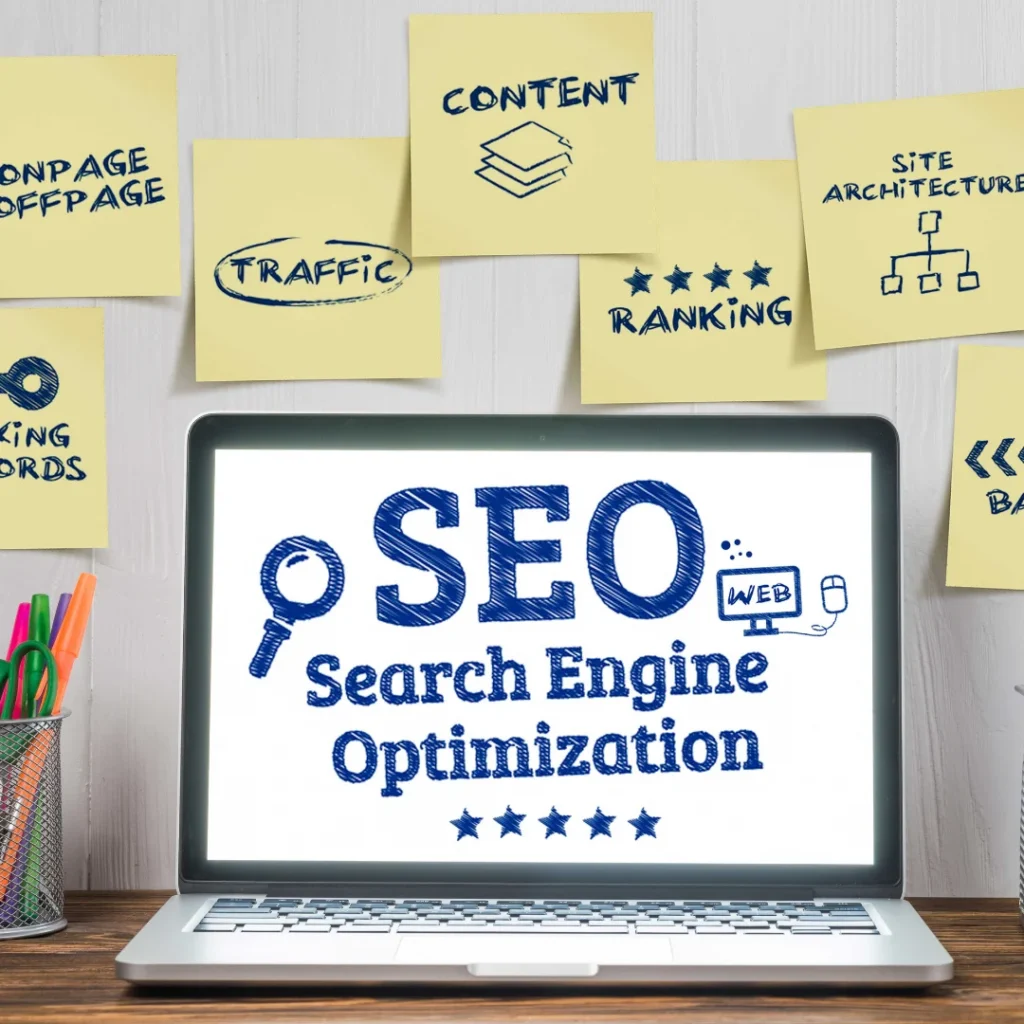
International SEO Strategy for Global Brands An international SEO strategy is essential for any brand expanding beyond its home market. Global SEO helps businesses reach new audiences, build trust, and rank well in different countries. However, expanding internationally is not as simple as translating a website. It requires careful planning across technical, content, and cultural factors. Brands that succeed internationally tend to treat each new market almost like a fresh SEO campaign. They do not simply copy their existing strategy and hope it transfers. Instead, they research, test, and adjust based on what each specific audience responds to best. This guide covers the key building blocks of a strong international SEO strategy. We will explore technical setup, keyword research, content adaptation, and tracking. By the end, you will understand how to approach global SEO with confidence. Expanding into new markets is exciting, but it also introduces new complexity. Search engines like Google treat each country and language as a distinct audience. Therefore, a strategy that works well at home may need significant adjustments abroad. Taking a structured approach from the start helps avoid costly missteps later. Why International SEO Strategy Matters Global brands often assume that a strong domestic SEO strategy will naturally translate overseas. Unfortunately, this rarely happens. Search engines evaluate relevance differently across regions. Local competitors, language nuances, and cultural expectations all affect rankings. Consider a brand that ranks first for its category at home but struggles to appear on the second page abroad. This gap usually is not caused by weak products or poor branding. Instead, it often reflects missing technical signals, unresearched local keywords, or content that simply does not resonate with the new audience. Without a dedicated international SEO strategy, brands risk poor visibility in new markets. This can lead to wasted marketing spend and missed growth opportunities. On the other hand, a well-executed global SEO strategy builds long-term visibility and trust with international audiences. Additionally, search engines reward websites that clearly indicate their target audience. Proper technical setup helps search engines serve the right content to the right users. This foundation supports every other part of your international SEO efforts. Global brands that skip this step often see confusing results. They may rank well in one country but remain invisible in another, despite offering the same products. Understanding the root causes early prevents wasted effort and helps teams focus on the strategies that actually move the needle in each market. Hreflang & Technical Setup for Global SEO Technical setup forms the backbone of any successful international SEO strategy. Hreflang tags tell search engines which language and region each page targets. Without proper hreflang implementation, search engines may show the wrong version of your site to users. Start by deciding on your website structure. Common options include country-specific domains, subdomains, or sub-folders. Each option has trade-offs in terms of cost, control, and SEO impact. Subfolders are often the easiest to manage for mid-sized global brands. Next, implement hreflang tags correctly across all relevant pages. Even small errors can confuse search engines and hurt rankings. Therefore, testing your hreflang setup regularly is essential. Tools are available to help identify and fix implementation issues quickly. Finally, ensure your website loads quickly across all target regions. Slow load times in certain countries can hurt both rankings and user experience. Consider using a content delivery network to improve global site speed. Mobile performance deserves special attention as well. In many international markets, mobile devices account for the majority of web traffic. A site that performs well on desktop but lags on mobile can quietly lose ground to local competitors. Regularly testing your site from different regions and devices helps catch these issues before they affect rankings. Localized Keyword Research for Global SEO Localized keyword research is a critical part of any global SEO strategy. Simply translating your existing keywords rarely works well. Search behavior varies significantly across languages and cultures. Start by researching how people in each target market actually search for your products or services. Local search volume, phrasing, and intent can differ dramatically from your home market. Native speakers or local SEO experts can provide valuable insight here. Additionally, consider regional spelling differences and slang. Even within the same language, countries often use different terms. For example, British and American English include several notable vocabulary differences. Ignoring these nuances can weaken your keyword targeting. Voice search and mobile search patterns can also differ across regions. Some markets rely heavily on voice assistants, which favor longer, conversational phrases. Others still search primarily through short, typed queries. Understanding these habits helps you shape content that matches how people in each market actually search. Once you gather localized keywords, integrate them naturally into your content. Avoid forcing translated keywords that sound unnatural to native speakers. Authentic, well-researched keywords improve both rankings and user engagement. It also helps to study local competitors directly. Reviewing which keywords they target and how they structure their content reveals valuable market insight. This research often uncovers opportunities your home-market strategy would never have surfaced, since search habits and competitive gaps vary so widely between regions. Cultural Content Adaptation for Global SEO Cultural content adaptation goes beyond translation. It means adjusting tone, examples, imagery, and messaging to fit each target audience. What resonates in one country may feel irrelevant or even inappropriate in another. Consider cultural preferences around communication style. Some markets prefer direct, concise messaging. Others respond better to detailed, relationship-focused content. Understanding these differences helps your brand build stronger local trust. Visual elements also matter significantly. Colors, symbols, and imagery carry different meanings across cultures. Reviewing these details carefully can prevent unintended messaging issues. Local marketing consultants often provide helpful guidance in this area. Furthermore, consider local regulations and industry standards. Some markets have specific legal requirements around advertising claims or disclosures. Adapting content to meet these requirements protects your brand and builds credibility. Local case studies and testimonials can also strengthen your content’s relevance. When potential customers see examples from their own […]

AI Marketing, Digital Marketing, Local SEO, Marketing, Marketing Tech, SEO Marketing, social media marketing

How Webinar Funnel Strategy Saves Time : A Complete Guide

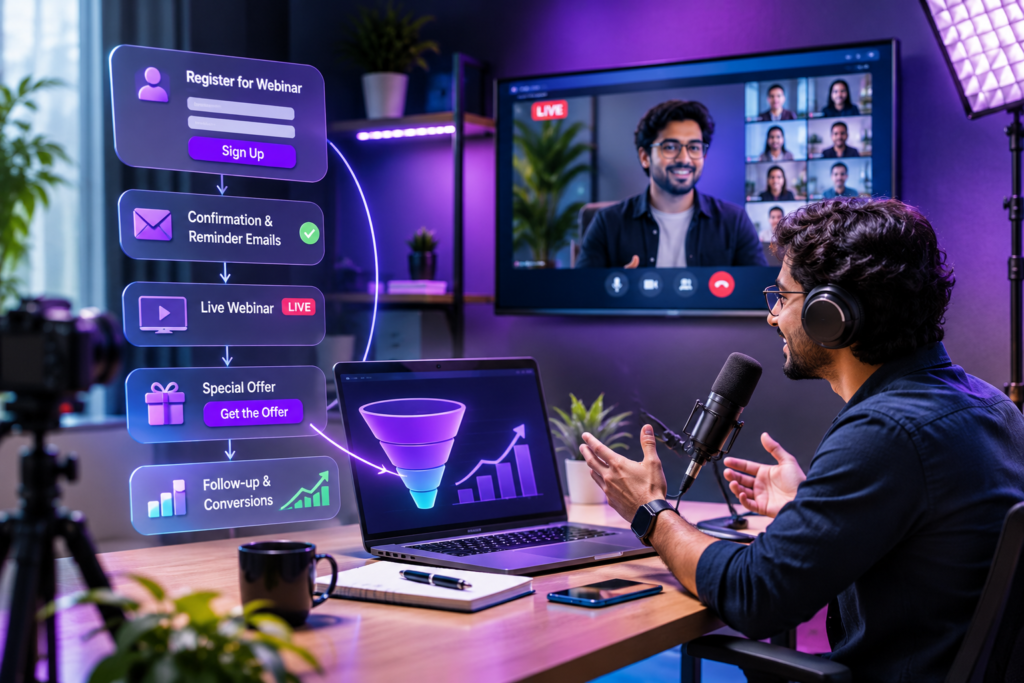
Building High-Converting Webinar Funnels Webinars remain one of the most powerful tools for generating leads. However, a great presentation alone does not guarantee results. You need a solid webinar funnel strategy to turn viewers into paying customers. This article breaks down each stage of that funnel. You will learn how to optimize registration pages for more sign ups. You will also see how email sequences keep attendees engaged. Additionally, we will cover offer strategy and post-webinar automation. By the end, you will have a clear framework for webinar lead generation that actually works. Let’s build a funnel that converts from start to finish. Registration Page Optimization Your registration page is the first impression of your webinar funnel strategy. A weak page loses potential leads before the webinar even starts. Therefore, clarity and simplicity matter more than fancy design elements. Start with a headline that states the clear benefit of attending. Visitors should instantly understand what problem your webinar solves. For example, focus on outcomes rather than generic topic descriptions. This approach improves both clicks and sign ups. Additionally, keep your registration form short. Asking for too much information reduces conversion rates significantly. Name and email are often enough at this stage. As a result, more visitors complete the sign-up process. Social proof also strengthens registration pages. Testimonials, attendee counts, or client logos build instant credibility. Similarly, a countdown timer can create healthy urgency. These small elements often boost webinar lead generation considerably. Email Reminder Sequences Registration is only the first step in a strong webinar funnel strategy. Many people forget to attend live sessions without proper reminders. Therefore, a well-planned email sequence is essential. Send a confirmation email immediately after sign-up. This email should restate the date, time, and key benefit clearly. Meanwhile, follow up with a reminder email a day before the event. Another reminder an hour before further reduces no-shows. In addition, use these emails to build anticipation. Share a quick tip or teaser related to your webinar topic. This keeps subscribers engaged between sign-up and the live session. Consequently, attendance rates improve noticeably. For attendees who miss the live session, send a replay email quickly. This keeps your webinar lead generation funnel active even after the event ends. Some leads convert better through a relaxed, on-demand viewing experience. Webinar Offer Strategy The offer you present during your webinar directly impacts conversions. A vague or rushed pitch weakens even the best presentations. Instead, structure your offer with clear value and clear next steps. Present your offer only after delivering genuine value first. Attendees should feel they learned something useful before any sales pitch begins. This builds trust and makes the offer feel earned, not forced. Furthermore, keep your offer simple and specific. Confusing pricing or too many options can overwhelm potential buyers. A clear call to action, repeated a few times, works better than complex choices. Limited-time bonuses often boost conversions as well. For example, offering a discount only for live attendees rewards engagement. This tactic strengthens your overall webinar funnel strategy while respecting audience trust. Post-Webinar Sales Automation Your webinar funnel strategy should not end when the live session closes. Post-webinar automation keeps momentum going without constant manual effort. This stage often determines your final conversion numbers. Set up automated emails for both buyers and non-buyers. Buyers should receive on boarding information and next steps immediately. Non-buyers should receive a short, value-focused follow-up sequence instead. Additionally, consider re-targeting ads for attendees who did not convert. These reminders reinforce your message across different platforms. As a result, some leads return and complete their purchase later. Tracking performance data closes the loop on your webinar funnel strategy. Review registration rates, attendance rates, and conversion rates after each webinar. This data reveals exactly where improvements are needed most. Conclusion Building high-converting webinar funnels requires attention at every single stage. A strong registration page brings in qualified leads efficiently. Email reminder sequences keep those leads engaged and ready to attend. A clear offer strategy then turns attendees into paying customers. Finally, post-webinar automation captures additional sales after the event ends. Together, these elements create a complete webinar funnel strategy built for consistent results. Businesses that refine each stage will see stronger webinar lead generation over time. Frequently Asked Questions 1. What makes a webinar funnel strategy effective? An effective strategy optimizes every stage, from registration and reminders to the offer and post-webinar follow-up automation. 2. How can I improve webinar lead generation on my registration page? Use a clear benefit-driven headline, a short sign-up form, and social proof to increase completed registrations. 3. How many reminder emails should I send before a webinar? Most successful funnels use three emails: a confirmation, a day-before reminder, and a final reminder shortly before the event. 4. When should I present my offer during a webinar? Present your offer after delivering valuable content first, so attendees feel informed before seeing your call to action. 5. What happens after the webinar ends in a strong funnel? Post-webinar automation sends follow-up emails and re-targeting ads, helping convert attendees who did not purchase immediately. Also Read: How to Use GA4 Attribution Models Correctly How to Build an Enterprise SEO Strategy: Complete Guide

A/B Testing, AI Search SEO, B2B marketing, Brand Awareness, brand reputation, Brand Trust, Brand Visibility, Branding, content strategy, Digital Marketing, Instagram, Leads Generation, Local SEO, Marketing

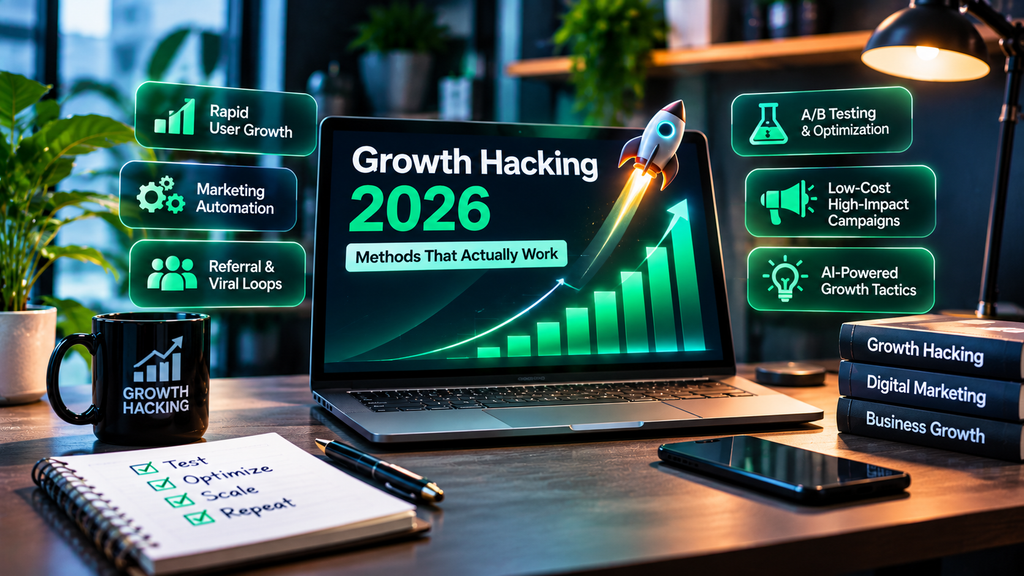
Growth Hacking 2026 Methods That Actually Work

Startups face a tough challenge. They need to grow fast but have limited money and resources. Traditional marketing is often too slow and too expensive for early-stage companies. Growth hacking strategies for startups offer a smarter path. These are creative, data-driven methods that focus on finding the fastest route to growth. In 2026, the most successful startups are not the ones with the biggest budgets. They are the ones with the smartest playbooks. This guide covers the core growth hacking strategies you need to know. Rapid Experimentation Model The rapid experimentation model is the foundation of modern growth hacking 2025. It is built on a simple idea. Test fast, learn fast, and scale what works. Traditional businesses often spend months planning a campaign before launching it. Startups cannot afford that luxury. They need to know what works in weeks, not quarters. Therefore, rapid experimentation involves running many small tests simultaneously. Each test has a clear hypothesis. For example, a startup might test whether a red call-to-action button drives more sign-ups than a green one. They run both versions and measure results quickly. The winning version stays. The losing version gets dropped. This approach applies to pricing, messaging, landing pages, email subject lines, onboarding flows, and more. Every part of the customer journey is a potential experiment. Moreover, the compounding effect of many small improvements adds up to massive growth over time. The key to a successful rapid experimentation model is discipline. Teams need a clear process for designing tests, collecting data, and making decisions. Additionally, they must avoid confirmation bias, the tendency to favor results that match expectations. Good data always wins over assumptions. Tools like A/B testing platforms, session recording software, and analytics dashboards make rapid experimentation accessible even for small teams. Consequently, startups with just a few people can run dozens of tests simultaneously and generate significant insights. Viral Loops A viral loop is one of the most powerful startup marketing strategies available. It turns your existing users into your best marketers. When done right, growth becomes self-sustaining. A viral loop works like this. A user discovers your product. They enjoy it enough to share it with others. Those new users discover the product, enjoy it, and share it again. The cycle continues. As a result, each new user brings in more users without additional cost. Dropbox is the most famous example of a viral loop. They offered extra storage to users who referred friends. Both the referrer and the new user received a benefit. The program drove millions of sign-ups and became a key part of their early growth story. For a viral loop to work, the product itself must be worth sharing. No incentive will compensate for a poor user experience. Furthermore, the sharing mechanism must be built directly into the product. It should feel natural, not forced. There are different types of viral loops. Referral programs reward users for bringing in new customers. Collaboration features make sharing necessary to use the product. Social proof elements like user counts and reviews encourage others to try the product. In 2026, social sharing through short video content adds a new dimension to viral loops. Products that generate content people want to share on platforms like TikTok or Instagram gain exposure to entirely new audiences at no cost. Therefore, designing for shareability is now a core part of effective growth hacking strategies for startups. Low Budget Ads Paid advertising often feels out of reach for startups. However, low budget ads done smartly can deliver strong returns. The goal is precision, not scale. The first principle of low budget startup advertising is targeting. Broad audiences waste money. Narrow, highly specific audiences maximize every dollar spent. Platforms like Meta, Google, and TikTok offer powerful targeting tools. They allow advertisers to reach people based on demographics, behaviors, interests, and intent signals. Retargeting is one of the most cost-effective ad strategies available. It shows ads only to people who have already visited your website or engaged with your brand. These audiences are warmer than cold traffic and convert at higher rates. Additionally, retargeting campaigns typically cost much less than broad awareness campaigns. Creative testing is also essential for low budget advertising. Different ad formats, headlines, and visuals perform differently for different audiences. Moreover, the ads that work for competitors may not work for your brand. Test at least three to five ad creatives simultaneously and identify winners quickly. Micro-influencer partnerships offer another affordable growth channel. Micro-influencers have smaller followings but higher engagement rates. They are often more affordable than major influencers and reach highly engaged niche communities. For startups with products that appeal to specific audiences, micro-influencer campaigns can be remarkably effective. Finally, organic content amplified with small paid budgets often outperforms traditional ads. A post that gains organic engagement can be boosted with a modest spend to reach a much wider audience. This hybrid approach stretches the advertising budget further while maintaining authentic brand storytelling. Product-Led Growth Product-led growth, or PLG, is one of the defining startup marketing strategies of this era. Instead of relying on sales teams or heavy marketing spend to drive acquisition, the product itself becomes the main growth engine. In a PLG model, users discover the value of a product by using it. A free tier, free trial, or freemium version allows people to experience the product before committing to payment. The goal is to create an aha moment, the point where the user clearly sees how the product solves their problem. Slack, Notion, and Figma all grew largely through product-led strategies. Their products were so useful that people shared them with colleagues and teams. Furthermore, the collaborative features of these products meant that one user often brought in an entire organization. For startups adopting a PLG approach, onboarding design is critical. New users must reach their aha moment as quickly as possible. A confusing or slow onboarding process causes churn before the user even understands the product’s full value. Therefore, simplifying and shortening onboarding is a […]

Brand Awareness, Brand Markeing, Business Growth, Business Marketing Strategies, Marketing, Marketing ROI, Marketing Strategy, Marketing Tech, Omnichannel Marketing

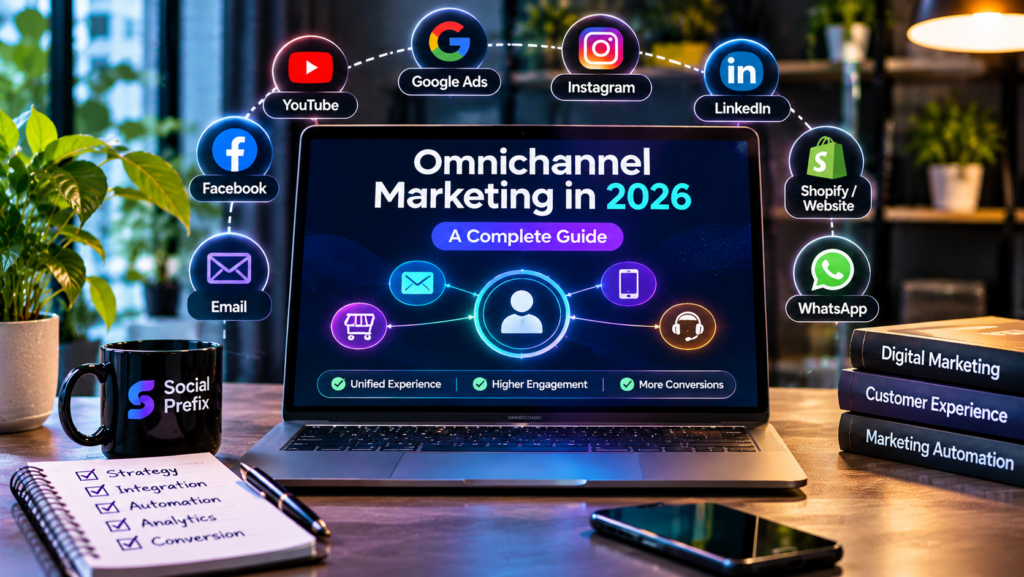
How to Execute Omnichannel Marketing in 2026: Complete Guide

Customers today do not follow a straight path to purchase. They discover brands on social media, research on mobile, compare options on desktop, and buy in-store or through an app. Each interaction shapes their perception. A disconnected experience frustrates them. A seamless one builds loyalty. Omnichannel marketing strategy connects every touchpoint into a single, consistent journey. In 2026, this integrated approach is not just a competitive advantage. It is the baseline expectation for brands that want to grow. This guide breaks down how to build an omnichannel marketing strategy that actually delivers results. Unified Customer Experience The foundation of omnichannel marketing 2026 is a unified customer experience. This means every interaction feels like part of the same conversation, regardless of channel. Many brands confuse multichannel marketing with omnichannel. Multichannel means being present on many platforms. Omnichannel means those platforms work together cohesively. The difference is significant. In a truly unified experience, a customer can start a conversation in a live chat, follow up by email, and complete a purchase in-store without repeating themselves. Their history and preferences carry across every touchpoint. This continuity builds trust. Customers feel recognized and valued. They do not experience the frustration of being treated like a stranger every time they switch channels. Creating this experience starts with customer journey mapping. Identify every touchpoint where customers interact with your brand. Understand the context and expectations at each stage. Additionally, brand consistency plays a central role. Visuals, tone of voice, messaging, and offers must feel cohesive across email, social media, paid ads, physical stores, and customer service. Inconsistency breaks the sense of a unified experience. Furthermore, personalization elevates the unified experience. Using data to tailor messages based on previous behavior makes customers feel understood. Generic mass messages no longer meet the standards customers have in 2026. Channel Integration Channel integration is the operational backbone of any effective integrated marketing strategy. It ensures that marketing, sales, and customer service teams work from the same playbook. Without integration, channels operate in silos. The email team sends one message. The social team sends another. Customer service has no visibility into either. Customers receive conflicting information and the brand loses credibility. Integrated marketing strategy breaks down these silos deliberately. It requires shared goals, shared data, and shared content calendars across all channels. Technology plays a major role in making this happen. Marketing automation platforms like HubSpot, Marketo, and Salesforce Marketing Cloud provide infrastructure for connected campaigns. They allow teams to coordinate messaging across email, SMS, social media, and paid channels from a central system. Content strategy must align across channels as well. A new product launch, for example, should have consistent messaging everywhere. However, the format and tone adapt to each channel’s context. A tweet and an email newsletter deliver the same core message in very different ways. Moreover, paid and organic channels benefit enormously from integration. Retargeting ads that reflect the email content a customer recently opened create a coherent experience that reinforces the message without feeling repetitive. Customer service integration is frequently overlooked. Service agents need access to marketing interaction history. When a customer contacts support, agents should see which campaigns they engaged with, what they purchased, and what issues they had previously. This context dramatically improves service quality. Therefore, invest in connecting your CRM, marketing automation, and customer service platforms. The technical work is worthwhile. The customer experience improvement is visible quickly. Data Synchronization Data is what makes omnichannel marketing work in practice. Without clean, synchronized data flowing across your channels and systems, the unified experience falls apart at the execution level. Data synchronization means that customer information is consistent and current across all systems in real time. When a customer updates their email address in one system, every other system reflects that change immediately. When they make a purchase, their history updates everywhere at once. The challenge is that most businesses have data stored in multiple disconnected systems. An ecommerce platform holds purchase data. An email marketing tool holds engagement data. A CRM holds sales interaction data. A support platform holds service history. These data silos create contradictory customer profiles. Marketing sends a promotional email to a customer who just called to cancel their subscription. The gap between systems produces exactly the kind of experience that destroys loyalty. Solving this requires a customer data platform, or CDP. A CDP collects and unifies data from all sources into a single customer profile. It provides a real-time, comprehensive view of every customer across all touchpoints. Additionally, data quality management is critical. Duplicate records, outdated contact details, and incomplete profiles undermine personalization efforts. Regular data hygiene processes keep your customer database accurate and useful. First-party data has become increasingly important as third-party cookies phase out. Brands need to build direct relationships with customers that generate proprietary data. Email lists, loyalty programs, and customer accounts are primary sources of this valuable first-party data. Similarly, privacy compliance is essential. GDPR, CCPA, and other regulations require transparent data collection and clear consent. Customers must trust that their data is handled responsibly. Non-compliance damages both reputation and bottom line. Consequently, businesses that invest in strong data infrastructure have a lasting competitive advantage. They can personalize at scale, reduce wasted ad spend, and make smarter decisions based on complete customer insights. Measuring ROI Measuring the return on investment of omnichannel marketing is complex. Customers interact with multiple touchpoints before converting. Attributing value accurately requires a thoughtful approach. Traditional last-click attribution assigns all credit for a conversion to the final channel a customer used before purchasing. This model severely undervalues upper-funnel channels like social media and display advertising that contribute to awareness and consideration. Multi-touch attribution models distribute credit across every channel that influenced the customer journey. This gives a more accurate picture of which channels actually drive results. In 2026, data-driven attribution powered by machine learning is the most accurate option available. It analyzes actual conversion patterns rather than relying on fixed rules. Consequently, budget allocation decisions become much smarter. Key metrics to track […]

content strategy, conversion funnel, Digital Marketing, Full-Funnel Marketing, funnel leak diagnosis, Leads Generation, Local SEO, Marketing, Marketing Automation, Marketing Strategy, SEO

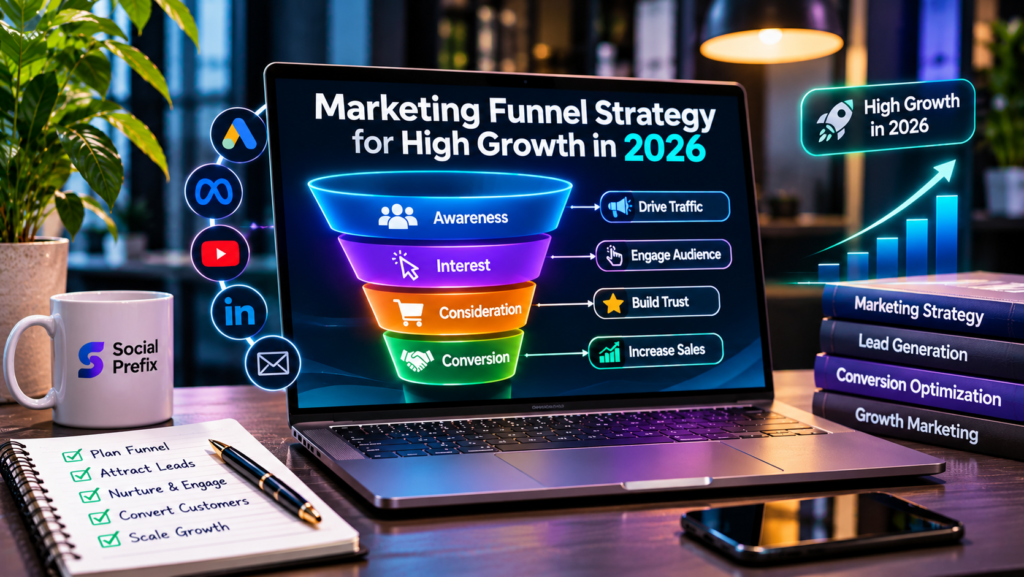
Marketing Funnel Strategy for High Growth in 2026

The marketing funnel has never been more important. Buyers are more informed. Competition is fiercer. Attention spans are shorter. In 2026, a poorly optimized funnel does not just underperform. It actively costs you customers and revenue. Marketing funnel strategy must now account for AI-driven buyer behavior, multi-channel touchpoints, and increasingly personalized expectations. Sales funnel optimization is no longer a quarterly project. It is a continuous discipline. This guide walks you through the four pillars of funnel optimization in 2026. You will learn how to map your customer journey, integrate automation intelligently, diagnose where your funnel is leaking, and scale what is already working. Awareness to Conversion Mapping Every successful marketing funnel starts with clarity. You need to know exactly how a customer moves from first discovering your brand to completing a purchase. This is called awareness to conversion mapping. It is one of the most underutilized practices in marketing funnel strategy. Begin by identifying every touchpoint a buyer encounters. This includes social media ads, organic search results, blog posts, email sequences, landing pages, and product pages. Map each one to a specific funnel stage. Awareness content attracts cold audiences. Consideration content helps them evaluate options. Decision content moves them to buy. Furthermore, use data to understand where most buyers enter and exit your funnel. Analytics platforms like Google Analytics 4, HubSpot, or Mixpanel reveal these patterns clearly. Once you know the most common paths to conversion, you can strengthen them intentionally. Consequently, you reduce the number of buyers who fall off before reaching the end of the funnel. Aligning Content With Funnel Stages Content alignment is critical in 2026. Showing a high-intent sales page to someone who has never heard of your brand creates friction, not conversion. Similarly, showing awareness-level content to someone ready to buy delays the sale unnecessarily. Map every piece of content to a specific funnel stage. Top-of-funnel content should educate and attract. Mid-funnel content should build trust and overcome objections. Bottom-of-funnel content should remove risk and confirm value. Moreover, personalization tools now make it possible to serve the right content dynamically. AI-powered platforms can adapt landing pages, emails, and ad creatives based on user behavior. This kind of personalized funnel mapping significantly improves conversion rates across all stages. Automation Integration Marketing automation is no longer optional in 2026. Buyers expect timely, relevant communication. Manual follow-up cannot match the speed or consistency that automation provides. However, bad automation is worse than no automation. Generic, impersonal sequences damage brand trust quickly. Therefore, the goal is intelligent automation that feels human. Start with your email sequences. Map out what happens after someone downloads a lead magnet, starts a free trial, or abandons a cart. Each trigger should launch a relevant, helpful sequence. Use behavioral signals to personalize the messaging. For example, someone who visits your pricing page three times is showing strong intent. An automated sequence that acknowledges this and offers a limited-time incentive can dramatically lift conversion. Additionally, integrate your CRM with your marketing platform. When sales and marketing data share the same system, handoffs become smoother. Leads do not fall through the cracks between departments. Choosing the Right Automation Tools The market for marketing automation tools is large. Selecting the wrong platform wastes both money and time. In 2026, look for platforms that combine email automation, CRM functionality, behavioral tracking, and AI-powered personalization. HubSpot, ActiveCampaign, Klaviyo, and Brevo are strong options at different price points. For ecommerce funnels specifically, Klaviyo remains a top performer for revenue-driven automation. Furthermore, platforms with native AI features are becoming increasingly valuable. They suggest optimal send times, predict churn risk, and recommend content based on user behavior. These capabilities improve funnel performance with minimal manual effort. As a result, your team can focus on strategy rather than repetitive execution. Funnel Leak Diagnosis A leaking funnel costs revenue silently. Most businesses know their top-line conversion rate but miss the specific stages where buyers are dropping off. Funnel leak diagnosis is the process of identifying exactly where and why this happens. Start with a funnel audit. Map every stage from awareness to purchase. Then assign conversion rate benchmarks to each stage. Industry averages vary, but you should know your own historical baselines. Compare current performance against those baselines. Also, look for patterns in drop-off. Are visitors bouncing from a specific landing page or Are leads going cold after a particular email in your sequence? Are trial users failing to convert to paid after a certain onboarding step? Each of these signals points to a specific leak. Moreover, qualitative research supplements quantitative data well. User session recordings, heatmaps, and exit surveys reveal friction that numbers alone cannot explain. Tools like Hotjar and Microsoft Clarity provide this insight affordably. Fixing the Most Common Funnel Leaks Once you identify leaks, the repair process begins. Common funnel leaks include slow page load times that increase bounce rates. They also include unclear value propositions on landing pages. Weak calls to action that do not create urgency are another frequent issue. Confusing pricing pages or checkout flows also cause significant drop-off. Address each leak systematically. Run A/B tests to validate fixes before rolling them out broadly. For example, changing a call-to-action button from “Submit” to “Get My Free Report” can lift click-through rates noticeably. Similarly, simplifying a pricing page by removing unnecessary options can reduce decision fatigue and increase conversions. Therefore, treat each funnel stage as a conversion rate optimization opportunity. Small improvements at every stage compound into significant revenue gains over time. Scaling High-Converting Funnels Once your funnel is working, the goal shifts to scaling. Scaling a high-converting funnel means driving more volume through a proven system. Many businesses make the mistake of scaling prematurely. They increase ad spend before the funnel is truly optimized. This accelerates losses rather than gains. First, confirm that your funnel is profitable at current volume. Calculate customer acquisition cost and compare it against lifetime value. If the ratio is healthy, scaling becomes a sound investment. Next, identify the top-performing traffic channels. Not […]

Brand Markeing, Business Growth, Community marketing, Growth marketing, Marketing, Marketing Strategy, user engagement

Why Community-Led Growth Beats Ads in 2026

Paid ads are getting more expensive. Organic reach on social media keeps shrinking. Cold outreach conversion rates are falling. Traditional marketing is harder than ever. But one channel keeps delivering — community. Brands that build genuine communities grow faster, retain customers longer, and spend less on acquisition. Community-led growth is not a trend. It is a proven community marketing strategy that turns your users into your most powerful marketing engine. Here is how to build one. Why Communities Drive Loyalty Loyalty is the holy grail of marketing. It is far cheaper to retain a customer than to acquire a new one. Communities create loyalty that no ad campaign can replicate. When people join a community, they invest emotionally. They share knowledge, support others, and form connections. These emotional bonds tie them to your brand in a way that discounts never could. Moreover, communities create a sense of identity. Members do not just use your product — they become part of something larger. This identity drives word-of-mouth referrals and organic community growth naturally. The Science of Belonging Humans are wired for connection. Psychologist Abraham Maslow placed belonging in the middle of his famous hierarchy of needs. People need to feel part of a group. Brands that tap into this need build deep loyalty. Harley-Davidson owners do not just buy motorcycles — they join a brotherhood. Peloton riders do not just exercise — they compete together. Additionally, community members feel more heard. When your brand listens and responds within a community, trust compounds over time. Loyal members become vocal advocates. Community as a Retention Tool SaaS companies with strong user communities show significantly higher retention rates. Community members have more reasons to stay. They have built relationships. They have contributed knowledge. Furthermore, leaving a community means losing those relationships. This emotional switching cost keeps members engaged far longer than any loyalty points programme. Consequently, community investment pays off in lower churn, higher lifetime value, and stronger net promoter scores. It is one of the most cost-effective retention strategies available. Platforms for Building Communities Choosing the right platform is essential for your community marketing strategy. The best platform depends on your audience, your content type, and your monetisation goals. Discord Discord started as a gaming platform but has become a hub for developer communities, creator fanbases, and brand communities. It supports text channels, voice chat, and video. Discord works best for highly engaged, real-time communities. Tech brands, gaming companies, and Web3 projects thrive here. The platform’s server structure allows rich, organised discussions. Slack Slack suits professional and B2B communities. If your audience consists of marketers, developers, or business professionals, Slack feels natural. Many SaaS companies build Slack communities for their power users. These spaces become invaluable for peer support, product feedback, and feature discussions. Circle Circle is purpose-built for brand communities. It supports courses, events, discussion spaces, and member directories in one clean interface. Moreover, Circle integrates with popular tools like Teachable, Notion, and Zapier. It is the platform of choice for creators, coaches, and knowledge businesses focused on community growth. Facebook Groups Despite the rise of newer platforms, Facebook Groups still host millions of active brand communities. They work particularly well for consumer brands with older demographics. The algorithm can boost group content to members’ feeds, giving your community organic reach that a standalone forum cannot match. Additionally, Facebook’s event features work well for community meetups. Reddit Reddit communities, called subreddits, are among the most engaged spaces on the internet. Brands that participate authentically — without being overly promotional — can build significant community presence. However, Reddit communities resist hard selling. Success here requires genuine contribution, honest answers, and transparent brand participation. Monetisation Models A strong community is an asset. Many brands turn their community into a direct revenue stream. Here are the most effective community monetisation models in use today. 1. Paid Membership Communities Charge a monthly or annual fee for access to exclusive content, events, or expertise. This model works when your community delivers clear, measurable value. Examples include paid Slack groups for marketers, private Discord servers for investors, and gated Circle communities for entrepreneurs. Pricing typically ranges from $10 to $100 per month. 2. Freemium Community Access Offer a free community tier to build your audience. Then, charge for premium features, advanced content, or closer access to experts. This model drives community growth quickly. Free members become evangelists. Additionally, some percentage of free members naturally convert to paid tiers over time. 3. Sponsorships and Brand Partnerships Large communities attract sponsors. Relevant brands pay to reach your engaged audience through sponsored content, newsletter placements, or virtual events. This model works best when your community is niche and highly targeted. A community of 5,000 engaged DevOps engineers is worth far more to a software sponsor than a general audience of 50,000. 4. Productised Services and Courses Many community builders use their audience to sell courses, workshops, or consulting services. The community provides trust and engagement. The product provides revenue. Furthermore, community members make better course buyers. They already trust you. They know your expertise. Selling to your community converts at significantly higher rates than cold traffic. 5. Community as a Product Accelerator For SaaS companies, the community itself drives product-led growth. Community members become beta testers, feature advocates, and support agents — all voluntarily. This reduces customer support costs. It accelerates product feedback loops. And it turns your most passionate users into unpaid ambassadors for your community marketing strategy. Case Studies HubSpot: Community as a Flywheel HubSpot built one of the most successful brand communities in B2B marketing. Their HubSpot Community forum hosts hundreds of thousands of marketers and sales professionals. Users answer each other’s questions, share templates, and discuss best practices. HubSpot saves millions in support costs while generating massive organic content. The community fuels SEO, reduces churn, and creates advocacy. Furthermore, their community members become certified HubSpot experts. This certification system deepens loyalty and creates a pool of skilled users who advocate for the platform. Notion: Turning Users […]

Digital Marketing, Local SEO, Marketing, Property Leads Generation, Real Estate Marketing, Real Estates, SEO Marketing

Real Estate SEO & Social Ads: 2026 Complete Guide

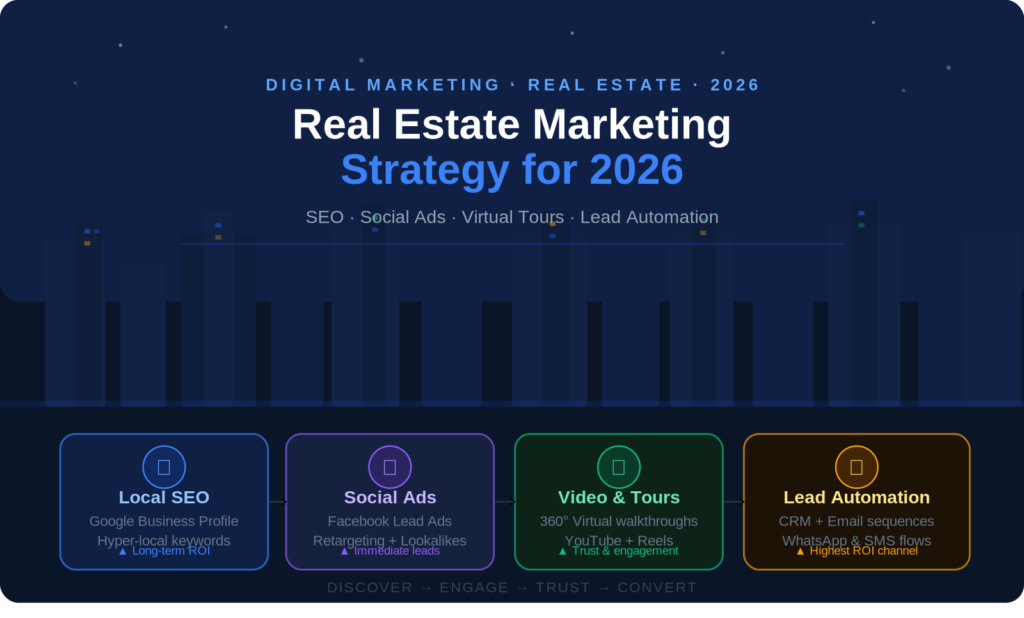
The real estate market is more competitive than ever. Buyers scroll listings on their phones before they ever step into an open house. Sellers compare agents based on their online presence. If you are not investing in real estate digital marketing, you are already losing deals to someone who is. Fortunately, 2026 brings sharper tools, smarter algorithms, and better automation. This guide breaks down the four pillars of a winning real estate digital marketing strategy — local SEO, social ads, video content, and lead nurturing. Each one plays a distinct role in building your pipeline and growing your brand. Local SEO for Realtors When someone types ‘3 BHK apartments near me’ or ‘best realtor in Gurgaon,’ they are looking to make a decision quickly. Local SEO ensures your name appears before anyone else’s. Therefore, investing in local search optimization is one of the highest-ROI moves any real estate agent can make. Optimize Your Google Business Profile Your Google Business Profile (GBP) is the foundation of local SEO. Keep it fully updated with your current address, phone number, working hours, and service areas. Additionally, add high-quality photos of properties you have sold and collect reviews consistently. Profiles with 20+ reviews see significantly higher click-through rates. Furthermore, use the Posts feature inside GBP to share new listings, open house announcements, and market updates. This signals to Google that your profile is active — and active profiles rank higher. Target Hyper-Local Keywords Generic keywords like ‘real estate agent’ are too competitive to win quickly. Instead, focus on hyper-local terms — ‘flats for sale in Powai,’ ‘independent houses in Whitefield,’ or ‘luxury villas near Jubilee Hills.’ Sprinkle these naturally across your website pages, blog posts, and meta descriptions. Moreover, create individual landing pages for each neighborhood you serve. Each page should answer a simple question: why should a buyer or seller choose this area? Include pricing trends, nearby schools, transport links, and market insights. Consequently, you become the go-to authority for that location. Build Local Backlinks Reach out to local news portals, housing blogs, and community websites for guest posts or citations. Even a mention in a local newspaper’s digital edition can boost your domain authority. Likewise, list your agency in reputable property directories like 99acres, MagicBricks, and Housing.com with consistent NAP (Name, Address, Phone) details across all platforms. Social Ads for Listings Organic reach on social media has declined. However, paid social advertising more than makes up for it — when done right. Platforms like Facebook, Instagram, and YouTube let you reach buyers with surgical precision, targeting by location, income, interests, and even life events like ‘likely to move soon.’ Facebook & Instagram Ads Facebook Lead Ads are one of the most efficient tools for property lead generation. A prospect sees your listing ad, clicks, and a pre-filled form appears — no website visit required. As a result, friction drops and lead volume increases. Use carousel ads to showcase multiple photos of the same property, or run video ads for walkthroughs. Instagram works best for premium and luxury listings. High-quality Reels showing drone footage, interior design highlights, or neighborhood lifestyle content perform exceptionally well. Additionally, Instagram Stories with swipe-up CTAs are perfect for open house promotions and time-sensitive offers. Retargeting: The Hidden Weapon Most buyers do not convert on the first visit. Retargeting fixes that. Install the Meta Pixel on your website and serve follow-up ads to people who have already viewed a listing but did not fill out a form. Similarly, create custom audiences from your email list and run lookalike campaigns to reach buyers who resemble your best past clients. Set a realistic ad budget based on your market. In India’s Tier 1 cities, a spend of ₹15,000–₹30,000 per month on social ads can generate 40–80 qualified leads when the creative and targeting are well-optimized. Track cost-per-lead closely and cut underperforming ad sets every two weeks. Video & Virtual Tours Video is no longer optional in real estate marketing — it is expected. Properties with video content generate 403% more inquiries than those without, according to industry studies. Buyers want to experience a home before they drive to see it. Video gives them that experience. Property Walkthrough Videos Keep walkthrough videos between 2 and 4 minutes. Start with the exterior, move through main living areas, highlight unique features, and end with the neighborhood or view. Use a stabilizer for smooth footage and invest in basic lighting. Natural light works best — schedule shoots during the day. Narrate the video with a warm, conversational tone. Point out practical details — storage space, natural ventilation, kitchen layout — because buyers think practically. Furthermore, add subtitles, as most social media users watch videos without sound. 360° Virtual Tours Virtual tours have become a standard expectation, especially for NRI buyers and out-of-city buyers who cannot visit in person. Tools like Matterport, Kuula, and EyeSpy360 make it easy to create immersive 3D tours. Embed these directly on your listing pages and share links via WhatsApp. Beyond listings, use video for personal branding. Short market update videos — ‘What is the property market doing in Pune this month?’ — position you as a trusted expert. Post these weekly on YouTube Shorts, Instagram Reels, and LinkedIn. Over time, this builds a loyal audience that thinks of you first when they are ready to buy or sell. YouTube as a Long-Term Asset YouTube is the second-largest search engine in the world. A well-optimized YouTube channel can drive consistent organic traffic for years. Title your videos around search queries — ‘best areas to buy flat in Hyderabad 2026’ or ‘how to check property documents in India.’ Consequently, buyers find you exactly when they need expert guidance. Lead Nurturing Automation Getting a lead is only the beginning. Most property buyers take 3 to 12 months to make a final decision. Without a solid nurturing system, you will lose those leads to a competitor who stays in touch better than you do. This is where automation becomes your superpower. Build a […]

Attribution Modeling, data-driven marketing, Marketing, Marketing Automation, Marketing ROI, Marketing Strategy, Performance Tracking, SEO Marketing

How to Turn Marketing Data into Real Revenue

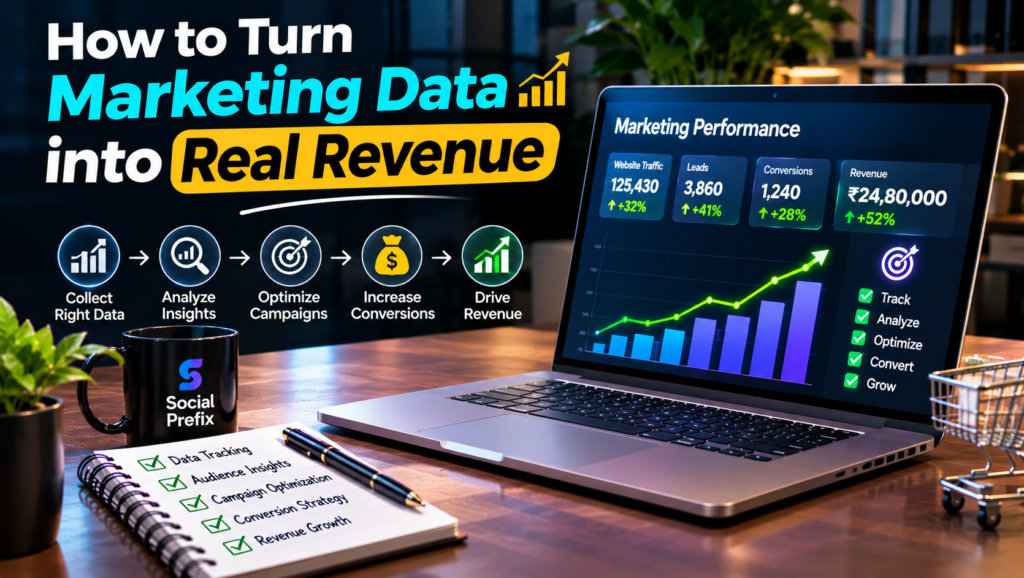
The modern world of digital marketing is no longer a game of guessing. Instead, success now depends on how well you can turn raw numbers into real profit. By using a smart marketing analytics strategy, you can see exactly what your customers want before they even ask. Consequently, this blog shows you how to use data to fuel your growth in 2026. To achieve this, you must move beyond just looking at charts and start making choices based on facts. Ultimately, this path leads to higher sales and a much stronger brand. Therefore, every business must master the art of data if they want to win. Collecting Actionable Data Not all data is useful for your brand. In fact, having too much information can often lead to confusion. To start, you must focus on collecting data that you can actually use to improve. Specifically, look at how users move through your site and where they choose to leave. In addition, track which social posts lead to the most sign-ups. By doing so, you find the “why” behind every click. Moreover, smart tools now help you clean this data in real time. As a result, you spend less time sorting and more time winning. Clearly, gathering the right facts is the first step toward a better marketing plan. Attribution Models in 2025 Knowing which ad gets the final sale is good, but knowing the whole journey is much better. In the past, many used simple models that only looked at the last click. However, modern marketing analytics strategy now uses multi-touch attribution. This approach gives credit to every step of the path, from the first ad to the final checkout. For example, a lead might see a post on LinkedIn, then a video on YouTube, and finally search for your name on Google. By using these advanced models, you can see which channels are truly worth your money. Thus, you can spend your budget where it helps the most. Predictive Insights The biggest shift in marketing today is the move from looking back to looking forward. Through the use of AI, you can now gain predictive insights into what will happen next. For instance, smart tools can tell you which leads are most likely to buy next week. Furthermore, they can predict when a customer might leave so you can stop them. As a result, you can take action early and save your revenue. In addition, this tech helps you find new groups of people who look like your best buyers. In short, predictive data is like having a crystal ball for your business growth. Building a Data Culture Having the best tools is not enough if your team does not use them. Therefore, you must build a strong data culture within your company. First, ensure that everyone has access to the same clean reports. Second, encourage your team to test their ideas with data rather than just gut feelings. In light of this, every choice becomes smarter and more stable. Moreover, this shared focus leads to faster wins and less wasted time. When everyone understands the marketing analytics strategy, your whole brand moves in the same direction. Ultimately, a data-driven team is a winning team. Frequently Asked Questions 1 Is marketing analytics hard for a small business? No, because many modern tools handle the hard math for you and give you simple answers. 2 Why is attribution so important? This is because it helps you see the hidden value in your ads that do not get the final click. 3 How often should I check my data? You should check your main stats every day, but look for big trends every week. 4 Does data replace creative ideas? On the contrary, data helps you see which creative ideas work the best for your fans. 5 What is the first step to a data culture? Simply start by asking for a data report before making any big new choice. Read More: How to Capture marketing Results with a Proven Funnel How to Find high ticket leads and Scale Fast

AI Marketing, AI Support, AI Tools, AI Trends, Automation Tools, Brand Markeing, Content Marketing, Digital Advertising, Digital Marketing, Marketing, Marketing Strategy, Marketing Tech

How Brands use Generative AI to Grow in 2026: Complete Guide

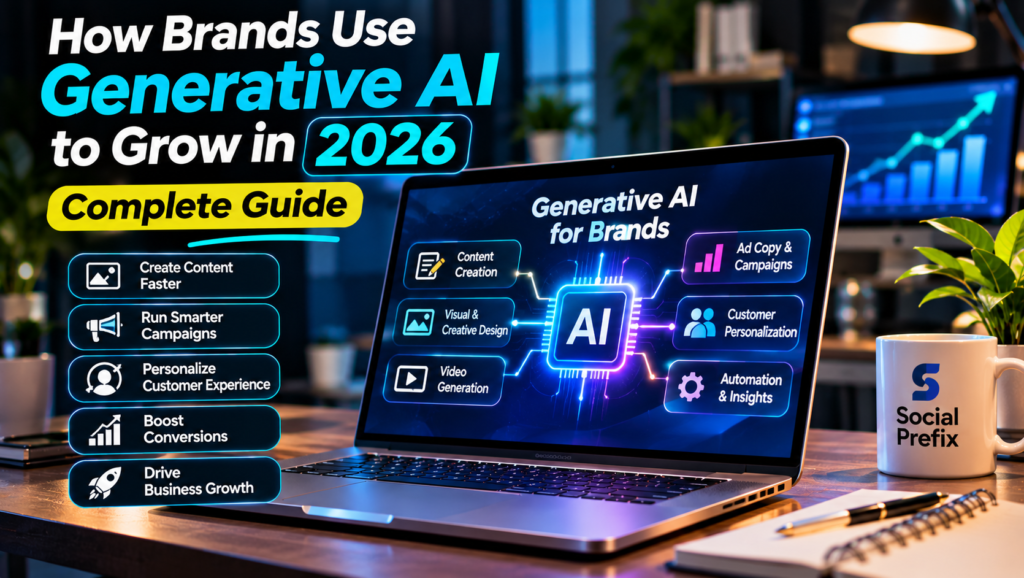
The digital marketing world in 2026 is shifting fast. It is no longer just about new tools. Instead, it is a big change in how brands talk to people. Generative AI is now the main engine for all marketing tasks. Because of this, companies can offer experiences that were once impossible. Marketers use generative AI to see deep patterns in how we act. Consequently, they can create content that fits every need right away. This year is also the start of smart systems. These systems do not just follow rules. They work hard to meet specific goals for growth. What Generative AI Means for Brands For brands today, generative AI is a bridge. It connects huge sets of data to real human feelings. Furthermore, it allows for deep personal touches at a very large scale. Manual teams simply cannot keep up with this speed. As a result, every chat with a brand feels special. This is because generative AI can change web pages and emails in real time. Brands also use these tools to guess what a user wants next. Therefore, marketing is no longer just a loud shout to a crowd. It is now a set of quiet, helpful talks. Companies that use generative AI well see much more love from their fans. AI + Human Collaboration Model The best marketing teams in 2026 use a shared model. In this setup, AI and humans work as a single team. First, generative AI does the heavy work. It looks at data and writes the first drafts. It also tests many versions of an ad at once. Meanwhile, human marketers focus on the big plan. They also bring the heart and the brand voice to the work. Although AI can make a thousand ads in a blink, it still needs a human touch. Humans set the rules to keep things fair and safe. This teamwork makes sure every plan is smart but still feels real. Most work now starts with AI ideas that humans turn into art. Risks of Over-Automation However, there are big risks if you use too much automation. Brands must not forget the human side of the job. If you lean too hard on generative AI, the work can feel flat. People call this “AI slop.” This is content that feels like a robot wrote it. Most fans in 2026 can spot this a mile away. If they do, they might stop trusting the brand. Also, AI tools can learn bad habits from old data. This happens if humans do not watch them closely. There is also a risk of losing your way. This occurs when a computer makes every choice. To stay strong, brands must be open about how they use AI. Building an AI-Enhanced Marketing Engine Building a strong engine today needs a clear map. You must link generative AI into every part of your plan. First, get your own data ready. This gives the AI a good base to learn from. Next, start using smart tools for small tasks. These tools can handle ads, lists, and basic notes. After that, focus on groups of content. These should answer the exact questions people ask. It is also vital to keep a human in the loop. This person checks every AI post for quality. They make sure it fits the brand. Finally, teach your team well. Everyone should know how to talk to and lead these new systems. Frequently Asked Questions 1 How does generative AI help with SEO in 2026? It helps sites show up in AI chat results. It does this by giving clear and short answers. 2 Will generative AI take away all marketing jobs? No, it just changes the work. Marketers now lead smart systems instead of doing dull tasks. 3 What is a big mistake to avoid with AI? The biggest error is letting AI do everything. This makes your brand look just like everyone else. 4 Can generative AI create video ads? Yes, it can make custom videos for each user. It can change the music and the script in a flash. 5 How do I keep my AI blog posts feeling human? Use AI for the main facts and the first draft. Then, add your own stories and feelings to finish it. Read More: How to Master web vitals for Better SEO Easily? Is your digital marketing ready for the post-cookie world? How to use cybersecurity to build ultimate customer trust?

Scroll to Top