Data Visualization

Ad optimization, Ad Security, affiliate marketing, AI Adoption, AI ROI, AI Support, Content Marketing, content strategy, Data Visualization, Digital Advertising, Digital Marketing, digital PR, digital transformation, E-commerce, Ecommerce Marketing 2026

How Do You Audit Your Brand for AI Search? Ultimate Guide

AI Search Visibility Audit: 25 Things Every Business Should Check AI search tools are changing how customers find businesses. Instead of scrolling through ten blue links, people now ask AI tools direct questions. If your brand does not appear in those answers, you lose visibility. This is why an AI search visibility audit matters more than ever. An AI search audit, sometimes called a GEO audit, checks whether your business shows up correctly across AI-driven search tools. This guide walks through 25 things every business should check, organized into clear categories. Use it to strengthen your AI SEO audit process and stay visible as search behavior evolves. Website & Technical Signals in brand with AI AI search tools rely heavily on clean, crawlable websites. If your site has technical issues, AI tools may struggle to understand or trust your content. Start your AI search audit here, since technical problems can block everything else. Check your site speed first. Slow-loading pages often get deprioritized by both traditional and AI-driven search systems. Next, confirm your site uses secure HTTPS across every page. Security signals matter for trust, which directly affects AI visibility. Additionally, review your mobile experience. Most users, and many AI crawlers, evaluate mobile versions of your site closely. Broken links, duplicate content, and poor site architecture also weaken your overall AI SEO audit results. Fixing these basics creates a stronger foundation for everything that follows. Content & Topical Authority with AI in Brands AI tools favor content that demonstrates clear expertise. This means your content should answer questions directly and thoroughly. Vague or overly promotional content often gets skipped in AI-generated answers. Review your existing content for topical depth. Does your website cover your core subject areas comprehensively? Thin, scattered content weakens topical authority, which is essential for AI visibility. Similarly, outdated content can confuse AI tools about your current expertise. Furthermore, check whether your content answers common questions directly. AI search tools often pull concise, clear answers from well-structured pages. Content written in a natural, conversational tone tends to perform better than overly technical or jargon-heavy writing. Entity & Brand Signals with AI AI search tools rely on entity recognition to understand who you are. This means consistent business information across the web matters significantly. Inconsistent names, addresses, or descriptions can confuse AI systems about your brand identity. Check your business listings across major platforms for consistency. Your business name, industry description, and key details should match everywhere. Additionally, review your “About” page to ensure it clearly explains what your business does and who it serves. Brand mentions across the web also strengthen entity signals. The more consistently and accurately your brand appears across trusted sources, the easier it becomes for AI tools to recognize and recommend you confidently. Structure the Data with AI Structured data helps AI tools understand your content more precisely. Without it, AI systems must guess at context, which increases the risk of misrepresentation or being overlooked entirely. Check whether your website uses schema markup for key content types. This includes organization schema, FAQ schema, and product schema where relevant. Each of these helps AI tools extract accurate information quickly and confidently. Moreover, validate your structured data regularly using available testing tools. Errors in markup can prevent AI systems from reading your data correctly, even if the code appears present. Clean, error-free structured data significantly strengthens your AI search audit results. Digital PR & Third-Party Mentions with AI AI tools weigh third-party validation heavily. Mentions from credible external sources signal trustworthiness in ways your own website cannot achieve alone. This makes digital PR an important part of any AI visibility audit. Review recent media mentions, guest articles, and industry publications referencing your business. A lack of external mentions weakens your visibility, regardless of how strong your own content is. Consequently, businesses should actively pursue credible coverage opportunities. Additionally, check how your brand is discussed across forums, review sites, and industry directories. Consistent, positive third-party mentions build the kind of trust signals that AI tools increasingly prioritize. Video and Social Visibility of brand with AI AI search tools increasingly pull from video and social content, not just traditional web pages. This means your video and social presence directly affects your overall AI visibility audit results. Check whether your video content includes clear titles, descriptions, and captions. These elements help AI tools understand and index your video content accurately. Similarly, review your social media profiles for consistency with your website information. Engagement matters too. Active, well-maintained social profiles signal relevance and credibility. Neglected or inconsistent social presence can weaken the overall trust signals AI tools use when evaluating your brand. AI Citation Monitoring The final technical piece involves monitoring how AI tools actually mention your brand. This is a newer but increasingly important part of any AI SEO audit process. Regularly search relevant AI tools using questions your customers might ask. Note whether your brand appears, how it is described, and whether the information is accurate. Incorrect or outdated citations should be addressed through updated content and consistent entity signals. Tracking this over time helps you understand which improvements actually move the needle. As AI citation monitoring tools mature, businesses that start tracking early will have a clearer picture of their progress. The 25-Point AI Visibility Checklist Conclusion An AI search visibility audit is no longer optional for businesses that want to stay discoverable. As AI tools reshape how customers search, brands need consistent, accurate, and well-structured signals across every channel. Use this 25-point checklist regularly to strengthen your AI SEO audit and GEO audit efforts. Businesses that invest in this now will likely stay ahead as AI search continues to grow. Frequently Asked Questions 1. What is the difference between an SEO audit and an AI search audit? A traditional SEO audit focuses on search engine rankings, while an AI search audit also checks visibility within AI-generated answers. 2. How often should I run an AI visibility audit? Most businesses benefit from running a full […]


Ad optimization, Ad Security, affiliate marketing, AI Adoption, AI Marketing, AI Personalization, AI ROI, AI Search SEO, AI Support, Blogging, Brand Awareness, Brand Markeing, Brand Protection, Community marketing, Consumer Engagement, Content Marketing, Data Insights, Data Privacy, data protection, Data Visualization, Digital Advertising, Engagement

Which Google AI Mode SEO Mistakes Hurt Brands? Complete Guide

Google AI Mode SEO: How Businesses Can Get Discovered in AI Search Search is changing fast. People now ask long questions and get full answers on the results page. Google AI Mode leads this shift. It gives rich, conversational replies and links to a few trusted sources. For businesses, this creates a new question. How do you get picked as one of those sources? This guide explains Google AI Mode SEO in simple words. You will learn how AI search works and what makes a site worth citing. You will also get a clear checklist to act on. What Is Google AI Mode? Google AI Mode is a search experience built on generative AI. You type or speak a question, and it replies with a written answer. The answer often includes links, images, and follow-up ideas. Users can keep asking questions in one long thread. It feels more like a chat than a list of blue links. Behind the scenes, the system breaks a complex question into smaller searches. It runs them at once and then combines what it finds. Google has described this method as query fan-out. The result is a fuller answer than one search could give. Your page may be used for one small part of that answer. This is different from classic results. A ten-link page rewards the best match for one query. AI Mode rewards pages that answer many related needs clearly. Therefore, your content must be helpful across a whole topic, not just one keyword. Google AI search features are still growing, and details change often. Treat any advice as a moving target. Even so, the core ideas stay steady. Clear, useful, trusted content wins. How AI Mode Changes Traditional Search Behaviour Search habits are shifting. People used to type short phrases such as “CRM software.” Now they ask, “Which CRM suits a ten-person online store with a small budget?” These long questions carry rich intent. They show what the buyer needs and how far along they are. Follow-up questions are common too. A user may start with a broad topic and then narrow it in three or four steps. Each step can bring new sources into view. Your brand can appear at any point in that journey. It may also be missed if your content covers only the first step. Many users also read the answer and stop. This can mean fewer clicks for some pages. However, the visits that do happen often come from people who are more informed. They know what they want and arrive closer to a decision. Quality of traffic can matter more than quantity. For businesses, the message is clear. Think about the full customer journey. Answer the first question, the follow-up, and the doubt behind it. AI search optimization starts with understanding real questions. Ranking vs Being Cited in AI Search In classic SEO, you aim for position one. In AI search, you aim to be referenced. A citation is a link inside the AI answer that points to your page. It also builds brand trust, since people see your name next to the answer. The two goals overlap, but they are not the same. A page can rank well and still be skipped by AI Mode. Another page may rank lower and still be cited because it explains one point better. Google has said that strong core SEO remains the foundation. Pages must be indexed and eligible to appear in search snippets. What does this mean in practice? You need pages that give direct, well-structured answers. AI systems look for passages they can quote or summarize with confidence. Clear headings, short paragraphs, and plain language help a lot. Vague and padded pages get passed over. Brand mentions matter as well. Even when users do not click, they see who supplied the answer. Repeat exposure builds familiarity. Later, they may search for your brand by name. That direct search is a very strong buying signal. What Makes a Website More Likely to Be Referenced? No one outside Google knows the exact formula. Still, patterns are visible. Sites that get cited tend to share four traits. Topical Authority Cover your subject deeply, not thinly. Build a cluster of pages around one theme. Link them together in a logical way. For example, a payments firm might publish guides on fees, security, and compliance. Depth signals that you truly know the field. Original Information AI answers already contain common facts. They need fresh value. Share your own data, case studies, surveys, and expert views. Explain what you learned from real projects. Original insight gives Google a reason to cite you instead of a copy. Clear Entities and Relationships Entities are people, brands, products, and places. Make them easy to identify. Use consistent names across your site and profiles. Add structured data, called schema markup, so machines can read your details. Explain how things connect, such as which product solves which problem. Trust and Expertise Trust is the base of everything. Show real authors with clear credentials. Include an about page, contact details, and customer reviews. Cite reliable sources and keep facts current. Strong security, such as HTTPS, supports trust. Google calls this idea E-E-A-T, which stands for experience, expertise, authoritativeness, and trust. How to Optimize Existing Content for AI Search You do not need to start from scratch. Improve your best pages first. Follow these steps. Begin with an audit. List your top pages by traffic and by business value. Check which questions each page answers. Note gaps, weak sections, and outdated facts. This gives you a clear work list. Next, lead with answers. Put a short, direct answer near the top of each section. Follow it with detail and examples. Use question-style headings that match real searches. This format suits both readers and AI systems. Then, add depth and proof. Include numbers, examples, and expert quotes from your own team. Add short FAQs for follow-up questions. Update dates and remove stale claims. Fresh, accurate pages earn more trust. […]

Ad optimization, Ad Security, affiliate marketing, ai content, AI investment, AI Marketing, AI Personalization, AI Search SEO, AI Support, Analytics, Data Visualization, Digital Advertising, Digital Marketing, Influencer, Instagram, Social Media

How Do You Report Social Media Analytics? Ultimate Guide

Advanced Social Media Analytics & Reporting Posting content without measuring results is like driving with your eyes closed. A strong social media analytics strategy tells you exactly what works and what wastes budget. Yet many marketing teams still rely on vanity metrics that look impressive but mean little. This guide moves beyond likes and follower counts. It focuses on building marketing dashboards that reveal real business impact. You will learn which numbers actually matter, how to track them, and how to present results that stakeholders trust. Whether you manage one brand or several channels, this social media analytics strategy will help you report with confidence. Let us dive into the details. KPIs That Matter for Analytics Not every metric deserves your attention. A focused social media analytics strategy starts with choosing the right key performance indicators. Engagement rate remains valuable, but only when viewed alongside context. A high engagement rate on a small audience means less than steady engagement across a growing one. Therefore, always compare engagement against audience size and content type. Reach and impressions show visibility, yet they rarely reveal business impact alone. Instead, pair these numbers with conversion metrics like click-through rate and website traffic. This combination shows whether visibility actually translates into meaningful action. Conversion-focused metrics deserve central attention in any serious marketing dashboard. Track lead generation, sign-ups, or sales directly attributed to social channels. Additionally, monitor cost per result to understand efficiency across different platforms and campaigns. Customer sentiment matters too, though it is harder to quantify. Social listening tools can measure sentiment trends over time. This data often predicts brand health before it shows up in sales numbers. Similarly, response time and customer service metrics reflect brand reputation directly. Finally, track follower quality, not just follower count. Growth means little if new followers never engage or convert. A smaller, highly engaged audience often outperforms a large, passive one in real business terms. Custom Reporting Dashboards for Social Media Analytics Generic reports rarely satisfy every stakeholder. A well-built marketing dashboard should present data clearly for different audiences within your organization. Start by identifying who will actually use each dashboard. Executives usually want high-level trends and business impact. Marketing managers need deeper detail on campaign performance and channel comparisons. Therefore, build separate dashboard views tailored to each audience. Choose visualization types that make data easy to understand quickly. Line charts work well for trends over time. Bar charts suit comparisons between channels or campaigns. Meanwhile, avoid cluttering dashboards with too many charts on a single screen. Automation saves significant time when building marketing dashboards. Tools that pull data directly from social platforms eliminate manual data entry errors. This also ensures your dashboard reflects real-time performance rather than outdated snapshots. Consistency matters greatly across reporting periods. Use the same metrics, timeframes, and formatting each time you report. This consistency makes it easier to spot trends and changes over multiple reporting cycles. Consider building a single source of truth dashboard that combines all channels. Comparing Instagram, LinkedIn, and other platforms side by side reveals which channels deserve more investment. Consequently, this approach supports smarter budget allocation across your entire social strategy. Attribution Tracking for Analytics Attribution tracking answers the hardest question in marketing. Which social media efforts actually drive revenue? Multi-touch attribution models offer the most realistic picture for most brands. Customers rarely convert after a single interaction. Instead, they often see several posts or ads before finally taking action. Multi-touch models credit each touchpoint appropriately along that journey. UTM parameters remain one of the simplest attribution tools available. Adding tracking tags to every social media link lets you trace traffic back to specific posts and campaigns accurately. This data feeds directly into your broader marketing dashboards for cleaner reporting. Platform-native analytics tools provide useful data but rarely tell the complete story. Each platform tracks performance within its own ecosystem only. Therefore, combining platform data with website analytics gives a more accurate attribution picture overall. Conversion tracking pixels add another valuable layer of insight. These tools track user actions after they leave social platforms and visit your website. As a result, you can connect specific social content directly to sign-ups, purchases, or other conversions. Attribution windows also deserve careful consideration. Some purchases happen quickly after seeing an ad, while others take weeks. Adjusting your attribution window to match your typical customer journey improves reporting accuracy significantly. Presenting Reports to Stakeholders for Social Media Analytics Even great data fails to matter if stakeholders cannot understand or act on it. Presentation skills matter just as much as analysis skills here. Lead with business impact, not raw numbers. Executives care more about revenue influence than impressions or reach alone. Therefore, always connect social media performance back to broader business goals early in your presentation. Keep reports visual and scannable rather than text-heavy. Charts and summary statements communicate faster than long paragraphs of data. Similarly, highlight three to five key takeaways instead of overwhelming stakeholders with every available metric. Context makes numbers meaningful. A twenty percent increase means little without comparison to previous periods or industry benchmarks. Always include this context so stakeholders can properly judge performance. Address challenges honestly alongside successes. Stakeholders trust reports more when they include both wins and areas needing improvement. This transparency builds credibility for your entire social media analytics strategy over time. Finally, end every report with clear next steps. Data without action feels incomplete. Explain what you plan to adjust based on the findings and why that change should improve results going forward. Building this level of reporting maturity takes the right tools and expertise. Get actionable insights with Social Prefix and turn your social media data into confident business decisions. Conclusion A strong social media analytics strategy transforms scattered data into clear business direction. Choosing the right KPIs, building thoughtful marketing dashboards, and tracking attribution accurately all work together toward this goal. Reporting should never feel like an afterthought. It deserves the same strategic attention as content creation and campaign planning. When done […]

affiliate marketing, AI Adoption, AI Advertising, AI Chatbots, ai content, AI investment, AI Marketing, Data Analytics, Data Insights, Data Privacy, data protection, Data Visualization, Digital Marketing, Podcast

How Does Podcast Guesting Build Authority? A Complete Guide

Building Authority Through Podcast Guesting Building authority through podcast guesting has become one of the smartest marketing moves in 2026. Instead of shouting into a crowded feed, you speak directly to an engaged, trusting audience. This guide breaks down how to make podcast guest marketing work for your brand. You will learn how to find the right shows. You will also learn how to pitch hosts well and turn each appearance into lasting authority. Plus, you will see how to reuse content and turn listeners into real leads. Podcasting continues to grow steadily, and listener trust remains high compared to many other media formats. This makes podcast guesting a powerful, often underused channel for building genuine authority. Identifying Relevant Podcast The first step in any authority building strategy is finding the right podcasts. Not every show fits your brand, even if it has a large audience. Relevance matters more than raw download numbers. Start by listing topics your ideal audience cares about deeply. Then, search podcast directories using those topics as keywords. This approach reveals shows already discussing subjects close to your expertise. Also, check episode quality before reaching out. Listen to a few recent episodes and note the host’s interview style. A thoughtful host creates space for guests to share real insights, not just quick soundbites. Audience size matters less than audience engagement. A small show with an active, loyal fan base often works better than a huge show with passive listeners. So look for signs of engagement, like reviews and social shares. It also helps to build a simple tracking sheet. List potential shows, their audience focus, contact information, and episode frequency. This organized approach makes outreach far more manageable as your list grows. Consider guest history too. If a show regularly features experts in your field, your appearance will likely resonate with its regular listeners. This alignment increases the chance of meaningful, long-term audience connection. Look beyond the biggest names in your industry as well. Niche shows that focus on one problem tend to attract listeners who are already looking for answers. That makes those listeners more likely to act after they hear you speak. Diversifying show formats also helps. Interview-style shows, panel discussions, and solo-host formats each offer different strengths. A mix of formats exposes your message to varied audience preferences and listening habits. Outreach Strategy for Podcast Effective outreach starts with genuine research, not generic templates. Reference specific episodes you enjoyed and explain why they resonated with you. Hosts notice when a pitch feels personal rather than copied and pasted. Keep your pitch short and focused. Explain who you are, what expertise you bring, and why your topic fits their audience. Long, rambling pitches often go unread by busy podcast hosts. Similarly, offer a few specific topic ideas rather than a vague request to appear. Specific topics make it easier for hosts to imagine the conversation and say yes quickly. Timing also influences response rates. Avoid pitching around major holidays or industry events when hosts are likely overwhelmed. Instead, send pitches during quieter periods for better visibility. Following up matters, but persistence should stay respectful. One polite follow-up after two weeks is usually appropriate. Beyond that, move on and focus energy on other opportunities. Building relationships before pitching can also improve results a lot. Engage with a host’s content on social media first. This familiarity often makes your eventual pitch feel warmer and more welcome. A well-written media kit can also strengthen your pitch. Include a short bio, past speaking clips, and sample talking points. This preparation shows hosts you take the opportunity seriously and reduces their workload. Repurposing Podcast Content A single podcast appearance can fuel weeks of additional content. After recording, request the audio or video file from the host whenever possible. This raw material becomes valuable across multiple platforms. Turn key moments into short social media clips. Platforms like LinkedIn and Instagram reward short, insight-packed video content. As a result, one appearance can generate several pieces of engaging social content. Also, transcribe the episode and pull standout quotes. These quotes work well as graphics, newsletter content, or blog post material. Repurposing this way extends the life of a single conversation a lot. Consider writing a companion blog post summarizing key insights from the episode. This approach captures search traffic from people who prefer reading over listening. It also reinforces your authority building strategy across different content formats. Email newsletters offer one more valuable repurposing channel. Share episode highlights with your subscriber list, along with a link to the full conversation. This keeps your audience engaged while driving traffic back to the podcast. Audiograms, short video clips featuring animated waveforms and captions, work especially well on social feeds. They combine the authenticity of audio with the scroll-stopping power of visual content. Turning Listeners into Leads Podcast guesting only builds real authority when it drives measurable business results. So, every appearance should include a clear, simple call to action for listeners. Offer something valuable in exchange for contact information. A free guide, checklist, or short course related to the episode topic works well. This exchange turns passive listeners into engaged leads. Use a dedicated landing page for each podcast appearance whenever possible. Custom URLs make it easier to track which shows generate the most valuable traffic and leads over time. So, tracking these results helps refine your podcast outreach strategy. Focus future efforts on shows and topics that generate the strongest lead conversion rates. Retargeting listeners who visit your landing page can also improve conversion over time. Even visitors who do not convert right away often return after seeing a few reminder ads. Last, nurture new leads with a thoughtful follow-up sequence. A simple email series introducing your expertise keeps the relationship warm long after the episode airs. It also helps to mention your offer naturally during the conversation itself. A short, well-timed mention feels far less like an ad than a scripted pitch. Listeners respond better to that honesty. Measuring Long-Term Authority […]

Ad optimization, Ad Security, affiliate marketing, AI Adoption, AI Chatbots, ai content, AI Marketing, AI ROI, AI Support, AI Tools, AI Trends, Audience Scaling, Business Strategy, Data Analytics, Data Privacy, data protection, Data Visualization, Digital Marketing, Marketing, SEO

How Do Indian Startups Market on a Budget? Ultimate Guide

Marketing For Indian Startups: 2026 Playbook Indian startups face a unique marketing landscape. Diverse languages, varied income levels, and fast-changing digital habits make this market both exciting and challenging. Founders need strategies that work without draining limited budgets. This playbook breaks down practical approaches for Indian startup marketing in 2026. From lean growth tactics to sustainable scaling, these strategies focus on real results. Let us explore what actually works for startup growth India in the current environment. Lean Growth Framework for Startups Most Indian startups operate with tight budgets, especially in the early stages. A lean growth framework helps founders achieve meaningful results without overspending. Focus On One Core Channel First Many founders try to be everywhere at once. However, spreading resources too thin often produces weak results across every channel. Instead, choose one platform where your audience is most active and master it first. For example, a B2B SaaS startup might focus entirely on LinkedIn and email outreach. Meanwhile, a consumer app might prioritize Instagram or YouTube. Depth beats width during the early growth stage. Use Data To Guide Every Decision for Startups Lean growth depends on constant testing and measurement. Track which messages, channels, and offers actually convert. This data-driven approach prevents wasted spending on tactics that simply do not work. Additionally, small experiments help startups learn quickly without major financial risk. Testing with small budgets first protects limited resources while still generating useful insights. Build Organic Content Early for Startups Organic content, such as blog posts and social media, builds long-term value. Unlike paid ads, this content continues attracting attention long after publication. Startups that invest early in organic content often see lower acquisition costs over time. Consistency matters more than perfection here. Publishing regularly, even with simple content, builds audience trust steadily. Paid Ads On Budget For Startups Paid advertising remains valuable, even for startups with limited funds. The key is spending wisely rather than spending heavily. Start Small And Scale What Works Begin paid campaigns with a modest daily budget. This limits financial risk while still generating useful performance data. Once a campaign shows strong results, gradually increase spending to scale that success. Furthermore, avoid launching too many campaigns simultaneously. Focused testing produces clearer insights than scattered, unfocused spending. Target Regional And Language Segments India’s diversity offers a unique advantage for targeted advertising. Startups can create campaigns tailored to specific regions or languages. This often produces stronger engagement than generic, nationwide messaging. For instance, ads in regional languages frequently outperform English-only campaigns in certain markets. Testing this approach can reveal valuable, underused opportunities. Retarget Warm Audiences Retargeting website visitors and app users typically costs less than acquiring new customers. These warm audiences already know your brand, making conversion more likely. Allocating part of the budget toward retargeting usually improves overall return on investment. Influencer And Community Growth for Startups Influencer marketing and community building offer cost-effective growth channels for Indian startups. Partner With Micro-Influencers Large celebrity endorsements are expensive and often out of reach for early-stage startups. Micro-influencers, however, offer strong engagement at a fraction of the cost. Their audiences tend to trust their recommendations more than typical celebrity endorsements. Choose influencers whose audience closely matches your target customer. Relevance matters more than follower count in most cases. Build An Active Community Communities create loyal customers who advocate for your brand naturally. Platforms like WhatsApp groups, Discord servers, and Telegram channels work well for Indian audiences specifically. Consistent engagement within these communities builds trust over time. Furthermore, community members often provide valuable feedback that improves the product itself. Encourage User-Generated Content User-generated content adds authenticity that traditional advertising cannot replicate. Encourage customers to share their experiences through reviews, photos, or videos. This content also serves as free, credible marketing material for future campaigns. Choosing The Right Marketing Tools For Startups Indian startups have access to a growing range of affordable marketing tools. Choosing the right ones can make lean growth far more manageable. Analytics Platforms For Small Teams Startups do not need enterprise-level analytics software right away. Free or low-cost tools can track website traffic, conversion rates, and user behavior effectively. This data helps founders make informed decisions without a large budget. Simple Email Marketing Software Email remains one of the most cost-effective channels available. Affordable email platforms allow startups to automate follow-ups and nurture leads over time. Consistent, relevant emails often outperform expensive one-time advertising pushes. Social Media Scheduling Tools Managing multiple social platforms manually consumes valuable time. Scheduling tools help maintain a consistent posting rhythm without daily manual effort. This consistency supports the organic growth strategies mentioned earlier in this playbook. Understanding The Indian Digital Consumer For Startups Successful marketing starts with understanding the audience deeply. Indian consumers show distinct behaviors that differ from other global markets. Mobile-First Behavior Most Indian internet users access content primarily through mobile devices. Therefore, every marketing asset should be optimized for mobile screens first. Slow-loading pages or poorly formatted content quickly lose potential customers. Value-Conscious Decision Making Indian consumers often research thoroughly before making purchase decisions. Highlighting clear value, rather than flashy branding alone, tends to resonate more strongly. Transparent pricing and honest messaging build trust faster in this market. Trust Signals Matter Reviews, testimonials, and word-of-mouth recommendations carry significant weight. Startups should actively collect and showcase genuine customer feedback. This social proof often influences purchase decisions more than traditional advertising claims. Scaling Sustainably Rapid growth without a solid foundation often leads to problems later. Sustainable scaling protects long-term success. Strengthen Customer Retention First Acquiring new customers costs more than retaining existing ones. Before scaling aggressively, ensure your product delivers consistent value to current users. Strong retention numbers make every future growth investment more effective. Automate Where Possible As a startup grows, manual marketing processes become harder to manage. Automation tools help maintain consistency across email campaigns, social posting, and customer follow-ups. This frees the team to focus on strategy rather than repetitive tasks. Diversify Growth Channels Gradually Once one channel proves successful, gradually test additional […]

AI Chatbots, ai content, AI Marketing, AI Personalization, AI ROI, AI Search SEO, Clinic SEO Strategy, Customer Service, Data Analytics, Data Insights, Data Privacy, Data Visualization, data-driven marketing, digital transformation, Google, Marketing, Marketing Automation, Marketing ROI, Search Engines, Semantic SEO, SEO, SEO Marketing

How Do Brands Execute a Global SEO Strategy? Ultimate Guide

International SEO Strategy for Global Brands An international SEO strategy is essential for any brand expanding beyond its home market. Global SEO helps businesses reach new audiences, build trust, and rank well in different countries. However, expanding internationally is not as simple as translating a website. It requires careful planning across technical, content, and cultural factors. Brands that succeed internationally tend to treat each new market almost like a fresh SEO campaign. They do not simply copy their existing strategy and hope it transfers. Instead, they research, test, and adjust based on what each specific audience responds to best. This guide covers the key building blocks of a strong international SEO strategy. We will explore technical setup, keyword research, content adaptation, and tracking. By the end, you will understand how to approach global SEO with confidence. Expanding into new markets is exciting, but it also introduces new complexity. Search engines like Google treat each country and language as a distinct audience. Therefore, a strategy that works well at home may need significant adjustments abroad. Taking a structured approach from the start helps avoid costly missteps later. Why International SEO Strategy Matters Global brands often assume that a strong domestic SEO strategy will naturally translate overseas. Unfortunately, this rarely happens. Search engines evaluate relevance differently across regions. Local competitors, language nuances, and cultural expectations all affect rankings. Consider a brand that ranks first for its category at home but struggles to appear on the second page abroad. This gap usually is not caused by weak products or poor branding. Instead, it often reflects missing technical signals, unresearched local keywords, or content that simply does not resonate with the new audience. Without a dedicated international SEO strategy, brands risk poor visibility in new markets. This can lead to wasted marketing spend and missed growth opportunities. On the other hand, a well-executed global SEO strategy builds long-term visibility and trust with international audiences. Additionally, search engines reward websites that clearly indicate their target audience. Proper technical setup helps search engines serve the right content to the right users. This foundation supports every other part of your international SEO efforts. Global brands that skip this step often see confusing results. They may rank well in one country but remain invisible in another, despite offering the same products. Understanding the root causes early prevents wasted effort and helps teams focus on the strategies that actually move the needle in each market. Hreflang & Technical Setup for Global SEO Technical setup forms the backbone of any successful international SEO strategy. Hreflang tags tell search engines which language and region each page targets. Without proper hreflang implementation, search engines may show the wrong version of your site to users. Start by deciding on your website structure. Common options include country-specific domains, subdomains, or sub-folders. Each option has trade-offs in terms of cost, control, and SEO impact. Subfolders are often the easiest to manage for mid-sized global brands. Next, implement hreflang tags correctly across all relevant pages. Even small errors can confuse search engines and hurt rankings. Therefore, testing your hreflang setup regularly is essential. Tools are available to help identify and fix implementation issues quickly. Finally, ensure your website loads quickly across all target regions. Slow load times in certain countries can hurt both rankings and user experience. Consider using a content delivery network to improve global site speed. Mobile performance deserves special attention as well. In many international markets, mobile devices account for the majority of web traffic. A site that performs well on desktop but lags on mobile can quietly lose ground to local competitors. Regularly testing your site from different regions and devices helps catch these issues before they affect rankings. Localized Keyword Research for Global SEO Localized keyword research is a critical part of any global SEO strategy. Simply translating your existing keywords rarely works well. Search behavior varies significantly across languages and cultures. Start by researching how people in each target market actually search for your products or services. Local search volume, phrasing, and intent can differ dramatically from your home market. Native speakers or local SEO experts can provide valuable insight here. Additionally, consider regional spelling differences and slang. Even within the same language, countries often use different terms. For example, British and American English include several notable vocabulary differences. Ignoring these nuances can weaken your keyword targeting. Voice search and mobile search patterns can also differ across regions. Some markets rely heavily on voice assistants, which favor longer, conversational phrases. Others still search primarily through short, typed queries. Understanding these habits helps you shape content that matches how people in each market actually search. Once you gather localized keywords, integrate them naturally into your content. Avoid forcing translated keywords that sound unnatural to native speakers. Authentic, well-researched keywords improve both rankings and user engagement. It also helps to study local competitors directly. Reviewing which keywords they target and how they structure their content reveals valuable market insight. This research often uncovers opportunities your home-market strategy would never have surfaced, since search habits and competitive gaps vary so widely between regions. Cultural Content Adaptation for Global SEO Cultural content adaptation goes beyond translation. It means adjusting tone, examples, imagery, and messaging to fit each target audience. What resonates in one country may feel irrelevant or even inappropriate in another. Consider cultural preferences around communication style. Some markets prefer direct, concise messaging. Others respond better to detailed, relationship-focused content. Understanding these differences helps your brand build stronger local trust. Visual elements also matter significantly. Colors, symbols, and imagery carry different meanings across cultures. Reviewing these details carefully can prevent unintended messaging issues. Local marketing consultants often provide helpful guidance in this area. Furthermore, consider local regulations and industry standards. Some markets have specific legal requirements around advertising claims or disclosures. Adapting content to meet these requirements protects your brand and builds credibility. Local case studies and testimonials can also strengthen your content’s relevance. When potential customers see examples from their own […]

Ad optimization, Ad Security, affiliate marketing, AI Adoption, AI Advertising, AI Chatbots, AI Marketing, AI Personalization, AI ROI, AI Search SEO, AI Support, AI Tools, AI Trends, data protection, Data Visualization, Digital Advertising, Digital Marketing, digital transformation, email marketing

How Do You Test AI Ad Creatives Cheaply? Ultimate Guide

AI-Powered Creative Testing Framework Ad performance depends heavily on creative quality. Even the best targeting cannot fix a weak ad. This is why a strong creative testing strategy matters so much today. AI now makes this process faster, cheaper, and far more accurate than traditional methods. This guide introduces a practical AI-powered creative testing framework. It covers how to generate AI ad creatives, test them effectively, and scale the ones that work. Marketers, founders, and growth teams can apply this framework immediately. Whether you manage a small budget or a large one, the same principles apply. Structured testing beats guesswork every time. This framework gives you a repeatable process instead of a one-off experiment. Using AI for Ad Variations Creating multiple ad variations manually takes significant time. Designers and copywriters often struggle to produce enough versions for proper testing. AI changes this equation completely. AI tools can generate dozens of AI ad creatives within minutes. These variations might include different headlines, images, or calls to action. Additionally, AI can adjust tone, length, and format automatically for different platforms. This speed allows marketing teams to test more ideas without expanding their creative team. As a result, campaigns launch faster and testing cycles shorten considerably. Generating AI Variations at Scale Start by defining a strong creative brief. Include your product benefits, target audience, and brand voice. AI tools use this input to generate relevant, on-brand variations quickly. Review each variation before publishing. AI-generated content still benefits from human oversight. Small edits often improve clarity and brand alignment significantly. Keep a simple checklist during review. Confirm accurate claims, correct branding, and appropriate tone for the platform. This quick check prevents embarrassing mistakes from reaching a live campaign. Balancing AI Volume With Quality More variations do not always mean better results. Focus on meaningful differences between versions. Testing five distinct concepts often outperforms testing twenty minor tweaks. Therefore, prioritize variety in messaging over small visual changes. This approach produces clearer insights during the testing phase. Matching Formats to AI Platforms Different platforms favor different formats. Short vertical videos often outperform static images on some networks. Meanwhile, carousel formats work well for product-focused campaigns elsewhere. AI tools can automatically resize and reformat a single concept for multiple platforms. This saves significant production time. It also ensures your AI ad creatives look native on every channel, rather than stretched or cropped awkwardly. Testing Hooks & Angles The opening seconds of an ad determine most of its performance. Strong hooks capture attention immediately. Weak hooks lose viewers before the message even lands. A solid creative testing strategy isolates hooks as a specific testing variable. This means testing different opening lines, questions, or visuals while keeping other elements consistent. Identifying Winning AI Hooks AI tools can analyze past ad performance to identify hook patterns. For example, question-based hooks might outperform statement-based ones for certain audiences. Similarly, urgency-driven hooks might work better for time-sensitive offers. Use these insights to prioritize which hooks to test next. This data-driven approach reduces guesswork significantly. Pay attention to audience-specific patterns as well. A hook that performs well with younger audiences might fall flat with an older demographic. Segmenting your analysis by audience group often uncovers these differences quickly. Testing Different Angles Beyond hooks, test different overall angles. One version might emphasize price savings. Another might highlight convenience or social proof. Meanwhile, a third might focus on solving a specific pain point. Running these angles simultaneously reveals what resonates most with your audience. Consequently, future campaigns can lean into proven angles rather than starting from scratch. Keep a running log of angle performance by audience segment. Patterns often shift between seasons or promotions, so last quarter’s winning angle may need a refresh next quarter. Scaling Winning Creatives Once a creative shows strong performance, scaling becomes the next priority. However, scaling too quickly can sometimes reduce effectiveness. A structured approach prevents this issue. Gradual Budget Increases Increase budget gradually rather than all at once. Sudden spikes can disrupt algorithm learning phases on ad platforms. Instead, raise spend in small increments while monitoring performance closely. This method protects your return on ad spend during the scaling phase. It also gives you time to catch performance dips early. A common approach raises budget by twenty to thirty percent every few days. This pace keeps the algorithm stable while still growing reach steadily over time. Expanding Across Placements Winning creatives often perform well across multiple placements. Test the same AI ad creatives across different platforms and formats. Some creatives may perform better as short videos, while others work well as static images. This cross-platform testing extends the lifespan of a single winning concept. As a result, your team gets more value from each successful creative. Documenting What Makes a Creative Win Before scaling further, document why a creative performed well. Was it the hook, the offer, or the visual style? This analysis helps replicate success in future campaigns rather than relying on luck. Share these findings with your entire creative team. Over time, this shared knowledge base speeds up future ideation and reduces repeated testing of concepts that already failed once. Avoiding Creative Fatigue Even top-performing ads lose effectiveness over time. Audiences see the same creative repeatedly, and engagement drops. This decline is known as creative fatigue. A strong creative testing strategy includes a plan for refreshing content regularly. Waiting until performance drops significantly often means lost revenue during the decline period. Signs of Creative Fatigue Watch for rising costs per result and declining click-through rates. These metrics often signal fatigue before performance collapses completely. Monitoring dashboards weekly helps catch these signals early. Frequency metrics also matter here. When the same audience sees an ad too many times, engagement naturally drops. Setting frequency caps can delay fatigue, but fresh creative remains the most reliable long-term fix. Refreshing Creatives Proactively Use AI to generate fresh variations before fatigue sets in fully. Small changes, like updated visuals or new hooks, can extend a creative’s lifespan. Meanwhile, completely new concepts […]

Brand Trust, Business Growth, Data Analytics, Data Visualization, Digital Marketing, Marketing dashboard, Performance Tracking

Does a dashboard for scaling unlock your business growth?

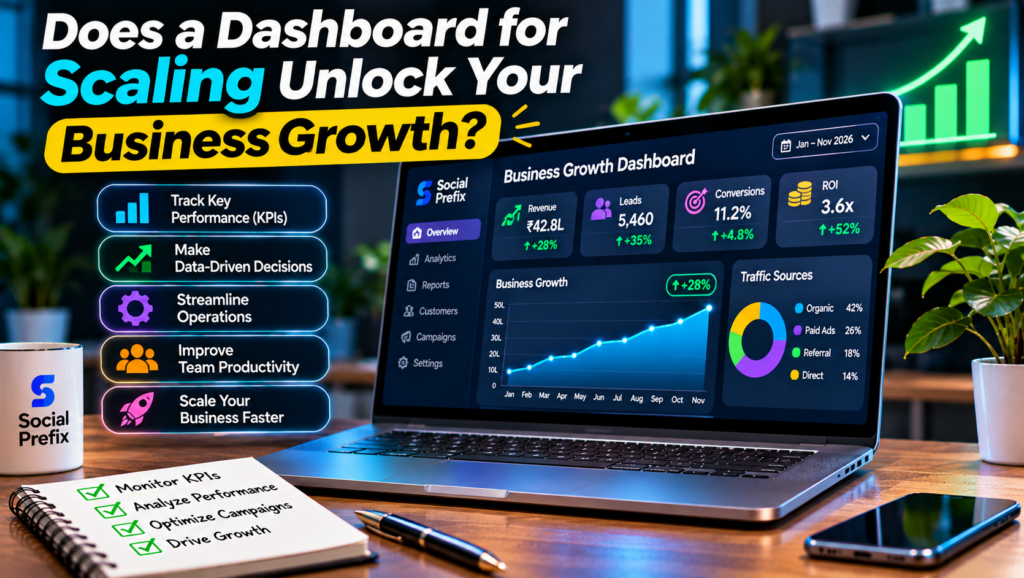
In today’s fast-paced digital world, businesses need the right tools to thrive. Many owners struggle to track their online success accurately. However, there is a simple solution to this common problem. Because of this, every company should use a central hub for their data. Specifically, a digital marketing dashboard is a game-changer for growth. It offers clear views, better insights, and a professional way to work. This move is not just a trend. In fact, it is a smart investment. Consequently, why every business needs a digital marketing dashboard is a vital topic for you. You will see a clear return on investment with this powerful tool. The Limitations of Manual Data Tracking Tracking data by hand is very hard for any business. However, many teams still try to do it every day. First, manual tracking often leads to big mistakes. Specifically, a simple error in a sheet can ruin your whole plan. Furthermore, manual work takes up too much of your time. You also miss out on real-time updates. Similarly, viewing different sites one by one is very slow. This puts your business growth at a halt. In contrast, a digital marketing dashboard solves all these issues. Why every business needs a digital marketing dashboard highlights these critical gaps. Indeed, it is a necessary step for serious operations. Real-Time Insights at Your Fingertips A digital marketing dashboard offers a live view of your data. It includes stats from ads, social media, and your website. Additionally, you get instant updates on how your campaigns perform. All these metrics work together seamlessly. Therefore, your team can make fast choices from anywhere. For example, you can stop a bad ad right away. Data saves automatically to the cloud. Thus, you never lose sight of your goals. Why every business needs a digital marketing dashboard shows how to unlock this power. It truly boosts team productivity every day. Better Budget Control and Spending Managing a budget is a major concern for any business. Manual tracking often hides where your money goes. A digital marketing dashboard, however, provides advanced clarity. For example, it shows which ads bring in the most cash. It also tracks your cost per click. You also get admin controls for your budget. This allows you to manage spending across all platforms. For instance, you can move funds to the best ads. Plus, you get a clear view of your ROI. This keeps your business safe from wasting money. Why every business needs a digital marketing dashboard focuses on this peace of mind. Your money and time are too important to risk. Enhancing Team Collaboration and Trust Sharing data with your team makes your business look professional. Imagine a single screen that everyone can see. This builds trust with your staff and partners. Similarly, it reinforces your brand goals. A digital marketing dashboard makes sharing this data very easy. For instance, you can create custom views for different roles. Consequently, this presents a unified front to the world. Why every business needs a digital marketing dashboard helps you elevate your brand. Indeed, clear communication truly matters in the business world. ROI Example 1: Saving Valuable Time Let’s look at a small team of 5 people. Each person wastes 30 minutes a day on data tasks. This includes finding stats or making manual reports. This totals 2.5 hours lost per day. Over a month, that is 50 hours. If an employee’s wage is $20 per hour, that is $1,000 lost monthly. With a digital marketing dashboard, data collection is automatic. For example, live charts and smart alerts cut down wasted time by half. Therefore, you save $500 per month. Why every business needs a digital marketing dashboard proves the ROI is clear. ROI Example 2: Preventing Costly Ad Mistakes A bad ad campaign can cost a small business thousands. In fact, it can even lead to total failure. Studies show average waste in ads is very high. Imagine a bad ad costs your business $5,000. A digital marketing dashboard’s live alerts reduce this risk greatly. By seeing the data early, you protect against huge losses. This is like having a guard for your wallet. Furthermore, the peace of mind is worth it. Why every business needs a digital marketing dashboard protects your assets. It is a smart move for your future. ROI Example 3: Fast Scaling and Growth As your business grows, your data needs change. A digital marketing dashboard scales with you. For instance, you can easily add new data sources. Similarly, your views can expand as needed. New features roll out regularly. This ensures your tools stay modern. Therefore, you will not outgrow your system. This long-term thinking saves money and effort. Consequently, you avoid changing tools later. Why every business needs a digital marketing dashboard is about smooth growth. It sets a strong foundation for future success. Finding the Right Dashboard for You Choosing the right tool is a strategic decision. It is about more than just numbers. It is about speed, clarity, and professional growth. The clear ROI examples show its value. Small businesses that use a dashboard gain a competitive edge. Therefore, they work smarter and not harder. They protect their cash and build trust. Why every business needs a digital marketing dashboard is the path to your full potential. Make the switch today and watch your business thrive. FAQs 1 Why should I use a dashboard if I have Google Analytics? A dashboard combines many tools into one view. Therefore, you see the whole picture in one place. 2 Is it hard to set up a marketing dashboard? No, most modern tools are very simple to use. Consequently, you can start seeing data in minutes. 3 Will a dashboard save my business money? Yes, it helps you find and stop wasteful spending. Thus, your budget works much harder for you. 4 Can my whole team use the same dashboard? Yes, you can share access with everyone on your team. For instance, it keeps everyone on […]

Scroll to Top