SEO

Brand Markeing, Branding, Engagement, Google, Instagram, Leads Generation, Marketing, SEO, SEO Marketing, Strategies

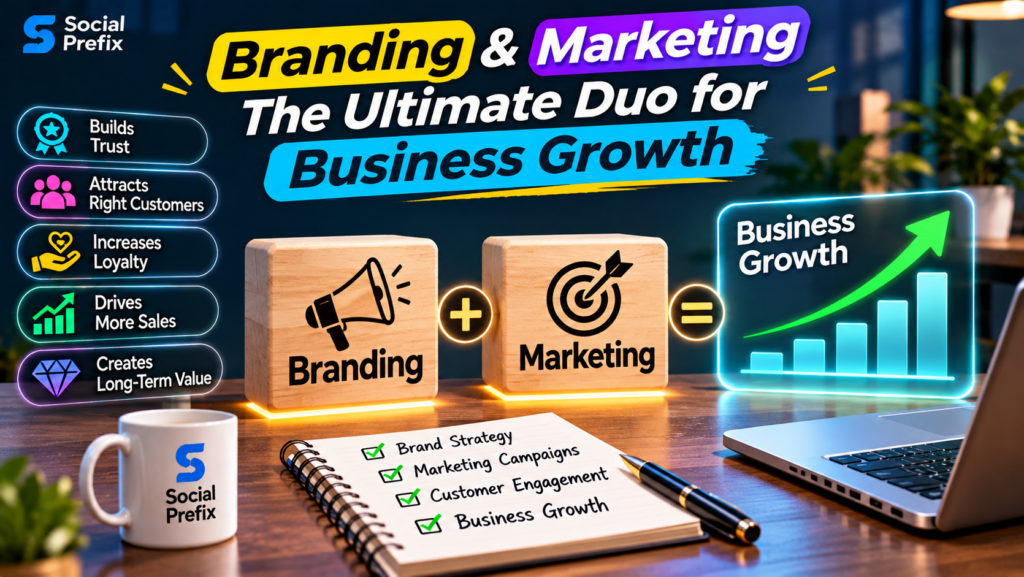
Branding & Marketing: The Ultimate Duo for Business Growth

Every business wants to grow. Thus, it needs customers. Many people think “branding” and “marketing” mean the same thing. However, they are very different. They work together. Truly, one cannot reach its full potential without the other. Therefore, understanding their roles is key for any company that wants to scale big. Some businesses focus only on marketing. They run ads. They try to get quick sales. But, they forget to build a strong brand. Consequently, their customers might buy once. Yet, they do not stay loyal. Other businesses focus only on branding. They create a nice logo. They also have a good story. However, they do not tell anyone about it. Always remember, both branding and marketing are vital. Branding builds your identity. Marketing tells your story. By using both wisely, your business can attract more customers. Furthermore, it can also keep them. This leads to lasting growth. The Core Difference: Who You Are vs. How You Tell It First, let’s clearly define each term. Branding is about who your business is. It is its soul. Marketing is about how you tell people about who you are. It is the actions you take. Clearly, they are partners, not rivals. Therefore, knowing their distinct roles helps you use each one better. What is Branding? Your Business’s Identity and Promise Branding is much more than a logo. It is the overall feeling people get about your company. It is what makes you different from others. Here are the key parts of branding: Think of branding as building a person’s character. It is their personality. It is how others see them and what they expect. A strong brand creates trust. It also makes people feel connected. What is Marketing? Telling Your Story to the Right People Marketing is the active process of promoting your business. It is about reaching out. It is about getting customers to buy. Here are the key parts of marketing: Think of marketing as telling that person’s story. It is using different ways to share their best qualities with others. Marketing pushes your message out. It aims for direct action. Why Branding Comes First: The Foundation of Trust While both are important, branding usually comes before marketing. It sets the stage. It provides the meaning. Truly, without a clear brand, marketing efforts often fall flat. A strong brand is like the sturdy foundation of a house. Building Trust and Recognition Firstly, branding creates recognition. Your logo, colors, and voice make you easy to spot. This helps people remember you. When they see your ad, they know it is you. Secondly, branding builds trust. A consistent message and look show you are reliable. People trust what they recognize. This trust is vital before they even think about buying. Furthermore, branding sets expectations. Your brand promise tells customers what to expect. If you promise high quality, they expect high quality. Marketing then shows how you deliver on that promise. Also, branding attracts the right customers. Your brand’s values draw people who share those values. This creates a stronger connection. They are more likely to become loyal. Truly, a solid brand makes all your marketing efforts much more effective. It gives your marketing a clear direction and a strong message to share. How Marketing Brings Your Brand to Life: Reaching the World Once you have a strong brand, marketing takes over. It uses the brand’s identity and message. Then, it spreads it to the world. Clearly, marketing is the engine that drives awareness and sales. Therefore, even the best brand needs active marketing to grow. Spreading Your Message and Driving Sales Firstly, marketing communicates your brand story. You have a mission and values. Marketing finds the best ways to tell people about them. It uses ads, social posts, and videos to share your unique message. Secondly, marketing reaches your target audience. You know who your ideal customer is. Marketing uses specific channels (like Facebook ads or industry blogs) to find and connect with those people directly. Furthermore, marketing drives traffic and leads. It encourages people to visit your website and makes them sign up for your emails. It gets them to call you. These actions turn interested people into potential customers. Also, marketing generates sales. Ultimately, all marketing efforts aim to convert interest into purchases. It uses special offers, clear calls to action, and persuasive content to move people to buy. Truly, marketing is the active arm of your business. It takes the strong character built by branding and introduces it to everyone who needs to know. Why You Need Both to Scale: The Power of Synergy Successful growth, or scaling, demands both branding and marketing working together. They create a powerful synergy. They build a cycle of recognition, trust, and sales. Clearly, relying on just one side will always limit your growth. Therefore, a balanced approach is key to reaching new heights. The Cycle of Growth: Brand Fuels Marketing, Marketing Builds Brand Firstly, branding provides the consistent message for marketing. Imagine running ads with a different look and message every time. This would confuse people. A strong brand gives marketing a clear, unified voice. This makes every marketing dollar work harder. Secondly, marketing amplifies your brand. Every ad, every social post, every email spreads your brand’s name and message. The more people see your marketing, the more they become familiar with your brand. This builds reputation and recognition even further. Furthermore, strong branding leads to higher marketing ROI (Return on Investment). When people trust your brand, they are more likely to respond to your ads. They convert more easily. This means your marketing campaigns get better results for the same cost. Also, marketing helps you reach new audiences. Your existing brand might be known by some. However, marketing pushes your message to new groups of people who might not know you yet. This expands your reach. Lastly, a great brand supports customer loyalty. Customers who feel connected to your brand are more likely to stay. They will buy again. They […]

content strategy, Digital Marketing, Engagement, Google, Influencer Marketing, Instagram, Leads Generation, SEO, social media marketing, Strategies

The Hidden Social Media Rule That Stops the Scroll

Every day, people see thousands of posts online. They scroll very fast through their social media feeds. Your business only has a few seconds to get their attention. If your post does not make them stop, they will keep moving. This is why creating a scroll-stopping post is so important. It is the first step to getting likes, comments, and new customers. This is not just luck. Instead, there is a real science behind it. Many people think getting attention online is hard. They just post pretty pictures and hope for the best. However, this often fails. Truly, you must use smart tricks and human psychology. You need to know what makes people pause their scrolling. Always remember, the goal is to make your content impossible to ignore. By using proven methods for hooks, visuals, and emotion, you can master the science of social media. This will make your posts stand out and grow your audience much faster. The Attention Battle: Why Stopping the Scroll is Key First, let’s understand the challenge. Social media is a battle for attention. People are easily distracted. They are also very busy. They see content from friends, family, and many businesses. Consequently, you have less than two seconds to make an impact. Clearly, if your post fails this test, your message is lost. Therefore, making someone stop scrolling is the most important job of any social media post. What Happens When People Scroll Fast? People scroll fast for a few reasons. They are looking for something interesting. They are also avoiding boring things. Their brains process images very quickly. They decide in a blink if something is worth their time. Here are the main problems you must fix: A scroll-stopping post solves these problems. It uses smart tricks to break the pattern and forces the eye to stop. It also promises a reward for slowing down. Truly, this is the first step toward building a real connection with your followers. Element 1: The Visual Hook – Your First 0.5 Second Chance The visual part of your post is the most important hook. It is your first chance to stop the scroll. People see the picture or video before they read any words. Clearly, your image or video must be bright, unique, and powerful. Therefore, focusing on the visual is the fastest way to get attention. Making Your Visuals Impossible to Ignore Firstly, use contrast and bright colors. Social media feeds are often white or gray. Your visual should pop against this background. Use bold colors that attract the eye instantly. Secondly, feature human faces and direct eye contact. People are naturally drawn to other faces. This is part of how our brains work. A clear, smiling, or surprising face is a great stop sign. Furthermore, use unexpected motion or big text. If your post is a video, the first 1-2 seconds must show movement or something surprising. If it is an image, use a big, easy-to-read headline right on the picture itself. This quick text gives instant context. Also, use high-quality visuals. Blurry or low-resolution pictures look unprofessional. They also signal low value. Truly, a sharp, clean visual hook tells the user your content is worth their time. By making your visuals stand out, you win the first crucial battle for attention. Element 2: The Headline Hook – The Power of the First Line Once the visual makes a person pause, the headline must keep them there. This is the very first line of your caption or text. Clearly, it must be compelling and promise an immediate reward. Truly, a weak first line will make the user scroll away instantly. Therefore, crafting a strong headline hook is essential for converting a pause into a real read. Headlines That Demand Attention Firstly, use the power of surprise or contradiction. Start with something unexpected. For example, “Stop Doing This One Thing” or “The Lie About Working Hard.” This creates a feeling of curiosity. People want to know the answer. Secondly, use numbers and lists. Headlines like “3 Simple Ways to…” or “7 Secrets to…” promise clear, easy-to-digest value. Our brains love organized information. Furthermore, use direct questions or personal statements. Ask a question that your target audience is already thinking about. For instance, “Are you making this common mistake?” Or, start with a statement that connects to their emotion, like “I used to struggle with this too.” Also, use strong, active words. Avoid weak language. Use words that suggest action or strong feeling, such as “Unleash,” “Warning,” “Discover,” or “Banned.” Truly, a powerful headline hook grabs the user by their interest. It convinces them that the information is relevant to their life, ensuring they read the rest of your valuable content. Element 3: The Psychology of Engagement – Why People React Scroll-stopping is not just about looks; instead, it is about triggering a psychological reaction. People stop scrolling because their brain tells them to. Clearly, the best content uses simple human emotions and needs to force that pause. Therefore, understanding the basic psychology behind social media use is key to creating engaging posts. Tapping into Core Human Needs Firstly, use the power of curiosity. People hate an information gap. They must know the answer. Start your post by showing a problem without the solution. Use words like “Wait till you see the end result” or “The secret is…” This strong pull makes them stop scrolling. Secondly, appeal to emotion. Content that makes people feel something—joy, anger, surprise, or sadness—is highly shared. Posts that inspire hope or make people laugh are great at stopping the scroll. Furthermore, use social proof and shared experience. People want to know what others are doing. Use language like “Everyone is talking about this” or “The method used by top performers.” This suggests they might miss out if they keep scrolling. Also, offer a quick solution to a pain point. If your headline promises to solve a common, annoying problem, people will stop. They want the fix right now. Truly, by […]

affiliate marketing, Blogging, content strategy, Digital Marketing, E-commerce, Engagement, Google, Instagram, Leads Generation, SEO, Strategies

How to Build a Social Media Strategy To Convert Followers into Clients

In today’s digital age, social media is far more than just a platform for sharing updates; instead, it’s a dynamic ecosystem where brands connect with their audience, build communities, and drive business growth. However, accumulating a large follower count is only half the battle. Truly, the ultimate measure of social media success lies in its ability to convert those followers into paying clients. This transformation requires a deliberate, strategic approach that moves beyond vanity metrics and focuses on tangible business outcomes. Therefore, understanding how to craft such a strategy is paramount for any business looking to monetize its social media presence. Many businesses mistakenly equate social media presence with sales. They post content, gain followers, and then wonder why their bottom line isn’t reflecting their online activity. This disconnect often stems from a lack of a clear conversion-focused strategy. Simply put, followers don’t magically become clients; instead, they need to be nurtured through a carefully designed journey that builds trust, demonstrates value, and gently guides them towards a purchasing decision. Always remember, social media is a relationship-building tool first and a sales tool second. By implementing a strategy that prioritizes engagement, value, and a clear call to action, you can turn your vibrant online community into a consistent source of revenue. The Core Problem: Beyond Vanity Metrics to Real Conversions To begin with, let’s address the fundamental challenge: moving beyond vanity metrics to real, measurable conversions. Many social media strategies get bogged down by focusing solely on superficial numbers like likes, shares, and follower counts. While these metrics can indicate reach and engagement, they often fail to translate directly into revenue. Consequently, businesses find themselves with a popular social media presence but a stagnant sales pipeline. Clearly, this disconnect highlights the need for a more strategic, outcome-driven approach to social media. Understanding the Follower-to-Client Journey Naturally, the journey from a casual follower to a loyal client is complex and requires multiple touchpoints. It’s rarely a direct jump from seeing a post to making a purchase. Instead, it typically involves several stages: Each of these stages requires a different type of content and a specific call to action. Truly, a conversion-focused social media strategy meticulously plans for this entire journey, nurturing followers at every step. Therefore, by understanding that social media is a funnel, not just a broadcast channel, businesses can create content and interactions that systematically guide their audience towards becoming valuable clients. Step 1: Define Your Target Audience and Their Needs Before you even think about posting content, the absolute first step in building a conversion-focused social media strategy is to deeply understand your target audience. Clearly, without this foundational knowledge, your efforts will be akin to shouting into the void, hoping someone relevant hears you. Truly, knowing who you’re trying to reach and what they need is paramount for creating content that genuinely resonates and ultimately converts. Therefore, invest significant time in this crucial discovery phase. Creating Detailed Buyer Personas Firstly, move beyond basic demographics and create detailed buyer personas. These are semi-fictional representations of your ideal clients, based on market research and real data about your existing customers. For example, consider their: Furthermore, understand their information consumption habits. Are they looking for quick tips, in-depth guides, inspirational stories, or behind-the-scenes glimpses? Do they prefer video, carousels, or written posts? By tailoring your content to their specific preferences and needs, you increase the likelihood of engagement and, critically, conversion. Always remember, successful conversion starts with relevance. Truly, when your content speaks directly to your audience’s challenges and aspirations, you naturally build the trust and connection necessary to move them from followers to clients. Step 2: Choose the Right Platforms and Optimize Your Profile Once you have a crystal-clear understanding of your target audience, the next critical step is to select the right social media platforms where they are most active. Clearly, trying to be everywhere at once is a recipe for diluted effort and minimal impact. Instead, a focused approach on the platforms where your ideal clients spend their time will yield far better results. Therefore, strategic platform selection is as important as the content itself. Making Your Profile a Conversion Hub Firstly, after selecting your platforms, optimize your social media profiles to serve as conversion hubs. Your profile is often the first place a potential client will go after engaging with your content. Ensure it’s professional, informative, and, most importantly, directs visitors towards your desired next step. For example: Furthermore, ensure your visual branding is consistent across all platforms. Use your brand colors, logos, and a consistent aesthetic. This creates a cohesive and professional image, building instant recognition and trust. Remember, your social media profile is a digital storefront; make it inviting and easy for potential clients to find what they need and take action. Truly, an optimized profile acts as a bridge, guiding interested followers seamlessly towards conversion. Step 3: Create Value-Driven Content for Each Funnel Stage With your audience defined and profiles optimized, the heart of your strategy lies in creating value-driven content that speaks to each stage of the follower-to-client journey. Clearly, generic content that aims for mass appeal rarely converts. Instead, your content must be tailored to nurture prospects, moving them gently from awareness all the way to a purchase decision. Therefore, a strategic content plan that addresses varying levels of intent is essential. Tailoring Content to Nurture Prospects Firstly, for the Awareness Stage, create content that educates, entertains, or inspires. This content should demonstrate your expertise and solve common pain points without being overtly salesy. Examples include: Secondly, for the Engagement and Interest Stages, provide deeper value and start positioning your solution. This content might include: Lastly, for the Consideration and Conversion Stages, your content should directly address buying intent. This is where you introduce clear calls to action: Step 4: Engage Authentically and Build Community While strategic content is crucial, social media is, at its core, about social interaction. Therefore, building a community and engaging authentically with your audience is […]

Scroll to Top