Google Ads

Engagement, Google, Google Ads, Google Ads Optimization, Leads Generation, PPC Ads, Search Engines, SEO, Site Traffic, Strategies, Viral Campaigns

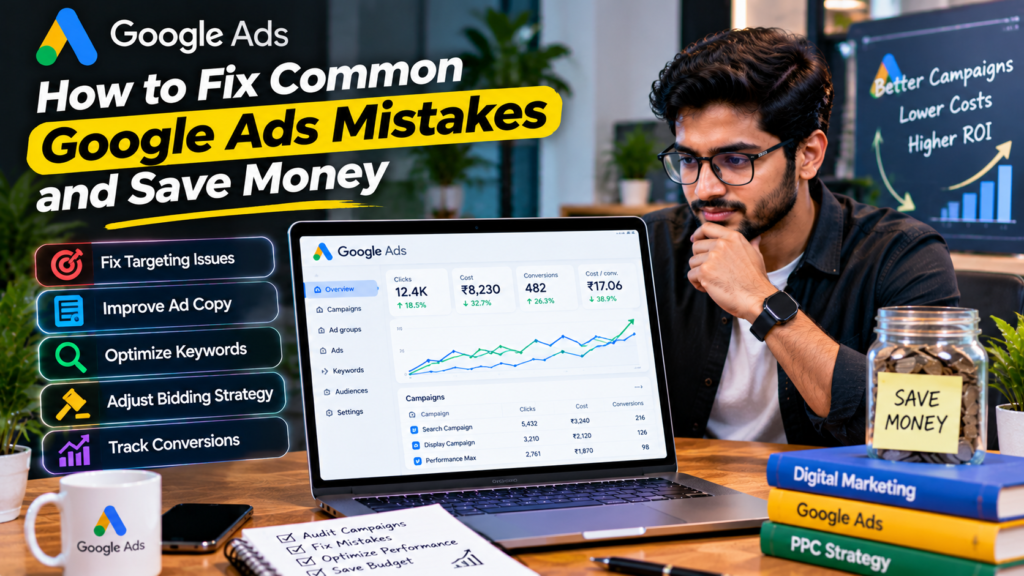
How to fix common Google Ads mistakes and save money

You must be very careful with every dollar you spend on marketing today. Therefore, you should learn about common Google Ads mistakes that drain your budget. Truly, many businesses lose thousands of dollars because of tiny setting errors. Consequently, you can protect your profits by fixing these hidden leaks in 2026. Many people think that spending more money always leads to more sales. But, the reality is that smart settings work much better than a huge budget. Always remember, a clean and high-performing ad is a strong signal for any search engine. This ensures that your brand stays visible and your cost per click stays very low. This approach requires you to look at your keywords, your ads, and your landing pages. It helps you build a much more profitable business for the long term. It makes your daily digital marketing feel much more secure and very effective. Fixing Broad Match and Keyword Leaks First, you must look at which words are triggering your ads right now. Why does Google show your ad to people who have no interest in buying? Clearly, using “Broad Match” keywords without a plan is a major budget killer. Therefore, you must use more specific match types to save your cash in 2026. How to Stop Irrelevant Keyword Spending Here are several ways to tighten your keyword list today: Truly, these steps solve the problem of wasted clicks in just a few minutes. But, you must also check your keyword list every single week to find new leaks. This keeps your ad spend low and prevents any sudden losses for your firm. It creates a very high and professional standard for your daily ad management. Improving Your Low Quality Score So, how do you pay less for a top spot on the search results page? Truly, Google rewards ads that are helpful and very relevant to the user. Consequently, you should focus on your “Quality Score” to lower your costs in 2026. It acts as a direct fix for high prices and helps your ads perform much better. Simple Ways to Boost Your Quality Score Here is how you can make Google love your ads more: Furthermore, this improves your search engine performance by showing you are a quality pro. It makes your company look very reliable and ready for 2026 digital growth. This ensures that you get the best value for every cent you spend on ads. It creates a very fast and clear path for your professional marketing success. Optimizing Your Landing Pages for Conversion The third phase involves looking at where your customers go after they click. Clearly, sending traffic to a generic home page is a very big mistake today. Therefore, you should use dedicated landing pages to turn clicks into real sales. Creating Pages That Turn Browsers Into Buyers Firstly, create a unique page for every different ad campaign you run in 2026. This allows you to give the user exactly what they were looking for right away. Secondly, use a single, clear “Call to Action” so people know how to buy today. Furthermore, remove any distracting links that might lead people away from your offer. Also, use transition words in your page copy to keep it very easy to read. Lastly, remember that a high conversion rate helps your search engine authority and trust. Truly, a great landing page is the best partner for a great ad campaign. It allows you to prove your value and close the sale without any confusion. This is why top marketers spend so much time on their web pages right now. Measuring and Refining Your Ad Success The fourth phase is where you use data to see if your changes are working. Clearly, you must know if your ads are truly helping your bottom line in 2026. Therefore, you must track your “Return on Ad Spend” (ROAS) every single month. Metrics for a Profitable Ad Account Firstly, track the “Conversion Rate” to see how many people actually buy from you. This helps you see which Google ads are working and which ones are just wasting money. Secondly, calculate your “Cost Per Acquisition” to know what a new customer costs. Furthermore, look for any “Dead Ads” that have many clicks but zero real sales. Also, use your data to see if certain times of day bring more profit for you. Lastly, check your search engine ranking to see if ad success helps your web traffic. Truly, a smart ad plan is a journey that leads to a much stronger brand. It turns a risky budget into a series of smart, secure wins for your whole team. This ensures your business stays strong while others face empty bank accounts. Best Practices: Staying Ahead of Google Ads Trends Finalizing your plan requires you to stay informed about new Google features. It needs you to review your account and update your strategy every single month. Clearly, winning at Google Ads is a team effort in 2026. Therefore, follow these simple tips to keep your ads fresh and your budget safe. Simple Tips for Lifelong Ad Success Firstly, try out new “Smart Bidding” tools to let AI help you find the best prices. This helps you stay one step ahead of your rivals without a lot of manual work. Secondly, keep your ad copy updated to match the current trends and seasons today. Furthermore, use transition words in your ad text to keep it very clear and helpful. Also, remind yourself that ad safety helps the company earn more search engine trust. Lastly, check your search engine data to see if your Google ads help your web traffic grow. Truly, a safe path is a journey that leads to a much better brand in 2026. It builds a path of trust that lets your whole team grow very fast. This secures your future in the digital world for a long time. Frequently Asked Questions (FAQs) Q1: Why is my Google Ads budget finishing so fast? This usually […]
Audience Engagement, Engagement, Google, Google Ads, Google Ads Optimization, Leads Generation, PPC Ads, Search Engines

How to fix Google Ads mistakes and boost sales

You must manage your ad spend with great care today. Therefore, you should learn to spot common Google Ads mistakes. Truly, many businesses lose money because they miss simple settings. Consequently, you can save your budget by fixing these errors right now. Many people think that spending more money leads to more sales. But, the reality is that smart settings matter more than a big budget. Always remember, a well run ad campaign is a strong signal for any search engine. This ensures that your brand reaches the right people at the right time. This approach requires you to check your data and adjust your bids. It helps you build a much more profitable business for the long term. It makes your daily marketing feel much more stable and very effective. Phase 1: Fixing Broad Match Keyword Issues First, you must look at your keyword match types. Why do broad match keywords drain your budget so fast? Clearly, these settings tell Google to show your Google ads for any related search. Therefore, you often pay for clicks that have nothing to do with your product. Steps to Control Your Keyword Spend Here are several ways you can tighten your keyword targeting: Truly, these changes keep your money focused on the best leads. But, you must also keep an eye on your search volume to ensure people still find you. This keeps your traffic high while keeping your costs very low. It creates a very efficient and high standard for your ad account. Phase 2: Optimizing Your Landing Page Experience So, what happens after a user clicks on your expensive ad? Truly, a bad landing page is a major reason why budgets go to waste. Consequently, the user leaves your site fast and you still have to pay for the click. It acts as a leak in your sales funnel that you must plug. How to Improve Your Page for Better Sales Here is how you can make your landing pages work harder for you: Furthermore, this improves your search engine score by giving users exactly what they want. It makes your brand look very professional and ready for 2026. This ensures that your ad spend turns into real revenue for your company. It creates a very fast and clear path for your customer journey. Phase 3: Setting Better Location and Time Targets The third phase moves your focus to where and when your ads appear. Clearly, showing ads in the wrong city or at 3 AM can waste your funds. Therefore, you should use data to find the best times to show your message. Why Smart Targeting Saves Your Budget Firstly, you can stop your ads from showing in countries where you do not ship. This allows you to save your daily budget for your best local customers. Secondly, you can lower your bids during the hours when your office is closed. Furthermore, you can increase your bids in cities where you have the most sales. Also, you can see exactly which devices your customers use in your reports. Lastly, remember that precise targeting helps your search engine trust and ad rank. Truly, geo targeting is the best way to handle a small budget safely. It allows you to reach the best people without spending too much. This is why top firms check their location reports every single day. Phase 4: Avoiding the Trap of Smart Campaigns The fourth phase looks at the automated settings inside the Google platform. Clearly, letting the AI make every choice can lead to high costs and low results. Therefore, you must take back control of your account settings to save money. How to Manage Your Own Ad Strategy Firstly, avoid the default smart campaigns if you want to see detailed data. This helps you understand exactly where every cent of your money goes. Secondly, set your own manual bids for your top performing ad groups. Furthermore, give the system a clear goal like a lead or a sale. Also, tell the system to focus on your own site rather than the search partners. Lastly, check your search engine ranking to see how your ads help your brand. Truly, a human touch is your best tool against automated waste. It turns you into a partner who guides the AI toward better results. This ensures your business stays profitable and grows from the inside out. Best Practices: Audit Your Google Ads Every Week Managing your ads is a task that needs constant attention from you. It needs you to look at your data and cut out what does not work. Clearly, a good ad account is never finished and always needs a tweak. Therefore, follow these simple tips to keep your budget safe and your sales high. Simple Tips for Long Term Ad Success Firstly, check your quality score every week and try to make it higher. This helps you get better ad spots for a lower price than your rivals. Secondly, make sure your conversion tracking is working perfectly every day. Furthermore, write new ad copy to test against your old winning ads. Also, use simple words in your ads so everyone knows what you sell. Lastly, check your search engine data to see which ads bring the best fans. Truly, fixing these mistakes is a journey that leads to a better brand. It builds a path of profit that lets your team grow very fast. This secures your future in the digital world for a long time. Frequently Asked Questions (FAQs) Q1: Why is my Google Ads budget spending so fast? This usually happens because of broad match keywords or showing ads in too many locations at once. Q2: Will a high quality score lower my costs? Yes, a higher quality score means Google will charge you less for every single click you get. Q3: Do I need to use negative keywords? Yes, negative keywords are vital because they stop your ads from showing for irrelevant searches. Q4: Should I run my Google […]

affiliate marketing, content strategy, Engagement, FAcebook ads, Google Ads, Leads Generation, PPC Ads, Strategies

How to Use A/B Testing to Cut Ad Costs and Boost ROI

You spend money on ads every day. Therefore, you want every dollar to work harder. But, many businesses run ads without testing them. Consequently, they waste a lot of money. The key to better ad results is A/B Testing. Truly, A/B testing is a method. It helps you compare two versions of an ad or page. You see which one performs better. Some people think A/B testing is only for big companies. But, this is not true. Small changes can make huge differences. Furthermore, a better ad can cut costs. Always remember, even small tests can boost your return on investment (ROI). By systematically testing your ads and landing pages, you can get more clicks. You can also get more conversions for the same budget. This grows your business faster. It also makes your ad campaigns much more effective. The Ad Spend Challenge: Why Some Campaigns Fail First, let’s understand the common challenges in online advertising. Many campaigns underperform. This means they spend money but do not get enough sales. Clearly, this is a big problem. Therefore, you must find out why some ads fail to deliver good results. Common Reasons for Wasted Ad Spend These common issues often lead to high ad costs and low returns: A/B testing helps solve these problems. It gives you data and shows what actually works. It eliminates guesswork. What is A/B Testing for Ads? Your Data-Driven Edge So, what exactly is A/B testing for ads? It is a scientific method. You compare two versions of something. For instance, you test “Version A” against “Version B.” You show each version to different groups of people. Then, you measure which version performs better. Truly, this is your data-driven edge. It helps you make smart choices. Key Elements to A/B Test in Advertising Here are the key elements you can test in your ad campaigns: Truly, A/B testing helps you fine-tune every part of your ad campaign. It helps you get the most out of your budget. Pillar 1: Testing Your Ads for Lower Cost-Per-Click (CPC) The first way A/B testing helps is by lowering your Cost-Per-Click (CPC). This means you pay less money for each person who clicks your ad. Clearly, a lower CPC means more clicks for the same budget. Therefore, testing your ad creative is very important. Optimizing Ad Creatives for More Clicks Firstly, test your headlines. Write two different headlines for the same ad. Show them to similar audiences. See which headline gets more clicks. Secondly, test your ad copy. Change the description text. Make one version focus on benefits. Make another focus on a problem. See which performs better. Furthermore, test your ad visuals. Use a different image or video for your ad. See if a brighter image gets more attention. Also, test your call to action (CTA) buttons. Use “Shop Now” on one ad. Use “Get Discount” on another. See which one people prefer to click. Lastly, test different ad formats. If you use Facebook ads, try a single image ad versus a carousel ad. See which one your audience likes more. Truly, by systematically testing these ad elements, you can find the best combinations. This brings down your CPC. It also increases the number of people who see your offer. Pillar 2: Boosting Conversions and Return on Investment (ROI) The second and most powerful way A/B testing helps is by boosting conversions. It also improves your Return on Investment (ROI). This means more sales for the same number of clicks. Clearly, a higher conversion rate means more money in your pocket. Therefore, testing your landing page is just as important as testing your ad. Optimizing Landing Pages for Higher Sales Firstly, test your landing page headlines. The headline on your landing page must match your ad. But, you can still test different versions. See which one convinces visitors to convert more often. Secondly, test your landing page visuals. Use different images or videos on the page. See which one helps explain your offer best. Furthermore, test your call to action (CTA) on the landing page. Make the button a different color. Change the text to something more specific. See what drives more sign-ups or purchases. Also, test your offer type. If your ad leads to a special deal, test different special deals on the landing page. See if “Free Shipping” or “$10 Off” works better. Lastly, test your form length. Make one form short. Make another form a bit longer. See which one gets more completed forms. Truly, by optimizing your landing page, you can turn more of your ad clicks into actual sales. This dramatically boosts your overall ROI. Pillar 3: Systematic Testing for Consistent Wins A/B testing is not a one-time thing. It is a continuous process. You must always be testing something new. Clearly, consistent testing leads to consistent wins. Therefore, create a system for your A/B tests. Building a Strong A/B Testing Process Firstly, test one element at a time. Do not change the headline and the image at once. If you do, you will not know which change caused the improvement. Secondly, set clear goals for each test. Do you want more clicks? Or more sales? Define this before you start. Furthermore, run tests long enough. Do not stop a test after just a few hours. Let it run until you have enough data. This is called “statistical significance.” Also, test continuously. When one test finishes, start another. There is always something to improve. Lastly, document your results. Keep a record of all your tests. What worked? What failed? Learn from every test. Truly, a systematic approach to A/B testing turns it into a powerful engine. It continuously improves your ad performance. It consistently lowers costs. Best Practices: Maximizing Your A/B Testing Impact To truly cut ad costs and boost ROI, you must use A/B testing smartly. It is not just about running tests. It is about how you interpret and act on the results. Clearly, focused testing gives the best returns. Therefore, […]

AI Advertising, Brand Markeing, Branding, Engagement, Google, Google Ads, Leads Generation, Strategies

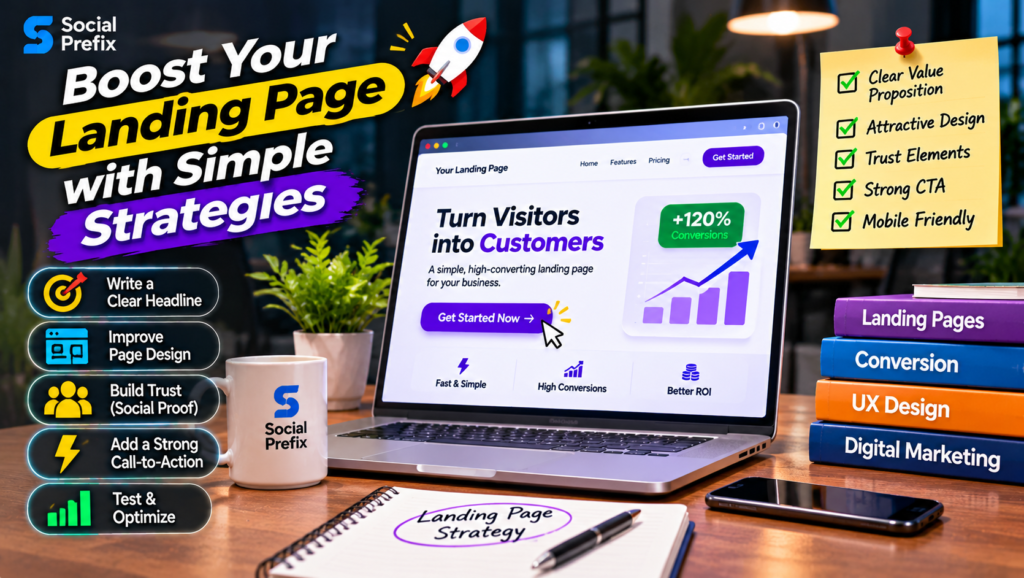
Boost Your Landing Page With Simple Strategies

You spend money on online ads every day. Therefore, you want every click to count. However, many businesses drive traffic to poor landing pages. Consequently, they waste their money easily. The key to high success is Landing Page Optimization (LPO). Truly, LPO is the process of improving your landing page. This improvement helps increase the number of visitors who take action. Some people think a good ad is enough. But, this is not true. A great ad gets the click. Yet, the landing page gets the conversion. If the landing page is confusing, visitors leave fast. Furthermore, this raises your advertising cost. Always remember, a well-optimized landing page matches the ad message perfectly. Thus, by focusing on clear design and strong messaging, you can turn more clicks into customers. Also, this lowers your cost. Moreover, it grows your business faster. The Conversion Gap: Why Clicks Fail to Convert First, let’s understand why so many ad clicks fail to convert. This difference between clicks and conversions is the conversion gap. Furthermore, it is often a big problem. Clearly, fixing this gap is vital for campaign success. Therefore, you must look closely at what happens after a visitor arrives on your page. Common Landing Page Mistakes Mistakes on the landing page are often the reason for low conversions: Landing Page Optimization fixes these issues. It simplifies the experience. It also builds trust. Moreover, it makes the next step very clear. What is Landing Page Optimization (LPO)? Your Conversion Engine So, what exactly is Landing Page Optimization (LPO)? It is a continuous process of testing and improving elements on your page. The goal is to increase the page’s conversion rate. Truly, LPO is about making the visitor’s journey as smooth as possible. It removes friction. It also builds desire. Key Principles of an Optimized Landing Page Here are the four key principles of LPO: Truly, LPO turns your landing page into a dedicated conversion engine. It focuses the visitor’s attention only on the single desired action. Pillar 1: Message Match – Closing the Consistency Loop The first and most important step in LPO is message match. This means the message on your landing page must be the same as the message in your ad. Clearly, this creates a sense of continuity. Therefore, it assures the visitor they are in the right place. Matching Ad Text to Landing Page Copy Firstly, use the exact same headline on the landing page that you used in the ad. If the ad says “50% Off Software,” the page headline must say “Get 50% Off Our Software Today.” Secondly, match the visuals. Use the same colors, logos, and product images from the ad on the landing page. This helps create instant recognition. Furthermore, match the tone and value proposition. If the ad promised a free guide, the landing page must focus only on downloading that guide. Do not mention other products. Also, eliminate all distractions. Remove the main navigation menu, footer links, and external links. Consequently, the only clickable button should be the main Call to Action (CTA). Lastly, highlight the benefit. Quickly tell the visitor what they will gain by converting. Use short, bulleted lists for easy reading. Truly, perfect message match instantly reduces visitor confusion. This keeps them engaged. It also makes them ready to complete the conversion. Pillar 2: Technical Speed and Trust Signals The second pillar focuses on the technical side of LPO. This includes page speed and trust elements. Clearly, a slow page loses visitors instantly. Trust is also non-negotiable for online conversions. Therefore, optimizing these elements is crucial. Improving Load Times and Building Confidence Firstly, test your page speed. Use tools like Google PageSpeed Insights. Focus on making your page load in under three seconds. Furthermore, every second lost means fewer conversions. Secondly, optimize images. Compress all images on the page. Use the right file format (like WebP) to ensure fast loading times. Furthermore, use trust seals and badges. Include security seals like McAfee or Norton. Also, show payment logos if you are selling a product. This builds immediate confidence. Also, add social proof. Include customer testimonials, client logos, or product ratings. Show real people getting real results. Lastly, ensure your page is mobile-friendly. Most ad traffic comes from phones. The page must look perfect. It must also load fast on small screens. Truly, a fast-loading page combined with strong trust signals convinces visitors easily. It shows your offer is legitimate and reliable. Pillar 3: Optimizing the Call to Action (CTA) The third pillar is the Call to Action (CTA). This is the single most important element on your page. The CTA tells the visitor what to do next. Clearly, a weak or unclear CTA will cause conversion failure. Therefore, you must make the CTA stand out. You must also use persuasive language. Making the Next Step Unmistakable Firstly, make the CTA button prominent. Use a contrasting color (like green or orange) that jumps off the page. Make it large enough to click easily. Secondly, use specific, action-oriented text on the button. Instead of “Submit,” use phrases like “Get My Free Ebook Now” or “Start My Free Trial.” This increases desire. Furthermore, place the CTA above the fold. Visitors should see the main button without having to scroll down. Repeat the CTA at the bottom of the page for long-form content. Also, simplify the conversion form. Ask only for the essential information. If you only need an email address, do not ask for a phone number or company size. Every extra field reduces conversions. Lastly, use directional cues. Use arrows or visual elements that point the visitor’s eye directly to the CTA button or the form. Truly, by making your CTA specific, visible, and easy to use, you guide the visitor toward the desired outcome effortlessly. Best Practices: Testing and Iterating Your Landing Page Landing Page Optimization is a continuous cycle. It does not end after the first launch. You must always test and improve. Clearly, small changes can lead to […]

Backlink, Engagement, Google Ads, Influencer Marketing, Leads Generation, PPC Ads, Search Engines, Uncategorized

How to Create Content That Builds Trust and Generates Leads

In today’s crowded digital landscape, every business battles for attention. However, simply getting noticed is no longer enough. Instead, consumers are looking for genuine connections and reliable information. Therefore, your marketing strategy must move beyond mere visibility. Specifically, it needs to foster a deep sense of trust. When potential customers trust you, they are much more likely to become loyal clients. This crucial transformation from passive observer to engaged customer is the ultimate goal. Today, we explore how to create content that not only educates and informs but also genuinely builds trust and effectively generates valuable leads for your business. The Foundation of Trust: Solving Real Customer Problems The most effective way to build trust is to genuinely help your audience. Therefore, your content should always aim to solve their real-world problems. Do not just talk about your products or services. Instead, focus on the challenges your ideal customers face. Then, offer clear, actionable solutions. For example, if you sell financial software, your content could explain how to manage small business cash flow, rather than just listing features of your software. By consistently providing valuable, problem-solving information, you position your brand as a helpful expert. Consequently, this consistent assistance builds credibility. Ultimately, customers see you as a reliable resource, which is the first step to building trust and encouraging them to create content that is truly helpful. Authenticity and Transparency: Your Brand’s True Voice In an era of skepticism, authenticity is highly prized. Therefore, your content must reflect your brand’s true voice and values. Avoid jargon and overly salesy language. Instead, communicate in a clear, relatable manner. Furthermore, be transparent about your products, your processes, and even your occasional shortcomings. For example, sharing customer testimonials (both positive and constructive) shows you are confident and honest. Additionally, showing behind-the-scenes glimpses of your team or your work culture humanizes your brand. This transparency helps foster a deeper connection with your audience. Remember, people connect with people, not faceless corporations. This human element is crucial to create content that resonates deeply. Consistency and Reliability: The Power of Showing Up Trust is not built overnight; it grows steadily through consistent action. Therefore, your content marketing efforts must be reliable. This means regularly publishing high-quality content on a consistent schedule. Whether it’s weekly blog posts, monthly newsletters, or daily social media updates, your audience should know when and where to expect your valuable insights. Inconsistency, on the other hand, can erode trust. If you start strong and then disappear for weeks, your audience might assume you are unreliable or that you no longer care. Consequently, showing up consistently demonstrates commitment and professionalism. This steady presence is vital to create content that builds a lasting relationship with your audience. Educate, Don’t Just Sell: The Inbound Approach The best content educates first and sells second. This is the core principle of inbound marketing. Instead of pushing your products, you draw customers in by providing valuable information. For example, if you sell eco-friendly cleaning supplies, your blog could feature articles on sustainable living tips, rather than just product advertisements. Therefore, by offering educational resources, you empower your audience to make informed decisions. Consequently, when they are ready to buy, they will naturally turn to the brand that has consistently helped them. This approach builds authority and trust, which are essential for generating qualified leads. Your goal should always be to create content that informs and empowers. Diverse Content Formats: Reaching Every Learning Style People consume information in different ways. Therefore, relying on just one type of content limits your reach and impact. To truly create content that builds trust and generates leads, you need a diverse content strategy. This might include: By offering a variety of formats, you cater to different preferences and keep your audience engaged. This multi-channel approach increases your chances of connecting with more potential leads. The Call to Action: Guiding Leads Through the Funnel While building trust is paramount, the ultimate goal is to generate leads. Therefore, every piece of content, especially educational content, should include a clear and relevant call to action (CTA). However, the CTA should not always be “Buy now!” Instead, it should guide the reader to the next logical step in their journey. For example: These soft CTAs provide value and move the lead further down the sales funnel without being overly aggressive. Always ensure your CTA is relevant to the content and offers clear value. This strategic use of CTAs helps to create content that effectively converts interest into action. Measuring Success: Analytics and Lead Generation Metrics You cannot improve what you do not measure. Therefore, tracking the performance of your content is essential. Use analytics tools to monitor key metrics such as: By analyzing these metrics, you can identify what works well and what needs improvement. This data-driven approach allows you to continuously refine your strategy. Consequently, you can optimize your efforts to create content that generates more trust and leads over time. Conclusion In the competitive digital landscape, merely existing online is not enough. To truly thrive, businesses must create content that goes beyond promotion. Instead, it must build genuine trust and actively generate leads. By consistently solving customer problems, being authentic, educating your audience, and diversifying your content formats, you cultivate a loyal following. Remember, trust is the currency of modern business. When your audience trusts you, they listen to you, they engage with you, and ultimately, they choose to do business with you. Therefore, invest in content that provides real value. This strategic approach will transform your marketing efforts into a powerful engine for sustainable growth. Frequently Asked Questions (FAQs) 1. Why is building trust important for lead generation? Building trust is crucial because consumers are more likely to buy from brands they trust. Trust reduces perceived risk and increases customer loyalty. When your content helps and educates, it establishes your brand as an authority, making potential customers more willing to share their information or make a purchase. 2. What type of content is […]

Brand Markeing, content strategy, Digital Marketing, E-commerce, Engagement, Google Ads, logo design, PPC Ads, Search Engines, SEO Marketing, Strategies

Local SEO in 2025: How Small Businesses Can Beat Big Brands in Search

In 2025, the digital marketing battlefield is fiercer than ever. For small businesses, competing with the massive budgets and brand recognition of big corporations in general SEO can feel like an impossible task. However, there’s a powerful arena where local businesses not only compete but frequently dominate: Local SEO. As search engines become increasingly sophisticated and personalized, the intent behind “near me” searches, voice queries, and mobile searches continues to prioritize proximity and relevance above all else. This trend creates a unique opportunity for small businesses to shine by connecting directly with customers in their immediate geographic area. Therefore, understanding and mastering Local SEO in 2025 is not just an advantage; it is absolutely essential for survival and growth. This focused approach allows you to directly target customers ready to make a purchase right now. Mastering Google Business Profile (GBP) in 2025 Your Google Business Profile (formerly Google My Business) remains the cornerstone of Local SEO in 2025. This free tool is often the first interaction a potential local customer has with your business. Therefore, optimizing your GBP is paramount. Start by ensuring every single detail is meticulously accurate and comprehensive: your business name, address, phone number (NAP), website, operating hours, and service areas. Go further by adding high-quality photos of your storefront, products, and team. Because visual content significantly boosts engagement, keep your GBP photos fresh and inviting. Furthermore, leverage all available features. Use the “Posts” feature regularly to announce specials, events, and updates. Answer customer questions promptly in the Q&A section, preempting common queries. Most importantly, actively manage and solicit customer reviews. Positive reviews are gold for Local SEO, acting as powerful social proof and a direct ranking factor. Respond to every review, positive or negative, with professionalism and gratitude, as this shows excellent customer service. This proactive and comprehensive management of your Google Business Profile is a clear signal to Google that your business is active, reputable, and relevant to local searchers. Hyper-Local Content Strategy: Speak to Your Neighbors While big brands craft national campaigns, small businesses can win by creating hyper-local content that resonates deeply with their community. In 2025, Local SEO demands content that directly addresses the unique needs, events, and culture of your specific locale. For example, instead of just “Best coffee shop,” think “Best artisan coffee in [Your Neighborhood] near [Local Landmark].” Blog posts can cover local events, partnerships with other local businesses, or solutions to common problems faced by residents. Consider creating landing pages optimized for specific services in specific neighborhoods or towns you serve. Use local keywords naturally throughout your website copy, blog posts, and service descriptions. Incorporate local landmarks, street names, and community events. Furthermore, if your business is involved in local sponsorships or charity work, highlight these efforts on your website. This not only builds trust and goodwill within the community but also provides fantastic local content opportunities that Google’s algorithms increasingly favor. Therefore, hyper-local content shows both Google and your potential customers that you are an integral part of their community. Building a Robust Local Backlink Profile Backlinks remain a critical ranking factor in 2025, and for Local SEO, the quality and relevance of those links matter immensely. Focus on acquiring backlinks from other reputable local businesses, community organizations, local news sites, and industry-specific directories. Think about partnering with non-competing local businesses for cross-promotional content or reciprocal links. Sponsoring local sports teams, events, or charities can also provide valuable local backlinks and community engagement. Beyond traditional backlinks, ensure your business is listed in relevant niche directories (e.g., Yelp, TripAdvisor for hospitality, specific legal directories for law firms). While some directories may offer “dofollow” links, even “nofollow” links from trusted local sources can signal relevance to Google. The key is to demonstrate to search engines that your business is a well-known and respected entity within its local ecosystem. Building this local backlink profile takes time and effort, but it is a sustainable strategy that big brands often struggle to replicate at a hyper-local level, giving small businesses a significant Local SEO advantage. Leveraging Reviews and User-Generated Content Customer reviews are more influential than ever in 2025, especially for Local SEO. They are a primary trust signal for both search engines and potential customers. Actively encourage satisfied customers to leave reviews on your Google Business Profile, Yelp, Facebook, and industry-specific review sites. Make the process easy by providing direct links or QR codes. Beyond just soliciting reviews, actively respond to every single one. Thank customers for positive feedback and address negative reviews professionally and constructively. This demonstrates excellent customer service and transparency. Furthermore, user-generated content (UGC), such as customer photos or social media posts featuring your business, can significantly amplify your Local SEO efforts. Encourage customers to tag your business in their posts. Repost and share this UGC (with permission) on your own social media channels and even embed it on your website. This content acts as authentic social proof and signals to search engines that your business is highly engaging and valued by its customers. Embracing and managing reviews and UGC is a powerful, cost-effective way for small businesses to build online authority and beat bigger brands in local search. Optimizing for Voice Search and Mobile in 2025 Voice search and mobile usage continue to surge in 2025, profoundly impacting Local SEO. People often use voice assistants to ask very specific, conversational questions like “Hey Google, where’s the closest Italian restaurant open now?” or “Siri, find a reliable plumber near me.” Therefore, your website and GBP content must be optimized to answer these natural language queries. Think about the questions your customers might ask and ensure your content provides direct, concise answers. Furthermore, mobile optimization is non-negotiable. Google’s mobile-first indexing means your website’s mobile experience dictates its search ranking. Ensure your website is fully responsive, loads quickly on mobile devices, and offers an excellent user experience for those on the go. Local searches are predominantly performed on mobile devices by users looking for immediate solutions. A fast, user-friendly […]

affiliate marketing, Backlink, Blogging, Brand Markeing, content strategy, Digital Marketing, E-commerce, Engagement, Google Ads, Leads Generation, PPC Ads, Search Engines, SEO Marketing, social media marketing

The Top 7 SEO Mistakes That Cost You Revenue

Search Engine Optimization (SEO) is not just a passing trend. It is a fundamental pillar of modern business success. Many companies invest in SEO. However, they often make critical SEO mistakes. These mistakes directly lead to lost opportunities. They also cost thousands in lost revenue. It is vital to understand and correct these errors right away. You can significantly improve your online visibility. Ultimately, this drives more traffic and sales to your business. Ignoring Mobile-First Indexing: A Costly Oversight One of the biggest SEO mistakes businesses make is neglecting mobile optimization. Google shifted to mobile-first indexing many years ago. Therefore, search engines primarily use the mobile version of your website for ranking. If your site is not responsive, you are losing out. A site that loads slowly on mobile is penalized. A poor mobile user experience also hurts your site badly. Because of this, a bad mobile experience hurts your rankings. This directly leads to lost revenue. You must always test your site’s mobile performance frequently. Google‘s Mobile-Friendly Test and PageSpeed Insights are helpful tools. They help you find specific issues quickly. You must prioritize mobile-friendly design and fast loading speeds for success. This ensures your site performs well on all devices, which is essential for modern search. Keyword Stuffing: A Practice That Harms Rankings In the past, some people believed that repeating keywords many times would improve rankings. This practice is called keyword stuffing. It is now an outdated and very harmful tactic. Now, modern search engine algorithms are very smart. They can easily detect unnatural keyword usage. When they find this poor practice, they will surely penalize your site. This causes a dramatic drop in rankings. Consequently, this particular SEO mistake can lead to significant lost revenue for any company. Instead, you must focus on using natural language. Use keywords wisely in your text. You should include them in a way that feels organic and useful. Also, use related terms and synonyms often. This provides more value to your readers. Furthermore, it easily satisfies search engine algorithms. Always remember that quality content wins every single time. Neglecting Technical SEO: The Hidden Traps Many businesses overlook technical SEO. This is a crucial area for website health. Technical SEO deals with your website’s backend structure. This structure includes things like site speed, crawlability, indexability, and structured data. These elements determine how easily search engines can access, crawl, and understand all your content. Ignoring them is a common SEO mistake that can create hidden traps for your site. For instance, slow page loading times frustrate every user. This dramatically increases your bounce rates. It also hurts your search rankings over time. Broken links and incorrect redirects confuse search engine crawlers quickly. This confusion prevents proper indexing of your key pages. Therefore, you must perform regular technical SEO audits. These audits help uncover all these hidden issues. Fixing them improves your site’s foundation immediately. This action boosts your overall SEO performance greatly. This effort directly contributes to avoiding lost revenue in the long run. Common Technical SEO Issues to Fix Now Slow Page Speed is a major issue. Users expect websites to load quickly. Because of this, search engines rank fast-loading sites higher. Broken Links create a bad user experience. They also hurt your site’s authority very badly. Missing XML Sitemaps are a problem. Sitemaps help search engines find and index all your important pages. Duplicate Content confuses all search engines. It can also dilute your ranking power across the site. No SSL Certificate (HTTPS) is a critical flaw. Security is now a major ranking factor. Browsers flag non-secure sites as dangerous. Poor Site Structure is confusing. A clear hierarchy helps both users and search engines navigate your entire site. Ignoring User Experience (UX): Beyond Keywords Alone SEO is no longer just about keywords and building backlinks. User experience (UX) now plays a huge role in all modern rankings. Search engines want to provide the very best results to their users. They look closely at how users interact with your site. If users quickly leave your site (a high bounce rate), search engines see this as a sign of poor quality. This is a subtle yet very costly SEO mistake. Ensure your website is easy to navigate at all times. You must make it visually appealing and clean. Provide clear calls to action buttons. High-quality content is also essential for success. It keeps users highly engaged with your brand. Good UX leads to longer dwell times on your pages. It also lowers your bounce rates successfully. These positive factors strongly influence your rankings. They prevent lost revenue caused by user frustration and quick exits. Not Doing Regular SEO Audits: Staying in the Dark The digital landscape changes constantly every day. Search engine algorithms update very frequently throughout the year. Therefore, an SEO audit is not a one-time task. It should be a regular and mandatory process. Not performing regular SEO audits is a critical SEO mistake. It leaves businesses entirely in the dark. This practice prevents them from identifying new issues promptly. It also means they miss new ranking opportunities completely. An effective SEO audit helps you check for broken links everywhere. It quickly identifies duplicate content that is confusing the search engines. Furthermore, it assesses keyword performance accurately. It also evaluates your backlink profile carefully. Regular audits are like essential health check-ups for your website’s performance. They keep your site optimized and competitive against rivals. This proactive approach prevents unexpected drops in traffic. It successfully protects your business from lost revenue. The Key Components of an Effective SEO Audit A Technical SEO check looks for crawl errors and site speed issues. It also checks mobile-friendliness and indexing problems. An On-Page SEO review checks content quality and keyword usage. It also reviews meta tags and internal linking structures. An Off-Page SEO analysis looks at backlink profile quality and quantity. It also checks the anchor text used. Competitive Analysis identifies what your direct competitors are doing well. It also highlights where new […]

affiliate marketing, Backlink, Blogging, Brand Markeing, content strategy, content strategy, Digital Marketing, Engagement, Google Ads, Leads Generation, PPC Ads, Search Engines, SEO Marketing

PPC vs. SEO: Which Delivers Better ROI for Your Industry?

Every business wants to get the most from its marketing budget. When it comes to digital advertising, two giants stand out. These are Pay-Per-Click (PPC) advertising and Search Engine Optimization (SEO). Both aim to boost your visibility online. Both drive traffic to your website. However, their methods differ greatly. Their cost structures are unique. And their timelines for results vary. The big question for many is not which one is better overall. It is: which delivers better ROI for your industry? Deciding between PPC vs. SEO is not a simple choice. There is no one-size-all answer. The ideal strategy depends on many factors. These include your industry, budget, goals, and timeline. Understanding the strengths and weaknesses of each is crucial. It helps you make an informed decision. Sometimes, a blend of both works best. This blog post will explore these two powerful strategies. It will help you see how to maximize your online marketing investment. Understanding the Basics: What is PPC? PPC stands for Pay-Per-Click. It is a model of internet marketing. Advertisers pay a fee each time their ad is clicked. Basically, you are buying visits to your site. You are not earning them organically. Search engine advertising is the most common form of PPC. Google Ads is the most popular platform. It allows businesses to bid for ad placement in a search engine’s sponsored links. These links appear when someone searches for a keyword related to their business offering. The main benefit of PPC is its speed. You can set up campaigns quickly and can see results almost instantly. This is great for new businesses. It is also good for seasonal promotions. You have precise control over your budget and also target specific audiences. You can reach people based on location, age, interests, and more. This makes PPC vs. SEO a strong choice for immediate impact. However, the cost can add up quickly. Once you stop paying, your visibility disappears. Understanding the Basics: What is SEO? SEO stands for Search Engine Optimization. It is the practice of increasing the quantity and quality of traffic to your website. It does this through organic search engine results. Unlike PPC, you do not pay Google for placement. Instead, you earn a top spot. You do this by making your website relevant and valuable. You aim for content that matches what users search for. This makes SEO a long-term strategy. SEO involves several key areas. These include optimizing your website’s content with keywords. It means building quality backlinks ensuring your site is technically sound. It must be fast and mobile-friendly. The main advantage of SEO is its sustained visibility. Once you rank high, you can maintain that position. This drives consistent, free organic traffic. While initial results can be slow, the long-term ROI for SEO vs. PPC can be very high. This is because you are not paying per click. Immediate Impact vs. Long-Term Growth: The Core Difference The biggest difference when comparing PPC vs. SEO lies in their time to results. PPC offers immediate visibility. You can launch an ad campaign today. You can start getting clicks tomorrow. This makes it ideal for urgent campaigns. It is also good for product launches. You can get instant traffic to new offers. This quick turnaround is very appealing for businesses that need fast results. SEO, on the other hand, is a marathon, not a sprint. It takes time to build authority. It takes time to rank for competitive keywords. You might spend months creating great content and building links. You may not see significant results for a while. However, once you achieve high organic rankings, the traffic can be consistent and sustainable. This long-term growth is a key benefit of SEO. It offers a more enduring digital presence compared to the immediate, but temporary, effects of PPC. This difference is central to the PPC vs. SEO debate for many industries. Cost Structure and Budget Control: A Key Factor The financial aspects of PPC vs. SEO are quite different. With PPC, you have a direct spend. You set a daily or monthly budget. You pay for each click or impression. This gives you granular control over your ad spend. You can adjust your bids. You can pause campaigns anytime. This predictability is a huge advantage for budget management. You know exactly what you are paying for, and you can scale your budget up or down as needed. SEO costs are less direct. You might pay for content creation or invest in tools for keyword research. You might hire an SEO specialist or agency. These are typically fixed costs or ongoing retainers. While you do not pay per click, there is still a significant investment. The “free” traffic from organic search only comes after this investment. This cost difference is a major consideration for businesses. It helps them decide on their primary digital marketing strategy. The choice in PPC vs. SEO often comes down to how a business prefers to allocate its marketing funds. Targeting and Audience Reach: Precision vs. Breadth Both PPC and SEO offer powerful ways to reach your audience. However, their targeting mechanisms vary. PPC allows for incredibly precise targeting. You can define your audience based on demographics. You can use their location, interests, search queries, and even past website behavior. This means your ads are shown to people most likely to be interested in your offer. This high level of targeting makes PPC very effective for specific campaigns. SEO’s targeting is broader but still highly effective. It focuses on matching user intent with relevant content. When someone searches for “best running shoes,” a well-optimized article about running shoes will appear. You are capturing users actively looking for information or solutions. While you cannot target a specific age group directly with organic search, you are reaching a wide audience interested in your topic. The choice of PPC vs. SEO here depends on whether you need laser-focused targeting or broad topic authority. Credibility and Trust: Organic vs. Paid Perception There is a […]

Backlink, Blogging, Brand Markeing, content strategy, Digital Marketing, Engagement, Google Ads, Leads Generation, PPC Ads, Strategies

Google Ads in 2025: New Features Every Business Should Use

The AI-Powered Advertising Revolution The world of digital marketing is always changing. Consequently, in 2025, the pace of change is faster than ever, primarily driven by artificial intelligence. Businesses that adapt now will gain a huge competitive advantage. Therefore, staying ahead means understanding and implementing the newest features in Google Ads. This evolution is all about smarter automation and deeper insights, giving you the tools to reach customers with pinpoint accuracy. The key takeaway for every business is that modern advertising success depends on feeding high-quality inputs into Google’s advanced AI models. This comprehensive guide details the essential new features of Google Ads in 2025 that you should start using immediately. The core shift is from manual optimization to strategic signal management. For instance, the AI in Google Ads now handles bidding, ad creation, and cross-channel placement far better than any human ever could. Because of this, your job changes from a campaign manager to a strategy architect. Moreover, the best performance comes when you provide the AI with excellent creative assets, accurate first-party data, and clear conversion goals. This move to automation is not about less work; instead, it is about shifting your effort to higher-impact, strategic tasks. Thus, embracing the AI is essential for maximizing your return on investment in Google Ads. Performance Max (PMax) Campaigns: Smarter, Not Just Broader Performance Max (PMax) has solidified its position as the foundational campaign type in the 2025 ecosystem. This automated tool is now the primary way to access inventory across the entire Google network, including Search, Display, YouTube, Gmail, and Discover. However, the biggest news for PMax in Google Ads in 2025 is the introduction of several critical control features that advertisers requested. These updates address the initial concerns about transparency and control, making PMax a much more reliable and powerful tool. Specifically, the rollout of campaign-level negative keywords gives you essential control over irrelevant traffic. Therefore, you can now proactively exclude search terms that waste budget or do not align with your business. Furthermore, enhanced reporting provides greater visibility into asset-level performance, showing exactly which creative elements are performing well across different channels. Another major improvement is the new customer acquisition goal with a high-value mode, which allows the AI to bid more aggressively for new customers likely to have a high lifetime value. Consequently, PMax is transforming into a sophisticated platform that blends automation with necessary advertiser oversight. This blend makes it indispensable for achieving ambitious conversion goals. The Rise of Demand Gen: Creating Intent with Visuals With users increasingly engaging with visual content across platforms like YouTube Shorts and the Discover feed, Google introduced the Demand Gen campaign type. This tool evolved from the older Video Action Campaigns. Now, in 2025, Demand Gen is the primary vehicle for creative storytelling and audience building. It is purpose-built to create demand by capturing attention on high-engagement, visual surfaces. Since this campaign type relies on strong creative assets, it signals the growing importance of professional, compelling video and image content. You can use Demand Gen to deliver visually engaging ads across YouTube (including Shorts), Gmail, and the Discover feed. Consequently, this allows you to reach new prospects much earlier in the customer journey. Also, the integration of new creative tools powered by Generative AI helps you quickly produce multiple ad variations. By using vertical images and short, hook-driven video snippets, you can cater to the mobile-first behavior of modern consumers. Thus, every business should allocate a portion of their budget to Demand Gen to nurture top-of-funnel interest, which complements the conversion-focused efforts of other Google Ads in 2025 campaigns. The Impact of AI Overviews and Conversational Search The integration of Generative AI into Google Search, particularly through AI Overviews and conversational search, is fundamentally changing the way ads appear. In 2025, search results are no longer just a list of ten links. Instead, they often feature an AI-generated summary at the top. This shift creates a new and valuable ad placement opportunity. Since users are getting answers directly from the AI, your ad needs to be positioned within this new content format to remain visible. Ads are now contextually placed within or directly above these AI Overviews, clearly marked as sponsored content. Therefore, to win in this new environment, advertisers must adapt their ad copy. It is no longer enough to target a simple keyword; your ad copy should be conversational, question-based, and solution-driven to seamlessly blend with the AI-generated responses. Furthermore, visual search, integrated through Google Lens and Circle to Search, means product-focused ads will appear more frequently within image-based search results. Thus, high-quality, detailed product imagery and accurate Merchant Center feeds are more critical than ever before. This is the new frontier for search advertising within Google Ads in 2025. A New Focus: First-Party Data and Privacy The transition away from third-party cookies, which is scheduled for completion in 2025, makes first-party data the single most valuable asset for advertisers. First-party data is the information you collect directly from your customers, such as emails from sign-ups or purchase history from your CRM. This focus keyword is central to the future of Google Ads in 2025 because it is the key to maintaining accurate measurement and effective targeting in a privacy-centric world. To thrive, you must strengthen your data foundation. This involves implementing privacy-focused tools like Consent Mode v2 and Enhanced Conversions. Consent Mode allows Google’s AI to model conversions where user consent for tracking is not given, helping to fill measurement gaps. Enhanced Conversions improves the accuracy of tracking by passing hashed, user-provided data back to Google Ads. In addition, using Customer Match allows you to upload your first-party email lists to target existing customers or create powerful lookalike audiences. Thus, successful businesses will invest in collecting, organizing, and ethically deploying their own customer data to feed the AI models and secure a competitive edge. Leveraging New Creative Tools and Assets Creative agility has become a central pillar of success in Google Ads in 2025. Google’s Generative […]

Scroll to Top