
Video Marketing Funnel for 2025
Introduction
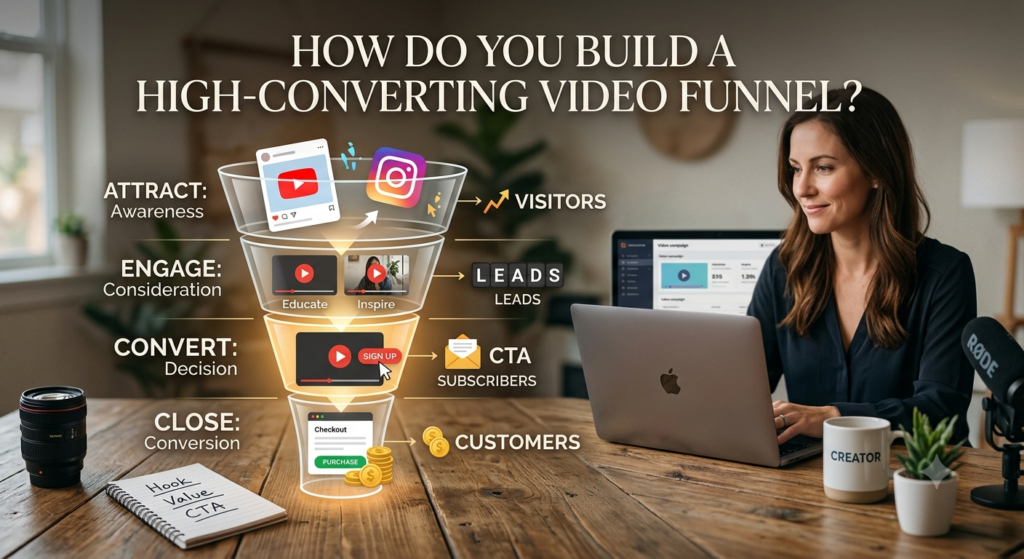
Video has become the fastest way to earn attention online. Text and images still matter, but video builds trust faster than almost any other format. A well-built video marketing funnel guides a stranger from first view to loyal customer. This matters more in 2025 than ever before, as platforms reward video content with wider reach. In this guide, we will break down a complete video marketing funnel for 2025. You will learn how to structure content for each stage, from first impression to repeat purchase. Along the way, we will focus on practical steps for video lead generation, so your funnel produces real, measurable results instead of just views. By the end, you will have a clear framework you can apply immediately, regardless of your industry or budget size.
Awareness Stage Video
The awareness stage introduces your brand to people who have never heard of you. At this point, viewers are not ready to buy. They are simply discovering that your business exists. Videos here should educate or entertain, without pushing a hard sales message.
Short-form video works especially well at this stage. Platforms favor quick, engaging clips that answer a common question or solve a small problem. For example, a skincare brand might post a fifteen-second video explaining one surprising ingredient benefit. This type of content spreads easily because it feels helpful rather than promotional.
Storytelling also plays a major role in awareness videos. People remember stories longer than they remember facts. A brief video showing how your product started, or a relatable customer struggle, creates an emotional connection early in the relationship. This connection makes viewers more receptive to future messages from your brand.
Consistency matters just as much as creativity. Posting occasionally will not build lasting awareness. Instead, aim for a regular publishing schedule across platforms where your audience spends time. Over weeks and months, this consistent presence builds familiarity, and familiarity naturally leads to trust.
It also helps to repurpose one core idea across multiple formats. A single interview or demonstration can become a short clip, a slightly longer highlight reel, and a full-length video. This approach saves production time while still reaching viewers who prefer different content lengths across different platforms.
Consideration Stage Content and it’s Video
Once viewers know your brand, the consideration stage helps them evaluate whether your product fits their needs. Here, video content should go deeper than awareness content. Viewers are actively comparing options, so your videos need to answer specific questions.
Product demonstration videos perform well during this stage. Showing your product in real use, rather than describing it, helps viewers picture themselves using it. Additionally, comparison videos that honestly address alternatives build credibility. Customers appreciate transparency, and a fair comparison often builds more trust than an overly promotional pitch.
Customer testimonial videos are particularly powerful for video lead generation. Hearing a real person describe their experience feels more credible than branded messaging alone. Keep these testimonials specific. A testimonial mentioning an exact result, such as time saved or a measurable improvement, works better than a vague, generic compliment.
Educational webinars and longer explainer videos also fit naturally here. Viewers at this stage are willing to spend more time if the content directly addresses their concerns. Therefore, do not shy away from slightly longer formats, as long as every minute adds real value.
Finally, consider gating some consideration-stage content behind a simple form. This is where video lead generation becomes measurable. A viewer willing to share their email for deeper content demonstrates genuine interest, giving your sales team a clear signal to follow up.
Keep the form itself short. Asking for too much information at this stage can discourage viewers who were otherwise ready to engage. A name and email address is usually enough to start a meaningful follow-up conversation without creating unnecessary friction.
Conversion Video
Conversion videos exist to move a warm lead toward an actual purchase decision. At this stage, viewers already understand your product. They need a final push of confidence to act.
Clear calls to action are essential in conversion videos. Every video should tell viewers exactly what to do next, whether that means starting a free trial, booking a call, or completing a purchase. Ambiguous endings waste the momentum built throughout the funnel.
Urgency and social proof both strengthen conversion videos. A limited-time offer, shown briefly and honestly, can encourage faster decisions. Similarly, displaying real numbers, such as customer counts or satisfaction ratings, reassures hesitant buyers that others have made the same choice successfully.
Personalized video also performs remarkably well at this stage. A short, direct video addressing a specific lead’s situation, even using their name or company, can significantly increase conversion rates compared to generic content. This approach works particularly well for higher-value products where personal attention influences the final decision.
Keep conversion videos short and focused. Unlike awareness content, this is not the place for lengthy storytelling. Viewers already care about your product. Your job now is simply to remove remaining doubt and make the next step obvious.
Testing different endings can reveal surprising results. Some audiences respond better to a direct, confident call to action, while others prefer a softer invitation. Running small experiments across your conversion videos helps you identify which approach consistently drives more completed purchases for your specific audience.
Retargeting with Video Ads
Not every viewer converts on their first visit. Retargeting with video ads recaptures attention from people who showed interest but did not complete a purchase. This stage often delivers the highest return on ad spend within the entire video marketing funnel.
Effective retargeting videos should reference the viewer’s previous action indirectly. For example, someone who viewed a specific product page might see a retargeting ad highlighting that exact product’s key benefit. This relevance significantly increases click-through rates compared to generic retargeting ads.
Frequency matters here as well. Showing the same retargeting video too often creates fatigue and can damage brand perception. Rotate several video variations, and set reasonable frequency caps to keep the experience fresh rather than repetitive or annoying.
Retargeting also works well for abandoned carts or incomplete sign-ups. A short video reminder, perhaps combined with a small incentive, can recover a meaningful percentage of lost conversions. This tactic is especially effective because these viewers already demonstrated strong intent before leaving.
Finally, measure retargeting performance separately from top-of-funnel campaigns. Because these viewers are further along the funnel, expect higher conversion rates but smaller audience sizes. Understanding this distinction helps you allocate budget more effectively across every stage of your video marketing funnel.
Consider extending your retargeting window based on your typical sales cycle. A low-cost product might only need a week of follow-up ads, while a higher-priced service could benefit from a longer window spanning several weeks. Matching the timeline to actual buyer behavior prevents wasted ad spend on audiences who have already moved on.
Conclusion
A successful video marketing funnel for 2025 requires intentional content at every stage. Awareness videos introduce your brand. Consideration content builds trust and generates leads. Conversion videos remove final doubts. Retargeting ads recapture missed opportunities. Together, these stages create a complete system that turns casual viewers into paying customers. Rather than creating random videos and hoping for results, this structured approach ensures every piece of content has a clear purpose. Review your funnel quarterly, since audience preferences and platform algorithms both shift throughout the year. Build high-converting video funnels with Social Prefix and turn your video strategy into a genuine growth engine.
Frequently Asked Questions
1. What is a video marketing funnel?
A video marketing funnel is a structured series of videos guiding viewers from initial brand awareness through consideration to a final purchase decision.
2. How long should awareness stage videos be?
Short, focused videos between fifteen and sixty seconds typically perform best, since viewers have not yet built a strong connection with your brand.
3. What makes video lead generation effective?
Offering genuinely valuable content, such as detailed webinars or exclusive guides, in exchange for contact information tends to attract high-quality leads.
4. Why is retargeting with video ads so effective?
Retargeting reaches viewers who already showed interest, making them more likely to convert compared to a completely cold audience.
5. How often should conversion videos be updated?
Refreshing conversion videos every few months helps prevent ad fatigue and keeps messaging aligned with current offers and social proof.
Also Read:
How Do You Report Social Media Analytics? Ultimate Guide
How Do Growing Brands Handle Social Media Reporting? Ultimate Guide