
Customer Retention Marketing Strategy for Long-Term Growth
Acquiring new customers costs far more than keeping existing ones. Yet many businesses focus almost entirely on acquisition. This imbalance leaves growth potential untapped. A strong customer retention marketing strategy changes this equation completely. It turns one-time buyers into repeat customers and loyal advocates. This guide covers the key building blocks of effective retention marketing, including loyalty programs, retention flows, upsell strategies, and lifetime value measurement. Business owners, marketers, and startup founders will find practical steps to apply immediately.
No matter your industry, the core idea stays the same. Customers who feel valued and understood keep coming back. Building a system around that idea, rather than relying on one-off promotions, creates compounding growth over time. The following sections break down exactly how to build that system piece by piece.
Loyalty Programs for Customer
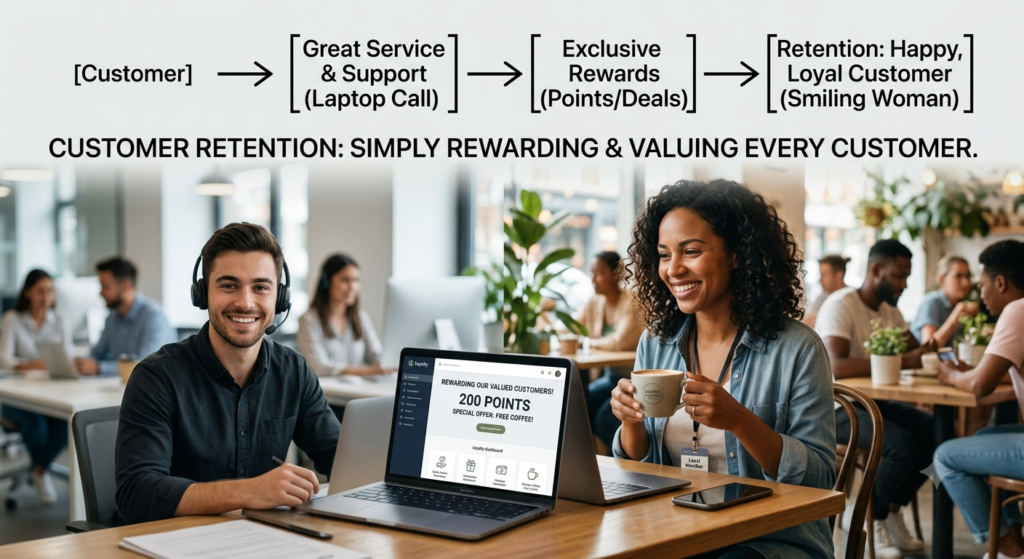
Loyalty programs reward customers for continued engagement with your brand. Points, tiers, and exclusive perks all encourage repeat purchases. When done well, these programs make customers feel valued rather than just targeted.
A simple points system works for many businesses starting out. Customers earn points per purchase and redeem them for discounts or free products. Additionally, tiered programs reward your most loyal customers with better perks over time. This creates a sense of progress and achievement.
Gamification elements, such as progress bars toward the next reward tier, can further boost engagement. Customers enjoy seeing tangible progress toward a goal. This visual feedback encourages them to make another purchase sooner than they otherwise might.
However, loyalty programs must stay simple to succeed. Complicated rules confuse customers and reduce participation. Therefore, keep the structure clear and the rewards meaningful. A well-designed loyalty program directly supports your broader repeat purchase strategy.
Consider offering early access to new products for top-tier members. This kind of perk feels exclusive without costing much to deliver. Similarly, birthday rewards or surprise bonuses create positive emotional moments that customers remember. These small touches often matter more than the size of the discount itself.
Email & SMS Retention Flows
Automated email and SMS flows keep your brand present without constant manual effort. These messages remind customers to return, celebrate milestones, and highlight relevant offers. Timing and relevance matter more than frequency.
Post-purchase flows are a great starting point. Send a thank-you message, followed by product tips, then a review request. Similarly, win-back flows target customers who have not purchased in a while. A well-timed discount or reminder can reactivate a dormant customer.
SMS works well for time-sensitive offers due to high open rates. Meanwhile, email suits longer content like guides or loyalty updates. Combining both channels creates a consistent retention experience. This approach keeps customers engaged throughout their entire journey with your brand.
Segment your audience before sending any retention message. A first-time buyer needs different messaging than a customer who has purchased ten times. Consequently, tailored flows perform better than generic blasts sent to your entire list. Testing subject lines and send times also improves open rates over time.
Upsell & Cross-Sell Strategy for Customer Retention
Upselling and cross-selling increase revenue from existing customers without new acquisition costs. Upselling encourages customers to choose a higher-value option. Cross-selling suggests complementary products that add value to their purchase.
Timing plays a critical role in both strategies. Offering an upsell during checkout often works better than after the sale is complete. In contrast, cross-sell suggestions work well in follow-up emails once customers have used the initial product. This spacing prevents the offer from feeling pushy.
Testing different placements helps identify what works best for your audience. Some customers respond well to in-app suggestions, while others prefer email-based recommendations sent a few days after purchase. Running small experiments before scaling a tactic across your entire customer base reduces the risk of a poor experience.
Personalization also improves results significantly. Recommendations based on past purchase behavior feel relevant rather than random. As a result, customers are more likely to accept the suggestion. A thoughtful upsell and cross-sell strategy strengthens both revenue and customer satisfaction.
Bundling is another effective tactic within this strategy. Grouping complementary products at a slight discount encourages larger orders. Meanwhile, showing “customers also bought” suggestions on product pages captures interest at the right moment. These tactics work best when they genuinely add value rather than simply pushing more products.
Measuring Lifetime Value for Customer
Customer lifetime value, or LTV, shows the total revenue a customer generates over time. This metric helps businesses understand which retention efforts truly work. Without measuring LTV, retention strategies are just guesses.
Calculating LTV involves average purchase value, purchase frequency, and customer lifespan. Tracking this number over time reveals trends in customer behavior. Furthermore, segmenting LTV by customer group shows which audiences respond best to retention efforts. This data guides smarter marketing investment decisions.
Businesses should review LTV alongside acquisition costs regularly. This comparison shows whether retention marketing is delivering real returns. Consistent tracking turns retention from a nice idea into a measurable growth driver.
For example, a business might discover that customers who join a loyalty program have a noticeably higher LTV than those who do not. This insight justifies further investment in loyalty features. Similarly, tracking LTV by acquisition channel reveals which marketing sources bring in the most valuable long-term customers, not just the cheapest ones.
Bringing the Strategy Together for Customer
Loyalty programs, retention flows, upsell tactics, and LTV tracking work best as a connected system. Each element supports the others. For example, loyalty data can inform which customers receive personalized upsell offers. Meanwhile, retention flows can highlight loyalty rewards to boost participation.
Start with one element if resources are limited. Many businesses begin with email retention flows due to their low cost and high impact. From there, add loyalty programs and refine upsell strategies as data becomes available. This phased approach builds a sustainable customer retention marketing strategy over time.
It also helps to assign clear ownership for each piece of the strategy. One team member might manage loyalty program performance, while another focuses on email and SMS flows. Regular cross-functional check-ins ensure these efforts stay aligned rather than working in isolation. This coordination is often what separates a strategy that works from one that stalls after launch.
Conclusion
Long-term growth depends on more than constant new customer acquisition. A thoughtful customer retention marketing strategy turns existing customers into a reliable revenue source. Loyalty programs build emotional connection, while email and SMS flows keep engagement steady. Upsell and cross-sell tactics increase revenue naturally, and LTV measurement confirms what is working. Together, these elements create a repeat purchase strategy that supports sustainable growth. Start small, measure results, and expand your efforts as you learn what resonates most with your customers.
Retention marketing is not a one-time campaign. It is an ongoing relationship built through consistent, thoughtful touchpoints. Businesses that commit to this approach see steadier revenue, stronger customer relationships, and a clear path toward long-term, sustainable growth.
Increase LTV with Social Prefix. Ready to strengthen your customer retention marketing strategy? Connect with Social Prefix to build a plan that increases lifetime value.
Frequently Asked Questions
1. What is customer retention marketing?
Customer retention marketing focuses on keeping existing customers engaged and encouraging repeat purchases, rather than only attracting new buyers.
2. How do loyalty programs support a repeat purchase strategy?
Loyalty programs reward continued engagement, giving customers a reason to return and make additional purchases over time.
3. What is the best channel for retention flows, email or SMS?
Both work well together. Email suits detailed content, while SMS works best for time-sensitive offers and reminders.
4. How does upselling differ from cross-selling?
Upselling encourages a higher-value purchase, while cross-selling recommends complementary products that add value to the original purchase.
5. Why is customer lifetime value important?
Lifetime value shows the total revenue a customer generates, helping businesses measure the real impact of retention efforts.
Also Read:
How Do You Build a High-Converting Video Funnel? Ultimate Guide
How Do You Report Social Media Analytics? Ultimate Guide