
The modern world of digital marketing is no longer a game of guessing. Instead, success now depends on how well you can turn raw numbers into real profit. By using a smart marketing analytics strategy, you can see exactly what your customers want before they even ask. Consequently, this blog shows you how to use data to fuel your growth in 2026. To achieve this, you must move beyond just looking at charts and start making choices based on facts. Ultimately, this path leads to higher sales and a much stronger brand. Therefore, every business must master the art of data if they want to win.
Collecting Actionable Data
Not all data is useful for your brand. In fact, having too much information can often lead to confusion. To start, you must focus on collecting data that you can actually use to improve. Specifically, look at how users move through your site and where they choose to leave. In addition, track which social posts lead to the most sign-ups. By doing so, you find the “why” behind every click. Moreover, smart tools now help you clean this data in real time. As a result, you spend less time sorting and more time winning. Clearly, gathering the right facts is the first step toward a better marketing plan.
Attribution Models in 2025
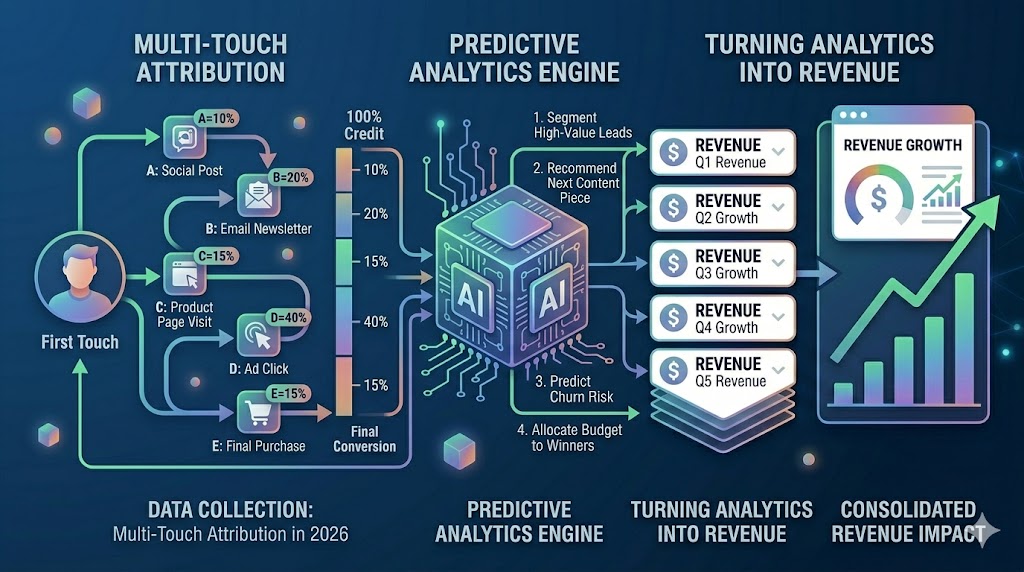
Knowing which ad gets the final sale is good, but knowing the whole journey is much better. In the past, many used simple models that only looked at the last click. However, modern marketing analytics strategy now uses multi-touch attribution. This approach gives credit to every step of the path, from the first ad to the final checkout. For example, a lead might see a post on LinkedIn, then a video on YouTube, and finally search for your name on Google. By using these advanced models, you can see which channels are truly worth your money. Thus, you can spend your budget where it helps the most.
Predictive Insights
The biggest shift in marketing today is the move from looking back to looking forward. Through the use of AI, you can now gain predictive insights into what will happen next. For instance, smart tools can tell you which leads are most likely to buy next week. Furthermore, they can predict when a customer might leave so you can stop them. As a result, you can take action early and save your revenue. In addition, this tech helps you find new groups of people who look like your best buyers. In short, predictive data is like having a crystal ball for your business growth.
Building a Data Culture
Having the best tools is not enough if your team does not use them. Therefore, you must build a strong data culture within your company. First, ensure that everyone has access to the same clean reports. Second, encourage your team to test their ideas with data rather than just gut feelings. In light of this, every choice becomes smarter and more stable. Moreover, this shared focus leads to faster wins and less wasted time. When everyone understands the marketing analytics strategy, your whole brand moves in the same direction. Ultimately, a data-driven team is a winning team.
Frequently Asked Questions
1 Is marketing analytics hard for a small business?
No, because many modern tools handle the hard math for you and give you simple answers.
2 Why is attribution so important?
This is because it helps you see the hidden value in your ads that do not get the final click.
3 How often should I check my data?
You should check your main stats every day, but look for big trends every week.
4 Does data replace creative ideas?
On the contrary, data helps you see which creative ideas work the best for your fans.
5 What is the first step to a data culture?
Simply start by asking for a data report before making any big new choice.
Read More:
How to Capture marketing Results with a Proven Funnel
How to Find high ticket leads and Scale Fast