
Marketing should not require constant manual effort every single day. Many small teams feel stretched thin, juggling emails, leads, and reports. An automated marketing system can change that completely.
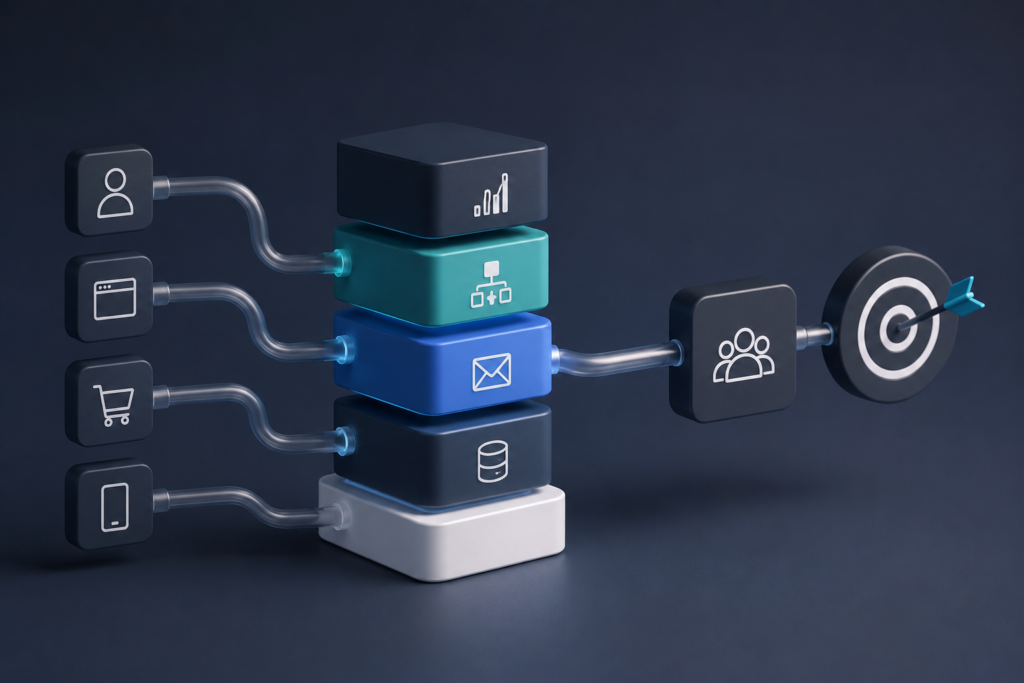
An automated marketing system connects your tools so they work together automatically. Instead of repeating tasks by hand, your marketing automation stack handles the heavy lifting. This frees your team to focus on strategy and creativity.
Building this kind of system takes planning, but it pays off quickly. Once set up, your marketing runs smoothly with far less daily attention. Leads get nurtured, emails get sent, and reports update themselves.
Picture a Monday morning where leads from the weekend are already sorted and contacted. No one had to log in over the weekend to make that happen. That is what a well-built automated marketing system delivers consistently.
This guide walks through the key pieces of an automated marketing system. You will learn how each part works together to create real autopilot marketing. By the end, you will have a clear path to building your own.
CRM and Automation Integration
A strong automated marketing system starts with CRM and automation integration. Your customer relationship management tool should connect directly to your marketing automation stack. This connection keeps customer data accurate and up to date everywhere.
Without integration, teams often work from separate, disconnected systems. Sales sees one version of a lead while marketing sees another. This disconnect causes missed opportunities and frustrated customers.
When your CRM and automation tools talk to each other, information flows automatically. A new lead entering your CRM can trigger an automatic email sequence instantly. No manual data entry is required at any step.
This kind of automatic flow eliminates a common source of human error. Forgotten follow-ups and duplicate entries become far less common. Both sales and marketing benefit from cleaner, more reliable data.
Integration also improves reporting accuracy significantly. Sales and marketing teams can see the same data in real time. This shared visibility helps both teams make better decisions together.
Choosing compatible tools matters greatly during setup. Not every CRM connects easily with every automation platform. Researching integration options before purchasing software saves time and frustration later.
Many popular platforms now offer built-in integrations or simple plugins. HubSpot, Salesforce, and similar tools often connect smoothly with common automation systems. Checking compatibility early prevents costly technical headaches down the road.
Furthermore, syncing contact records across platforms avoids duplicate work entirely. A single source of truth keeps every team aligned on the same customer history. This consistency becomes more valuable as your contact list grows.
Once integrated, your automated marketing system becomes the foundation for everything else. Lead scoring, email flows, and reporting all depend on this connection working properly.
Lead Scoring
It is a core part of any effective marketing automation stack. It ranks leads based on how likely they are to become customers. This ranking helps your team prioritize effort where it matters most.
Without lead scoring, sales teams often waste time on unqualified leads. Every inquiry gets treated the same, regardless of real interest. This approach wastes valuable time and resources.
An automated marketing system assigns points based on specific behaviors. Opening emails, visiting pricing pages, or downloading guides all earn points. Higher scores indicate stronger buying intent.
A lead who visits your pricing page three times sends a clear signal. That behavior matters more than a single newsletter click. Good scoring models weigh these differences accurately.
Demographic information also factors into lead scoring. Job title, company size, and industry can all influence a lead’s score. Combining behavior and demographics creates a more accurate picture overall.
Once a lead reaches a certain score, automation can trigger the next step. The system might notify a salesperson or send a more personalized offer. This timing ensures leads receive attention exactly when interest peaks.
Lead scoring models need occasional adjustment as your business evolves. What worked last year may not reflect current buyer behavior. Regularly reviewing your scoring criteria keeps the system accurate and effective.
Marketing and sales teams should agree on scoring criteria together. This alignment prevents confusion about which leads deserve immediate follow-up. Clear communication between teams strengthens the entire automated marketing system.
Without that agreement, sales may ignore leads marketing considers valuable. Shared definitions of a qualified lead remove this friction. Everyone ends up working from the same playbook.
Meanwhile, consistent definitions also make reporting more meaningful. Conversion rates only mean something when everyone agrees on what counts as a qualified lead in the first place.
Email and Retargeting Flows
Email and retargeting flows bring your automated marketing system to life. These flows nurture leads automatically, without requiring constant manual sending. They keep your brand visible throughout the buyer’s journey.
Email automation typically begins with a welcome sequence. New subscribers receive a series of helpful, well-timed messages. This sequence introduces your brand and builds trust gradually.
From there, behavior-triggered emails take over. A lead who downloads a guide might receive related content automatically. Someone who abandons a cart might receive a gentle reminder shortly after.
These triggers feel personal, even though they run automatically. A timely, relevant email rarely feels like spam. It feels like the brand was paying attention at exactly the right moment.
Retargeting ads work alongside email flows effectively. These ads follow website visitors across other platforms, reminding them of your brand. Combined with email, retargeting reinforces your message through multiple channels.
This multi-channel approach increases the chances of conversion. People rarely buy after a single interaction. Consistent, automated touchpoints keep your brand present until they are ready to decide.
Personalization strengthens these flows considerably. Generic messages often get ignored or deleted quickly. Automated systems that personalize content based on behavior tend to perform much better.
Timing also matters greatly within email and retargeting flows. Sending too many messages can overwhelm leads and damage trust. A well-built marketing automation stack paces communication thoughtfully, based on real engagement signals.
Testing different subject lines and send times improves results further. Small adjustments often reveal what truly resonates with your audience. Over time, these insights make every flow more effective.
Similarly, segmenting your audience by interest or behavior sharpens these flows even more. A single broad email rarely performs as well as several targeted ones sent to smaller groups.
Reporting Dashboards
Reporting dashboards complete the automated marketing system by showing real results. Without clear reporting, it becomes difficult to know what is actually working. Dashboards turn raw data into clear, actionable insights.
A strong dashboard pulls data from every part of your marketing automation stack. This includes email performance, lead scoring trends, and campaign results. Viewing everything in one place saves significant time.
Real-time dashboards allow teams to react quickly to changes. If a campaign underperforms, teams can adjust before wasting additional budget. This responsiveness is a major advantage of automation.
A dip in open rates, for example, can be spotted within hours instead of weeks. Quick visibility means quick correction. Small problems get fixed before they affect an entire quarter.
Custom dashboards work best for different team members. Executives may want high-level summaries, while marketers need detailed metrics. Tailoring dashboards to each audience improves usefulness across the organization.
Automated reporting also reduces manual work significantly. Instead of building reports by hand each week, dashboards update automatically. This consistency ensures decisions are based on current, accurate data.
Tracking the right metrics matters more than tracking everything possible. Focus on conversion rates, lead quality, and revenue impact. These metrics connect marketing efforts directly to business outcomes.
Vanity metrics, like raw click counts, can be tempting to watch. They rarely tell the full story on their own, though. Pairing them with conversion data gives a far more honest picture.
Consequently, teams that focus on revenue-linked metrics tend to make better budget decisions. They know exactly which channels and flows deserve more investment.
Over time, dashboards reveal patterns that improve your entire automated marketing system. Teams can identify which flows perform best and refine weaker areas. This continuous improvement keeps your marketing running efficiently on autopilot.
Conclusion
Building a marketing system that runs on autopilot takes thoughtful setup, but the results are worth it. From CRM integration to lead scoring, email flows, and reporting, each piece supports the others. Together, they create a marketing automation stack that works quietly in the background.
Once built, your automated marketing system frees your team to focus on strategy and growth. Leads get nurtured automatically, reports update themselves, and your marketing keeps moving forward, even on busy days.
Start with one piece if the full system feels overwhelming at first. Connect your CRM, then add lead scoring, then build out email flows. Each step makes the next one easier to put in place.
Finally, remember that automation is meant to support your team, not replace its judgment. The system handles repetition, while your team focuses on strategy and the relationships that truly drive growth.
Frequently Asked Questions
- What is an automated marketing system?
An automated marketing system connects tools like CRM, email, and analytics to handle marketing tasks automatically. - Why is CRM integration important for automation?
CRM integration keeps customer data accurate across systems, allowing automated workflows to trigger correctly without manual input. - How does lead scoring improve marketing automation?
Lead scoring ranks leads by buying intent, helping teams prioritize follow-up and focus effort on the most promising leads. - Can small businesses use a marketing automation stack?
Yes. Many affordable tools allow small businesses to build a simple, effective marketing automation stack. - How do reporting dashboards support an automated marketing system?
Reporting dashboards track performance in real time, helping teams refine campaigns and improve results continuously.
Read More:
Growth Hacking 2026 Methods That Actually Work
How to Execute Omnichannel Marketing in 2026: Complete Guide