
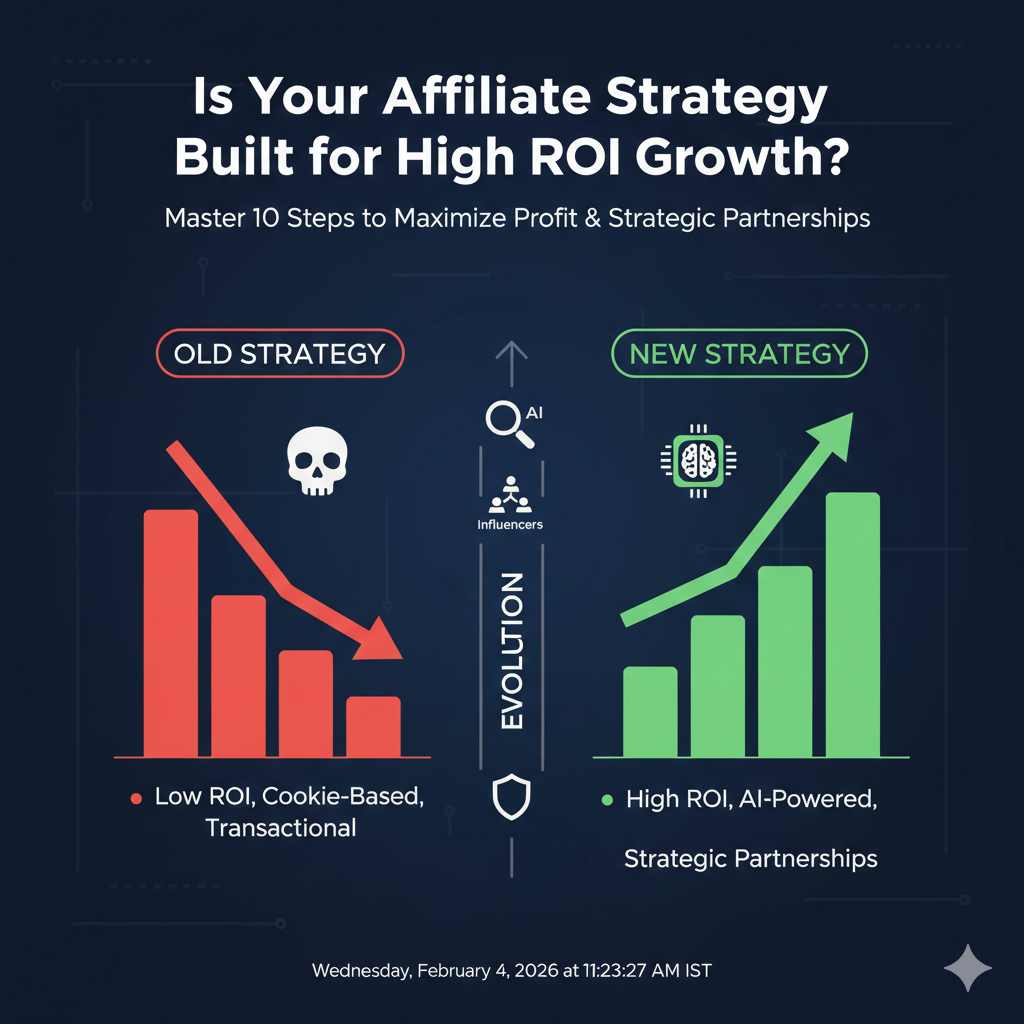
The Shift from Transactions to Strategic Partnerships
I’ve heard it a thousand times. A company treats its affiliate program like a set-it-and-forget-it tool. And yet, their marketing team wonders why their growth is flat. Usually, that is just a polite way of saying the program is too passive. Also, the brands are too busy chasing volume to build real trust with partners. If you are only paying for clicks while your competitors build long-term ties, you are building a ghost town.
In fact, an affiliate program built on deep trust is worth much more than a network of general links. Furthermore, the biggest budget killer in 2026 is relying on old cookie-based tracking. This happens when brands lose data because of new privacy rules. This path creates a massive gap in your data. Because of this, brands want a more secure way to track their sales.
The solution lies in a smart fusion of AI tech and human relationships. This turns a simple link into a powerful growth engine. This isn’t just a tech fix. Instead, it is a strategic shift. This empowers every brand to scale with conviction. Once you use these partner tools, you will see your sales pipeline grow with high-quality leads.
1. AI: The New Strategic Partner for Growth
If you aren’t using AI to manage your partners, you are flying blind. Specifically, smart systems now use predictive analytics to find the best partners for your niche. You need to know which affiliates will drive the best lifetime value. For example, was it the niche blog or the short-form video creator? Smart brands use AI-powered tools to analyze these patterns. Then, they suggest the best commission rates for every partner.
Moreover, smart AI plans allow for a steady gain in market share. This is because they focus on high-quality user paths and fraud detection. By using a data-first plan, you help your program win. This leads to steady gains. It sounds simple. However, most brands are too busy guessing to look at the AI success in 2026.
2. The Rise of Micro-Influencers and UGC
The move to smaller, niche creators is happening faster than we thought. While big stars have reach, micro-influencers add high trust through personal ties. These creators use real stories to sell products. These stories act like a smart bridge to a loyal audience. Many brands now prefer nano-influencers with just 5,000 followers because they drive more qualified leads.
However, simple posts are not enough for a big change. The most top-tier stage is creator-led commerce through video and live shopping. These tools handle the shift from browsing to buying in real-time. These systems help brands stay relevant. Consequently, they act as a smart brain for your social sales strategy.
3. Privacy-First Tracking and Attribution
To build smart sales tools, you should not have to glue poor data together. The new rules of 2026 demand first-party data solutions. Specifically, this draws on server-to-server tracking to give safe answers to privacy shifts. This means a brand can track a sale with full data ready to go, even without cookies.
Additionally, think of a case where your attribution better understands the whole journey. It uses multi-touch models to give fair credit to every touchpoint. This base ensures that your responses to partner needs stay strong. Therefore, it stops the friction that slows down your best affiliates. It helps them finish their day with more fair payouts and fewer errors.
4. The 80/20 Rule of Partner Management
If your brand spends all its time on general networks, you have no time for high-value ties. You must follow an 80/20 rule. Thus, use your top 20% of partners to drive 80% of your value. This includes co-creating content or giving early access to products. This leaves the 20% of simple admin work to automated tools.
Using fast AI tools helps your program stay on track without manual work. AI can even set up fast replies for partner questions. This allows your team to work in a flow. They do not have to switch between many tools. This leads to much faster growth.
5. Track the Metrics That Actually Hit the Bank
If your manager talks about total clicks but not lead quality, you need a new plan. Those are vanity marks that hide a weak spot. You can have many clicks but no real profit in the bank. To know if you are winning, you must track the “Dirty Four”:
- Incrementality: First, did this sale happen only because of the affiliate?
- Customer LTV: Next, what is the total long-term value of these new users?
- Mobile Conversion: Then, how fast do your mobile clicks turn into sales?
- Fraud Rate: Finally, when you use AI, how much of your budget is saved from bots?
Conclusion
How to win the future of affiliate marketing? It shifts from a secret to a system when you pick your niche well. You must set clear goals for the channel. Also, track gains with care using AI data. Repeat this for 90 days. Then, growth becomes steady. This helps you spend your budget with trust.
Key Takeaways
- First, the global affiliate industry is projected to exceed $20 billion by 2026 because it delivers high ROI.
- Therefore, brands must adopt AI-driven automation for real-time campaign optimization and fraud detection.
- Specifically, multi-touch attribution models are essential to track complex customer journeys across different devices.
- Furthermore, partnerships with micro and nano-influencers often drive higher engagement than massive accounts.
- Consequently, shifting to first-party data strategies is now vital due to the phase-out of third-party cookies.
- In fact, video content and live commerce are becoming primary tools for high conversion rates.
- For instance, brands can see returns as high as $15 for every $1 spent on affiliate channels.
- Thus, mobile commerce now drives over 50% of affiliate traffic and requires mobile-first optimization.
- In addition, voice search optimization is emerging as a crucial new area for content strategy.
- Finally, moving from simple transactions to long-term brand partnerships boosts conversion by up to 40%.
FAQs
Q1: Will AI replace human affiliate marketers?
Ans. No, but it will act like a smart helper for tasks like finding partners and stopping fraud.
Q2: Why are micro-influencers better than big stars?
Ans. They have higher trust and engagement rates, often leading to better lead quality.
Q3: Is it better to focus on my own site or social apps?
Ans. Good brands use a mix of both, but mobile and social tools are growing very fast.
Q4: How do I track sales without third-party cookies?
Ans. You must move to server-side tracking and use first-party data to stay safe and accurate.
Q5: What is the biggest risk for brands in affiliate marketing?
Ans. Ad fraud and poor tracking are big risks, so make sure you use smart tech tools.
READ MORE:
10 Secret Webinar Hacks for High Quality Leads Today
Steps to Master WhatsApp Marketing in 30 Days: Ultimate Guide