lead generation

Ad optimization, affiliate marketing, AI Adoption, AI Advertising, AI Chatbots, AI investment, AI Marketing, AI Personalization, AI ROI, AI Search SEO, Data Analytics, Growth marketing

How Do Growth-Stage Firms Use LinkedIn Ads? Ultimate Guide

Advanced LinkedIn Ads Strategy for B2B Growth LinkedIn has become one of the strongest channels for B2B growth. However, running ads there requires more than boosting a post. A real LinkedIn ads strategy needs precise targeting, smart lead capture, and constant optimization. This guide breaks down an advanced approach to B2B LinkedIn campaigns. You will learn how to target the right buyers, capture leads efficiently, retarget interested prospects, and control your costs. Each section builds on the last, so you can apply these tactics in order. Let’s start with the foundation of every strong campaign: audience targeting. Audience Targeting on LinkedIn Audience targeting determines whether your LinkedIn ads strategy succeeds or fails. Even the best ad creative underperforms if it reaches the wrong people. Therefore, targeting deserves the most attention early in your campaign setup. Start with firmographic filters. LinkedIn lets you target by company size, industry, and revenue range. These filters narrow your audience to companies that actually fit your ideal customer profile. Next, layer in job title and seniority targeting. B2B buying decisions usually involve multiple stakeholders. Targeting both decision-makers and influencers within a company often produces stronger results than targeting one title alone. Additionally, consider using matched audiences. This feature lets you upload existing contact lists or retarget website visitors directly. Matched audiences typically convert better, since these people already know your brand. Finally, avoid targeting audiences that are too broad or too narrow. A broad audience wastes budget on unqualified clicks. A narrow audience limits your reach and slows down ad delivery. Testing different audience sizes helps you find the right balance for your specific offer. Lead Gen Forms On LinkedIn Lead gen forms are one of LinkedIn’s most valuable features for B2B campaigns. They let users submit their information without leaving the platform. This convenience significantly increases conversion rates compared to standard landing pages. The main advantage comes from pre-filled fields. LinkedIn automatically populates a user’s name, job title, and company using their profile data. As a result, users complete forms in seconds, which reduces drop-off during the submission process. However, lead gen forms only work well when the offer feels valuable. A generic newsletter signup rarely performs strongly. In contrast, offers like industry reports, product demos, or free assessments tend to attract higher-quality leads. Keep your form fields minimal. Every extra field you add reduces your completion rate. Stick to the essentials, such as name, email, and company, unless additional data is truly necessary for qualification. Also, connect your lead gen forms directly to your CRM. Manual exports create delays that hurt your response time. Fast follow-up after a form submission significantly improves your chances of converting a lead into a customer. Retargeting Sequences On LinkedIn Most B2B buyers do not convert on their first ad interaction. Retargeting sequences solve this problem by keeping your brand visible throughout a longer decision-making process. This step often separates average campaigns from truly effective ones. Start by segmenting your retargeting audience. Website visitors, video viewers, and lead gen form abandoners all deserve different messaging. Treating every visitor the same way wastes an opportunity to move them further down the funnel. For website visitors, focus on trust-building content. Case studies, testimonials, and product comparisons work well here. These visitors already showed interest, so your goal is reinforcing credibility. For video viewers, consider a more direct offer. Someone who watched most of a video likely has genuine interest. A demo request or consultation offer often performs well with this warmer audience segment. Meanwhile, sequence your ads over time rather than showing the same message repeatedly. Rotating creative every one to two weeks prevents ad fatigue. This approach also lets you test which messaging resonates most with each audience segment. Cost Optimization Cost control matters just as much as targeting and creative. Without careful monitoring, LinkedIn ad spend can grow quickly with little return. Fortunately, several proven tactics help manage costs effectively. First, monitor your frequency metrics closely. If the same users see your ad too often, engagement drops and costs rise. Capping frequency, or refreshing your audience regularly, helps maintain efficiency. Second, test bidding strategies carefully. Automated bidding works well for broad awareness campaigns. However, manual bidding often gives you more control for lead generation campaigns, where cost per result matters most. Third, review your ad relevance regularly. LinkedIn rewards ads that generate strong engagement with lower costs. Poor-performing creative not only underperforms, it can also raise your overall campaign costs over time. Finally, analyze cost per qualified lead, not just cost per click. A cheap click means little if it never converts. Tracking the full funnel helps you understand true return on investment, rather than surface-level engagement numbers. Conclusion An advanced LinkedIn ads strategy requires more than launching a campaign and hoping for results. Strong audience targeting, efficient lead gen forms, thoughtful retargeting sequences, and disciplined cost optimization work together to drive real B2B growth. Each element in this guide connects to the next. Better targeting improves lead quality. Strong lead gen forms increase conversion. Retargeting nurtures prospects who are not ready yet. Cost optimization ensures your budget delivers maximum value throughout the process. If you want expert help building and managing high-performing B2B LinkedIn campaigns, Generate qualified B2B leads with Social Prefix. Their team specializes in LinkedIn ads strategy designed specifically for B2B growth. Frequently Asked Questions 1. What makes a LinkedIn ads strategy effective for B2B companies? An effective strategy combines precise audience targeting, strong offers, retargeting sequences, and ongoing cost optimization. Each element supports the others throughout the buyer’s journey. 2. Are LinkedIn lead gen forms better than landing pages? Lead gen forms often convert better because they use pre-filled profile data. However, landing pages can work well when you need more detailed qualification information. 3. How long should a retargeting sequence run? Most B2B retargeting sequences run for several weeks, since buying decisions often take time. Rotating creative every one to two weeks helps prevent ad fatigue. 4. What is a good cost […]

AI Chatbots, AI Support, Business Scaling, Consumer Engagement, Customer Service, Leads Generation, Marketing Tech, Sales Automation

Is scaling with ai chatbots the ultimate ROI hack for 2026?

The world of modern business is moving at a very fast pace today. Many firms wonder how they can stay ahead of the next big shift. However, the answer lies in choosing the right path for your digital growth. Because of this, staying ahead means looking toward a smart and flexible leader. Specifically, using ai chatbots is now a vital step for your firm. This shift offers a clear map for success and a very professional way to work. This move is not just a trend for small teams. In fact, it is a very smart investment for any brand today. Consequently, a smart choice helps you build a future proof brand name. Boosting Your Sales Funnel with Smart Tools Many firms find that hunting for new leads is very hard. However, teams still try to hunt for the best tools for months. First, traditional ways are far too expensive and slow for most small firms. Specifically, ai chatbots can hide many deep and dark costs of manual work. Furthermore, finding a top tool that stays for the long term is rare. You also miss out on fast moves while your lead list stays low. Similarly, paying for a role that lacks deep care is a big waste. This puts your business growth at a total halt for a long time. In contrast, making a strategic tech hire like ai chatbots early on helps you win. Indeed, it is the best step for serious and fast global growth. Setting a Gold Standard for Your Digital Team The journey to the top begins when you pick a dedicated tech partner. At this stage, you might wonder why a cheap pick often fails you. These ai chatbots must act as your top guide on a steady basis. They ensure your tech and its true worth match your business goals. They are built to spark fast progress in every single chat project. You should also know that an executive partner offers more than a simple task list. While a solo human just finishes a task, ai chatbots guide your whole path. Furthermore, they move firms past the fear of bad tech choices early. This approach starts very strong by setting a gold standard for all. It truly boosts initial trust for you every day with fans. Your choice of ai chatbots shapes your whole brand future. Scaling Fast with a Strategic Leadership Model After you join the model, the goal shifts to gaining big wins. One of the top wins of expert help is getting dedicated guidance. These ai chatbots then deliver a very custom plan for your firm. This path matches what you need and how you act every day. Therefore, if a project starts, you get fast and clear focus. You also gain access to a very diverse and deep skillset. This includes design, dev, and very deep digital security through ai chatbots. Access to these skills keeps all your users very happy and safe. It also shows you know your specific needs in a tough market. Your brand and its trust are too vital to risk right now. The reality of high-level support from ai chatbots is clear for those who scale. How a Unified View Drives Real Business Value As a firm’s tech grows, a strategic lead helps you find new ways. At this stage, ai chatbots focus on building a very strong architecture. This plan is specific to what the modern user likes and wants. For example, some might get a faster way to find new items. The timing of these moves is very key for your success. Furthermore, the leader handles all your vendors and developers with ease. This ensures your ai chatbots plan is solid from the very first step. Such smart timing helps firms move toward a big global win. Smart leaders push for more scale every single year for you. Indeed, the right partnership with ai chatbots reveals who is truly ready. Well timed tech lead truly matters in the modern business world. Turning Insights into a Sustainable Content Edge Data is the backbone of all smart marketing and content success today. These ai chatbots constantly track how every user acts with your tech. This includes how they read and share your posts or apps. These facts help refine the paths for every brand you lead. Therefore, the system learns and grows over time to serve you better. This data driven path ensures the best results for your firm. It also prevents any bad risks from hurting your brand name. Smart leadership through ai chatbots relies on real facts to win every single time. Your plan and focus are too important to risk at any step. The core of your strategy with ai chatbots is about long term brand health. Joining Human Talent with Efficient Tech Systems For the best results, smart tech joins your team in a seamless way. This link ensures all facts stay in one place for your team. Managers and ai chatbots share the same live info to move faster. This stops double work and missed ideas for new products or sales. The system provides a full view of every piece you need. Consequently, it supports personal touches at every single step of the way. Your strategy works best when ai chatbots are joined with intelligent tools. It sets a strong base for your future success in any market. Thus, picking the right tech head is about building a real team. It is a key part of how ai chatbots help in your modern world politics and trade. Is a Manual Path Harming Your Long Term ROI? Picking the slow path for scaling is a very big risk. You must look for signs that your business needs ai chatbots. If your tech is slow, you might need a new plan now. If your costs are too high, experienced ai chatbots can fix the leak. The process makes your work much easier and more clear. It also leads to more […]

CTA, Customer Engagement, Engagement, Google, Leads Generation, Marketing, Site Traffic, Social Commerce, social media engagement

10 Secret Webinar Hacks for High Quality Leads Today

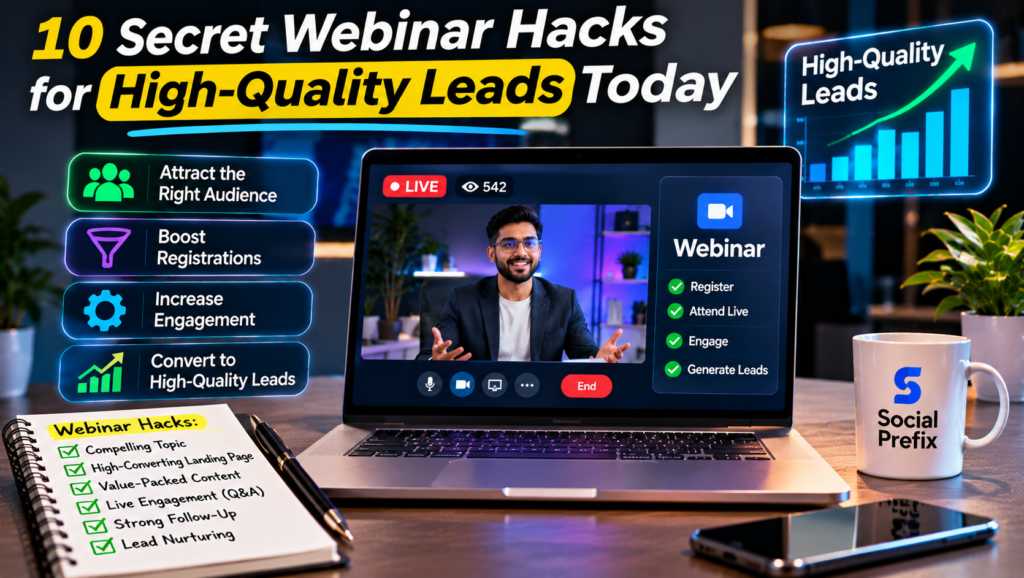
Traditional lead generation often feels very impersonal because it lacks the direct engagement of a real conversation with potential customers. However, once you learn how to leverage webinar, you will see much higher engagement and a significant boost in qualified leads. I have used these exact strategies to help brands slash their advertising costs while seeing a massive boost in conversions. The Problem With Cold Outreach Many businesses still rely on cold emails or generic content that people often ignore. This approach creates a massive disconnect because these methods lack the personal feel of a real interaction. You might feel frustrated when your expensive ad campaigns fail to bring in genuinely interested prospects. Cold outreach is like shouting at a crowd and hoping one person looks your way; it’s inefficient and often ineffective. The solution lies in creating a highly engaging, interactive experience where potential customers willingly invest their time to learn from you. Webinars allow you to demonstrate your expertise, build trust, and address pain points in a live, dynamic setting. Once you apply these personal touchpoints, you will see your sales pipeline fill with genuinely interested prospects. I have seen small B2B companies double their lead quality by simply hosting well-structured webinars. Strategy 1: Define Your Target Audience and Their Pain Points Before anything else, clearly identify who you want to attract and what problems they are trying to solve. A focused webinar topic that directly addresses a specific pain point will attract a more qualified audience. For example, instead of “Digital Marketing Basics,” choose “How B2B SaaS Companies Can Double Leads in Q2.” This precision ensures you’re speaking to the right people. Strategy 2: Create Compelling, Solution-Oriented Content Your webinar content should not just inform but also inspire and provide actionable solutions. Focus on delivering immense value, showcasing your expertise, and subtly positioning your product or service as the ultimate solution. Use case studies, live demos, and interactive polls to keep the audience engaged and illustrate real-world success. Strategy 3: Optimize Your Registration Page for Conversions Your registration page is your first conversion point. It needs to be clear, concise, and persuasive, highlighting the key benefits attendees will gain. Use strong headlines, bullet points, testimonials, and a clear call-to-action (CTA). Only ask for essential information (name, email, company) to minimize friction. Strategy 4: Promote Your Webinar Across Multiple Channels Don’t just rely on one channel. Promote your webinar heavily across email lists, social media (LinkedIn, Twitter, Facebook), your website, and even paid ads if budget allows. Craft different messages for each platform to resonate with that audience’s specific context. Consistent promotion is key to maximizing attendance. Strategy 5: Engage Your Audience with Live Interaction A static presentation won’t generate high-quality leads. Encourage questions, run polls, and use chat features to create a dynamic and interactive experience. Addressing audience questions directly builds trust and allows you to understand their specific needs, which is invaluable for lead qualification. Strategy 6: Implement Strategic Call-to-Actions (CTAs) Your webinar should have clear, well-placed CTAs. This isn’t just about selling; it’s about guiding interested prospects to the next logical step. Offer a free resource, a demo, a consultation, or a special discount for attendees. Make it easy for them to take action right at the point of highest interest. Strategy 7: Utilize Post-Webinar Follow-Up Sequences The real lead generation often happens after the live event. Send a series of automated emails to attendees, those who registered but didn’t attend, and those who downloaded resources. Provide the recording, additional resources, and reiterate your CTA, nurturing them further down the funnel. Strategy 8: Segment Leads Based on Engagement and Behavior Not all leads are created equal. Track who attended, who asked questions, who clicked on CTAs, and who downloaded resources. Use this data to segment your leads into different groups (e.g., highly engaged, moderately engaged) and tailor your follow-up messages accordingly. This allows your sales team to prioritize the hottest prospects. Strategy 9: Repurpose Your Webinar Content Extensively One webinar can generate a wealth of content. Turn the recording into an on-demand resource, extract key clips for social media, transcribe it into blog posts, and create infographics from your data. This multiplies the value of your initial effort and continues to generate leads long after the live event. Strategy 10: Integrate Webinars with Your CRM and Sales Team Ensure seamless integration between your webinar platform and your CRM. Automatically pass lead data, engagement scores, and attendee behavior directly to your sales team. This provides them with crucial context for their outreach and ensures no hot lead falls through the cracks, leading to more efficient sales cycles. Conclusion and Next Steps By implementing these 10 strategies, you can transform your webinars into powerful lead generation machines, delivering high-quality prospects directly to your sales pipeline. Don’t forget to continuously analyze your performance, iterate, and optimize your approach. FAQs 1 What makes a webinar high-quality for lead generation? High-quality webinars offer immense value, solve specific audience problems, and include clear, strategic calls-to-action. 2 How often should I host webinars? The ideal frequency depends on your industry and resources, but consistency (e.g., monthly or quarterly) is often effective. 3 Should I charge for webinars? Generally, for lead generation, free webinars attract a larger audience. Charging is more common for in-depth training or premium content. 4 What’s the most important part of webinar promotion? Targeted promotion across multiple channels with compelling messaging that highlights attendee benefits is crucial. 5 How do I measure webinar success for lead generation? Key metrics include registration-to-attendance rate, engagement during the event, CTA clicks, and the number of qualified leads generated post-webinar. Also Read: Steps to Master WhatsApp Marketing in 30 Days: Ultimate Guide

affiliate marketing, Blogging, content strategy, Digital Marketing, E-commerce, Engagement, Google, Instagram, Leads Generation, SEO, Strategies

How to Build a Social Media Strategy To Convert Followers into Clients

In today’s digital age, social media is far more than just a platform for sharing updates; instead, it’s a dynamic ecosystem where brands connect with their audience, build communities, and drive business growth. However, accumulating a large follower count is only half the battle. Truly, the ultimate measure of social media success lies in its ability to convert those followers into paying clients. This transformation requires a deliberate, strategic approach that moves beyond vanity metrics and focuses on tangible business outcomes. Therefore, understanding how to craft such a strategy is paramount for any business looking to monetize its social media presence. Many businesses mistakenly equate social media presence with sales. They post content, gain followers, and then wonder why their bottom line isn’t reflecting their online activity. This disconnect often stems from a lack of a clear conversion-focused strategy. Simply put, followers don’t magically become clients; instead, they need to be nurtured through a carefully designed journey that builds trust, demonstrates value, and gently guides them towards a purchasing decision. Always remember, social media is a relationship-building tool first and a sales tool second. By implementing a strategy that prioritizes engagement, value, and a clear call to action, you can turn your vibrant online community into a consistent source of revenue. The Core Problem: Beyond Vanity Metrics to Real Conversions To begin with, let’s address the fundamental challenge: moving beyond vanity metrics to real, measurable conversions. Many social media strategies get bogged down by focusing solely on superficial numbers like likes, shares, and follower counts. While these metrics can indicate reach and engagement, they often fail to translate directly into revenue. Consequently, businesses find themselves with a popular social media presence but a stagnant sales pipeline. Clearly, this disconnect highlights the need for a more strategic, outcome-driven approach to social media. Understanding the Follower-to-Client Journey Naturally, the journey from a casual follower to a loyal client is complex and requires multiple touchpoints. It’s rarely a direct jump from seeing a post to making a purchase. Instead, it typically involves several stages: Each of these stages requires a different type of content and a specific call to action. Truly, a conversion-focused social media strategy meticulously plans for this entire journey, nurturing followers at every step. Therefore, by understanding that social media is a funnel, not just a broadcast channel, businesses can create content and interactions that systematically guide their audience towards becoming valuable clients. Step 1: Define Your Target Audience and Their Needs Before you even think about posting content, the absolute first step in building a conversion-focused social media strategy is to deeply understand your target audience. Clearly, without this foundational knowledge, your efforts will be akin to shouting into the void, hoping someone relevant hears you. Truly, knowing who you’re trying to reach and what they need is paramount for creating content that genuinely resonates and ultimately converts. Therefore, invest significant time in this crucial discovery phase. Creating Detailed Buyer Personas Firstly, move beyond basic demographics and create detailed buyer personas. These are semi-fictional representations of your ideal clients, based on market research and real data about your existing customers. For example, consider their: Furthermore, understand their information consumption habits. Are they looking for quick tips, in-depth guides, inspirational stories, or behind-the-scenes glimpses? Do they prefer video, carousels, or written posts? By tailoring your content to their specific preferences and needs, you increase the likelihood of engagement and, critically, conversion. Always remember, successful conversion starts with relevance. Truly, when your content speaks directly to your audience’s challenges and aspirations, you naturally build the trust and connection necessary to move them from followers to clients. Step 2: Choose the Right Platforms and Optimize Your Profile Once you have a crystal-clear understanding of your target audience, the next critical step is to select the right social media platforms where they are most active. Clearly, trying to be everywhere at once is a recipe for diluted effort and minimal impact. Instead, a focused approach on the platforms where your ideal clients spend their time will yield far better results. Therefore, strategic platform selection is as important as the content itself. Making Your Profile a Conversion Hub Firstly, after selecting your platforms, optimize your social media profiles to serve as conversion hubs. Your profile is often the first place a potential client will go after engaging with your content. Ensure it’s professional, informative, and, most importantly, directs visitors towards your desired next step. For example: Furthermore, ensure your visual branding is consistent across all platforms. Use your brand colors, logos, and a consistent aesthetic. This creates a cohesive and professional image, building instant recognition and trust. Remember, your social media profile is a digital storefront; make it inviting and easy for potential clients to find what they need and take action. Truly, an optimized profile acts as a bridge, guiding interested followers seamlessly towards conversion. Step 3: Create Value-Driven Content for Each Funnel Stage With your audience defined and profiles optimized, the heart of your strategy lies in creating value-driven content that speaks to each stage of the follower-to-client journey. Clearly, generic content that aims for mass appeal rarely converts. Instead, your content must be tailored to nurture prospects, moving them gently from awareness all the way to a purchase decision. Therefore, a strategic content plan that addresses varying levels of intent is essential. Tailoring Content to Nurture Prospects Firstly, for the Awareness Stage, create content that educates, entertains, or inspires. This content should demonstrate your expertise and solve common pain points without being overtly salesy. Examples include: Secondly, for the Engagement and Interest Stages, provide deeper value and start positioning your solution. This content might include: Lastly, for the Consideration and Conversion Stages, your content should directly address buying intent. This is where you introduce clear calls to action: Step 4: Engage Authentically and Build Community While strategic content is crucial, social media is, at its core, about social interaction. Therefore, building a community and engaging authentically with your audience is […]

Backlink, Engagement, Google Ads, Influencer Marketing, Leads Generation, PPC Ads, Search Engines, Uncategorized

How to Create Content That Builds Trust and Generates Leads

In today’s crowded digital landscape, every business battles for attention. However, simply getting noticed is no longer enough. Instead, consumers are looking for genuine connections and reliable information. Therefore, your marketing strategy must move beyond mere visibility. Specifically, it needs to foster a deep sense of trust. When potential customers trust you, they are much more likely to become loyal clients. This crucial transformation from passive observer to engaged customer is the ultimate goal. Today, we explore how to create content that not only educates and informs but also genuinely builds trust and effectively generates valuable leads for your business. The Foundation of Trust: Solving Real Customer Problems The most effective way to build trust is to genuinely help your audience. Therefore, your content should always aim to solve their real-world problems. Do not just talk about your products or services. Instead, focus on the challenges your ideal customers face. Then, offer clear, actionable solutions. For example, if you sell financial software, your content could explain how to manage small business cash flow, rather than just listing features of your software. By consistently providing valuable, problem-solving information, you position your brand as a helpful expert. Consequently, this consistent assistance builds credibility. Ultimately, customers see you as a reliable resource, which is the first step to building trust and encouraging them to create content that is truly helpful. Authenticity and Transparency: Your Brand’s True Voice In an era of skepticism, authenticity is highly prized. Therefore, your content must reflect your brand’s true voice and values. Avoid jargon and overly salesy language. Instead, communicate in a clear, relatable manner. Furthermore, be transparent about your products, your processes, and even your occasional shortcomings. For example, sharing customer testimonials (both positive and constructive) shows you are confident and honest. Additionally, showing behind-the-scenes glimpses of your team or your work culture humanizes your brand. This transparency helps foster a deeper connection with your audience. Remember, people connect with people, not faceless corporations. This human element is crucial to create content that resonates deeply. Consistency and Reliability: The Power of Showing Up Trust is not built overnight; it grows steadily through consistent action. Therefore, your content marketing efforts must be reliable. This means regularly publishing high-quality content on a consistent schedule. Whether it’s weekly blog posts, monthly newsletters, or daily social media updates, your audience should know when and where to expect your valuable insights. Inconsistency, on the other hand, can erode trust. If you start strong and then disappear for weeks, your audience might assume you are unreliable or that you no longer care. Consequently, showing up consistently demonstrates commitment and professionalism. This steady presence is vital to create content that builds a lasting relationship with your audience. Educate, Don’t Just Sell: The Inbound Approach The best content educates first and sells second. This is the core principle of inbound marketing. Instead of pushing your products, you draw customers in by providing valuable information. For example, if you sell eco-friendly cleaning supplies, your blog could feature articles on sustainable living tips, rather than just product advertisements. Therefore, by offering educational resources, you empower your audience to make informed decisions. Consequently, when they are ready to buy, they will naturally turn to the brand that has consistently helped them. This approach builds authority and trust, which are essential for generating qualified leads. Your goal should always be to create content that informs and empowers. Diverse Content Formats: Reaching Every Learning Style People consume information in different ways. Therefore, relying on just one type of content limits your reach and impact. To truly create content that builds trust and generates leads, you need a diverse content strategy. This might include: By offering a variety of formats, you cater to different preferences and keep your audience engaged. This multi-channel approach increases your chances of connecting with more potential leads. The Call to Action: Guiding Leads Through the Funnel While building trust is paramount, the ultimate goal is to generate leads. Therefore, every piece of content, especially educational content, should include a clear and relevant call to action (CTA). However, the CTA should not always be “Buy now!” Instead, it should guide the reader to the next logical step in their journey. For example: These soft CTAs provide value and move the lead further down the sales funnel without being overly aggressive. Always ensure your CTA is relevant to the content and offers clear value. This strategic use of CTAs helps to create content that effectively converts interest into action. Measuring Success: Analytics and Lead Generation Metrics You cannot improve what you do not measure. Therefore, tracking the performance of your content is essential. Use analytics tools to monitor key metrics such as: By analyzing these metrics, you can identify what works well and what needs improvement. This data-driven approach allows you to continuously refine your strategy. Consequently, you can optimize your efforts to create content that generates more trust and leads over time. Conclusion In the competitive digital landscape, merely existing online is not enough. To truly thrive, businesses must create content that goes beyond promotion. Instead, it must build genuine trust and actively generate leads. By consistently solving customer problems, being authentic, educating your audience, and diversifying your content formats, you cultivate a loyal following. Remember, trust is the currency of modern business. When your audience trusts you, they listen to you, they engage with you, and ultimately, they choose to do business with you. Therefore, invest in content that provides real value. This strategic approach will transform your marketing efforts into a powerful engine for sustainable growth. Frequently Asked Questions (FAQs) 1. Why is building trust important for lead generation? Building trust is crucial because consumers are more likely to buy from brands they trust. Trust reduces perceived risk and increases customer loyalty. When your content helps and educates, it establishes your brand as an authority, making potential customers more willing to share their information or make a purchase. 2. What type of content is […]

content strategy, content strategy, Digital Marketing, E-commerce, email marketing, Engagement, Instagram, Leads Generation, Uncategorized, Youtube shorts

Instagram vs. TikTok vs. YouTube Shorts – Which Drives Better Leads?

Social media is a powerful tool for lead generation today. Marketers constantly wonder which platform works best. Instagram, TikTok, and YouTube Shorts are top players. Each platform has its own strengths. Each one attracts different types of users. Therefore, picking the right one means knowing how each platform works. It means understanding their audience. This guide helps you choose. It looks at how each platform helps bring in new customers. It also discusses how to get good leads from each. Understanding The Short-form Video Trend Short-form video is huge. People love quick, engaging content. This trend started with TikTok. Then, Instagram and YouTube followed. They launched Reels and Shorts. These videos are often less than 60 seconds. They are easy to watch. They are great for quick brand messages. This format helps grab attention fast. It is perfect for today’s busy users. Instagram Reels: Creative, Community-Focused Leads Instagram has a large, varied user base. Reels fit well into this platform. They offer many creative tools. They allow users to add music, effects, and text. Brands can use Reels to show products. They can share behind-the-scenes looks. They can also offer quick tips. Audience and Engagement Instagram users are often interested in lifestyle, fashion, and visual content. They follow brands they like. Engagement on Reels can be high. People share, like, and comment often. This helps spread brand messages. Brands can also use shopping features. These features help turn viewers into buyers directly. Lead Generation Strategies for Instagram Reels Instagram’s strong community features help a lot. They build loyal customers. This often leads to better, more qualified leads. Thus, Instagram is good for brands that focus on visuals. It is also good for those building a community. TikTok: Viral Reach for Mass Awareness TikTok is known for its viral content. It has a massive young audience. Videos can go viral very fast. This offers huge reach. Brands can become very popular overnight. TikTok is less formal. It values real, fun content. Audience and Engagement TikTok’s audience is very active. They love trends and challenges. They are open to new brands. Engagement is high. People spend hours scrolling. The algorithm shows content to many users. This is true even if they do not follow you. This helps new brands grow fast. Lead generation strategies for tiktok TikTok is great for quick brand awareness. It helps reach a huge audience. The leads might be less qualified at first. However, the sheer volume can be very valuable. Therefore, TikTok is best for brands wanting mass reach. It is also good for those selling to a young audience. Youtube Shorts: Search Intent and Long-Term Value YouTube Shorts is a newer player. It uses YouTube’s vast search power. People often go to YouTube to learn. They look for solutions. Shorts can answer these needs quickly. They offer lasting value because they live on YouTube. Audience and Engagement YouTube’s audience is diverse. They often look for specific information. They are ready to learn. Shorts can reach these users. Engagement can be good. Viewers often go from a Short to a longer video. This creates a customer journey. It builds deeper engagement. Lead Generation Strategies for Youtube Shorts YouTube Shorts is excellent for high-quality leads. These leads are often already looking for solutions. They are ready to buy. The content also has a long life. It can bring leads for months or years. Thus, YouTube Shorts is perfect for brands offering detailed products. It is also good for service-based businesses. Which drives better leads? (Making the Choice) The best platform depends on your goals. It depends on your audience. Consider using all three. Each one offers unique benefits. Adjust your content for each platform. Track your results carefully. See which one brings the most value. Also, look at the quality of leads. Do they turn into customers? This will help you make the best choice. Frequently Asked Questions (5 FAQs) 1. What is short-form video? Short-form video refers to quick, brief videos. They are usually less than 60 seconds long. TikTok, Instagram Reels, and YouTube Shorts all use this format. People watch them quickly. 2. How does tiktok’s algorithm work for brands? TikTok’s algorithm shows videos to many users. It does this even if they do not follow you. It often pushes trending content. This allows brands to gain huge visibility fast. 3. Can i use the same video on all three platforms? You can use the same core video. However, it is best to adapt it for each platform. Change the music. Add different text overlays. Adjust the call to action. Each platform has a unique style. 4. How do i track leads from short-form videos? Use clear calls to action with unique links. Track website visits from these links. Ask new customers how they found you. Use UTM parameters on your links. This helps see which platform works best. 5. Which platform is best for b2b lead generation? YouTube Shorts can be very good for B2B. It attracts users looking for solutions. Educational content works well. Instagram Reels can also work for B2B brands with strong visuals. TikTok is generally less effective for direct B2B leads. Also Read: Social Media Trends 2025: Where Should Businesses Invest Their Time?

Google Ads

Google Ads – 7 Effective strategies for lead generation

Are you looking to boost your lead generation efforts through Google Ads? If so, you’ve come to the right place. In this article, we will provide you with valuable insights and strategies on how to generate leads effectively using Google Ads. Google Ads is a powerful tool that can help you reach a vast audience and drive quality traffic to your website. By targeting specific keywords and demographics, you can attract potential customers who are actively searching for products or services like yours. Let’s explore various techniques to optimize your Google Ads campaigns for lead generation.  Here are some of the best practices to consider for maximizing lead generation: 1. Compelling Ad Copy: Craft compelling ad copy that resonates with your target audience and compels them to take action. Highlight unique selling propositions, benefits, and incentives to encourage clicks. A/B testing different ad copies can help identify the most effective messaging 2. Landing Page Optimization: A well-optimized landing page plays a critical role in converting clicks into leads. Ensure that your landing page is relevant to the ad content, easy to navigate, and features a clear call-to-action (CTA). Test different landing page elements such as headlines, images, and CTAs to maximize conversions. 3. Optimize your campaigns: Regularly review and optimize your Google Ads campaigns so as to ensure that they are performing at their best. Test different ad variations, keywords, and landing page designs to find the winning combination that generates the most leads. 4. Use ad extensions: Take advantage of ad extensions such as call extensions, sitelink extensions, and location extensions to provide additional information and options to users. Ad extensions can improve the visibility and click-through rate of your ads, leading to more leads. 5. Optimize for mobile: Since majority of searches now happening on mobile devices, it’s crucial to optimize your Google Ads campaigns for mobile users. Ensure that your landing pages are mobile-friendly and that your ads are optimized for smaller screens. 6. Test different bidding strategies: Experiment with different bidding strategies, such as manual CPC bidding, automated bidding, or target CPA bidding, to find the strategy that works best for your lead generation goals. 7. Conversion Tracking: Tracking conversions is essential for measuring the effectiveness of your Google Ads campaigns. Set up conversion tracking to monitor actions such as form submissions, purchases, or sign-ups. Analyse conversion data to optimize campaigns and allocate budget effectively.  You need to continuously test and optimize your campaigns so that you can stay engaged with your leads through retargeting. Also leverage the available tools and resources to drive high-quality leads to your business. By following these strategies and best practices, you can unlock the full potential of lead generation with Google Ads and achieve significant results for your business. Start implementing these techniques today and watch your leads soar!

Brand Markeing, Digital Marketing, digital marketing for healthcare sector, email marketing, Healthcare Marketing, Heathcare Marketing, Search Engines, SEO Marketing, social media marketing, social meia marketing

How Social Media Marketing Can Help Your Business Today

The power of social media marketing cannot be denied in today’s business world. With the rise of technology and the increasing number of people using social media platforms, businesses can no longer afford to ignore social media as a marketing tool. Social media marketing has become an essential part of the marketing mix, and businesses that want to succeed must incorporate it into their overall marketing strategy. Social media platforms such as Facebook, Twitter, Instagram, LinkedIn, and TikTok have billions of active users worldwide, making them an ideal place for businesses to reach a large audience. By leveraging social media marketing, businesses can connect with their target audience, increase brand awareness, drive website traffic, generate leads, and boost sales. Here are some of the ways social media marketing can benefit businesses in today’s world. Connect with the Target Audience: Social media provides businesses with an opportunity to connect with their target audience in a more personal and engaging way. Businesses can use social media to create and share content that resonates with their target audience, answer customer queries, and build relationships with their customers. By engaging with their customers on social media, businesses can build trust and loyalty, which can lead to increased sales and customer retention. Increase Brand Awareness: Social media platforms offer businesses an effective way to increase brand awareness. By creating and sharing valuable content, businesses can attract followers and build their brand’s reputation. When followers engage with a business’s content, they share it with their followers, which can lead to a wider audience and increased exposure for the brand. By consistently creating and sharing quality content, businesses can establish themselves as an authority in their industry, which can lead to increased trust and credibility. Drive Website Traffic: Using social media to increase website traffic can be very effective. By sharing links to their website on social media platforms, businesses can attract potential customers to their websites. When users click on a business’s link, they are directed to the business’s website, where they can learn more about the business’s products and services. By consistently sharing links to their website on social media, businesses can increase their website traffic, which can lead to increased leads and sales. Generate Leads: Businesses can generate leads using social media platforms. By creating and sharing valuable content that appeals to their target audience, businesses can attract potential customers to their social media profiles. Once a user has engaged with a business’s content, businesses can use lead generation forms to collect their contact information. By collecting contact information, businesses can follow up with potential customers and convert them into paying customers. Boost Sales: Social media marketing can also help businesses boost their sales. By creating and sharing compelling content that promotes their products and services, businesses can encourage their followers to make a purchase. Social media platforms also offer businesses the opportunity to advertise their products and services to a targeted audience. By creating targeted ads, businesses can reach users who are most likely to be interested in their products and services, which can lead to increased sales. Conclusion: In conclusion, the power of social media marketing in today’s business world cannot be ignored. Social media platforms offer businesses an opportunity to connect with their target audience, increase brand awareness, drive website traffic, generate leads, and boost sales. By incorporating social media marketing into their overall marketing strategy, businesses can stay ahead of their competitors and reach a wider audience.

Brand Markeing, Digital Marketing, digital marketing for healthcare sector, email marketing, Healthcare Marketing, Heathcare Marketing, Search Engines, SEO Marketing, social media marketing, social meia marketing

Visual Storytelling: How To Tell A Compelling Story With Images

Visual storytelling is the art of using images to convey a message or story. With the rise of social media platforms, visual storytelling has become more important than ever before. Photos and videos are increasingly used to communicate ideas and emotions and to engage with audiences in a more meaningful way. In this article, we’ll explore the principles of visual storytelling and provide tips on how to tell a compelling story with images. Principles of Visual Storytelling Visual storytelling is about more than just taking pictures. It’s about using images to create a narrative that draws the viewer in and communicates a message. Here are some principles of visual storytelling that can help you create compelling images. Start with a clear message Before you start taking pictures, it’s important to have a clear message in mind. To whom are you trying to convey a message? What emotions do you want to evoke? Once you have a clear message, you can start thinking about the images that will best communicate that message. Use a variety of shots To create a compelling story, it’s important to use a variety of shots. This can include close-up shots, wide shots, and medium shots. Close-up shots can be used to show detail and emotion, while wide shots can be used to establish a sense of place or context. Medium shots are often used to show interactions between people or objects. Create a sense of rhythm Just like music, visual storytelling can have a sense of rhythm. This can be created by using a variety of shots and editing them together in a way that creates a sense of movement and progression. The rhythm of your visual story can help create an emotional response in your audience. Pay attention to the composition The composition of your images is crucial to creating a compelling visual story. Think about the placement of objects within the frame, the use of negative space, and the use of lines and shapes. These elements can be used to draw the viewer’s eye and create a sense of balance and harmony. Use color to set the mood Color can be a powerful tool in visual storytelling. Different colors can evoke different emotions and can be used to set the mood of your story. Warm colors like red and orange can create a sense of warmth and energy, while cool colors like blue and green can create a sense of calm and relaxation. Create a sense of contrast Contrast can be used to create a sense of tension and drama in your visual story. This can include differences in color, the disparity in light and shadow, or contrast in the subject matter. By creating contrast, you can draw the viewer’s eye to specific elements within the frame and create a sense of visual interest. Tips for Telling a Compelling Story with Images Now that we’ve covered some of the principles of visual storytelling, let’s look at some tips for telling a compelling story with images. Plan your story Before you start taking pictures, it’s essential to plan your story. Think about the message you want to communicate and the images that will best convey that message. Consider the different shots you’ll need, and how you’ll edit them together to create a sense of rhythm and movement. Look for interesting angles One way to create compelling images is to look for interesting angles. This can include shooting from a low angle to create a sense of power or shooting from a high angle to create a sense of vulnerability. By experimenting with different angles, you can create images that are more visually interesting and engaging. Use light to your advantage Light can be used to create mood and emotion in your images. Consider the time of day and the direction of the light when you’re taking pictures. You can also use artificial light sources like lamps or flash to create a sense of drama and interest in your images. Tell a story with each image Each image in your visual story should tell a story on its own. Think about the emotions and ideas you want to convey with each image, and how they fit into the larger narrative. By focusing on the story within each image, you can create a more compelling visual story overall. Use captions to add context Captions can be a powerful tool in visual storytelling. They can add context to your images, provide additional information, or create a sense of emotion or humor. Consider using captions to enhance your visual story and provide additional context for your audience. Edit your images carefully The way you edit your images can have a big impact on the overall feel of your visual story. Consider the use of color, contrast, and composition when you’re editing your images. Take the time to carefully edit each image to create a cohesive and compelling visual story. Conclusion Visual storytelling is a powerful tool for communicating ideas and emotions. By using images to create a narrative, you can engage your audience in a more meaningful way and create a lasting impression. By following the principles of visual storytelling and using the tips we’ve provided, you can create compelling images that tell a story and leave a lasting impact.

Scroll to Top