
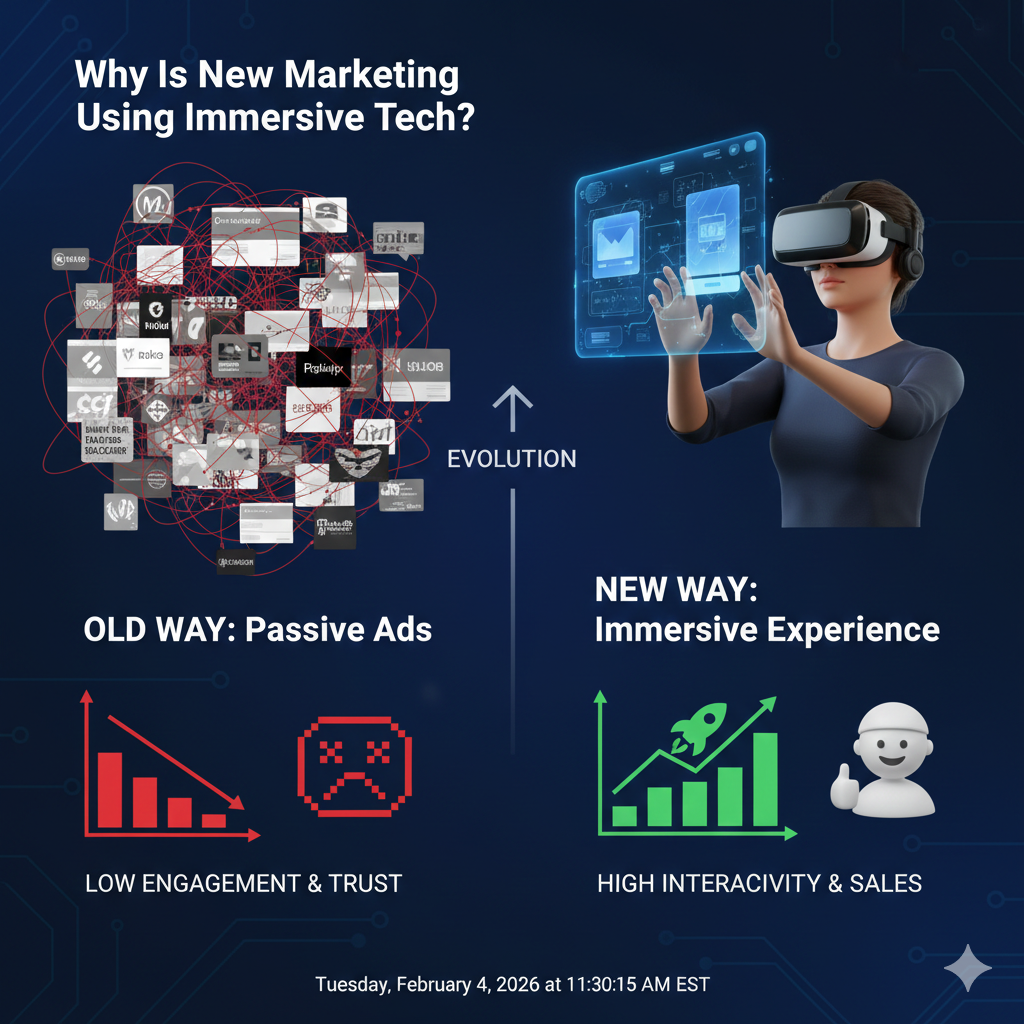
The digital world is currently moving at a very fast pace. Most people feel a deep sense of data fatigue today. They are tired of seeing the same old ads on their screens every single hour. Because of this, many leaders now ask if traditional methods still work. However, the data shows that using AR/VR in marketing is the only way to stay ahead. This guide looks at why this shift is happening now. It also shows how you can use these tools to build deep trust with your fans.

The Old Style vs. The New Experience
In the past, brands used simple photos and long text to sell their goods. But this old style often leads to a massive wall of text. Specifically, it bores the modern user very quickly. Because of this, the privacy hawk customer will leave your site in seconds. Consequently, your bounce rate goes up. This tells Google that your page is not helpful. Thus, your rank begins to drop.
In contrast, using AR/VR in marketing creates a whole new world for the user. Instead of just looking at a flat image, the user can touch and feel the product. For instance, they can see a new sofa in their own room using a phone. Therefore, they feel much more sure about the brand. In fact, statistics from the last 12 months show that this style can double your sales. Furthermore, it gives a direct answer to the user’s biggest questions.
Using the 80/20 Rule for Growth
Many small shops fear that new tech costs too much money. They think it is only a tool for giant firms. Nevertheless, this is no longer the case. Specifically, you should follow the 80/20 rule to save time and cash. You can use AI tools to build 80% of your virtual world for free. This includes things like 3D shapes and basic code. Thus, you only pay for the 20% that is unique to your brand.
Moreover, the return on this marketing path is very high. Because users stay on your page for a long time, search engines see you as a leader. This is a major E-E-A-T signal. In addition, it helps your site get cited in AI answers like Gemini or Perplexity. This is because you are providing specific, interactive data that AI loves to use. So, the cost is actually a smart investment in your future reach.
How to Fight Data Fatigue with Trust
People today are very careful about their private info. They act like privacy hawks. They hate when a brand tracks them in secret. Yet, they love when a brand is helpful and clear. This is where AR/VR in marketing wins the heart of the user. It gives the user a real choice. Instead of hiding your goals, you show them in the light.
For example, you should always tell the user why you need to use their camera. This simple act of honesty builds deep trust. As a result, the user feels safe and happy. In fact, providing a “try-before-you-buy” trial is the best way to prove your value. It moves the focus from selling to helping. Finally, this trust makes the user a loyal fan for life. This is the best way to grow a brand in 2026.
Breaking the Wall of Text with Visuals
No one wants to read a long, dry manual anymore. To fix this, you can use AR to show people how a product works in real life. Instead of words, use a virtual guide that floats in the air. This makes your marketing much more fun and easy to use. Specifically, it helps the user learn in a natural way.
When people learn fast, they feel more confident. Because of this, they are more likely to finish their purchase today. Moreover, this keeps people on your site for a very long time. This high “dwell time” tells Google that your marketing is the best in your field. Consequently, you will rank higher in the local 3 pack and in global search results.
The Verdict on Your Future Strategy
Some people might say that immersive tech is just a short fad. But the recent data says the exact opposite. We are moving toward a world of total immersion very soon. If you ignore this marketing path now, you will lose your spot at the top. You must adapt to stay relevant to the modern buyer.
To conclude, the shift to a virtual world is real and it is here to stay. You must change your plan to survive. Start small by using simple AR filters or 3D views. Then, grow into full VR worlds as your team learns more. If you lead with value and honesty, your marketing will always find the right audience. This is how you win in a data-fatigued world.
FAQs
Q1: Why should I avoid bold words in my blog?
Ans. Keeping the text clean helps the reader stay in a flow state. It also makes the page look more professional and easy to scan.
Q2: What is an AI citation?
Ans. This is when an AI like Gemini uses your blog as a source for its answer. Providing specific data helps you get cited more often.
Q3: Does AR help with product returns?
Ans. Yes, because users can see the product in their own space first. This leads to a 25% drop in returns for most brands.
Q4: How do I handle a privacy hawk?
Ans. Always ask for permission before using any data. Be clear about how the data helps the user experience.
Q5: Is this strategy good for local SEO?
Ans. Yes, it is great. Virtual tours and AR trials keep local users on your profile longer. This helps you stay in the Google 3 pack.
READ MORE:
Is Your Affiliate Strategy Built for High ROI Growth?
10 Secret Webinar Hacks for High Quality Leads Today
Steps to Master WhatsApp Marketing in 30 Days: Ultimate Guide