email marketing

Ad optimization, Ad Security, affiliate marketing, AI Adoption, AI Advertising, AI Chatbots, AI Marketing, AI Personalization, AI ROI, AI Search SEO, AI Support, AI Tools, AI Trends, data protection, Data Visualization, Digital Advertising, Digital Marketing, digital transformation, email marketing

How Do You Test AI Ad Creatives Cheaply? Ultimate Guide

AI-Powered Creative Testing Framework Ad performance depends heavily on creative quality. Even the best targeting cannot fix a weak ad. This is why a strong creative testing strategy matters so much today. AI now makes this process faster, cheaper, and far more accurate than traditional methods. This guide introduces a practical AI-powered creative testing framework. It covers how to generate AI ad creatives, test them effectively, and scale the ones that work. Marketers, founders, and growth teams can apply this framework immediately. Whether you manage a small budget or a large one, the same principles apply. Structured testing beats guesswork every time. This framework gives you a repeatable process instead of a one-off experiment. Using AI for Ad Variations Creating multiple ad variations manually takes significant time. Designers and copywriters often struggle to produce enough versions for proper testing. AI changes this equation completely. AI tools can generate dozens of AI ad creatives within minutes. These variations might include different headlines, images, or calls to action. Additionally, AI can adjust tone, length, and format automatically for different platforms. This speed allows marketing teams to test more ideas without expanding their creative team. As a result, campaigns launch faster and testing cycles shorten considerably. Generating AI Variations at Scale Start by defining a strong creative brief. Include your product benefits, target audience, and brand voice. AI tools use this input to generate relevant, on-brand variations quickly. Review each variation before publishing. AI-generated content still benefits from human oversight. Small edits often improve clarity and brand alignment significantly. Keep a simple checklist during review. Confirm accurate claims, correct branding, and appropriate tone for the platform. This quick check prevents embarrassing mistakes from reaching a live campaign. Balancing AI Volume With Quality More variations do not always mean better results. Focus on meaningful differences between versions. Testing five distinct concepts often outperforms testing twenty minor tweaks. Therefore, prioritize variety in messaging over small visual changes. This approach produces clearer insights during the testing phase. Matching Formats to AI Platforms Different platforms favor different formats. Short vertical videos often outperform static images on some networks. Meanwhile, carousel formats work well for product-focused campaigns elsewhere. AI tools can automatically resize and reformat a single concept for multiple platforms. This saves significant production time. It also ensures your AI ad creatives look native on every channel, rather than stretched or cropped awkwardly. Testing Hooks & Angles The opening seconds of an ad determine most of its performance. Strong hooks capture attention immediately. Weak hooks lose viewers before the message even lands. A solid creative testing strategy isolates hooks as a specific testing variable. This means testing different opening lines, questions, or visuals while keeping other elements consistent. Identifying Winning AI Hooks AI tools can analyze past ad performance to identify hook patterns. For example, question-based hooks might outperform statement-based ones for certain audiences. Similarly, urgency-driven hooks might work better for time-sensitive offers. Use these insights to prioritize which hooks to test next. This data-driven approach reduces guesswork significantly. Pay attention to audience-specific patterns as well. A hook that performs well with younger audiences might fall flat with an older demographic. Segmenting your analysis by audience group often uncovers these differences quickly. Testing Different Angles Beyond hooks, test different overall angles. One version might emphasize price savings. Another might highlight convenience or social proof. Meanwhile, a third might focus on solving a specific pain point. Running these angles simultaneously reveals what resonates most with your audience. Consequently, future campaigns can lean into proven angles rather than starting from scratch. Keep a running log of angle performance by audience segment. Patterns often shift between seasons or promotions, so last quarter’s winning angle may need a refresh next quarter. Scaling Winning Creatives Once a creative shows strong performance, scaling becomes the next priority. However, scaling too quickly can sometimes reduce effectiveness. A structured approach prevents this issue. Gradual Budget Increases Increase budget gradually rather than all at once. Sudden spikes can disrupt algorithm learning phases on ad platforms. Instead, raise spend in small increments while monitoring performance closely. This method protects your return on ad spend during the scaling phase. It also gives you time to catch performance dips early. A common approach raises budget by twenty to thirty percent every few days. This pace keeps the algorithm stable while still growing reach steadily over time. Expanding Across Placements Winning creatives often perform well across multiple placements. Test the same AI ad creatives across different platforms and formats. Some creatives may perform better as short videos, while others work well as static images. This cross-platform testing extends the lifespan of a single winning concept. As a result, your team gets more value from each successful creative. Documenting What Makes a Creative Win Before scaling further, document why a creative performed well. Was it the hook, the offer, or the visual style? This analysis helps replicate success in future campaigns rather than relying on luck. Share these findings with your entire creative team. Over time, this shared knowledge base speeds up future ideation and reduces repeated testing of concepts that already failed once. Avoiding Creative Fatigue Even top-performing ads lose effectiveness over time. Audiences see the same creative repeatedly, and engagement drops. This decline is known as creative fatigue. A strong creative testing strategy includes a plan for refreshing content regularly. Waiting until performance drops significantly often means lost revenue during the decline period. Signs of Creative Fatigue Watch for rising costs per result and declining click-through rates. These metrics often signal fatigue before performance collapses completely. Monitoring dashboards weekly helps catch these signals early. Frequency metrics also matter here. When the same audience sees an ad too many times, engagement naturally drops. Setting frequency caps can delay fatigue, but fresh creative remains the most reliable long-term fix. Refreshing Creatives Proactively Use AI to generate fresh variations before fatigue sets in fully. Small changes, like updated visuals or new hooks, can extend a creative’s lifespan. Meanwhile, completely new concepts […]

AI Marketing, content strategy, Digital Marketing, digital marketing for dental, Digital Marketing for Restaurants, digital PR, digital transformation, Email Automation, email marketing, Marketing Automation, Semantic SEO, SEO

How Do Advanced Email Automations Work? Complete Guide

Advanced Email Automation Sequences Email remains one of the strongest marketing channels available today. However, sending random emails no longer works well. Businesses need a smart email automation strategy to stand out. Advanced email funnels help brands guide customers step by step. These funnels nurture leads, respond to behavior, and win back inactive users. Done right, they drive real revenue. This blog covers four key parts of a strong email automation strategy. You will learn how to build sequences that engage readers and grow your business. Marketers at every level, from small teams to large enterprises, can apply these ideas. The goal is simple: send the right message to the right person at the right time. Welcome & Nurture Sequences A welcome sequence is your first chance to impress new subscribers. This series should introduce your brand and set clear expectations. A strong welcome email often gets the highest open rates of any email you send. Start with a short thank-you email. Confirm the subscription and share what readers can expect. For example, mention how often you will send emails and what value they offer. Next, build a nurture sequence around education. Share helpful tips, product guides, or customer stories. This content builds trust before you ask for a sale. Avoid pushing offers too early in the sequence. Timing matters greatly here. Space emails a few days apart to avoid overwhelming new subscribers. Additionally, use simple language and clear calls to action throughout the sequence. Personalization strengthens this process further. Use the subscriber’s name and reference their sign-up source when possible. A tailored welcome sequence often leads to stronger long-term engagement. A strong welcome sequence typically spans three to five emails. The first builds excitement, the middle emails provide value, and the final email introduces a soft offer. This gradual approach feels natural rather than pushy. Segmentation can improve results even further. New subscribers from a webinar may need different content than those from a product page. Tailoring your nurture sequence to sign-up source often increases engagement significantly. Mobile-friendly design deserves attention too. Many subscribers open emails on their phones first. Short paragraphs, clear buttons, and simple layouts help your welcome sequence perform well across every device. Behavioral Triggers Behavioral triggers send emails based on specific actions. This approach makes your email automation strategy far more relevant. Instead of blasting the same message to everyone, you respond to real behavior. Cart abandonment emails are a common example. When a shopper leaves items in their cart, an automated email can remind them to complete the purchase. These emails often include a gentle nudge or a small incentive. Browse abandonment works similarly. If someone views a product but does not add it to their cart, a follow-up email can highlight that item. This keeps your brand visible without feeling pushy. Engagement-based triggers also work well. For instance, you might send a special offer after a subscriber clicks a specific link multiple times. This shows genuine interest, making them a strong candidate for a targeted offer. Setting up these triggers requires reliable automation software. Most modern email platforms support this feature. Once configured, these sequences run automatically, saving time while boosting conversions. Purchase-based triggers extend the relationship beyond the first sale. A follow-up email asking for product feedback, or suggesting a complementary item, keeps customers engaged. This approach often increases repeat purchases over time. Timing plays a critical role in trigger performance. Cart abandonment emails, for example, work best when sent within one to three hours. Waiting too long often means the shopper has already lost interest or bought elsewhere. Milestone triggers offer another creative option. A message celebrating a customer’s one-year anniversary, or a loyalty milestone, adds a personal touch. These small gestures often strengthen long-term brand loyalty. Re-Engagement Campaigns Every email list includes inactive subscribers over time. Re-engagement campaigns aim to win these people back before you remove them. This step protects your sender reputation and improves overall list health. Start by identifying inactive users. Most platforms let you filter subscribers who have not opened or clicked emails within a set period, such as 90 days. This group becomes your re-engagement target. Send a direct message asking if they still want to hear from you. Keep the subject line honest and simple. Phrases like “We miss you” or “Are you still interested?” often perform well. Offering an incentive can help too. A discount code or exclusive content may encourage inactive users to engage again. However, avoid discounting too heavily, as this can hurt your brand value. If subscribers remain inactive after the campaign, consider removing them from your list. This may feel counterintuitive, but it keeps your advanced email funnels efficient. A smaller, engaged list often performs better than a large, inactive one. A well-built re-engagement sequence usually includes two or three emails. The first email checks in casually. If there is no response, the second email can offer an incentive or ask for feedback directly. Sender reputation improves noticeably once inactive subscribers are removed. Internet service providers track engagement closely. A cleaner list often means better inbox placement for every future campaign you send. Timing your re-engagement campaign matters too. Sending it right before a major sale or product launch can give hesitant subscribers a reason to open your email again and stay on your list. Measuring Email Automation & ROI Tracking results is essential for any email automation strategy. Without clear metrics, you cannot know what works. Regular measurement helps you refine your advanced email funnels over time. Start with open rates and click-through rates. These numbers show how well your subject lines and content perform. Low open rates often signal a need to improve subject lines or sender reputation. Conversion rate matters even more. This metric tracks how many recipients complete a desired action, such as making a purchase. Compare conversion rates across different sequences to find your strongest performers. Revenue per email is another valuable metric. This number shows the direct financial impact of your campaigns. […]

Automation Tools, CRM Automation, email marketing, lead scoring, Marketing Automation, Marketing Strategy, Retargeting ads

How to Build a Marketing Automation Stack: Complete Guide

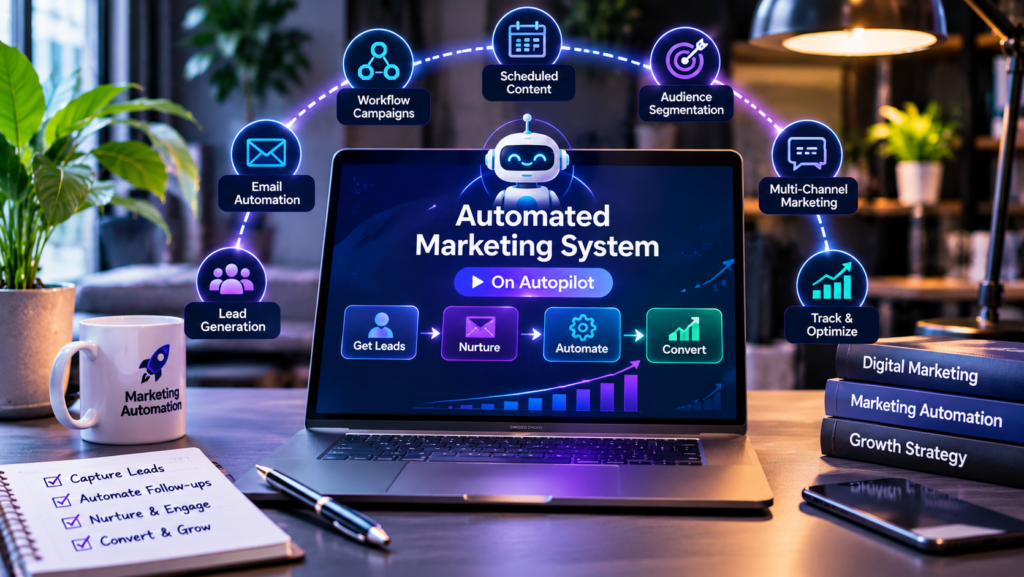
Marketing should not require constant manual effort every single day. Many small teams feel stretched thin, juggling emails, leads, and reports. An automated marketing system can change that completely. An automated marketing system connects your tools so they work together automatically. Instead of repeating tasks by hand, your marketing automation stack handles the heavy lifting. This frees your team to focus on strategy and creativity. Building this kind of system takes planning, but it pays off quickly. Once set up, your marketing runs smoothly with far less daily attention. Leads get nurtured, emails get sent, and reports update themselves. Picture a Monday morning where leads from the weekend are already sorted and contacted. No one had to log in over the weekend to make that happen. That is what a well-built automated marketing system delivers consistently. This guide walks through the key pieces of an automated marketing system. You will learn how each part works together to create real autopilot marketing. By the end, you will have a clear path to building your own. CRM and Automation Integration A strong automated marketing system starts with CRM and automation integration. Your customer relationship management tool should connect directly to your marketing automation stack. This connection keeps customer data accurate and up to date everywhere. Without integration, teams often work from separate, disconnected systems. Sales sees one version of a lead while marketing sees another. This disconnect causes missed opportunities and frustrated customers. When your CRM and automation tools talk to each other, information flows automatically. A new lead entering your CRM can trigger an automatic email sequence instantly. No manual data entry is required at any step. This kind of automatic flow eliminates a common source of human error. Forgotten follow-ups and duplicate entries become far less common. Both sales and marketing benefit from cleaner, more reliable data. Integration also improves reporting accuracy significantly. Sales and marketing teams can see the same data in real time. This shared visibility helps both teams make better decisions together. Choosing compatible tools matters greatly during setup. Not every CRM connects easily with every automation platform. Researching integration options before purchasing software saves time and frustration later. Many popular platforms now offer built-in integrations or simple plugins. HubSpot, Salesforce, and similar tools often connect smoothly with common automation systems. Checking compatibility early prevents costly technical headaches down the road. Furthermore, syncing contact records across platforms avoids duplicate work entirely. A single source of truth keeps every team aligned on the same customer history. This consistency becomes more valuable as your contact list grows. Once integrated, your automated marketing system becomes the foundation for everything else. Lead scoring, email flows, and reporting all depend on this connection working properly. Lead Scoring It is a core part of any effective marketing automation stack. It ranks leads based on how likely they are to become customers. This ranking helps your team prioritize effort where it matters most. Without lead scoring, sales teams often waste time on unqualified leads. Every inquiry gets treated the same, regardless of real interest. This approach wastes valuable time and resources. An automated marketing system assigns points based on specific behaviors. Opening emails, visiting pricing pages, or downloading guides all earn points. Higher scores indicate stronger buying intent. A lead who visits your pricing page three times sends a clear signal. That behavior matters more than a single newsletter click. Good scoring models weigh these differences accurately. Demographic information also factors into lead scoring. Job title, company size, and industry can all influence a lead’s score. Combining behavior and demographics creates a more accurate picture overall. Once a lead reaches a certain score, automation can trigger the next step. The system might notify a salesperson or send a more personalized offer. This timing ensures leads receive attention exactly when interest peaks. Lead scoring models need occasional adjustment as your business evolves. What worked last year may not reflect current buyer behavior. Regularly reviewing your scoring criteria keeps the system accurate and effective. Marketing and sales teams should agree on scoring criteria together. This alignment prevents confusion about which leads deserve immediate follow-up. Clear communication between teams strengthens the entire automated marketing system. Without that agreement, sales may ignore leads marketing considers valuable. Shared definitions of a qualified lead remove this friction. Everyone ends up working from the same playbook. Meanwhile, consistent definitions also make reporting more meaningful. Conversion rates only mean something when everyone agrees on what counts as a qualified lead in the first place. Email and Retargeting Flows Email and retargeting flows bring your automated marketing system to life. These flows nurture leads automatically, without requiring constant manual sending. They keep your brand visible throughout the buyer’s journey. Email automation typically begins with a welcome sequence. New subscribers receive a series of helpful, well-timed messages. This sequence introduces your brand and builds trust gradually. From there, behavior-triggered emails take over. A lead who downloads a guide might receive related content automatically. Someone who abandons a cart might receive a gentle reminder shortly after. These triggers feel personal, even though they run automatically. A timely, relevant email rarely feels like spam. It feels like the brand was paying attention at exactly the right moment. Retargeting ads work alongside email flows effectively. These ads follow website visitors across other platforms, reminding them of your brand. Combined with email, retargeting reinforces your message through multiple channels. This multi-channel approach increases the chances of conversion. People rarely buy after a single interaction. Consistent, automated touchpoints keep your brand present until they are ready to decide. Personalization strengthens these flows considerably. Generic messages often get ignored or deleted quickly. Automated systems that personalize content based on behavior tend to perform much better. Timing also matters greatly within email and retargeting flows. Sending too many messages can overwhelm leads and damage trust. A well-built marketing automation stack paces communication thoughtfully, based on real engagement signals. Testing different subject lines and send times improves results further. Small adjustments […]

Branding, Conversion Optimization, Digital Marketing, E-commerce, Ecommerce Marketing 2026, Ecommerce Sales, email marketing, Performance Ads

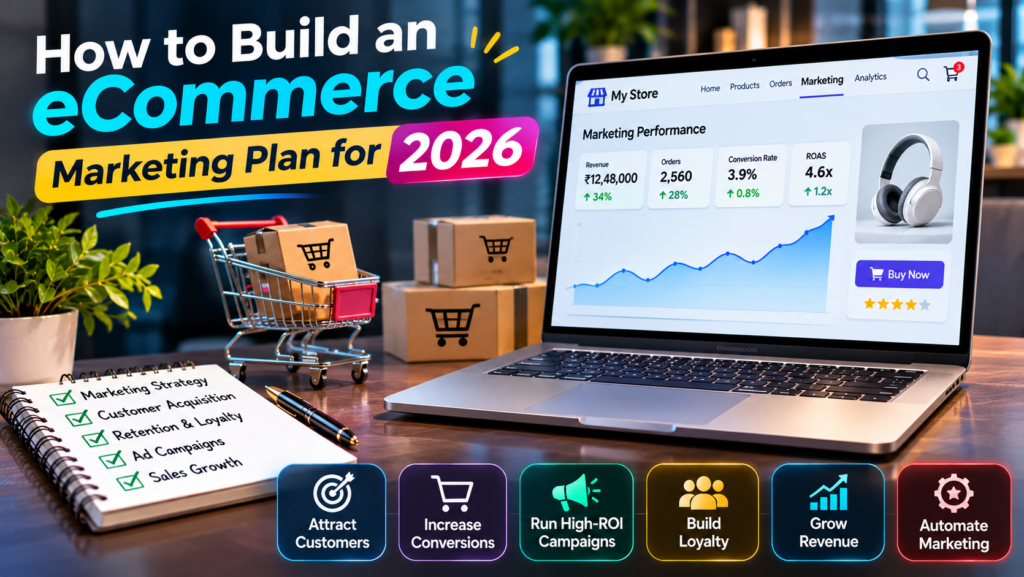
How to Build an Ecommerce Marketing 2026 Plan

Ecommerce is more competitive than ever. In 2025, global ecommerce sales are expected to surpass $6.8 trillion. However, getting a slice of that revenue requires more than a great product. It demands a smart, data-driven ecommerce marketing strategy that converts browsers into buyers and buyers into loyal customers. This guide covers the four most important pillars of ecommerce growth strategy in 2025. Specifically, these are performance ads, email and SMS automation, conversion optimisation, and retention. Each one builds on the other. Together, they form a system that drives compounding, sustainable growth. Performance Ads Structure Performance advertising is still one of the fastest ways to drive ecommerce traffic. However, the landscape has changed dramatically. iOS privacy updates, third-party cookie deprecation, and rising CPMs mean your ad structure needs to be smarter than ever. First, build your campaigns around a clear funnel structure. At the top of the funnel, use broad audience prospecting campaigns on Meta and Google. These introduce your brand to new potential customers. Additionally, use video creatives here — they perform significantly better than static ads for cold audiences. In the middle of the funnel, retarget engaged visitors with specific product ads, reviews, and social proof. Consequently, you bring back shoppers who showed interest but did not yet purchase. Use dynamic product ads (DPAs) to show people exactly what they viewed or added to cart. At the bottom of the funnel, close the sale. Use urgency-driven messaging — limited stock, price drops, expiring offers. Moreover, layer in customer testimonials and trust signals to address last-minute hesitations. For Google Shopping in 2025, Performance Max (PMax) campaigns dominate. However, supplement them with standard Shopping campaigns to maintain control over high-performing product categories. Additionally, use branded search campaigns to protect your brand terms from competitor bids. Always test creatives aggressively. Run at least 3-5 creative variations per ad set. Furthermore, use Meta’s Advantage+ Shopping Campaigns for proven product lines — they often outperform manual campaign structures for scaling. Keep a close eye on your MER (Marketing Efficiency Ratio) rather than relying solely on platform-reported ROAS. Email & SMS Automation Email and SMS remain the highest-ROI channels in ecommerce marketing. In fact, email generates an average return of $36 for every $1 spent. Therefore, building a robust automation system is non-negotiable for any serious ecommerce growth strategy. Start with your core automations. The welcome series is your most important flow. New subscribers are highly engaged. Consequently, a 3-5 email welcome sequence that introduces your brand story, best sellers, and a welcome offer can drive significant early revenue. Next, build an abandoned cart sequence. Send the first email within one hour of cart abandonment. Follow up again at 24 hours and 72 hours. Additionally, add an SMS touchpoint at the 24-hour mark for high-intent shoppers — conversion rates for SMS cart reminders often exceed 10%. Browse abandonment flows target visitors who viewed products but did not add to cart. These tend to be shorter — two to three emails maximum. Furthermore, personalise them with the specific products viewed for maximum relevance. Post-purchase flows are critical for retention. Send a confirmation, then a value-add email (how-to content, tips, or related products). Additionally, follow up at day 7 and day 21 to encourage repeat purchase. This is where loyalty is built. For SMS, keep messages short and direct. Always include a clear CTA. Moreover, segment your SMS list carefully — high-frequency messaging to unengaged subscribers damages your sender reputation and drives opt-outs. Aim for 4-8 SMS sends per month maximum. Klaviyo, Omnisend, and Attentive are the leading platforms for ecommerce email and SMS in 2025. Each integrates deeply with Shopify and most major platforms. Furthermore, use predictive analytics within these tools to identify at-risk customers before they churn. Conversion Optimisation Driving traffic is only half the battle. Conversion optimisation ensures that traffic actually turns into sales. Even a 1% improvement in your conversion rate can dramatically increase revenue without adding a single extra visitor. Start with your product pages. These are the highest-impact pages for most ecommerce stores. Ensure every product page has high-quality images from multiple angles, a clear and benefit-led headline, detailed but scannable descriptions, visible reviews and ratings, and a prominent, fast-loading Add to Cart button. Page speed is a conversion killer. Research shows that a one-second delay in load time reduces conversions by up to 7%. Therefore, optimise images, reduce JavaScript, and use a fast CDN. Additionally, test your site speed on mobile — in 2025, over 70% of ecommerce traffic comes from mobile devices. Use heatmaps and session recordings to understand where users drop off. Tools like Hotjar or Microsoft Clarity reveal exactly what shoppers do on your pages. Consequently, you can identify friction points that are hard to spot from analytics alone. Run A/B tests systematically. Test one element at a time — headline, CTA text, image layout, price display, social proof placement. Furthermore, use tools like VWO or Google Optimize to run tests with statistical confidence before making permanent changes. Checkout optimisation deserves special attention. Simplify your checkout to as few steps as possible. Offer guest checkout. Display trust badges prominently. Moreover, support multiple payment methods — including Buy Now Pay Later options like Klarna or Afterpay, which can boost average order value by 20-30%. Finally, personalisation drives conversion. Show returning visitors personalised product recommendations based on their browse and purchase history. Additionally, use dynamic homepage content to reflect the customer’s preferences. Personalised experiences convert at 2-3x the rate of generic ones. Retention Strategy Acquiring a new customer costs 5x more than retaining an existing one. Yet most ecommerce brands spend 80% of their marketing budget on acquisition. Flipping that balance — even slightly — can transform profitability. A strong retention strategy starts with your loyalty programme. Points-based systems work well for high-frequency purchases. However, for lower-frequency categories, a tiered VIP programme creates aspiration and drives repeat purchases. Moreover, make rewards easy to understand and redeem — complexity kills loyalty programme engagement. Subscription models are one of the […]

Brand Markeing, content strategy, content strategy, Digital Marketing, E-commerce, Education Marketing, email marketing, Engagement, Instagram, Leads Generation, SEO Marketing, social media marketing, Uncategorized, Youtube shorts

How Storytelling Drives Digital Marketing: Full Guide

Digital marketing is a busy space. Because screens fill with ads and facts, brands fight for attention. However, simple facts and feature lists often fail. This is why storytelling has become key. Storytelling is how brands connect with people. It turns simple transactions into real, human relationships. Ultimately, it is the most powerful tool for building trust and standing out online. Why Stories Beat Facts: The Human Connection People are naturally drawn to stories. In fact, stories are how humans have shared knowledge for centuries. The brain is wired to receive and remember stories much better than raw data. 1. The Power of Emotion Stories make people feel something. For instance, a story can make you feel joy, hope, or empathy. This emotional link is vital for buying choices. Research shows most buying choices are emotional. Therefore, when a brand tells a story that touches a person, it builds an emotional tie. This tie is stronger than any sale or discount. It changes a shopper into a loyal brand fan. 2. Building Trust and Authenticity Modern buyers want real brands. They do not want brands that hide things. Storytelling lets a brand show its true self. Specifically, it shows the people, the mission, and the hard work behind the product. Sharing stories about why the company started builds trust. Showing a customer’s success story builds belief. In this way, storytelling makes the brand human. It makes the brand real. Storytelling Across Digital Channels The role of storytelling must fit the platform. A good story works everywhere, but its format must change. Digital Channel Storytelling Focus Transition Word Example Blog/Website Content Long-form narratives; customer journey case studies; mission history. For instance, start with a problem. Social Media (Reels, TikTok) Short, fast stories; relatable everyday conflicts; team culture videos. In short, grab attention quickly. Email Marketing Personal, direct narratives; one-on-one problem-solving stories. Consider this example. Video Marketing Immersive visual stories; emotional depth; showing product impact. Because of the visuals, it stays memorable. The Story Arc: Making the Customer the Hero A strong marketing story uses a clear arc. This arc is not about the brand. Instead, it is about the customer. This pattern is often called the “Hero’s Journey.” This focus is key. Because the customer sees themselves in the “hero” role, they are more likely to buy. They feel like the solution is for them. Business Gains from Narrative Strategy Using storytelling well leads to clear business gains. These gains are easy to track. Conclusion Storytelling is not a new trend. Instead, it is a basic human tool. In digital marketing, it is a must-have strategy. It moves a brand past simple clicks. It helps build a strong community. By focusing on the customer’s journey, brands create real bonds. These bonds lead to trust, loyalty, and growth. Ultimately, brands that tell good stories win the most attention. FAQs 1. How does storytelling help with brand recall? Storytelling helps with brand recall because the human brain remembers narratives much better than facts or lists. When a brand’s message is wrapped in a story, it creates a stronger, more lasting memory for the consumer. 2. What is the ‘Hero’s Journey’ in marketing storytelling? The Hero’s Journey in marketing casts the customer as the hero facing a problem (the conflict). The brand is cast as the guide that gives the hero the tool (the product) needed to solve the problem and achieve success (the resolution). 3. Where should a brand use storytelling in its digital strategy? A brand should use storytelling everywhere. This includes long-form blogs, short social media videos, email campaigns, website copy, and video ads. The key is to adapt the story’s format to fit each platform. 4. What is the main benefit of telling authentic brand stories? The main benefit is building trust. Authentic stories show the brand’s values, people, and real mission. This transparency creates an emotional connection with consumers, making them more loyal. 5. How does storytelling benefit a brand’s SEO efforts? Storytelling benefits SEO because it increases user engagement metrics like ‘time on page’ and ‘shares.’ When search engines see that users spend more time consuming the content, they view the content as high-quality and rank it higher. Also Read: Instagram vs. TikTok vs. YouTube Shorts – Which Drives Better Leads?

content strategy, content strategy, Digital Marketing, E-commerce, email marketing, Engagement, Instagram, Leads Generation, Uncategorized, Youtube shorts

Instagram vs. TikTok vs. YouTube Shorts – Which Drives Better Leads?

Social media is a powerful tool for lead generation today. Marketers constantly wonder which platform works best. Instagram, TikTok, and YouTube Shorts are top players. Each platform has its own strengths. Each one attracts different types of users. Therefore, picking the right one means knowing how each platform works. It means understanding their audience. This guide helps you choose. It looks at how each platform helps bring in new customers. It also discusses how to get good leads from each. Understanding The Short-form Video Trend Short-form video is huge. People love quick, engaging content. This trend started with TikTok. Then, Instagram and YouTube followed. They launched Reels and Shorts. These videos are often less than 60 seconds. They are easy to watch. They are great for quick brand messages. This format helps grab attention fast. It is perfect for today’s busy users. Instagram Reels: Creative, Community-Focused Leads Instagram has a large, varied user base. Reels fit well into this platform. They offer many creative tools. They allow users to add music, effects, and text. Brands can use Reels to show products. They can share behind-the-scenes looks. They can also offer quick tips. Audience and Engagement Instagram users are often interested in lifestyle, fashion, and visual content. They follow brands they like. Engagement on Reels can be high. People share, like, and comment often. This helps spread brand messages. Brands can also use shopping features. These features help turn viewers into buyers directly. Lead Generation Strategies for Instagram Reels Instagram’s strong community features help a lot. They build loyal customers. This often leads to better, more qualified leads. Thus, Instagram is good for brands that focus on visuals. It is also good for those building a community. TikTok: Viral Reach for Mass Awareness TikTok is known for its viral content. It has a massive young audience. Videos can go viral very fast. This offers huge reach. Brands can become very popular overnight. TikTok is less formal. It values real, fun content. Audience and Engagement TikTok’s audience is very active. They love trends and challenges. They are open to new brands. Engagement is high. People spend hours scrolling. The algorithm shows content to many users. This is true even if they do not follow you. This helps new brands grow fast. Lead generation strategies for tiktok TikTok is great for quick brand awareness. It helps reach a huge audience. The leads might be less qualified at first. However, the sheer volume can be very valuable. Therefore, TikTok is best for brands wanting mass reach. It is also good for those selling to a young audience. Youtube Shorts: Search Intent and Long-Term Value YouTube Shorts is a newer player. It uses YouTube’s vast search power. People often go to YouTube to learn. They look for solutions. Shorts can answer these needs quickly. They offer lasting value because they live on YouTube. Audience and Engagement YouTube’s audience is diverse. They often look for specific information. They are ready to learn. Shorts can reach these users. Engagement can be good. Viewers often go from a Short to a longer video. This creates a customer journey. It builds deeper engagement. Lead Generation Strategies for Youtube Shorts YouTube Shorts is excellent for high-quality leads. These leads are often already looking for solutions. They are ready to buy. The content also has a long life. It can bring leads for months or years. Thus, YouTube Shorts is perfect for brands offering detailed products. It is also good for service-based businesses. Which drives better leads? (Making the Choice) The best platform depends on your goals. It depends on your audience. Consider using all three. Each one offers unique benefits. Adjust your content for each platform. Track your results carefully. See which one brings the most value. Also, look at the quality of leads. Do they turn into customers? This will help you make the best choice. Frequently Asked Questions (5 FAQs) 1. What is short-form video? Short-form video refers to quick, brief videos. They are usually less than 60 seconds long. TikTok, Instagram Reels, and YouTube Shorts all use this format. People watch them quickly. 2. How does tiktok’s algorithm work for brands? TikTok’s algorithm shows videos to many users. It does this even if they do not follow you. It often pushes trending content. This allows brands to gain huge visibility fast. 3. Can i use the same video on all three platforms? You can use the same core video. However, it is best to adapt it for each platform. Change the music. Add different text overlays. Adjust the call to action. Each platform has a unique style. 4. How do i track leads from short-form videos? Use clear calls to action with unique links. Track website visits from these links. Ask new customers how they found you. Use UTM parameters on your links. This helps see which platform works best. 5. Which platform is best for b2b lead generation? YouTube Shorts can be very good for B2B. It attracts users looking for solutions. Educational content works well. Instagram Reels can also work for B2B brands with strong visuals. TikTok is generally less effective for direct B2B leads. Also Read: Social Media Trends 2025: Where Should Businesses Invest Their Time?

email marketing, SEO Marketing

Email Marketing For Mobile: Optimizing For Smartphone Users

In the age of the smartphone, optimizing your email marketing campaigns for mobile users is no longer an option; There is a need. With an increasing number of people checking their email on mobile devices, neglecting mobile optimization can lead to missed opportunities and lower engagement. Some important tips to ensure here’s how your email marketing efforts align with smartphone usage: Responsive design: Start with a responsive email design that adapts to different screen sizes. This ensures that your emails look great and are easy to read across smartphones, tablets and desktops. Mobile-friendly content: Keep your email content and subject line concise. Smartphone users are more likely to scroll through email, so use short paragraphs, bullet points, and catchy headlines to grab their attention quickly. Clear Call-to-Action (CTA): Keep your CTAs clear and clickable. Use large buttons or links that are wide enough to accommodate touchscreen navigation. Make sure your CTA stands out in the email. Optimize images: Compress images to reduce loading time and ensure they display properly on mobile devices. Use alt text for images to provide context in case they don’t load. Readable font: Choose a readable font and maintain a font size of at least 14-16 pixels for body text. Avoid using too many lines to keep it clean and tidy. Single Column Layout: For a mobile-friendly email, choose a single-column layout. This simplifies the reading experience and eliminates the need for scrolling. Preview Text: Create an attractive preview text that encourages recipients to open your email. This text appears next to the subject line in most email applications and can have a significant impact on open rates. Testing: Before sending your email, test it thoroughly on different mobile devices and email clients. This ensures your emails will look great across platforms. Segmentation: Use data-driven segmentation to deliver targeted content to specific mobile user groups. Personalization enhances user experience and increases engagement. Loading Speed: Optimize your email load time by reducing file sizes and the use of external resources. Fast emails tend to grab a reader’s attention. In summary, in today’s mobile-centric world, mobile optimization is critical to the success of your email marketing campaign. By following these tips, you can create emails that not only look great on smartphones but can better engage and convert mobile users. Keep up to date with the latest mobile trends to ensure your email marketing strategy remains competitive and relevant to your target audience.

email marketing, SEO Marketing

SEO And Advertising: How To Optimize Your Strategy

Search engine optimization (SEO) and advertising are two of the most important components of any successful online marketing strategy. When used properly together, they can increase your online presence, drive targeted traffic to your website, and ultimately enhance the success of your business. Here are some important tips to optimize your SEO and advertising strategy for maximum impact: Keyword research: Start by doing thorough keyword research. Identify keywords and phrases that your target audience can use to search for products or services related to your business. Tools like Google Keyword Planner can help you find the right keywords. On-page SEO: Optimize your website’s on-page elements, such as title tags, meta descriptions, titles, and content. Make sure your chosen keywords are loaded on your web pages in a suitable format, but avoid keywords. Quality of Content: In the online world, content is king. Create high-quality, informative and engaging content that addresses the needs and interests of your target audience. Update your content regularly to keep it fresh and relevant. Backlinks: Build a strong backlink profile to get high-quality, authoritative backlinks from popular websites in your industry. Guests posting, reaching out, and creating shared content can naturally help generate backlinks. Mobile Optimization: Make sure your website is mobile-friendly. With an increasing number of users online on mobile devices, responsive design is essential for SEO and user experience. Paid advertising (PPC): Use a well-planned PPC ad campaign, such as Google ads or social media ads. These paid ads can help your SEO efforts by driving instant traffic to your website while working to improve your organic rankings. Ad Targeting: Use specific targeting options in your ad campaigns to reach the desired audience. This includes targeting demographics, location, and retargeting to re-engage previous visitors to your site. A/B testing: Continue to test and optimize your ad copy, landing pages, and keywords to improve the performance of your ad campaigns. A/B testing helps you figure out what works best for your audience.Analyze and monitor: Use tools like Google Analytics to monitor the performance of your SEO and advertising efforts regularly. Analyze key metrics like traffic conversions, click-through rates, and bounce rates to make data-driven decisions. Adapt and evolve: The digital landscape is constantly changing. Keep up to date with the latest SEO and advertising trends and adjust your strategy to stay competitive accordingly. In conclusion, a well-rounded digital marketing strategy that combines SEO with effective advertising strategies can help your business grow online. By executing your plan with the tips outlined above, you can increase your online visibility, attract the right audience, and get the best results in the long run.

email marketing

Email Marketing For Small Businesses: Tips And Tricks For Success

Email marketing is a powerful tool that can help small businesses connect with audiences, increase brand awareness, and increase sales. However, for small businesses to succeed in email marketing, they need to adopt effective strategies and best practices. Here are some tips and tricks to get the most out of your email marketing efforts: Build a healthy email list:Start by collecting the email addresses of your website visitors, social media followers, and in-store customers. Make sure you have permission to send emails to these addresses to comply with anti-spam laws. Customize your emails:Personalization can greatly improve engagement. Use the customer’s name and segment your email list based on demographics, behaviors, or preferences to send customized content. Inspiring Art Topics:Your headline is the first thing customers see. Keep the email content engaging, concise, and relevant. Avoid spammy words and excessive punctuation. Create a mobile-friendly email:Many people check their emails on mobile devices. Make sure your emails are responsive and look great on a variety of screen sizes. Provide valuable information:Your emails should provide something of value to the customer, whether it’s informative, exclusive discounts, or exciting news. Use Clear Call-to-Actions (CTAs):Make it easy for readers to do something they want, like make a purchase, subscribe to a website, or download an e-book. Use buttons and links for clarity. A/B testing: Experiment with different email elements, such as subject lines, images, and send times, to better see what resonates with your audience. Use data to shape your strategy. See how the email works:Look at key metrics like open rates, click-through rates and conversion rates. Analyze the data to understand what’s working and where improvement is needed. Categorize your email list:Segment your email list into subcategories based on specific criteria, such as location or purchase history. Send targeted emails to each category to make it more relevant. Maintain consistency:Establish a regular email schedule so your customers know when to expect your messages. Consistency builds credibility and keeps your brand top of mind. Email marketing can be a cost-effective way for small businesses to connect with their customers and drive growth. With these tips and tricks, you can increase the impact of your email campaigns and achieve greater success with your marketing efforts.

Brand Markeing, Digital Marketing, digital marketing for healthcare sector, email marketing, Healthcare Marketing, Heathcare Marketing, Search Engines, SEO Marketing, social media marketing, social meia marketing

How Social Media Marketing Can Help Your Business Today

The power of social media marketing cannot be denied in today’s business world. With the rise of technology and the increasing number of people using social media platforms, businesses can no longer afford to ignore social media as a marketing tool. Social media marketing has become an essential part of the marketing mix, and businesses that want to succeed must incorporate it into their overall marketing strategy. Social media platforms such as Facebook, Twitter, Instagram, LinkedIn, and TikTok have billions of active users worldwide, making them an ideal place for businesses to reach a large audience. By leveraging social media marketing, businesses can connect with their target audience, increase brand awareness, drive website traffic, generate leads, and boost sales. Here are some of the ways social media marketing can benefit businesses in today’s world. Connect with the Target Audience: Social media provides businesses with an opportunity to connect with their target audience in a more personal and engaging way. Businesses can use social media to create and share content that resonates with their target audience, answer customer queries, and build relationships with their customers. By engaging with their customers on social media, businesses can build trust and loyalty, which can lead to increased sales and customer retention. Increase Brand Awareness: Social media platforms offer businesses an effective way to increase brand awareness. By creating and sharing valuable content, businesses can attract followers and build their brand’s reputation. When followers engage with a business’s content, they share it with their followers, which can lead to a wider audience and increased exposure for the brand. By consistently creating and sharing quality content, businesses can establish themselves as an authority in their industry, which can lead to increased trust and credibility. Drive Website Traffic: Using social media to increase website traffic can be very effective. By sharing links to their website on social media platforms, businesses can attract potential customers to their websites. When users click on a business’s link, they are directed to the business’s website, where they can learn more about the business’s products and services. By consistently sharing links to their website on social media, businesses can increase their website traffic, which can lead to increased leads and sales. Generate Leads: Businesses can generate leads using social media platforms. By creating and sharing valuable content that appeals to their target audience, businesses can attract potential customers to their social media profiles. Once a user has engaged with a business’s content, businesses can use lead generation forms to collect their contact information. By collecting contact information, businesses can follow up with potential customers and convert them into paying customers. Boost Sales: Social media marketing can also help businesses boost their sales. By creating and sharing compelling content that promotes their products and services, businesses can encourage their followers to make a purchase. Social media platforms also offer businesses the opportunity to advertise their products and services to a targeted audience. By creating targeted ads, businesses can reach users who are most likely to be interested in their products and services, which can lead to increased sales. Conclusion: In conclusion, the power of social media marketing in today’s business world cannot be ignored. Social media platforms offer businesses an opportunity to connect with their target audience, increase brand awareness, drive website traffic, generate leads, and boost sales. By incorporating social media marketing into their overall marketing strategy, businesses can stay ahead of their competitors and reach a wider audience.

Scroll to Top