Digital Marketing

Brand Markeing, Digital Marketing, digital marketing for healthcare sector, email marketing, Healthcare Marketing, Heathcare Marketing, Search Engines, SEO Marketing, social media marketing, social meia marketing

Challenges Of Content Marketing Today And How To Overcome Them

Content marketing has become an essential component of any modern business strategy. It involves the creation and distribution of valuable, relevant, and consistent content with the aim of attracting and retaining a target audience. Content marketing, however, is not without its difficulties. In this article, we will explore the top challenges of content marketing today and how to overcome them. Creating High-Quality Content One of the biggest challenges of content marketing is creating high-quality content consistently. With so much content being produced every day, it can be difficult to stand out from the crowd. To overcome this challenge, businesses need to focus on producing content that is informative, relevant, and engaging. One way to ensure that your content is of high quality is to conduct extensive research on the topic you are writing about. This ensures that your content is correct and up to date. Additionally, you should use a variety of media formats such as videos, infographics, and podcasts to keep your content fresh and engaging. Generating Enough Content Another challenge of content marketing is generating enough content to keep your audience engaged. Consistency is key when it comes to content marketing, but it can be difficult to produce new content on a regular basis. To overcome this challenge, businesses should create a content calendar that outlines the topics they will cover and when they will be published. Additionally, businesses can repurpose their existing content by turning blog posts into videos, infographics, or podcasts. This can help to save time and resources while still providing valuable content to your audience. Standing Out in a Crowded Market With so much content being produced every day, it can be difficult to stand out in a crowded market. To overcome this challenge, businesses need to find ways to differentiate themselves from their competitors. One way to do this is by focusing on niche topics that are relevant to your audience but are not being covered extensively by your competitors. Additionally, businesses can leverage social media to reach a wider audience. By sharing your content on social media platforms, you can increase your sales, reach, and engagement, which can help to establish your brand as a thought leader in your industry. Measuring the Success of Your Content Measuring the success of your content is another challenge of content marketing. While there are a variety of metrics that businesses can use to measure the success of their content, it can be difficult to determine which metrics are the most important. To overcome this challenge, businesses need to identify their key performance indicators (KPIs) and focus on measuring these metrics. Some common KPIs for content marketing include website traffic, engagement rates, social media shares, and lead generation. By focusing on these metrics, businesses can determine which types of content are resonating with their audience and adjust their content strategy accordingly. Keeping Up with Trends and Changes Content marketing is constantly evolving, and businesses need to keep up with the latest trends and changes in order to remain competitive. This can be a challenge, especially for small businesses that do not have the resources to dedicate to staying up-to-date on the latest trends. To overcome this challenge, businesses should invest in continuing education and attend industry conferences and events. Additionally, businesses should consider hiring a content marketing agency or consultant to help them stay up-to-date on the latest trends and changes in the industry. Reaching the Right Audience Reaching the right audience is another challenge of content marketing. While businesses may be producing high-quality content, if it is not reaching the right audience, it will not be effective. To overcome this challenge, businesses need to develop a deep understanding of their target audience. This involves conducting market research to identify the demographics, interests, and pain points of your target audience. With this information, businesses can create content that is specifically tailored to their audience’s needs and interests, which can help to increase engagement and conversions. Additionally, businesses should use a variety of channels to distribute their content, such as social media, email marketing, and paid advertising. By using a multi-channel approach, businesses can increase their reach and ensure that their content is being seen by their target audience. Keeping Your Content Relevant Another challenge of content marketing is keeping your content relevant over time. As your industry and audience evolve, your content needs to evolve with them in order to remain relevant and effective. To overcome this challenge, businesses should conduct regular content audits to identify content that is no longer relevant or performing well. Additionally, businesses should regularly update their existing content to ensure that it remains accurate and up-to-date. This can help to increase the longevity of your content and ensure that it continues to provide value to your audience over time. Managing Your Content Strategy Managing your content strategy can also be a challenge, especially for businesses that do not have a dedicated content team. This involves developing a content strategy, creating and publishing content, promoting your content, and measuring its success. To overcome this challenge, businesses should consider outsourcing their content marketing to a content marketing agency or hiring a dedicated content marketing manager. This can help to ensure that your content strategy is being executed effectively and efficiently, allowing you to focus on other areas of your business. Conclusion Content marketing can be a powerful tool for businesses, but it is not without its challenges. From creating high-quality content to measuring its success, there are many factors that businesses need to consider in order to develop an effective content marketing strategy. By focusing on creating valuable, relevant, and engaging content, identifying your target audience, and staying up-to-date on the latest trends and changes in the industry, businesses can overcome these challenges and develop a content marketing strategy that drives results.


Brand Markeing, Digital Marketing, digital marketing for healthcare sector, email marketing, Healthcare Marketing, Heathcare Marketing, Search Engines, SEO Marketing, social media marketing, social meia marketing

What Are The 5 Main Rules Of Content Marketing?

Content marketing is a strategic marketing approach that involves creating and distributing valuable, relevant, and consistent content to attract and retain a defined audience and ultimately drive profitable customer action. It is an effective way for businesses to establish themselves as industry leaders, build brand awareness, and generate leads and sales. However, to be successful in content marketing, there are some rules that businesses must follow. In this article, we will discuss the five rules of content marketing that businesses need to keep in mind to create effective content that resonates with their target audience and drives business growth. Understand Your Audience The first rule of content marketing is to understand your audience. Content marketing is all about providing valuable and relevant information to your target audience. To do that, you need to have a clear understanding of who your audience is, what their pain points and challenges are, and what kind of content they prefer. To understand your audience, you can conduct market research, surveys, and customer interviews. You can also use social media analytics to gather insights about your target audience’s demographics, interests, and behavior. Once you have a clear understanding of your audience, you can tailor your content to their needs and preferences, and create content that resonates with them. Create Valuable Content The second rule of content marketing is to create valuable content. Content that is informative, educational, and engaging is more likely to attract and retain your audience’s attention. Valuable content can take many forms, such as blog posts, videos, podcasts, infographics, whitepapers, case studies, and webinars. To create valuable content, you need to focus on providing solutions to your audience’s problems and answering their questions. Your content should also be well-researched, accurate, and up-to-date. Additionally, your content should be visually appealing, easy to read, and shareable. When you create valuable content, your audience is more likely to engage with it, share it, and come back for more. Be Consistent The third rule of content marketing is to be consistent. Consistency is key to building brand awareness and establishing yourself as a thought leader in your industry. Your content should be consistent in terms of quality, tone, and frequency. Consistency also helps to build trust with your audience, which is essential for driving customer loyalty and sales. To be consistent, you need to create a content calendar and stick to it. Your content calendar should outline the topics you will cover, the format you will use, and the frequency of your content. You should also have a plan for promoting your content across different channels, such as social media, email, and your website. By being consistent in your content marketing efforts, you can create a strong brand identity and establish yourself as an authority in your industry. Focus on SEO The fourth rule of content marketing is to focus on SEO. The process of optimizing your content to rank higher in search engine results in pages is known as search engine optimization (SEO) (SERPs). When your content ranks higher in search results, it is more likely to be seen by your target audience, which can drive more traffic to your website and generate more leads and sales. To optimize your content for SEO, you need to conduct keyword research and use relevant keywords in your content. You should also optimize your headlines, meta descriptions, and images for SEO. Additionally, you should ensure that your website is mobile-friendly, has fast loading times, and is easy to navigate. By focusing on SEO, you can increase your visibility online and attract more qualified leads to your business. Measure and Analyze Your Results The fifth rule of content marketing emphasizes the importance of tracking and analyzing the performance of your content. This involves using various metrics to evaluate how well your content is performing in terms of attracting, engaging, and converting your target audience. The process of measuring and analyzing your results helps you identify what is working well and what needs improvement in your content marketing strategy. By doing so, you can make informed decisions and adjust your approach accordingly to maximize your content’s effectiveness.

Brand Markeing, Digital Marketing, digital marketing for healthcare sector, email marketing, Healthcare Marketing, Heathcare Marketing, Search Engines, SEO Marketing, social media marketing, social meia marketing

Why And How To Enrich Editorial Content With An Infographic?

To capture the attention of your reader, improve your positioning on search engines or even increase your chances of obtaining long visits that generate conversions on your site, it is essential to offer rich content, with varied media and quality. For example, adding a video can be very useful, especially to explain a complex concept and popularize it. However, if creating a video requires a certain budget, you have other perfectly relevant solutions to enhance your pages, air them out, and alternate editorial content with high-value-added media. This is particularly the case with infographics, very popular, and are to be regularly included in your blog posts and other pages. The benefits and potential of infographics In general, when the Internet user arrives on your web page, if he finds an infographic, he will be quickly captivated. If the elements are well presented, the statistics, diagrams, and other images will attract the eye, and make you want to know more. In a few minutes, the visitor should understand the principle explained by the image: it is both fun and educational. An infographic is potentially viral. As quickly as he reads it, the individual shares it, on his various social network accounts – or possibly on his blog. On platforms dedicated to images like Pinterest, the impact of an infographic is easy to assess and we realize, more often than not, that it is really important. In a completely different spirit, explaining your approach with an infographic gives you credibility. Indeed, it is admitted that the creation of such a graphic element is not within everyone’s reach: it is necessary to synthesize the main information, to have the capacity to schematize or even to have the possibility of mobilizing a multidisciplinary team around the image creation. By making yourself, in the company of professional graphic designers, a quality infographic, you increase your chances of improving your e-reputation. Naturally, since it brings added value to your written content, infographics facilitate the best referencing of a page or an article. Concretely, if you carry out substantive editorial work, but you do not provide any relevant illustration, you risk reducing your chances of being well-referenced. Thus, to present editorial content that has taken a lot of your time, it is essential to consider highlighting it through computer graphics. Why do Internet users prefer infographics? Computer graphics are among the favorite media of Internet users. Among the reasons for this dazzling success is the difference between seeing and reading. Most often, your prospects or readers prefer to observe an image than read your written content. They thus obtain information quickly and manage to understand the content fairly simply. In addition, since it appeals to visual memory, computer graphics facilitate the recording of important information. After reading a text or watching an infographic, the Internet user will not have the same feeling about the information provided. Most often, he will have retained more details after looking at an infographic, because it is synthetic, simple, and within everyone’s reach. Finally, you should know that visitors spend little time on each of the pages they consult. Within minutes, they want precise answers to their questions. If they see, when they arrive on a site, a mass of written content without any explanatory illustration, they will easily move on. Conversely, the presence of an infographic is associated with the idea of ​​getting information quickly and well. It reinforces the Internet user’s choice to stay a few minutes longer on your website, which can limit the bounce rate – and, possibly, increase the share of your conversions. Achieving an infographic in a nutshell Naturally, infographics are not a systematic practice in communication. Like all good things, it should be used sparingly, when the context best lends itself to it. Concretely, rather than automatically adding a low-end infographic to each of your editorial content, identify the moment that is most suitable for carrying out this work. A poorly designed infographic will not attract your readers: you need something very understandable, with intelligible and synthesized data and, naturally, an impactful visual. In general, if you want to get the best advice and the best results for the realization of your computer graphics, it is essential to collaborate with a graphic design agency. Only a multidisciplinary team and expert in communication will be able to determine the subjects that lend themselves particularly well to computer graphics – before drawing up specifications to design the image with the greatest care. While more than one in two Internet users spend only 15 seconds reading the content of a page and 70% of consumers say that content marketing helps them appreciate a brand, we understand that the use of infographics, viral, fun, and rich in information, is essential. Also Read: Content marketing benefits for small businesses The power of content marketing in the digital age How storytelling drives digital marketing full guide How to use user generated content for more sales

Brand Markeing, Digital Marketing, digital marketing for healthcare sector, email marketing, Healthcare Marketing, Heathcare Marketing, Search Engines, SEO Marketing, social media marketing, social meia marketing

How Can Social Media Help Increase Sales?

In today’s world, social media has become an indispensable tool for businesses to reach out to customers and increase sales. With billions of active users on social media platforms like Facebook, Instagram, Twitter, and LinkedIn, businesses have an enormous opportunity to target their audience and convert them into paying customers. Here are some ways in which social media can help to increase sales: Building Brand Awareness: Social media is an excellent tool to build brand awareness. By creating a strong social media presence, businesses can introduce their brand to a wider audience and establish their brand image. By consistently posting engaging content and interacting with followers, businesses can increase their visibility and reach. Targeting the Right Audience: Social media platforms offer advanced targeting options, allowing businesses to reach out to their target audience. By utilizing features like demographic targeting and interest-based targeting, businesses can create more personalized campaigns that are more likely to resonate with their target audience. Engaging with Customers: Social media provides a direct line of communication between businesses and their customers. By responding to comments and messages, businesses can create a more personal connection with their audience, which can lead to increased customer loyalty and sales. Showcasing Products: Social media is an excellent platform for showcasing products and services. By posting high-quality images and videos, businesses can showcase their products in a way that is visually appealing and engaging. This can help to increase interest in the product, leading to increased sales. Running Promotions and Campaigns: Social media is a great platform for running promotions and campaigns. By offering exclusive discounts or running contests, businesses can create excitement and buzz around their brand, leading to increased sales. Providing Customer Support: Social media can be used to provide customer support, which can help to increase customer satisfaction and retention. By addressing customer concerns and resolving issues in a timely and professional manner, businesses can build trust and loyalty with their customers. In conclusion, social media has become a critical tool for businesses to increase sales. By building brand awareness, targeting the right audience, engaging with customers, showcasing products, running promotions and campaigns, and providing customer support, businesses can create a strong social media presence that drives sales and boosts their bottom line.

Brand Markeing, Digital Marketing, digital marketing for healthcare sector, email marketing, Healthcare Marketing, Heathcare Marketing, Search Engines, SEO Marketing, social media marketing, social meia marketing

The 8 Key Elements of A Content Marketing Strategy

Content marketing is a buzzword that comes up a lot in B2B organizations, but what is content marketing? We’re glad you asked the question! Content marketing is a technique that uses different tools to address business challenges and help buyers make a purchasing decision. It allows businesses to connect, interact and close with customers by addressing their business challenges and needs. The overall goal of content marketing is to create a strategy to reach and convert your target customers. What is a content marketing strategy? A content marketing strategy is your “why who and how”. Why you create content, who you reach, and how you will uniquely help them. Businesses typically use content marketing to build an audience and achieve at least one of the following results: higher quality leads, faster conversions, or increased revenue. You’ve probably heard the phrase “content is king” and with the proper insight, it can also be a central tool that helps you grab your audience’s attention. We’ve identified 10 key elements that will help you build your organization’s content marketing strategy or take it to the next level. Check them out below! 1. Brand guidelines The foundation of your strategy comes from your brand identity, which should include clear indications of personality, voice, and tone. Communicating your brand identity perfectly through your content is essential if you want content marketing to work. Developing and implementing your charter will help you create a consistent voice and tone across the various tools and channels your organization uses. If you need inspiration, here are sample guidelines from Mailchimp, Nike Football, Intel, and Cisco. 2. Marketing objectives Your organization’s marketing strategy helps your team focus on its overall goals and objectives. To achieve your content marketing goals, it helps to align them with audience needs and optimize your content creation process. This will make it easier to achieve your goals and to be successful, they must be: 3. The customer profile(s) Understanding your audience helps align your content strategy with the addressable needs of your market. A customer profile is a fictional persona that is developed based on different attributes for a function or segment. This can be specific data such as: Above all, strive to uncover unique characteristics of your target customer that the rest of the industry overlooks or underestimates. Often this will serve as a creative catalyst for a successful content strategy or marketing campaign. 4. Data and market research Data and studies help your organization understand the current state of the market as well as its evolution. The content your organization shares with its audience generates data and insights that can help your team refine its content strategy. Market research provides insight into what other brands have done to develop their strategy. Getting to know the market also means getting to know your competitors. If you know what content your competitors are sharing with their customers and prospects, you can use it to your advantage. Tools like social listening can help your business understand how prospects and buyers are talking about your product and industry on the internet. This valuable information can help your business improve its content and get a head start. 5. The customer journey map Once you’ve defined who your customer is, a customer journey map outlines your target profile’s needs and how you can address them at each stage of the buying process. An effective map is a visual representation of the customer journey based on the state of the buyer at each stage of their decision process. By understanding a buyer’s mindset and position, you can create content that best helps them consider your product or service. Customer journeys are not linear, but there are many ways for your organization to be agile and adapt to change. Savvy marketers use a variety of methods to represent the journey, from post-it notes on a boardroom wall to Excel spreadsheets to infographics. The most important thing is that the map has meaning for those who use it. It helps if the journey map is tailored to the specific profile of your customers (and how you reach and interact with them), but a few design guidelines and best practices apply. Here is what is typically included in a customer journey map: 8. The internal communication plan An internal communications strategy can be a good idea, but without a detailed plan to execute that strategy, there can be a breakdown in your process. Your content team may involve a variety of people — your communications manager, customer marketing, product marketing, and general marketing management — to make sure they’re aligned with your strategy. This is especially useful if your content team operates as a “service provider” to other parts of the organization. Blogging is long form content dead in What are the 5 main rules of content marketing

Brand Markeing, Digital Marketing, digital marketing for healthcare sector, email marketing, Healthcare Marketing, Heathcare Marketing, Search Engines, SEO Marketing, social media marketing, social meia marketing

The 7 SEO KPIs To Follow Absolutely For Your Natural Referencing

The 7 SEO KPIs To Follow Absolutely For Your Natural Referencing Monitoring the result of your natural referencing strategy is important to develop and improve it. Many actions are possible once you know the right performance indicators to follow. Find out which SEO KPIs to observe to analyze the effectiveness of your natural referencing strategy. 1 – Positioning Monitoring This is the first SEO performance indicator that comes to mind. This is logical since the goal of SEO work is to position your pages on one or more important keywords for your business. The idea is of course to gain places to arrive on the first page of Google’s search results. By following the progress of your positioning on your keywords, you will be able to analyze the effectiveness of the SEO techniques put in place. To track how your rankings have changed over time, you can use the SEMRush tool, an SEO benchmark. Remember that the basis of a good SEO strategy is to choose your keywords well. If your position objectives are not achieved, it can also come from a bad choice of keyword, for example, a keyword that is too competitive. Bet on keywords with both good search volume and feasible positioning. 2 – The bounce rate, the number of page views, and the time spent on the site The bounce rate is a good SEO KPI to know if your content is of interest to users. It allows you both to realize the quality of your content but also their relevance to your target. The bounce rate occurs each time a user leaves your site without taking any action. For example, the Internet user closes the tab or types another URL in the search bar a few seconds after arriving. A low bounce rate is therefore to be preferred! The bounce rate is often analyzed with a close indicator: the time spent on your site. The more time a user spends on your site, the more likely they are to be interested in your products, services, or content. Conversely, a high bounce rate indicates that users are not finding what they are looking for on your site. If users leave your site too quickly, there can be several explanations: The site is not what they are looking for; The content is of low quality or not very readable… In any case, it does not make you want to explore your site further; The site is polluted with mass advertisements, pop-ups, etc. ; The user experience is poor: a site that is too slow to load, navigation between pages lacks fluidity, a visually unattractive site, etc. A close indicator is also indicative of an Internet user who liked your content: the number of page views per session. The higher this number, the more interest the user has surfed your site. Some solutions to improve these indicators: Offer quality content to users; Take care of your UX, etc. 3 – Page loading time As we have just seen, the loading time of your pages influences the bounce rate. More generally, a site that loads too slowly is a bad point for the user experience. Today’s user has less and less patience to wait for the page to load… And above all, there is no risk of returning to the site! To give you an idea, the ideal average time for a site to load should be around 1-2 seconds. Several tools make it possible to follow the loading speed of which PageSpeed ​​Insights. If you find that your site is too slow, here are some easy tips to implement: Compress images to make them lighter; Delete unnecessary elements (plugins, images, etc.). 4 – Generating leads and conversions If the good referencing of your pages is the direct objective of an SEO strategy, its indirect objective is to allow you to sell more of your products. Indeed, if your content is seen by thousands of users but they do not perform any other action on your site, then there is probably a problem! In terms of conversion tracking, you have to define well in advance what you want the users of your site to do once they arrive on your site to adopt the right strategy. Some examples of conversion objectives that can be set from Google Analytics: make a purchase, make a call, Request a demo, Fill out a contact form, Subscribe to the newsletter, etc. How to boost your conversions? Insert frequent “calls-to-actions” into your pages to push users to action. Work on your texts to make them more persuasive. Visually highlight your products or services (pop-up window, colored insert, etc.). Simplify your forms. 5 – The number of visits and the share of organic traffic Thanks to Google Analytics, you can see the volume of visitors to your site but also a more interesting indicator: the origin of your traffic. There are also different possible sources: “paid”, “referral”, “organic”, “direct” and “social”. Thus, you will be able to measure the part occupied by organic traffic in your traffic. If the number of visitors coming to your site through organic search is steadily increasing, it shows that your SEO strategy is starting to pay off! Another related indicator to watch: are the click-through rate on the SERPs page and the impression rate. If you observe a high impression rate of your pages, however, coupled with a low click rate, you may need to modify the meta-description or meta-title tags in the SERP to make them more attractive and encourage clicks. 6 – Backlinks Backlinks or inbound links influence your SEO. Logically, your backlinks should increase as your site becomes more well-known and acquires some authority. You can therefore follow performance indicators such as: The number of new backlinks obtained each month: if this number is too low, organize a net linking campaign. The quality of these backlinks: where do they come from? Are they relevant? Remember that Google prefers quality, diverse backlinks from trusted sites. SEMRush […]

Brand Markeing, Digital Marketing, digital marketing for healthcare sector, email marketing, Healthcare Marketing, Heathcare Marketing, Search Engines, SEO Marketing, social media marketing, social meia marketing

Why Adopt The Content Creation Strategy?

What Is A Content Creation Strategy? Adopting a content creation strategy means becoming your media by producing all types of content: blog articles, videos, infographics, product pages, podcasts, and content for social networks… These contents will treat well sure of your products and services but not only. You will also have to address topics related to your activity but not directly related to your business. The objective: to give more visibility to your company on the Internet to obtain contacts or orders depending on the type of site you manage, to simplify we are talking about leads.  Content creation allows you to get out of the classic scheme of digital advertising campaigns (AdWords, Bing Ads, Facebook Ads, etc.) to promote your business. These channels have the advantage of giving you immediate visibility, but they require constant investment. Why Is Content Creation An Alternative To Advertising? By implementing a content creation strategy with your website or blog, you position your content on specific keywords on which it will appear for a certain time without you needing to spend money on it.  If we were to integrate the creation of content into your company’s balance sheet, it would be a long-term asset since it would bring you visibility over time. If the search volume remains the same or even increases, you will be able to capitalize on this content. Your only problem is maintaining the relevance of your content about the theme it addresses; all you have to do is remember to refresh it according to developments in the news in your sector. The purchasing behavior of all consumers has changed with the advent of digital. Your future buyer wants us to help him and accompany him in his purchase, not to be bothered with intrusive advertisements. Today, we find its leads on search engines or social networks. This is the whole principle of the content creation strategy: to be found on the Internet (social networks and search engines combined) thanks to the production of useful content and the sharing of interesting information. Rest assured, adopting content marketing does not require you to completely revise your business strategy overnight. You can start producing content by continuing to communicate as you did before. And above all, you can be accompanied in this new orientation by an agency (like your favorite agency 🙂 ) to avoid pitfalls and put in place good practices from the start. If the adventure tempts you, know that you will have to be patient and diligent because the first results of your efforts will not begin to be felt until at least 6 months after your debut. But it is in your best interest to look into the subject because studies have shown that a contact generated through this method costs 60% less than a contact from traditional advertising. If you are well organized, the ROI can be calculated to develop your strategy and find the best balance.

Brand Markeing, Digital Marketing, digital marketing for healthcare sector, email marketing, Healthcare Marketing, Heathcare Marketing, Search Engines, SEO Marketing, social media marketing, social meia marketing

How To Improve Company’s Social Media Strategy?

You regularly post on all your social media platforms and respond now and then. You schedule several messages, but you have no idea what these messages are intended for. You get the feeling that the success of social media is not for you. Have you reached this stage? Don’t grieve! In this article, we’ll give you several tips on how to improve your company’s social media strategy. What Is A Social Media Strategy? A social media strategy ensures that you gain more insight into which channels and content best match the objective of your company and your target group. When you are going to draw up a social media strategy for your company, it is important to follow the following steps A Step-By-Step Plan For Creating A Social Media Strategy : Determine Your Platforms : Perhaps not all social media platforms are suitable for your objective and the content you want to share with your target group. Instagram and Pinterest, for example, are very suitable for sharing images, LinkedIn’s approach is mainly networking and sharing articles, and Facebook is the easiest way to build a valuable connection with your followers. Decide in advance which platforms you want to use. Get To Know Your Target Audience : You want to address your target group personally on your social media platforms. You don’t want to write a message that is intended for everyone, but you want your target group to feel addressed. One of the most important things you want to know about your target audience is where the pain points are. What problems and frustrations are there among the target group? They don’t have to be serious problems, as long as you can offer a solution with your product or service. Once you know who your target audience is and what pain points are at stake, you can start sharing content on social media. Think carefully about which values ​​you want to convey in your posts and whether these contribute positively to the experience of your target group. Determine Your Objective : Without a clear objective, you don’t know what you’re measuring. This makes it difficult to gain insight into the results of your social media strategy and to realize success. Examples of objectives are an x ​​number of followers, bringing in leads, intensive contact with your target group, etc. Determine an objective before your strategy and make sure it is SMART (Specific, Measurable, Acceptable, Realistic, and Time-bound). Do not think in terms of the number of likes, but rather in percentages. The number of likes is much less important, as long as the likes are relevant. The involvement of your target group is much more important. For example, a good goal could be: I want 10% of all my followers to click on the link in my post. Determine Your Budget : Determine what the budget is and how you intend to use this budget before your social media strategy. Do not let the number of conversions depend on your budget, but determine the expected budget based on your objective. In this way you optimize based on the costs per conversion instead of based on the budget, you provide more insight into the costs and you have a clear picture of whether the budget contributes to the previously formulated objective. Set Up Your Social Media Strategy : There are several tools you can use when setting up your social media strategy. For example, a content calendar is a good basis for planning social media messages and determining the content. You can also fill a content calendar with relevant holidays or events and respond to this on social media. Make sure your content is easy to consume by your target audience and above all, keep it accessible and fun. Interact With Your Target Audience : When you receive a lot of likes and comments on your social media post, you know that it is successful. Do you want to increase its chances of success? Then interact with your target group and try to respond to as many reactions as possible. This ensures a better connection with your target group and you may be able to get a conversion from it. Analyze And Optimize : After you have posted content on social media, it is important to analyze and then optimize these posts. When you’ve done A/B testing, you’ll notice that one version works better than the other. You can use this knowledge to optimize your next social media post. The more you post, the more you will learn and the more you can optimize your next posts.

Brand Markeing, Digital Marketing, digital marketing for healthcare sector, email marketing, Healthcare Marketing, Heathcare Marketing, Search Engines, SEO Marketing, social media marketing, social meia marketing

What Are The 6 Pillars Of Digital Marketing?

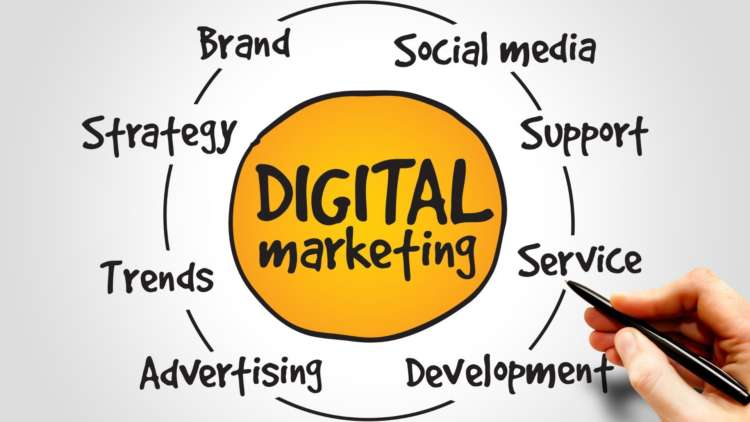
The phrase “digital marketing” has become popular. However, few of those who know what it is! Read the rest of this article to find out if you know the 6 main pillars of digital marketing. STRATEGY This is the first step to take when setting up digital marketing in a company. The strategy will indeed determine all the actions that will follow. A digital marketing strategy is based on an analysis of the market, the competition as well as a SWOT of your company to determine how it will be able to position itself. This is also the step where you must precisely determine the nature of your target audience, in particular using personas. You can then choose the digital channels you will use to reach and interact with this audience. THE WEBSITE The website is a must for any company that wants to embark on a digital strategy. Indeed, the site serves as a showcase for your business and allows you to collect leads and convert them. For your site to perform its functions properly, you must ensure that you follow certain recommendations such as: Adaptation to mobile: more and more Internet users are surfing from their phones. Your site must therefore be adapted to avoid losing prospects. Loading speed: a site that takes more than 3 seconds to load loses more than half of its traffic! VISIBILITY Once you have a site, you need to drive traffic to it. The Internet is vast, to have results you must have good visibility. This visibility can be achieved in different ways: Search Engine Optimization Online advertisements Use of social networks Content strategy  Offline Promotion The best way to be visible on the internet at a lower cost is to combine all these techniques. CONVERSION Attracting Internet users to your site is good, but you still need to be able to convert them! For example, you can offer the visitor to subscribe to your newsletter, download a white paper or give you a call. There are many types of conversions, the most ideal of which is of course buying or ordering. Performance Analysis To know your results, you need to be able to analyze them. Thanks to online tools, you can collect a lot of data that interests you on the behavior and characteristics of your visitors to be able to detect what works well on your site and in your advertisements as well as what works less well. Optimization With the data from Step 5, you can take action to improve your site and test new advertising strategies. This will allow you to get better results in the next period, which will bring you new data that will allow you to improve (and so on).

Brand Markeing, Digital Marketing, digital marketing for healthcare sector, email marketing, Healthcare Marketing, Heathcare Marketing, Search Engines, SEO Marketing, social media marketing, social meia marketing

What Are The Three Main SEO Techniques?

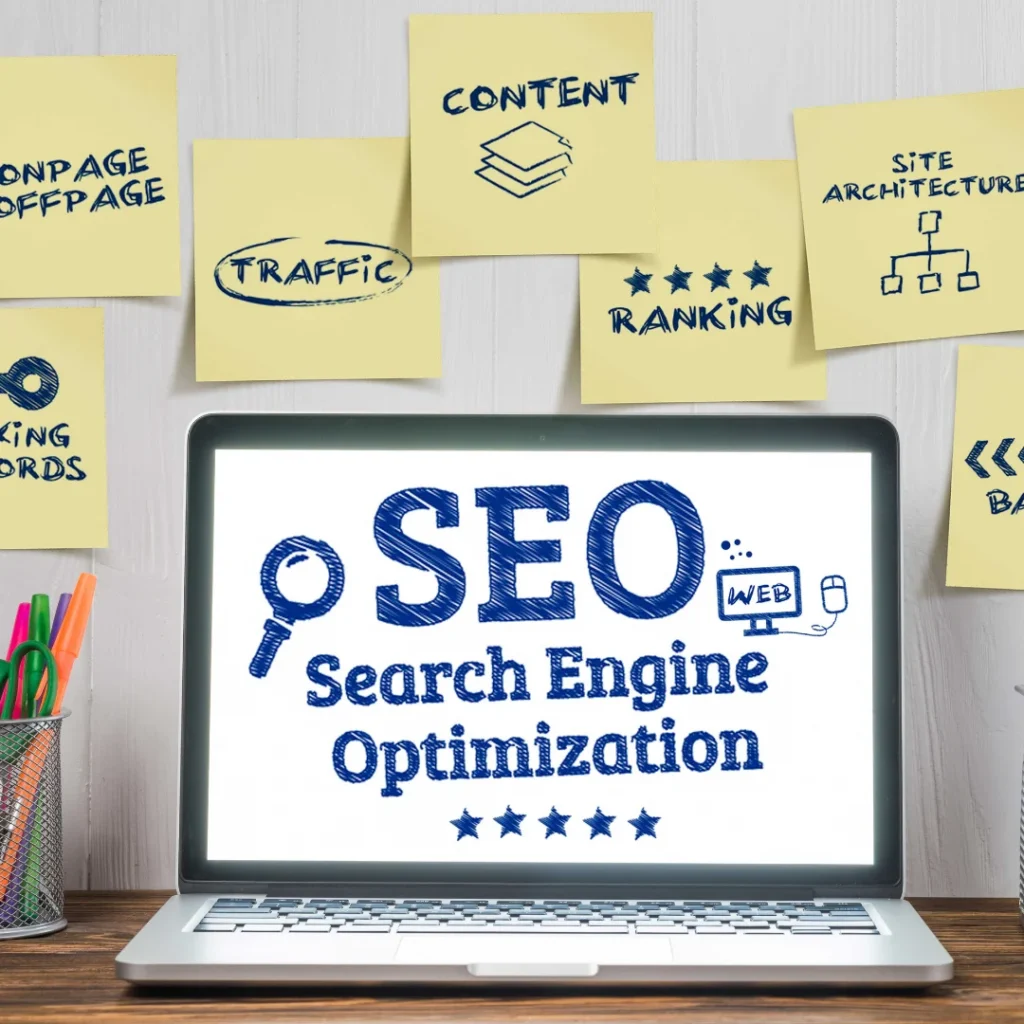
 SEO techniques improve the natural referencing of your website. These are actions that ensure both good indexing of your web pages and optimal positioning. Among all the SEO techniques, three of them represent the main levers for acquiring qualified traffic as part of your SEO strategy. You will find them below. 1st SEO Technique: Content Optimization Optimizing the editorial content on the pages of your website is one of the most important SEO techniques, if not the most important. During a question-and-answer session during the presentation by Google, Andrey Lipattsev, Search Quality Senior Strategist for the search engine notably cited it first among the criteria that define search results. It is indeed the content that tells search engines what each page of a website is about. It is therefore necessary to exclude from your site all content optimized only for search engines. To meet both the needs of SEO and the expectations of Internet users, content optimization then requires real editorial skills. A web editor can help you perform this task brilliantly. 2nd SEO Technique: External Linking Or Not Linking Netlinking is a strategy of exchanging and collecting links (backlinks) between several websites. This SEO technique allows you to increase the relevance index that a search engine has about your website.  Search engines assess your popularity based on what other sites think and say about you. The Google algorithm asks itself the following questions: How many sites talk about you? Are the sites that talk about you popular sites themselves? To acquire links to your site, you have the option of doing it the natural way. That is, to let other sites come to you over time and through the quality of your content. This SEO technique is called link baiting and it is the one to be preferred. Otherwise, you can start a proactive search for backlinks, with link exchanges or the creation of sponsored links. 3rd SEO Technique: Google Rankbrain And Keywords RankBrain is an artificial intelligence (AI) algorithm used by Google to sort search results. RankBrain refines Google’s algorithm by itself and thus allows the search engine to better process and understand Internet users’ queries by having part of its automated code. The main objective of RankBrain is in particular to better understand the meaning of keywords in the content of websites. It also analyzes the search queries and search intentions of the Internet user. RankBrain is also able to measure user satisfaction with the search engine. One of the main SEO techniques then consists of properly targeting your keywords for each of the pages of your website to be referenced. You must choose your keywords well using different strategies, but also avoid using keywords that are too different on the same page. This natural referencing technique represents a lot of work and therefore represents a strong investment. However, this investment will be largely rewarded by the increase in the level of traffic generated. To make these referencing techniques effective and sustainable over time, you must first ensure that the technical basis of your site complies with Google’s recommendations. Do not hesitate to carry out a technical audit of your website before embarking on a referencing campaign. Only an SEO-friendly site will allow you to fulfill your objectives!

Scroll to Top