Digital Marketing

Digital Marketing

How to Maximize ROI with the Best Digital Marketing Solutions of 2025

Introduction In 2025, digital marketing is no longer just about being online; it’s about being effective, efficient, and impactful. Businesses today face immense competition, with customers having endless options at their fingertips. To succeed, businesses must focus on getting the most out of their marketing investments maximizing Return on Investment (ROI). This article serves as a guide to understanding and utilizing the best digital marketing solutions of 2025 to help your business thrive. Whether you run a small business, manage a startup, or lead a large enterprise, these strategies will ensure that every rupee spent on marketing generates significant returns. Embrace AI and Automation for Smart Marketing Artificial Intelligence (AI) and automation are transforming how businesses approach digital marketing. These technologies simplify complex processes, reduce human error, and create personalized customer experiences. Tools to Use ChatGPT: A state-of-the-art AI that helps with content creation, automating customer support, and brainstorming new marketing ideas. It can also be used to generate scripts for ads, social media posts, and email campaigns. HubSpot: A comprehensive platform that integrates tools for marketing automation, sales management, and CRM. Its marketing hub offers email automation, lead generation, and analytics, making it a versatile tool for scaling businesses. Marketo Engage: A robust platform from Adobe that focuses on email marketing, lead management, and audience segmentation. It is particularly effective for businesses looking to implement long-term automated workflows for nurturing leads. How It Boosts ROI Personalized Interactions: AI tools analyze customer data to create campaigns tailored to individual preferences. Time-Saving Automation: Automation tools handle repetitive tasks like email follow-ups and social media scheduling, freeing up time for strategy building. Predictive Analytics: AI tools forecast customer behavior, allowing businesses to stay ahead of trends and plan better campaigns. Make Data-Driven Decisions Data is the backbone of successful marketing in 2024. By collecting and analyzing data, businesses can understand their customers better and create strategies that deliver results. Tools to Use Google Analytics 4: A powerful tool that offers insights into website traffic, user behavior, and conversion rates. It also supports multi-platform tracking, making it essential for businesses with both websites and apps. Sprout Social: An all-in-one social media management platform that not only schedules posts but also provides in-depth analytics on audience engagement, demographics, and campaign performance. Tableau: A visualization tool that turns raw data into meaningful insights through charts, graphs, and dashboards. Its drag-and-drop interface makes it easy for non-technical users to analyze data. How It Boosts ROI Targeted Campaigns: Use data insights to focus your efforts on high-performing strategies and profitable customer segments. Improved Decision-Making: Data helps eliminate guesswork, allowing businesses to invest in campaigns that deliver measurable results. Reduced Wastage: Avoid spending money on ineffective channels or campaigns by identifying what works best. Optimize for Search Engines (SEO and SEM) Search engines like Google and Bing are still the most popular way for people to discover new products and services. A strong presence on search engine result pages (SERPs) can drive significant organic traffic to your website. Tools to Use Ahrefs: Known for its comprehensive backlink analysis, keyword research, and competitor analysis, Ahrefs is an essential tool for improving search engine rankings. It also offers a content explorer to help businesses find trending topics in their niche. Moz: A user-friendly SEO tool with features like on-page optimization, rank tracking, and link building. Its keyword explorer provides actionable suggestions to help businesses target the right audience. Google Ads: A pay-per-click advertising platform that allows businesses to bid on keywords and create highly targeted campaigns. The platform’s advanced features include demographic targeting, ad scheduling, and performance tracking. How It Boosts ROI Organic Traffic: SEO ensures your website appears at the top of search results, attracting customers without additional advertising costs. Targeted Ads: SEM ensures that ads are shown to users searching for specific products or services, increasing the likelihood of conversion. Long-Term Benefits: Investments in SEO yield long-term benefits, making it a cost-effective strategy. Invest in Video Marketing Videos are one of the most engaging types of content online. They are perfect for grabbing attention, explaining products, and building a connection with your audience. Tools to Use Vidyard: A tool for creating professional videos, including product demos, tutorials, and personalized messages. It also tracks how viewers interact with your videos, offering valuable insights. Canva Pro: Ideal for businesses with limited design experience, Canva Pro offers templates for creating social media videos, ads, and stories. Adobe Premiere Pro: A professional-grade video editing tool with advanced features for creating high-quality content. Perfect for businesses looking to produce polished promotional materials. How It Boosts ROI Higher Engagement: Videos capture attention faster than text, increasing the likelihood of sharing and engagement. Brand Awareness: Compelling videos can go viral, exposing your brand to a broader audience. Improved Conversion Rates: Videos that explain your product or service effectively can drive sales. Strengthen Your Social Media Strategy Social media platforms are more than just a place to connect they are powerful tools for businesses to reach their customers and build relationships. Tools to Use Hootsuite: A social media management platform that helps schedule posts, monitor conversations, and analyze performance across platforms like Facebook, Twitter, and LinkedIn. Buffer: A simple yet effective tool for scheduling and analyzing posts. It offers insights into audience behavior and post-performance. Meta Business Suite: Combines Facebook and Instagram management into one tool, enabling businesses to create, schedule, and analyze posts and ads efficiently. How It Boosts ROI Affordable Advertising: Social media ads are budget-friendly and offer detailed targeting options. Increased Engagement: Interactive posts build strong relationships with your audience. Enhanced Visibility: Consistent posting ensures your brand stays top-of-mind for your audience. Focus on Email Marketing Email marketing remains one of the most cost-effective ways to reach customers. It allows businesses to connect directly with their audience and share personalized messages. Tools to Use Mailchimp: Known for its user-friendly interface, Mailchimp offers email templates, automation, and audience segmentation to create impactful campaigns. ConvertKit: Ideal for creators and small businesses, ConvertKit simplifies the […]

Digital Marketing

Essential Powerful Digital Marketing Tools for Small Business Owners

Introduction Scaling a small business in India is both an exciting and challenging endeavor. With the digital revolution sweeping the country, the internet has become a powerful equalizer, enabling even the smallest businesses to compete with larger corporations. Digital marketing tools are at the heart of this transformation, helping companies to reach wider audiences, improve customer engagement, and drive revenue growth. India’s dynamic market, with its diversity in demographics, language, and consumer behavior, demands a customized approach to digital marketing. Small businesses can no longer afford to overlook tools that streamline operations, optimize campaigns, and maximize impact. This article explores essential digital marketing tools designed for Indian businesses and showcases how socialprefix.com/, a trusted digital marketing service provider, can guide you on the path to success. Search Engine Optimization (SEO) Tools In the crowded online marketplace, SEO is non-negotiable. It’s what ensures your business ranks on Google and other search engines when potential customers search for products or services you offer. Recommended Tools Google Keyword Planner: Helps businesses find the most relevant and high-traffic keywords in their niche. For example, a bakery in Mumbai might discover that “custom cakes in Mumbai” is a popular search term and optimize its website accordingly. SEMrush: Provides a detailed analysis of your competitors’ keywords and backlinks, helping you stay ahead. Yoast SEO: This WordPress plugin ensures every piece of content is optimized for SEO, offering suggestions on readability, keyword density, and Meta descriptions. Why It Matters SEO is crucial for attracting organic traffic, which is often the most cost-effective way to acquire customers. In India, where the majority of online users rely on Google to make purchase decisions, appearing on the first page of search results can significantly impact your business. How socialprefix.com/ Can Help: socialprefix.com/ specializes in local SEO, helping businesses rank higher for region-specific searches. Whether you're a café in Jaipur or a salon in Bangalore, socialprefix.com/ ensures your website gets the visibility it deserves. Social Media Management Tools Social media is no longer optional it’s an essential channel for small businesses to connect with their audience. Platforms like Facebook, Instagram, and LinkedIn offer unparalleled opportunities for engagement, branding, and lead generation. Recommended Tools Hootsuite: Lets you manage multiple social media accounts, schedule posts, and track performance analytics in one place. Canva: Offers pre-designed templates for creating visually appealing posts, even if you lack design skills. For instance, a boutique in Kolkata can design festive promotional posts for Durga Puja using Canva. Buffer: A simple tool to schedule posts and track engagement metrics. Why It Matters With more than 500 million active social media users in India, having a strong presence on platforms such as Instagram and Facebook can significantly boost brand visibility and foster customer loyalty. For instance, a small food delivery service in Delhi can leverage Instagram Stories and Facebook Ads to showcase daily specials and attract local customers. How socialprefix.com/ Can Help: From creating engaging social media content to running targeted ad campaigns, socialprefix.com/ ensures your brand stands out. Their data-driven strategies help you connect with the right audience and achieve measurable results. Content Marketing Tools In India’s diverse market, storytelling is a powerful way to connect with audiences. Content marketing focuses on providing value to potential customers through blogs, videos, infographics, and more. Recommended Tools Grammarly: Ensures error-free and professional content that reflects positively on your brand. HubSpot: Helps plan, create, and distribute content, offering insights on what performs best. Vidyard: Perfect for creating and hosting videos, ideal for tutorials, product demos, or customer testimonials. Why It Matters Consumers in India often turn to online resources for advice, tips, and product reviews. High-quality, localized content can establish your brand as an industry authority and build trust with your audience. For example, a wellness brand could create blogs on the benefits of yoga or video tutorials on healthy recipes to attract health-conscious consumers. How socialprefix.com/ Can Help: socialprefix.com/ crafts tailored content strategies that align with your business goals. Their team ensures your content resonates with your audience, whether it’s in English, Hindi, or any regional language. Email Marketing Tools Email marketing continues to be a highly effective method for fostering strong customer relationships. With the right tools, you can send personalized campaigns that engage and convert your audience. Recommended Tools Mailchimp: Offers templates and automation features for designing campaigns. Constant Contact: A user-friendly tool for creating newsletters and managing email lists. Zoho Campaigns: An affordable solution for Indian small businesses, integrating seamlessly with other Zoho products. Why It Matters In India, email marketing can help businesses maintain direct communication with tech-savvy professionals. Personalized emails, such as festival offers or new product launches, can drive customer loyalty and sales. How socialprefix.com/ Can Help: From designing visually appealing emails to segmenting your audience, socialprefix.com/ ensures your email campaigns deliver results. Their team leverages analytics to refine your strategy for maximum impact. Pay-Per-Click (PPC) Advertising Tools PPC advertising is an excellent way to drive immediate traffic and generate leads. It’s especially effective for small businesses running time-sensitive promotions. Recommended Tools Google Ads: Ideal for creating search ads that target specific keywords. Facebook Ads Manager: Allows businesses to create highly targeted campaigns based on demographics, interests, and location. AdEspresso: Simplifies campaign management across platforms. Why It Matters For small businesses in India, PPC offers a way to compete with larger brands. For instance, a travel agency in Kerala could use PPC ads to promote holiday packages during peak tourist seasons. How socialprefix.com/ Can Help: socialprefix.com/ manages your PPC campaigns, ensuring optimal ad placement and budget allocation. Their expertise helps you achieve higher click-through rates and better ROI. Analytics and Reporting Tools Tracking and analyzing your digital marketing efforts is essential for scaling your business. Analytics tools provide insights into what’s working and where improvements are needed. Recommended Tools Google Analytics: Tracks website traffic, user behavior, and conversions. Kissmetrics: Offers detailed customer journey tracking, helping you understand your audience better. Hotjar: Provides heatmaps and session recordings to identify user behavior patterns. Why It […]

Digital Marketing

The Ultimate Guide to Choosing the Right Digital Marketing Solution

Introduction In today’s fast-paced world, businesses must leverage digital marketing to reach their audience effectively. This need has grown significantly in India, with the rise in internet usage, mobile adoption, and the booming e-commerce market. Choosing the right digital marketing solution is crucial to stay competitive in this dynamic environment. With numerous digital marketing strategies available, it can be overwhelming for businesses to decide which will work best. This guide will help you navigate the digital marketing landscape, focusing on the Indian market. It will also highlight socialprefix.com/ as a reliable partner for helping businesses succeed in their digital marketing journey. Understanding Your Business Needs Before diving into digital marketing strategies, it’s essential to understand the core objectives of your business. Whether you’re a local shop, a startup, or an enterprise, your business goals will define the digital marketing approach you should adopt. Defining Clear Business Goals Understanding what you want to achieve is the first step. Are you aiming for brand awareness, lead generation, customer engagement, or increasing direct sales? For instance, if your goal is to expand your brand’s reach, you might need a more extensive SEO strategy or a social media marketing campaign. For small businesses or startups, focusing on building an online presence through local SEO and social media marketing could be the most effective. On the other hand, established e-commerce platforms may prioritize PPC advertising or content marketing to drive conversions. socialprefix.com/ offers tailored digital marketing strategies designed to help businesses at every stage of growth. Understanding Your Target Audience In India, understanding your target audience is paramount. The country’s diverse population, spanning different regions, cultures, and languages, requires tailored strategies. While Instagram and LinkedIn may work for urban professionals in cities like Delhi or Mumbai, platforms like WhatsApp and Facebook may be more effective in tier-2 or tier-3 cities. When you collaborate with socialprefix.com/, their team takes the time to analyze your target audience’s behaviors. ensuring your marketing campaigns are designed to resonate with the right people. By understanding your audience’s preferences, whether it’s in English, Hindi, or regional languages like Tamil or Kannada, socialprefix.com/ can help craft content that speaks to them directly. Key Components of Digital Marketing Solutions A successful digital marketing strategy is multifaceted. Let’s explore the key components that can boost your online presence and growth. Search Engine Optimization (SEO) SEO is one of the most crucial components for any business with an online presence. In India, where millions of users turn to Google for everything from product reviews to local services, SEO ensures that your business ranks higher in search results. By working with socialprefix.com/, your business can benefit from their expertise in local SEO, which is vital for businesses targeting specific regions. Whether you're aiming to show up on the first page of Google for a local search or rank higher for industry-related keywords, SocialPrefix’s team uses a combination of keyword research, content optimization, and backlink strategies to boost your website’s visibility. Social Media Marketing (SMM) With over 500 million social media users in India, platforms like Facebook, Instagram, LinkedIn, and Twitter offer businesses an unparalleled opportunity to engage with potential customers. socialprefix.com/ excels in helping businesses create effective social media marketing strategies that align with their target audience’s preferences. Whether it’s Facebook ads to target a specific demographic or Instagram influencer marketing for younger audiences, socialprefix.com/ customizes campaigns for maximum engagement and lead generation. Their strategies are driven by data, ensuring you are engaging your audience where it matters most. Content Marketing Content is king in digital marketing. Creating informative, engaging, and shareable content is an excellent way to build trust and establish your brand as an authority. Content marketing can involve blog posts, videos, infographics, podcasts, and more. For Indian businesses, content must be localized to suit the language and preferences of different regions. Whether it’s an article on sustainable living for eco-conscious consumers or a video in Hindi for a broader audience, socialprefix.com/ helps businesses craft content strategies that resonate with their target market. Pay-Per-Click Advertising (PPC) PPC advertising on platforms like Google Ads or social media can give businesses a quick boost by driving immediate traffic to their website. It’s a cost-effective method, where you pay only when someone clicks on your ad. For Indian businesses, PPC advertising can be a game-changer, especially when aiming to promote a time-sensitive sale or new product launch. socialprefix.com/ offers expert PPC management, focusing on targeting the right audience, optimizing ad copy, and reducing cost-per-click to maximize ROI. Email Marketing Email marketing remains one of the most effective ways to nurture relationships with customers. Through personalized emails, businesses can send promotions, updates, and valuable content to their subscribers. Given the growth of smartphones in India, emails must be mobile-optimized for a seamless experience. socialprefix.com/ excels in crafting segmented, targeted email campaigns that convert subscribers into loyal customers, helping your business stay top of mind. Evaluating Digital Marketing Providers Choosing the right digital marketing service provider is crucial to the success of your campaigns. Here’s how to evaluate potential partners: Expertise and Experience A reputable digital marketing agency should have a proven track record of success. socialprefix.com/ stands out in the Indian digital marketing industry due to its deep understanding of the local market, client needs, and business challenges. Their portfolio includes a wide range of clients, from small startups to large enterprises. Industry Specialization If you belong to a niche industry, it’s beneficial to work with a digital marketing provider experienced in that field. For example, socialprefix.com/ has experience working across diverse sectors like retail, real estate, education, and healthcare, ensuring that marketing campaigns are tailored specifically to your industry’s needs. Transparency and Reporting A trustworthy digital marketing provider will keep you informed about the performance of your campaigns. Regular reports on metrics such as website traffic, engagement, and conversions are vital for assessing success. socialprefix.com/ offers clear, comprehensive reports that provide valuable insights, helping you understand the impact of your campaigns. Client Testimonials and Reviews One […]

Digital Marketing

Utilizing Data Analytics to Optimize Your Social Media Marketing Efforts

In today’s digital age, social media has become a powerful tool for businesses to connect with their intended audience. However, with ever-increasing competition and constantly evolving algorithms, businesses must stay ahead of the curve. This is where data analysis comes into play. Businesses can improve the results and ROI of their social media marketing efforts by effectively utilizing data analytics. One of the primary advantages of using data analytics for social media marketing is the ability to gain valuable insights into audience behavior and preferences. Businesses can better understand their target audience and tailor their content to them by analyzing data like engagement metrics, click-through rates, and demographic information. For example, if analytics show that a specific demographic responds well to video content, businesses can direct their efforts toward producing more video content to engage that audience segment. Furthermore, data analytics can enable businesses to monitor the performance of their social media campaigns in real-time. Businesses can quickly identify what is working and what isn’t by tracking metrics like reach, impressions, and conversions, allowing them to make necessary changes on the fly. This agility is critical in today’s fast-changing digital landscape, where trends and consumer preferences can instantly shift. Furthermore, data analytics allows businesses to conduct A/B testing to fine-tune their social media strategies further. Businesses can optimize their campaigns by testing variables such as ad copy, visuals, and targeting criteria to determine which elements resonate best with their target audience. This iterative approach not only maximizes ROI but also promotes continuous improvement and innovation. Finally, data analytics is a powerful tool for improving the effectiveness of social media marketing campaigns. Businesses can improve their marketing strategies by leveraging data to gain insights, track performance, and conduct testing. In today’s competitive landscape, embracing data analytics is no longer optional, but rather required for success in social media marketing.

Brand Markeing, Digital Marketing, digital marketing for healthcare sector, email marketing, Healthcare Marketing, Heathcare Marketing, Search Engines, SEO Marketing, social media marketing, social meia marketing

How Social Media Marketing Can Help Your Business Today

The power of social media marketing cannot be denied in today’s business world. With the rise of technology and the increasing number of people using social media platforms, businesses can no longer afford to ignore social media as a marketing tool. Social media marketing has become an essential part of the marketing mix, and businesses that want to succeed must incorporate it into their overall marketing strategy. Social media platforms such as Facebook, Twitter, Instagram, LinkedIn, and TikTok have billions of active users worldwide, making them an ideal place for businesses to reach a large audience. By leveraging social media marketing, businesses can connect with their target audience, increase brand awareness, drive website traffic, generate leads, and boost sales. Here are some of the ways social media marketing can benefit businesses in today’s world. Connect with the Target Audience: Social media provides businesses with an opportunity to connect with their target audience in a more personal and engaging way. Businesses can use social media to create and share content that resonates with their target audience, answer customer queries, and build relationships with their customers. By engaging with their customers on social media, businesses can build trust and loyalty, which can lead to increased sales and customer retention. Increase Brand Awareness: Social media platforms offer businesses an effective way to increase brand awareness. By creating and sharing valuable content, businesses can attract followers and build their brand’s reputation. When followers engage with a business’s content, they share it with their followers, which can lead to a wider audience and increased exposure for the brand. By consistently creating and sharing quality content, businesses can establish themselves as an authority in their industry, which can lead to increased trust and credibility. Drive Website Traffic: Using social media to increase website traffic can be very effective. By sharing links to their website on social media platforms, businesses can attract potential customers to their websites. When users click on a business’s link, they are directed to the business’s website, where they can learn more about the business’s products and services. By consistently sharing links to their website on social media, businesses can increase their website traffic, which can lead to increased leads and sales. Generate Leads: Businesses can generate leads using social media platforms. By creating and sharing valuable content that appeals to their target audience, businesses can attract potential customers to their social media profiles. Once a user has engaged with a business’s content, businesses can use lead generation forms to collect their contact information. By collecting contact information, businesses can follow up with potential customers and convert them into paying customers. Boost Sales: Social media marketing can also help businesses boost their sales. By creating and sharing compelling content that promotes their products and services, businesses can encourage their followers to make a purchase. Social media platforms also offer businesses the opportunity to advertise their products and services to a targeted audience. By creating targeted ads, businesses can reach users who are most likely to be interested in their products and services, which can lead to increased sales. Conclusion: In conclusion, the power of social media marketing in today’s business world cannot be ignored. Social media platforms offer businesses an opportunity to connect with their target audience, increase brand awareness, drive website traffic, generate leads, and boost sales. By incorporating social media marketing into their overall marketing strategy, businesses can stay ahead of their competitors and reach a wider audience.

Brand Markeing, Digital Marketing, digital marketing for healthcare sector, email marketing, Healthcare Marketing, Heathcare Marketing, Search Engines, SEO Marketing, social media marketing, social meia marketing

Visual Storytelling: How To Tell A Compelling Story With Images

Visual storytelling is the art of using images to convey a message or story. With the rise of social media platforms, visual storytelling has become more important than ever before. Photos and videos are increasingly used to communicate ideas and emotions and to engage with audiences in a more meaningful way. In this article, we’ll explore the principles of visual storytelling and provide tips on how to tell a compelling story with images. Principles of Visual Storytelling Visual storytelling is about more than just taking pictures. It’s about using images to create a narrative that draws the viewer in and communicates a message. Here are some principles of visual storytelling that can help you create compelling images. Start with a clear message Before you start taking pictures, it’s important to have a clear message in mind. To whom are you trying to convey a message? What emotions do you want to evoke? Once you have a clear message, you can start thinking about the images that will best communicate that message. Use a variety of shots To create a compelling story, it’s important to use a variety of shots. This can include close-up shots, wide shots, and medium shots. Close-up shots can be used to show detail and emotion, while wide shots can be used to establish a sense of place or context. Medium shots are often used to show interactions between people or objects. Create a sense of rhythm Just like music, visual storytelling can have a sense of rhythm. This can be created by using a variety of shots and editing them together in a way that creates a sense of movement and progression. The rhythm of your visual story can help create an emotional response in your audience. Pay attention to the composition The composition of your images is crucial to creating a compelling visual story. Think about the placement of objects within the frame, the use of negative space, and the use of lines and shapes. These elements can be used to draw the viewer’s eye and create a sense of balance and harmony. Use color to set the mood Color can be a powerful tool in visual storytelling. Different colors can evoke different emotions and can be used to set the mood of your story. Warm colors like red and orange can create a sense of warmth and energy, while cool colors like blue and green can create a sense of calm and relaxation. Create a sense of contrast Contrast can be used to create a sense of tension and drama in your visual story. This can include differences in color, the disparity in light and shadow, or contrast in the subject matter. By creating contrast, you can draw the viewer’s eye to specific elements within the frame and create a sense of visual interest. Tips for Telling a Compelling Story with Images Now that we’ve covered some of the principles of visual storytelling, let’s look at some tips for telling a compelling story with images. Plan your story Before you start taking pictures, it’s essential to plan your story. Think about the message you want to communicate and the images that will best convey that message. Consider the different shots you’ll need, and how you’ll edit them together to create a sense of rhythm and movement. Look for interesting angles One way to create compelling images is to look for interesting angles. This can include shooting from a low angle to create a sense of power or shooting from a high angle to create a sense of vulnerability. By experimenting with different angles, you can create images that are more visually interesting and engaging. Use light to your advantage Light can be used to create mood and emotion in your images. Consider the time of day and the direction of the light when you’re taking pictures. You can also use artificial light sources like lamps or flash to create a sense of drama and interest in your images. Tell a story with each image Each image in your visual story should tell a story on its own. Think about the emotions and ideas you want to convey with each image, and how they fit into the larger narrative. By focusing on the story within each image, you can create a more compelling visual story overall. Use captions to add context Captions can be a powerful tool in visual storytelling. They can add context to your images, provide additional information, or create a sense of emotion or humor. Consider using captions to enhance your visual story and provide additional context for your audience. Edit your images carefully The way you edit your images can have a big impact on the overall feel of your visual story. Consider the use of color, contrast, and composition when you’re editing your images. Take the time to carefully edit each image to create a cohesive and compelling visual story. Conclusion Visual storytelling is a powerful tool for communicating ideas and emotions. By using images to create a narrative, you can engage your audience in a more meaningful way and create a lasting impression. By following the principles of visual storytelling and using the tips we’ve provided, you can create compelling images that tell a story and leave a lasting impact.

Brand Markeing, Digital Marketing, digital marketing for healthcare sector, email marketing, Healthcare Marketing, Heathcare Marketing, Search Engines, SEO Marketing, social media marketing, social meia marketing

Navigating Social Media Algorithms: What You Need to Know

Social media algorithms are constantly evolving and changing. They can be a mystery to many people who use social media for personal or business reasons. Understanding how social media algorithms work is crucial if you want to effectively navigate them and achieve your goals on these platforms. In this article, we will explore what social media algorithms are, how they work, and what you need to know to navigate them. What Are Social Media Algorithms? Social media algorithms are a set of rules that determine what content users see on their feeds. These algorithms use machine learning and data analysis to determine which posts are most relevant and engaging to individual users based on their behavior, preferences, and other factors. For example, Instagram’s algorithm prioritizes content that users engage with the most, such as likes, comments, and shares. Twitter’s algorithm prioritizes tweets that are most likely to spark conversation and engagement. Facebook’s algorithm prioritizes content from friends and family over brands and businesses. How Social Media Algorithms Work Social media algorithms use a variety of factors to determine what content to show to users. These factors can include: Engagement: The number of likes, comments, and shares a post receives can increase its visibility on users’ feeds. Posts that generate high levels of engagement are more likely to appear at the top of users’ feeds. Relevance: Algorithms consider how relevant a post is to a user’s interests and preferences. For example, if a user frequently engages with posts about fitness, the algorithm will show them more content related to fitness. Recency: Algorithms also consider how recently a post was published. Fresh content is more likely to be shown to users than older content. Quality: Social media algorithms prioritize high-quality content that is visually appealing and well-written. Posts with spelling and grammatical errors, low-quality images, or spammy content are less likely to be shown to users. User behavior: Algorithms also analyze a user’s behavior on the platform, such as the pages they follow, the posts they engage with, and the time they spend on the platform. This data is used to tailor content to the user’s preferences. Navigating Social Media Algorithms Navigating social media algorithms can be challenging, but there are several strategies you can use to improve your chances of success. Here are some tips for navigating social media algorithms: Post high-quality content: As we mentioned earlier, algorithms prioritize high-quality content that is visually appealing and well-written. Make sure your posts are well-crafted and use high-quality images and videos. Use relevant hashtags: Hashtags can increase the visibility of your posts and make them more discoverable to users who are interested in the same topics. Make sure to use relevant hashtags that are popular and frequently used. Engage with your audience: Engaging with your audience can increase the visibility of your posts and improve your engagement rates. Respond to comments and messages promptly and ask questions to encourage conversation. Post consistently: Posting consistently can increase your visibility on social media and improve your engagement rates. Make sure to post regularly and at times when your audience is most active. Diversify your content: Social media algorithms prioritize diverse content that appeals to a wide range of users. Try to diversify your content by posting different types of content, such as photos, videos, and stories. Use paid advertising: Paid advertising can increase the visibility of your posts and target specific audiences. Consider using paid advertising to boost your reach and engagement rates. Analyze your data: Analyzing your data can help you understand what types of content perform best on social media. Use analytics tools to track your engagement rates, reach, and other metrics and adjust your strategy accordingly. Conclusion Social media algorithms can be a mystery to many people, but understanding how they work is crucial if you want to effectively navigate them and achieve your goals on these platforms. By understanding the factors that social media algorithms consider, you can optimize your content to improve your visibility and engagement rates. Remember to focus on creating high-quality content that is relevant to your audience, using relevant hashtags, engaging with your audience, posting consistently, diversifying your content, using paid advertising, and analyzing your data to refine your strategy. Navigating social media algorithms can be challenging, but by following these tips, you can improve your chances of success on these platforms. Keep in mind that social media algorithms are constantly changing, so it’s important to stay up-to-date on the latest trends and best practices to stay ahead of the game. To know SEO And PPC: Which Strategy Should You Use? click here

Brand Markeing, Digital Marketing, digital marketing for healthcare sector, email marketing, Healthcare Marketing, Heathcare Marketing, Search Engines, SEO Marketing, social media marketing, social meia marketing

Leveraging Social Media For Effective Brand Management

Social media has completely changed how businesses communicate with their customers. Nowadays, social media is a crucial part of every brand’s marketing strategy. It has become an effective tool for brand management and can be leveraged to create a strong brand presence. Effective brand management on social media requires a strategic approach, creativity, and consistency. In this article, we will explore how businesses can leverage social media for effective brand management. Define Your Brand’s Persona The first step to leveraging social media for effective brand management is to define your brand’s persona. This includes identifying your target audience, brand values, and voice. Your brand’s persona should be consistent across all social media platforms. It ought to be in line with the principles of your company and appeal to your intended market. A clear brand persona will help you create a more cohesive social media presence, build trust with your audience, and increase brand awareness. Create a Social Media Strategy Once you have defined your brand persona, the next step is to create a social media strategy. This strategy should align with your overall marketing goals and target audience. Your social media strategy should include the type of content you will be creating, the frequency of posts, and the platforms you will be using. It should also outline your brand’s messaging and tone of voice. Focus on Visual Content Visual content is a key component of effective brand management on social media. Visual content such as images, videos, and infographics are more likely to grab the attention of your audience than text-based content. When creating visual content, make sure it is high-quality, on-brand, and relevant to your target audience. Consistency is Key Consistency is essential when it comes to leveraging social media for effective brand management. This includes being consistent with your brand’s messaging, tone of voice, and visual identity. It also means being consistent with your posting schedule. Consistently posting high-quality content on a regular basis will help build brand recognition, trust, and loyalty. Engage with Your Audience Social media is a two-way communication platform. Engaging with your audience is essential for effective brand management. Responding to remarks, messages, and mentions falls under this. Engaging with your audience shows that you value their input and feedback, which can help build brand loyalty and trust. Monitor Your Brand’s Reputation Social media provides businesses with a unique opportunity to monitor their brand’s reputation. Monitoring your brand’s reputation on social media can help you identify potential issues before they become major problems. It can also help you identify opportunities to improve your brand’s reputation and build trust with your audience. Use Influencer Marketing Influencer marketing is a powerful tool for effective brand management on social media. Partnering with influencers who align with your brand values and target audience can help increase brand awareness and credibility. When partnering with influencers, make sure they have a genuine following and that their content aligns with your brand’s values. Utilize Paid Advertising Paid advertising is another effective way to leverage social media for brand management. Social media platforms such as Facebook and Instagram offer businesses the ability to target specific audiences with ads. This can help increase brand awareness, drive traffic to your website, and increase sales. Measure Your Results Measuring your results is essential for effective brand management on social media. By tracking metrics such as engagement, reach, and conversion rates, you can determine what is working and what is not. This will help you make data-driven decisions to improve your social media strategy and increase your ROI. Stay Up-to-Date with Social Media Trends Social media is constantly evolving, and it is essential to stay up-to-date with the latest trends and features. This includes changes to algorithms, new platforms, and emerging trends. Staying up-to-date with social media. Conclusion Leveraging social media for effective brand management requires a strategic approach, creativity, and consistency. By defining your brand persona, creating a social media strategy, focusing on visual content, being consistent, engaging with your audience, monitoring your brand’s reputation, using influencer marketing, utilizing paid advertising, measuring your results, staying up-to-date with social media trends, encouraging user-generated content, being authentic, staying engaged with industry influencers, using hashtags strategically, and being responsive to customer feedback, businesses can establish a powerful online presence for their brand. Effective brand management on social media can help increase brand awareness, build trust with your audience, and increase ROI.

Brand Markeing, Digital Marketing, digital marketing for healthcare sector, email marketing, Healthcare Marketing, Heathcare Marketing, Search Engines, SEO Marketing, social media marketing, social meia marketing

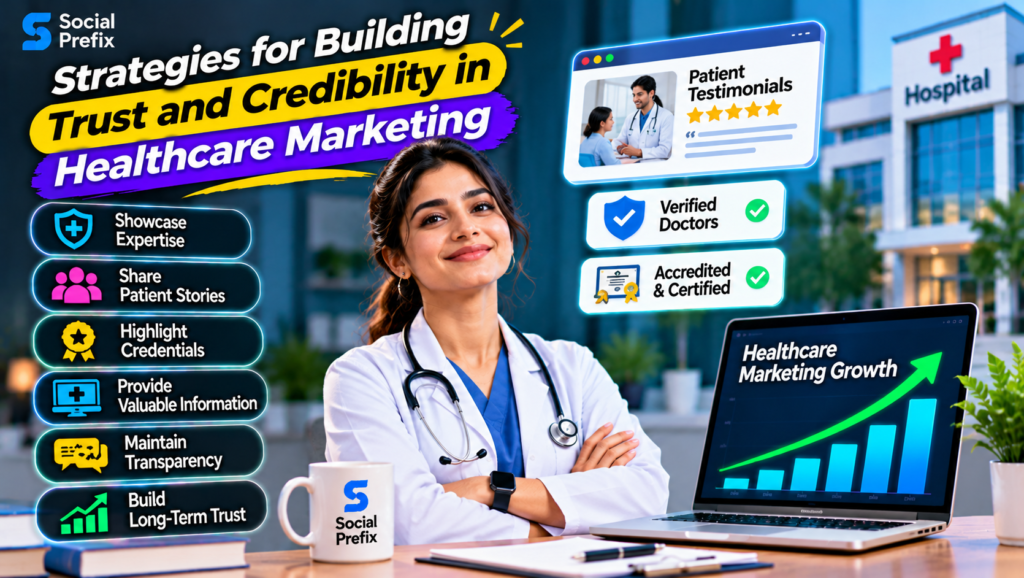
Strategies For Building Trust And Credibility In Healthcare Marketing

The healthcare industry is highly competitive, and it’s becoming increasingly important to establish trust and credibility with patients. Patients want to know that they are in good hands, and they want to be sure that they are receiving quality care. In this article, we will discuss various strategies for building trust and credibility in healthcare marketing. Establish a Strong Online Presence In today’s digital age, having a strong online presence is crucial for any healthcare provider. Patients are increasingly using the internet to research healthcare providers and facilities before making a decision. Therefore, it is essential to have a website that is easy to navigate and provides accurate information about your services. Your website should also include patient reviews, as this can help build trust and credibility. Social media platforms are also important for building trust and credibility in healthcare marketing. You can use social media to communicate with patients, provide valuable health information, and build a community around your brand. By providing useful information, you can establish yourself as an authority in your field and build trust with your followers. Provide Quality Patient Care Providing quality patient care is one of the most important ways to build trust and credibility in healthcare marketing. Patients want to know that they are receiving the best possible care, and they want to feel valued and respected. Therefore, it is important to train your staff to provide compassionate care and to listen to patients’ concerns. In addition to providing quality care, you should also be transparent about your outcomes. Share patient satisfaction rates and other key performance indicators (KPIs) on your website or social media platforms. This will help patients see that you are committed to providing high-quality care and that you are accountable for your results. Build Relationships with Patients Building relationships with patients is essential for building trust and credibility in healthcare marketing. Patients are more likely to trust providers who take the time to get to know them and who show genuine care and concern for their well-being. Therefore, it is important to build strong relationships with your patients by taking the time to listen to their concerns, answering their questions, and providing personalized care. You can also build relationships with patients by providing educational materials on your website or social media platforms. By providing information on a variety of health topics, you can help patients stay informed and empowered to make informed decisions about their health. Use Testimonials and Case Studies Testimonials and case studies are powerful tools for building trust and credibility in healthcare marketing. Patient testimonials provide social proof that your services are effective and that patients are satisfied with their care. Case studies can demonstrate your expertise and the positive outcomes that you can achieve. You can use testimonials and case studies on your website or social media platforms to showcase your success stories. By highlighting the positive experiences of your patients, you can build trust and credibility with prospective patients and establish yourself as a reliable provider. Engage in Community Outreach Engaging in community outreach is a great way to build trust and credibility in healthcare marketing. By participating in community events, providing free health screenings, and supporting local charities, you can demonstrate your commitment to the community and build goodwill. Community outreach can also help you build relationships with potential patients. By providing valuable services to the community, you can establish yourself as a trusted provider and build a strong referral network. Invest in Reputation Management Reputation management is essential for building trust and credibility in healthcare marketing. Online reviews and ratings can greatly impact patients’ decisions when choosing a healthcare provider. Therefore, it is important to monitor your online reputation and address any negative feedback promptly. Investing in reputation management can also help you build credibility by demonstrating your commitment to providing quality care and addressing patient concerns. By responding to negative feedback in a constructive manner, you can show that you are committed to improving your services and that you take patient feedback seriously. Provide Clear and Concise Information Patients want clear and concise information about their health and the services that you offer. Therefore, it is important to provide information in a way that is easy to understand and accessible to everyone. This includes providing information on your website or social media platforms that is easy to navigate and uses simple language. In addition to providing clear and concise information, it is also important to provide accurate information. Make sure that the information you provide is up-to-date and based on current medical research. By providing accurate information, you can build trust and credibility with patients and establish yourself as an expert in your field. Foster a Positive Online Reputation Your online reputation can greatly impact patients’ decisions when choosing a healthcare provider. Therefore, it is important to foster a positive online reputation by actively managing your online presence. This includes monitoring your online reviews, responding to patient feedback promptly and professionally, and providing valuable information on your website and social media platforms. You can also use online reputation management tools to monitor your online presence and track your online reputation. By being proactive about your online reputation, you can ensure that patients have a positive impression of your practice and are more likely to choose you as their healthcare provider. Emphasize Privacy and Confidentiality Privacy and confidentiality are important issues in healthcare marketing. Patients want to know that their personal and medical information is safe and secure. Therefore, it is important to emphasize privacy and confidentiality in all aspects of your marketing. Make sure that your website and social media platforms have clear privacy policies that explain how patient information is collected, used, and protected. Train your staff on the importance of privacy and confidentiality and ensure that they follow best practices when handling patient information. Embrace Patient Feedback Patient feedback is an important tool for building trust and credibility in healthcare marketing. By listening to patient feedback and addressing […]

Brand Markeing, Digital Marketing, digital marketing for healthcare sector, email marketing, Healthcare Marketing, Heathcare Marketing, Search Engines, SEO Marketing, social media marketing, social meia marketing

Social Media Advertising vs Organic Reach: Which is Better?

Social media has revolutionized the way businesses approach marketing. In the past, advertising was mainly done through traditional means such as print ads, television commercials, and billboards. However, with the rise of social media, advertising has taken a new form that has proven to be effective in reaching a wider audience. The question is, which is better, social media advertising or organic reach? In this article, we will explore both methods and their pros and cons to help you make an informed decision. What is Organic Reach? The number of people who see your content without any paid promotion or advertising is referred to as organic reach. In other words, it is the natural exposure your content receives through shares, likes, and comments. Organic reach is an important metric for social media platforms as it shows how engaging and relevant your content is to your followers. This means that the more engaging your content is, the more likely it is to be shared, liked, and commented on, which will increase its organic reach. Pros of Organic Reach Cost-effective: One of the most significant advantages of organic reach is that it is free. You don’t need to pay to reach your followers, and your content can potentially reach a wide audience without any additional cost. Builds trust and loyalty: When your followers engage with your content, it creates a sense of trust and loyalty. This can lead to increased brand awareness and customer retention. Increases engagement: Organic reach can lead to increased engagement, which can help you understand your audience better. This can help you create more targeted content that resonates with your audience. Cons of Organic Reach Limited reach: Organic reach is limited to your current followers. This means that if you want to reach a wider audience, you need to rely on paid advertising. Slow growth: Building organic reach takes time and effort. It requires consistent posting and engagement with your followers. This means that it may take longer to see results compared to paid advertising. Algorithm changes: Social media algorithms are constantly changing, which can impact your organic reach. This means that even if your content is engaging and relevant, it may not reach as many people due to algorithm changes. What is Social Media Advertising? Social media advertising is a form of paid promotion that allows you to reach a wider audience than organic reach. It involves creating ads targeting specific demographics and interests and paying to display those ads to those targeted users. Social media advertising can be done on various platforms, including Facebook, Twitter, Instagram, and LinkedIn. Pros of Social Media Advertising Targeted advertising: One of the most significant advantages of social media advertising is that it allows you to target specific demographics and interests. You can reach the right people with the right message, increasing conversion rates. Increased reach: Social media advertising can help you reach a wider audience than organic reach. This means that you can increase brand awareness and potentially reach new customers. Immediate results: Social media advertising can provide immediate results. You can track engagement, clicks, and conversions in real-time, allowing you to adjust your strategy as needed. Cons of Social Media Advertising Cost: Social media advertising can be expensive, especially if you want to reach a large audience. This means that you need to have a budget in place to support your advertising efforts. Ad fatigue: Social media users are bombarded with advertisements on a daily basis, which can lead to ad fatigue. This means that your ads may not be as effective over time as users become desensitized to them. Limited trust: Paid advertising can be seen as less trustworthy than organic content. This means that some users may be less likely to engage with your content if they know it is paid to advertise. To know how to use social media to increase brand awareness click here Which is Better? The answer to the question of which is better, social media advertising or organic reach, is not straightforward. Both methods have their advantages and disadvantages, and the best approach depends on your business goals and resources. If you have a limited budget and want to build trust and loyalty with your audience, organic reach may be the better option. It allows you to create content that resonates with your followers and builds a sense of community around your brand. However, if you want to reach a wider audience and see immediate results, social media advertising may be the better option. It allows you to target specific demographics and interests, and track engagement in real-time. In reality, the best approach is likely a combination of both methods. By using organic reach to build a loyal following and social media advertising to reach a wider audience, you can create a comprehensive marketing strategy that targets both existing and potential customers. Conclusion Social media advertising and organic reach are two distinct methods for reaching your audience on social media. Both methods have their advantages and disadvantages, and the best approach depends on your business goals and resources. Ultimately, the best approach is likely a combination of both methods, using organic reach to build a loyal following and social media advertising to reach a wider audience. By using these methods strategically, you can create a comprehensive marketing strategy that targets both existing and potential customers.

Scroll to Top