local SEO

Clinic SEO Strategy, Digital Advertising, health digital marketing, Healthcare Growth, Heathcare Marketing, Local SEO

How to Win healthcare digital marketing with Ethics

The world of healthcare digital marketing is changing very fast. Every clinic needs a clear plan to reach more patients today. It is not just about a website anymore. You must build trust and show your care online. A strong clinic SEO strategy helps people find you easily. However, you must also follow many strict legal rules. Growth and safety must go hand in hand for success. This guide will show you how to win in 2026. Your medical practice can grow while staying safe and ethical. Ethical & Legal Considerations Privacy is the most important part of any medical plan. Patients trust you with their most private health details. Therefore, you must protect this data with great care. Laws like HIPAA set very high bars for digital safety. Every piece of your healthcare digital marketing must be safe. You cannot share patient stories without clear written permission. Also, your website needs strong locks to stop data leaks. Safe marketing builds a bond that lasts for many years. It proves that you put your patients first every day. Being honest is the next big rule for your practice. Never make big promises that you cannot actually keep. Your clinic SEO strategy should focus on real medical facts. Avoid using words that might mislead a sick person. Instead, share clear and helpful tips for better health. Clear communication is the best way to gain new leads. Professional boards watch how clinics act on social media closely. By being ethical, you protect your license and your name. Trust is the currency of the modern medical world. Local SEO for Clinics Most patients search for a doctor near their home. This is why local search is so vital for you. Your clinic SEO strategy must start with your local area. Make sure your name and phone number are correct everywhere. Google uses this data to show you in local maps. If your data is wrong, you will lose new patients. Consistently update your hours and your physical street address online. This simple step makes your practice look more reliable. Local visibility is the key to a busy waiting room. Keywords help you show up when someone needs help fast. Use words that your neighbors actually type into search bars. Mention your city and your specific neighborhood often on pages. This tells search engines exactly where you are located physically. A smart clinic SEO strategy uses local landmarks in content. You can write about local health events in your community. These small details help you stand out from big brands. Being a local leader makes patients feel much more comfortable. They want a doctor who is part of their life. Review Management Happy patients are your best voices for new growth. Most people read reviews before they book a visit. Because of this, you must manage your online stars well. Ask your happy guests to share their kind words. However, never pay for a fake review on any site. Real stories from real people carry the most weight online. Your healthcare digital marketing thrives on these honest social proofs. Positive feedback acts like a digital referral for your team. It shows that your clinic provides excellent and kind care. You must also handle bad reviews with a calm mind. Never argue with an angry patient in a public space. This looks bad to anyone else reading the thread later. Instead, offer to talk about the issue in private. This shows that you care about making things right again. Privacy rules still apply even when you respond to comments. Avoid sharing any health facts in your public replies online. A professional response can turn a bad situation around. It proves that your clinic listens to every single voice. Appointment Funnels A great website must lead to a real booking. This path is often called an appointment funnel online. Your healthcare digital marketing should make booking very simple. Use large buttons that say “Book Now” on every page. Most patients want to book a visit after hours. An online system lets them do this with ease. This reduces the work for your front desk team too. A smooth path leads to more visitors and less stress. Convenience is a top priority for the modern busy patient. Follow up with your leads to keep them coming. Send a kind email or a text after they book. This reminds them of the date and the time. You can also share tips on how to prepare well. This extra care makes the patient feel very special. Your clinic SEO strategy brings them in, but care keeps them. Use automation to handle these small but vital tasks fast. A smart funnel turns a simple click into a visit. It ensures that your practice stays full and very healthy. Frequently Asked Questions 1 How does clinic SEO strategy help my medical practice? It helps local patients find your services when they search. 2 Is healthcare digital marketing safe for patient privacy? Yes, if you follow HIPAA rules and keep data very safe. 3 Should I reply to every single online review? Yes, professional replies show that you value every patient’s voice. 4 What is the best way to get more appointments? Use a simple online booking tool on your main website. 5 Can I use patient photos in my clinic marketing? Only if you have clear, written consent from the patient. Read More: Real Estate SEO & Social Ads: 2026 Complete Guide How to Turn Marketing Data into Real Revenue

Audience Engagement, Customer Engagement, Engagement, Leads Generation, Local SEO, Marketing, Personalization in Marketing, SEO, Whatsapp Business, Whatsapp Marketing

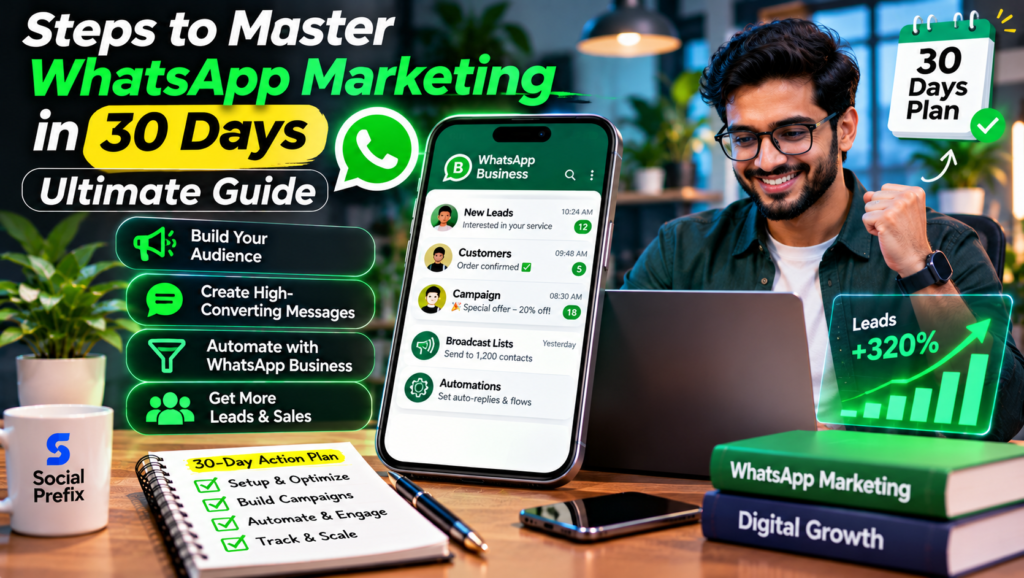
Steps to Master WhatsApp Marketing in 30 Days: Ultimate Guide

Marketing for a local business can feel very difficult because reaching customers in your neighborhood requires a direct and personal touch. However, once you learn how to use WhatsApp to connect with your community, you will see much higher engagement and foot traffic. I have used these exact strategies to help local brands slash their advertising costs while seeing a massive boost in repeat customers. The Problem With Traditional Local Ads Many local shops still rely on flyers or generic social media posts that people often ignore. This approach creates a massive disconnect because these methods lack the personal feel of a real conversation. You might feel frustrated when your expensive local ads fail to bring people through your front door. Traditional advertising is like shouting at a crowd and hoping one person looks your way. The solution lies in meeting your customers exactly where they spend their time every day. WhatsApp allows you to have a one on one conversation that builds immediate trust and loyalty. Once you apply these personal touchpoints you will see your sales numbers climb quickly. I have seen small cafes and salons double their bookings by simply being accessible through a quick text. Strategy 1: Create a WhatsApp Business Profile A professional profile is your first step toward building authority with your local audience. It allows you to list your address, website, and business hours in one clear place. You should also add a catalog of your best products to make browsing easy for users. This simple setup ensures that customers have all the info they need to visit you. Strategy 2: Use Click to Chat Links on Your Site You want to make it as easy as possible for mobile users to connect with your brand. Because over 30% of local searches happen on mobiles, you should use clickable links for your contact info. This saves people from the extra step of copying your number and switching between different apps. Therefore, a single click can start a conversation that leads to a local sale. Strategy 3: Offer Exclusive WhatsApp Only Discounts People love feeling like they are part of an exclusive club or a special local group. You can encourage people to join your list by offering a unique discount that is not available anywhere else. For example, a “buy one get one” deal for subscribers can drive a lot of traffic on slow weekdays. This incentive turns a casual browser into a loyal real world customer. Strategy 4: Use Status Updates for Daily Deals The Status feature is a great way to show off your daily offers without being pushy. You can post high quality images of your fresh products or new menu items to grab attention. These updates disappear after 24 hours which creates a natural sense of urgency for your followers. Consequently, people will check your status regularly so they do not miss out on a good deal. Strategy 5: Build a Local VIP Broadcast List Broadcast lists allow you to send a message to many people at once while keeping the chat private. This is much better than a group chat where everyone can see each other’s phone numbers. You should use this list to share important community news or special event invites. Therefore, your customers receive a personal notification that feels like a message from a friend. Strategy 6: Automate Your Quick Replies Local business owners are often busy and cannot answer every single text immediately. You should use the Quick Replies feature to answer common questions about your location or prices. This ensures that customers get the information they need even when you are working on the floor. Prompt responses help build a reputation for excellent customer service in your area. Strategy 7: Collect and Share Customer Reviews Social proof is a powerful tool that helps you win over new local customers who are undecided. You can ask your happy customers to send a quick text review of their experience with your brand. Once you have their permission, share a screenshot of these kind words on your status or other social pages. This demonstrates that you are a trusted and well liked member of the community. Strategy 8: Host Interactive Local Contests Contests are a fun way to get people engaged with your brand on a deeper level. You can ask users to send a photo of themselves using your product to enter a prize draw. This creates a lot of excitement and gives you great content to share with your other followers. In addition, it encourages more people to save your number so they can join the next event. Strategy 9: Use QR Codes at Your Physical Location You should place a WhatsApp QR code on your store window or at the checkout counter. This allows customers to join your list with a quick scan while they are already in your shop. You can even offer a small gift or a discount for anyone who signs up on the spot. This bridge between your offline and online marketing is the key to long term success. Strategy 10: Provide Personal Shopping Advice Use the chat to give tailored recommendations based on what a customer likes. For instance, if you run a clothing store, you can send photos of new items that match a user’s style. This high level of service is something that big global brands simply cannot provide. It makes your local business stand out as a helpful and expert authority in your field. Conclusion and Next Steps If you follow the tips in this guide, you should soon see much better results from your local marketing. Please do not forget to let me know how you got on in the comments below. I am always interested in hearing your thoughts, so tell me which tip you felt worked best for your business. FAQs 1 Why is WhatsApp better than email for local businesses? WhatsApp has a much higher open rate because people check their […]

Brand Markeing, content strategy, Digital Marketing, E-commerce, Engagement, Influencer Marketing, Leads Generation, Search Engines, SEO Marketing, Strategies

How to Master Voice Search Optimization Today

Voice search is no longer a futuristic concept; it is happening now. More and more people are using voice assistants like Siri, Google Assistant, and Alexa to find information, shop, and interact with the world. This shift means businesses must adapt their online strategies. Voice Search Optimization is key to staying visible and relevant. If your business isn’t prepared, you risk being left behind in this next wave of digital interaction. Understanding how voice search works and how to optimize for it is crucial for future success. The Rise of Voice Search Voice search has grown rapidly. Smart speakers are everywhere. Smartphones offer voice commands. This makes voice search a part of daily life. People use it for quick answers. They ask about weather, directions, and local businesses. This trend will only get stronger. As technology improves, so will voice assistant accuracy. This means more users will rely on their voices. Businesses must recognize this shift. They need to understand how people speak when searching. This is vital for effective Voice Search Optimization. It ensures your business can be found. How Voice Search Differs from Text Search Voice search is different from typing. When people type, they use short keywords. “Best pizza,” for example. When they speak, they use natural language. “Where is the best pizza near me?” This difference is huge. Voice searches are often longer. They are more like questions. They include natural phrases. This affects how you optimize. You need to think about how people talk. Your content must answer specific questions. This natural language focus is central to Voice Search Optimization. It moves beyond simple keywords. Voice Search Optimization for Conversational Queries To optimize for voice search, focus on natural language. Think about common questions related to your business. Create content that directly answers these. Use a conversational tone in your writing. Include long-tail keywords. These are longer, more specific phrases. For example, instead of just “car repair,” use “where can I get my car repaired quickly in my area?” Structure your content with headings. Use FAQs (Frequently Asked Questions) sections. This makes it easier for voice assistants to find answers. This approach is fundamental for successful Voice Search Optimization. It helps your content be heard. Local SEO and Voice Search Optimization Local search is extremely important for voice queries. Many people use voice search to find businesses nearby. “Find a coffee shop near me.” “What’s the best barber in town?” This means your local SEO needs to be perfect. Ensure your Google My Business profile is complete. Verify your address, phone number, and opening hours. Get positive customer reviews. These details are vital for voice assistants. They use this information to recommend local businesses. Strong local SEO is a critical component of Voice Search Optimization. It connects spoken queries to your physical location. The Future of Voice and Your Business Voice search is still evolving. It will become even more sophisticated. Voice assistants will integrate deeper into daily tasks. They will handle complex transactions. They will manage appointments. This means businesses must stay current. Continually update your website. Adapt to new voice search trends. Consider integrating voice commands into your own apps or services. Preparing now gives you a competitive edge. It positions your business for future growth. Embracing Voice Search Optimization today means you are ready for tomorrow’s digital landscape. Frequently Asked Questions (FAQs) 1 What is the main difference in how people use voice search versus text search? People use natural, conversational language for voice search. They use shorter, more fragmented keywords for text search. 2 Why is local SEO so important for voice search? Many voice searches are for nearby businesses and services. Voice assistants rely on accurate local data to provide relevant results. 3 Should I create content that answers specific questions for voice search? Yes, creating content that directly answers common questions is highly effective. This helps voice assistants find and use your information. 4 Will voice search replace traditional text search entirely? No, voice search is likely to complement text search. It will not fully replace it. Both will coexist, serving different user needs. 5 How can I check if my business is ready for voice search? Check your Google My Business profile for accuracy. Also, review your website content for natural language and long-tail question answers. Also Read: How Will AI Change Paid Advertising Forever: Complete Guide

Brand Markeing, content strategy, Digital Marketing, E-commerce, Engagement, Google Ads, logo design, PPC Ads, Search Engines, SEO Marketing, Strategies

Local SEO in 2025: How Small Businesses Can Beat Big Brands in Search

In 2025, the digital marketing battlefield is fiercer than ever. For small businesses, competing with the massive budgets and brand recognition of big corporations in general SEO can feel like an impossible task. However, there’s a powerful arena where local businesses not only compete but frequently dominate: Local SEO. As search engines become increasingly sophisticated and personalized, the intent behind “near me” searches, voice queries, and mobile searches continues to prioritize proximity and relevance above all else. This trend creates a unique opportunity for small businesses to shine by connecting directly with customers in their immediate geographic area. Therefore, understanding and mastering Local SEO in 2025 is not just an advantage; it is absolutely essential for survival and growth. This focused approach allows you to directly target customers ready to make a purchase right now. Mastering Google Business Profile (GBP) in 2025 Your Google Business Profile (formerly Google My Business) remains the cornerstone of Local SEO in 2025. This free tool is often the first interaction a potential local customer has with your business. Therefore, optimizing your GBP is paramount. Start by ensuring every single detail is meticulously accurate and comprehensive: your business name, address, phone number (NAP), website, operating hours, and service areas. Go further by adding high-quality photos of your storefront, products, and team. Because visual content significantly boosts engagement, keep your GBP photos fresh and inviting. Furthermore, leverage all available features. Use the “Posts” feature regularly to announce specials, events, and updates. Answer customer questions promptly in the Q&A section, preempting common queries. Most importantly, actively manage and solicit customer reviews. Positive reviews are gold for Local SEO, acting as powerful social proof and a direct ranking factor. Respond to every review, positive or negative, with professionalism and gratitude, as this shows excellent customer service. This proactive and comprehensive management of your Google Business Profile is a clear signal to Google that your business is active, reputable, and relevant to local searchers. Hyper-Local Content Strategy: Speak to Your Neighbors While big brands craft national campaigns, small businesses can win by creating hyper-local content that resonates deeply with their community. In 2025, Local SEO demands content that directly addresses the unique needs, events, and culture of your specific locale. For example, instead of just “Best coffee shop,” think “Best artisan coffee in [Your Neighborhood] near [Local Landmark].” Blog posts can cover local events, partnerships with other local businesses, or solutions to common problems faced by residents. Consider creating landing pages optimized for specific services in specific neighborhoods or towns you serve. Use local keywords naturally throughout your website copy, blog posts, and service descriptions. Incorporate local landmarks, street names, and community events. Furthermore, if your business is involved in local sponsorships or charity work, highlight these efforts on your website. This not only builds trust and goodwill within the community but also provides fantastic local content opportunities that Google’s algorithms increasingly favor. Therefore, hyper-local content shows both Google and your potential customers that you are an integral part of their community. Building a Robust Local Backlink Profile Backlinks remain a critical ranking factor in 2025, and for Local SEO, the quality and relevance of those links matter immensely. Focus on acquiring backlinks from other reputable local businesses, community organizations, local news sites, and industry-specific directories. Think about partnering with non-competing local businesses for cross-promotional content or reciprocal links. Sponsoring local sports teams, events, or charities can also provide valuable local backlinks and community engagement. Beyond traditional backlinks, ensure your business is listed in relevant niche directories (e.g., Yelp, TripAdvisor for hospitality, specific legal directories for law firms). While some directories may offer “dofollow” links, even “nofollow” links from trusted local sources can signal relevance to Google. The key is to demonstrate to search engines that your business is a well-known and respected entity within its local ecosystem. Building this local backlink profile takes time and effort, but it is a sustainable strategy that big brands often struggle to replicate at a hyper-local level, giving small businesses a significant Local SEO advantage. Leveraging Reviews and User-Generated Content Customer reviews are more influential than ever in 2025, especially for Local SEO. They are a primary trust signal for both search engines and potential customers. Actively encourage satisfied customers to leave reviews on your Google Business Profile, Yelp, Facebook, and industry-specific review sites. Make the process easy by providing direct links or QR codes. Beyond just soliciting reviews, actively respond to every single one. Thank customers for positive feedback and address negative reviews professionally and constructively. This demonstrates excellent customer service and transparency. Furthermore, user-generated content (UGC), such as customer photos or social media posts featuring your business, can significantly amplify your Local SEO efforts. Encourage customers to tag your business in their posts. Repost and share this UGC (with permission) on your own social media channels and even embed it on your website. This content acts as authentic social proof and signals to search engines that your business is highly engaging and valued by its customers. Embracing and managing reviews and UGC is a powerful, cost-effective way for small businesses to build online authority and beat bigger brands in local search. Optimizing for Voice Search and Mobile in 2025 Voice search and mobile usage continue to surge in 2025, profoundly impacting Local SEO. People often use voice assistants to ask very specific, conversational questions like “Hey Google, where’s the closest Italian restaurant open now?” or “Siri, find a reliable plumber near me.” Therefore, your website and GBP content must be optimized to answer these natural language queries. Think about the questions your customers might ask and ensure your content provides direct, concise answers. Furthermore, mobile optimization is non-negotiable. Google’s mobile-first indexing means your website’s mobile experience dictates its search ranking. Ensure your website is fully responsive, loads quickly on mobile devices, and offers an excellent user experience for those on the go. Local searches are predominantly performed on mobile devices by users looking for immediate solutions. A fast, user-friendly […]

affiliate marketing, Backlink, Blogging, Brand Markeing, content strategy, Digital Marketing, E-commerce, Engagement, Google Ads, Leads Generation, PPC Ads, Search Engines, SEO Marketing, social media marketing

The Top 7 SEO Mistakes That Cost You Revenue

Search Engine Optimization (SEO) is not just a passing trend. It is a fundamental pillar of modern business success. Many companies invest in SEO. However, they often make critical SEO mistakes. These mistakes directly lead to lost opportunities. They also cost thousands in lost revenue. It is vital to understand and correct these errors right away. You can significantly improve your online visibility. Ultimately, this drives more traffic and sales to your business. Ignoring Mobile-First Indexing: A Costly Oversight One of the biggest SEO mistakes businesses make is neglecting mobile optimization. Google shifted to mobile-first indexing many years ago. Therefore, search engines primarily use the mobile version of your website for ranking. If your site is not responsive, you are losing out. A site that loads slowly on mobile is penalized. A poor mobile user experience also hurts your site badly. Because of this, a bad mobile experience hurts your rankings. This directly leads to lost revenue. You must always test your site’s mobile performance frequently. Google‘s Mobile-Friendly Test and PageSpeed Insights are helpful tools. They help you find specific issues quickly. You must prioritize mobile-friendly design and fast loading speeds for success. This ensures your site performs well on all devices, which is essential for modern search. Keyword Stuffing: A Practice That Harms Rankings In the past, some people believed that repeating keywords many times would improve rankings. This practice is called keyword stuffing. It is now an outdated and very harmful tactic. Now, modern search engine algorithms are very smart. They can easily detect unnatural keyword usage. When they find this poor practice, they will surely penalize your site. This causes a dramatic drop in rankings. Consequently, this particular SEO mistake can lead to significant lost revenue for any company. Instead, you must focus on using natural language. Use keywords wisely in your text. You should include them in a way that feels organic and useful. Also, use related terms and synonyms often. This provides more value to your readers. Furthermore, it easily satisfies search engine algorithms. Always remember that quality content wins every single time. Neglecting Technical SEO: The Hidden Traps Many businesses overlook technical SEO. This is a crucial area for website health. Technical SEO deals with your website’s backend structure. This structure includes things like site speed, crawlability, indexability, and structured data. These elements determine how easily search engines can access, crawl, and understand all your content. Ignoring them is a common SEO mistake that can create hidden traps for your site. For instance, slow page loading times frustrate every user. This dramatically increases your bounce rates. It also hurts your search rankings over time. Broken links and incorrect redirects confuse search engine crawlers quickly. This confusion prevents proper indexing of your key pages. Therefore, you must perform regular technical SEO audits. These audits help uncover all these hidden issues. Fixing them improves your site’s foundation immediately. This action boosts your overall SEO performance greatly. This effort directly contributes to avoiding lost revenue in the long run. Common Technical SEO Issues to Fix Now Slow Page Speed is a major issue. Users expect websites to load quickly. Because of this, search engines rank fast-loading sites higher. Broken Links create a bad user experience. They also hurt your site’s authority very badly. Missing XML Sitemaps are a problem. Sitemaps help search engines find and index all your important pages. Duplicate Content confuses all search engines. It can also dilute your ranking power across the site. No SSL Certificate (HTTPS) is a critical flaw. Security is now a major ranking factor. Browsers flag non-secure sites as dangerous. Poor Site Structure is confusing. A clear hierarchy helps both users and search engines navigate your entire site. Ignoring User Experience (UX): Beyond Keywords Alone SEO is no longer just about keywords and building backlinks. User experience (UX) now plays a huge role in all modern rankings. Search engines want to provide the very best results to their users. They look closely at how users interact with your site. If users quickly leave your site (a high bounce rate), search engines see this as a sign of poor quality. This is a subtle yet very costly SEO mistake. Ensure your website is easy to navigate at all times. You must make it visually appealing and clean. Provide clear calls to action buttons. High-quality content is also essential for success. It keeps users highly engaged with your brand. Good UX leads to longer dwell times on your pages. It also lowers your bounce rates successfully. These positive factors strongly influence your rankings. They prevent lost revenue caused by user frustration and quick exits. Not Doing Regular SEO Audits: Staying in the Dark The digital landscape changes constantly every day. Search engine algorithms update very frequently throughout the year. Therefore, an SEO audit is not a one-time task. It should be a regular and mandatory process. Not performing regular SEO audits is a critical SEO mistake. It leaves businesses entirely in the dark. This practice prevents them from identifying new issues promptly. It also means they miss new ranking opportunities completely. An effective SEO audit helps you check for broken links everywhere. It quickly identifies duplicate content that is confusing the search engines. Furthermore, it assesses keyword performance accurately. It also evaluates your backlink profile carefully. Regular audits are like essential health check-ups for your website’s performance. They keep your site optimized and competitive against rivals. This proactive approach prevents unexpected drops in traffic. It successfully protects your business from lost revenue. The Key Components of an Effective SEO Audit A Technical SEO check looks for crawl errors and site speed issues. It also checks mobile-friendliness and indexing problems. An On-Page SEO review checks content quality and keyword usage. It also reviews meta tags and internal linking structures. An Off-Page SEO analysis looks at backlink profile quality and quantity. It also checks the anchor text used. Competitive Analysis identifies what your direct competitors are doing well. It also highlights where new […]

affiliate marketing, Blogging, content strategy, Digital Marketing, Engagement, Leads Generation, Search Engines, SEO Marketing

Blogging : Is Long-Form Content Dead in 2025?

The Content Paradox: Depth Versus Speed Many content creators currently face a serious strategic dilemma. On one hand, social media feeds are completely dominated by short-form videos and ‘snackable’ content. This trend suggests that audience attention spans are rapidly shrinking. However, the search engine world tells a very different story. Consequently, the big question remains: Is investing the substantial time and resources into creating comprehensive, long-form articles still a worthwhile endeavor? Absolutely, the answer is a resounding yes. Because of recent algorithm changes, long-form content remains the most effective strategy for building authority and securing high organic rankings in blogging in 2025. Therefore, businesses must recognize that depth, not just speed, is the ultimate driver of sustained success in the modern digital landscape. Why Google Rewards Content Depth Search engines like Google have always prioritized content that completely satisfies a user’s query. Consequently, a brief 500-word article simply cannot address a complex topic thoroughly. On the contrary, a detailed guide often offers multiple angles, answers follow-up questions, and provides examples. This extensive coverage signals to search algorithms that your page is a definitive resource. Furthermore, this is directly tied to the increasingly important SEO concept of E-A-T: Expertise, Authoritativeness, and Trustworthiness. When you consistently publish high-quality, in-depth articles, you clearly demonstrate your mastery of the subject. Ultimately, this enhanced credibility leads to better search visibility. Therefore, focusing on genuine content depth is not just a writing tactic; it is a long-term SEO investment that continually pays dividends. The Essential SEO Advantage of Longer Content The benefits of long-form content SEO extend beyond simple relevance. Long articles naturally incorporate a wider variety of long-tail keywords, capturing traffic from highly specific and less competitive search phrases. Additionally, longer content consistently earns more high-quality backlinks from other authoritative websites. Because of this, other sites view detailed guides as valuable references. Furthermore, a crucial behavioral metric called ‘dwell time’ is greatly influenced by content length. Dwell time is the amount of time a user spends on your page before returning to the search results. Clearly, a reader takes much longer to consume a 2,000-word article than a 500-word one. This increased time on page signals to Google that your article is valuable. Therefore, this combination of keyword variety, backlink magnet potential, and improved engagement keeps long-form content firmly atop the search results. Maximizing Dwell Time and User Engagement Even though we know that audiences enjoy short-form content, users are prepared to engage with longer pieces, provided they are well-structured and highly valuable. Therefore, the secret to effective long-form content is not just being long but being easy to read. First and foremost, you must prioritize readability by using clear section headings, bulleted lists, and ample white space. Immediately, this structure allows readers, who are often skimmers, to quickly find the specific information they need. Also, integrating rich media like infographics, custom charts, and short videos breaks up the text and appeals to different learning styles. This blended approach keeps the reader engaged and interested. Consequently, a strong structure directly increases the crucial metric of dwell time, showing search engines that your article is useful. Furthermore, always make sure the content directly addresses the reader’s primary pain point to ensure that the time spent reading is rewarded with a complete solution. Long-Form Content vs. Short-Form: A Strategic Partnership The current content environment does not force an “either/or” choice between formats. Instead, the most successful blogging in 2025 strategies use long-form vs short-form content in a powerful partnership. Short-form content, such as a social media reel or a short email snippet, is excellent for driving top-of-funnel awareness. It grabs attention and directs traffic to your website. Conversely, the long-form article acts as the foundational ‘cornerstone’ piece. This extensive article provides the real value, builds trust, and converts the engaged visitor into a lead or a customer. Consequently, an effective process involves breaking down one 2,500-word article into ten different short-form social posts. This technique of content atomization maximizes the return on your initial investment. Therefore, remember that short content starts the conversation, but long-form content closes the deal by establishing deep trust and authority. Building Authority and Trust with Longer Content In the age of information overload and AI-generated content, audience trust is the most valuable commodity. Shorter posts can deliver quick facts, but only longer content for authority allows you to showcase the necessary nuance, research, and unique insights. Furthermore, use your long-form articles to include proprietary data, original case studies, and expert quotes. These elements are difficult for competitors to replicate. When a user sees your article citing original sources and offering a detailed, step-by-step solution, they naturally view you as the trusted expert in that field. This deep impression leads to higher subscriber rates and better lead quality. Accordingly, this commitment to high-level content depth is what truly separates the industry leaders from the merely present bloggers. This foundational trust is what ensures that your brand maintains strong loyalty in a highly competitive digital ecosystem. Preparing Your Content Strategy for the Future The undeniable evidence confirms that long-form content is not only still working but is also essential for success in blogging in 2025. Therefore, content creators must strategically adjust their focus. Start by identifying your cornerstone topics—the complex subjects that require a complete, comprehensive answer. Then, dedicate more resources to producing these high-quality, 1,500-word-plus guides. Always ensure that your articles are impeccably structured for readability, using short sentences and simple language to maintain a high Flesch score. Furthermore, embrace a ‘hub-and-spoke’ model where your detailed guides link out to smaller, related articles. This strong internal linking structure reinforces your site’s authority for the focus keyword. By prioritizing content depth and quality over simply chasing fleeting social media trends, you build a sustainable source of organic traffic and long-term business growth that continually works for you. FAQs 1. What is considered long-form content in blogging in 2025? Generally, any article over 1,500 words is considered long-form content, but the true definition is […]

affiliate marketing, Brand Markeing, content strategy, content strategy, Digital Marketing, E-commerce, Search Engines, seo for education websites, SEO Marketing, social media marketing

Technical SEO Checklist for Websites (Rank on Google)

Technical SEO: Your Website’s Ranking Blueprint Every website, however, wants to rank highly. Google’s search results are, after all, very competitive. Many people focus only on keywords. Conversely, technical SEO is often overlooked, therefore. It is, consequently, a crucial foundation for success. This aspect directly impacts search engine visibility. Without it, even great content might simply struggle. This blog post offers a key checklist now. Technical SEO, essentially, optimizes your website’s backend. It ensures search engines can crawl it well. Furthermore, it helps them understand your content easily. This involves many different, critical factors. Consequently, we will explore these areas closely. Indeed, each step helps your site perform better. This, therefore, translates directly to higher rankings. Let us, then, dive into the specifics now. 1. Website Structure and Crawlability First of all, your website’s structure must be very clear. Search engines, by all means, need easy access. A logical hierarchy helps them understand, furthermore. Conversely, a messy structure confuses the bots. This can prevent proper indexing, ultimately. Proper crawlability is the initial step, therefore. XML Sitemaps are crucial, accordingly. They act as a helpful roadmap for search engines. Ensure your sitemap is always up-to-date. Also, submit it to Google Search Console. This helps Google find all your important pages. Furthermore, check for any broken links always. These hinder crawling efforts significantly. Thus, a clean sitemap is absolutely vital. Robots.txt files, moreover, control crawling behavior. This file tells bots what to access. It prevents them from certain, unnecessary sections. Make sure it is configured correctly. A faulty file can block important pages. This stops them from ranking entirely. Therefore, verify your robots.txt carefully now. URL structure, furthermore, must be optimized well. Keep URLs short and very descriptive. Use your focus keywords when possible. Avoid long, confusing text strings. Clear URLs help both users and bots. They indicate content relevance clearly. Consequently, a good URL structure is essential always. 2. Mobile-Friendliness and Responsive Design Mobile devices, by all means, dominate internet usage. Therefore, your website must be mobile-friendly. Google, consequently, uses mobile-first indexing. This means your mobile site is paramount, indeed. A poor mobile experience hurts your rankings. It also frustrates your potential visitors greatly. Responsive design is the best approach, however. Your site adapts to all screen sizes easily. Content flows seamlessly across all devices. This ensures a consistent user experience. No more difficult pinching or zooming, consequently. Furthermore, Google prefers this method greatly. It simplifies crawling for their search bots. Thus, responsive design is a must-have now. Test your site regularly for mobile issues. Google offers a free, mobile-friendly tool. It highlights any problems very clearly. Fix slow loading times on mobile, accordingly. Optimize images for much smaller screens. Ensure all tap targets are large enough. Therefore, a flawless mobile experience is key. It directly influences your overall ranking performance. 3. Site Speed and Core Web Vitals Website speed is, certainly, extremely important. Users expect fast-loading pages always. Google, consequently, uses speed as a key ranking factor. Slow sites annoy visitors and also search bots. This leads to higher bounce rates, certainly. Optimizing speed is a continuous effort, moreover. Core Web Vitals are Google’s metrics now. They measure user experience directly. These include LCP, FID, and CLS scores. Largest Contentful Paint (LCP) tracks loading speed. It measures when the main content appears. First Input Delay (FID) checks interactivity quickly. It measures response to user actions. Cumulative Layout Shift (CLS) checks stability. It measures unexpected content shifts, therefore. Improve these vitals for better ranking. Optimize all your images first of all. Compress them without losing much quality. Leverage browser caching effectively now. Use a Content Delivery Network (CDN) also. This delivers content faster globally. Furthermore, minify CSS, JavaScript, and HTML. Reduce server response times drastically. Therefore, a fast site is a ranking advantage. It greatly enhances overall user satisfaction. 4. Secure Sockets Layer (SSL) – HTTPS Website security is non-negotiable today, moreover. Users expect a safe browsing experience. Google, furthermore, prioritizes secure websites highly. HTTPS is a clear ranking signal, consequently. It encrypts data between server and browser. This protects sensitive user information. Conversely, old HTTP sites look “not secure.” Implement an SSL certificate immediately. This switches your site from HTTP to HTTPS. Ensure all internal links use HTTPS. Update any hardcoded HTTP URLs now. Redirect all old HTTP pages to HTTPS ones. This preserves your SEO value consistently. Furthermore, monitor your certificate’s expiry date. Renew it before it runs out completely. Therefore, HTTPS is fundamental for trust. It boosts both security and search ranking. 5. Schema Markup and Structured Data Schema markup, consequently, helps Google understand. It provides clear context to your content. This is structured data that you can add. It helps search engines interpret meaning. For example, tell Google about your recipe. Or, explain product details very clearly. This leads to much richer search results. Rich snippets are a direct benefit, consequently. Your search listings become more prominent. They show extra information in the results. For instance, star ratings or product prices. This attracts more clicks from users. It increases your click-through rate (CTR). Furthermore, Google loves this added context. It helps them serve better, accurate results. Implement schema markup very carefully. Use Google’s Structured Data Markup Helper. Test your implementation with their testing tool. Ensure there are no errors present. Focus on relevant schema types, accordingly. Examples include Article, Product, Review, or FAQ. Therefore, schema markup is a powerful tool. It elevates your site’s presence greatly. 6. Canonicalization and Duplicate Content Duplicate content causes many serious issues. Search engines dislike seeing it often. It confuses them about the original source. This can dilute your ranking power greatly. Canonicalization solves this problem directly. It tells Google your preferred page version now. Use canonical tags effectively, therefore. Point duplicate pages to the original one. This consolidates link equity properly. For instance, product pages with many URLs. Or, pages with and without “www.” Ensure all versions point correctly. Furthermore, check for content syndication issues. If you republish content, use […]

email marketing, SEO Marketing

Email Marketing For Mobile: Optimizing For Smartphone Users

In the age of the smartphone, optimizing your email marketing campaigns for mobile users is no longer an option; There is a need. With an increasing number of people checking their email on mobile devices, neglecting mobile optimization can lead to missed opportunities and lower engagement. Some important tips to ensure here’s how your email marketing efforts align with smartphone usage: Responsive design: Start with a responsive email design that adapts to different screen sizes. This ensures that your emails look great and are easy to read across smartphones, tablets and desktops. Mobile-friendly content: Keep your email content and subject line concise. Smartphone users are more likely to scroll through email, so use short paragraphs, bullet points, and catchy headlines to grab their attention quickly. Clear Call-to-Action (CTA): Keep your CTAs clear and clickable. Use large buttons or links that are wide enough to accommodate touchscreen navigation. Make sure your CTA stands out in the email. Optimize images: Compress images to reduce loading time and ensure they display properly on mobile devices. Use alt text for images to provide context in case they don’t load. Readable font: Choose a readable font and maintain a font size of at least 14-16 pixels for body text. Avoid using too many lines to keep it clean and tidy. Single Column Layout: For a mobile-friendly email, choose a single-column layout. This simplifies the reading experience and eliminates the need for scrolling. Preview Text: Create an attractive preview text that encourages recipients to open your email. This text appears next to the subject line in most email applications and can have a significant impact on open rates. Testing: Before sending your email, test it thoroughly on different mobile devices and email clients. This ensures your emails will look great across platforms. Segmentation: Use data-driven segmentation to deliver targeted content to specific mobile user groups. Personalization enhances user experience and increases engagement. Loading Speed: Optimize your email load time by reducing file sizes and the use of external resources. Fast emails tend to grab a reader’s attention. In summary, in today’s mobile-centric world, mobile optimization is critical to the success of your email marketing campaign. By following these tips, you can create emails that not only look great on smartphones but can better engage and convert mobile users. Keep up to date with the latest mobile trends to ensure your email marketing strategy remains competitive and relevant to your target audience.

email marketing, SEO Marketing

SEO And Advertising: How To Optimize Your Strategy

Search engine optimization (SEO) and advertising are two of the most important components of any successful online marketing strategy. When used properly together, they can increase your online presence, drive targeted traffic to your website, and ultimately enhance the success of your business. Here are some important tips to optimize your SEO and advertising strategy for maximum impact: Keyword research: Start by doing thorough keyword research. Identify keywords and phrases that your target audience can use to search for products or services related to your business. Tools like Google Keyword Planner can help you find the right keywords. On-page SEO: Optimize your website’s on-page elements, such as title tags, meta descriptions, titles, and content. Make sure your chosen keywords are loaded on your web pages in a suitable format, but avoid keywords. Quality of Content: In the online world, content is king. Create high-quality, informative and engaging content that addresses the needs and interests of your target audience. Update your content regularly to keep it fresh and relevant. Backlinks: Build a strong backlink profile to get high-quality, authoritative backlinks from popular websites in your industry. Guests posting, reaching out, and creating shared content can naturally help generate backlinks. Mobile Optimization: Make sure your website is mobile-friendly. With an increasing number of users online on mobile devices, responsive design is essential for SEO and user experience. Paid advertising (PPC): Use a well-planned PPC ad campaign, such as Google ads or social media ads. These paid ads can help your SEO efforts by driving instant traffic to your website while working to improve your organic rankings. Ad Targeting: Use specific targeting options in your ad campaigns to reach the desired audience. This includes targeting demographics, location, and retargeting to re-engage previous visitors to your site. A/B testing: Continue to test and optimize your ad copy, landing pages, and keywords to improve the performance of your ad campaigns. A/B testing helps you figure out what works best for your audience.Analyze and monitor: Use tools like Google Analytics to monitor the performance of your SEO and advertising efforts regularly. Analyze key metrics like traffic conversions, click-through rates, and bounce rates to make data-driven decisions. Adapt and evolve: The digital landscape is constantly changing. Keep up to date with the latest SEO and advertising trends and adjust your strategy to stay competitive accordingly. In conclusion, a well-rounded digital marketing strategy that combines SEO with effective advertising strategies can help your business grow online. By executing your plan with the tips outlined above, you can increase your online visibility, attract the right audience, and get the best results in the long run.

email marketing

Email Marketing For Small Businesses: Tips And Tricks For Success

Email marketing is a powerful tool that can help small businesses connect with audiences, increase brand awareness, and increase sales. However, for small businesses to succeed in email marketing, they need to adopt effective strategies and best practices. Here are some tips and tricks to get the most out of your email marketing efforts: Build a healthy email list:Start by collecting the email addresses of your website visitors, social media followers, and in-store customers. Make sure you have permission to send emails to these addresses to comply with anti-spam laws. Customize your emails:Personalization can greatly improve engagement. Use the customer’s name and segment your email list based on demographics, behaviors, or preferences to send customized content. Inspiring Art Topics:Your headline is the first thing customers see. Keep the email content engaging, concise, and relevant. Avoid spammy words and excessive punctuation. Create a mobile-friendly email:Many people check their emails on mobile devices. Make sure your emails are responsive and look great on a variety of screen sizes. Provide valuable information:Your emails should provide something of value to the customer, whether it’s informative, exclusive discounts, or exciting news. Use Clear Call-to-Actions (CTAs):Make it easy for readers to do something they want, like make a purchase, subscribe to a website, or download an e-book. Use buttons and links for clarity. A/B testing: Experiment with different email elements, such as subject lines, images, and send times, to better see what resonates with your audience. Use data to shape your strategy. See how the email works:Look at key metrics like open rates, click-through rates and conversion rates. Analyze the data to understand what’s working and where improvement is needed. Categorize your email list:Segment your email list into subcategories based on specific criteria, such as location or purchase history. Send targeted emails to each category to make it more relevant. Maintain consistency:Establish a regular email schedule so your customers know when to expect your messages. Consistency builds credibility and keeps your brand top of mind. Email marketing can be a cost-effective way for small businesses to connect with their customers and drive growth. With these tips and tricks, you can increase the impact of your email campaigns and achieve greater success with your marketing efforts.

Scroll to Top