Brand Markeing

AI Advertising, Brand Markeing, Branding, Engagement, Google, Google Ads, Leads Generation, Strategies

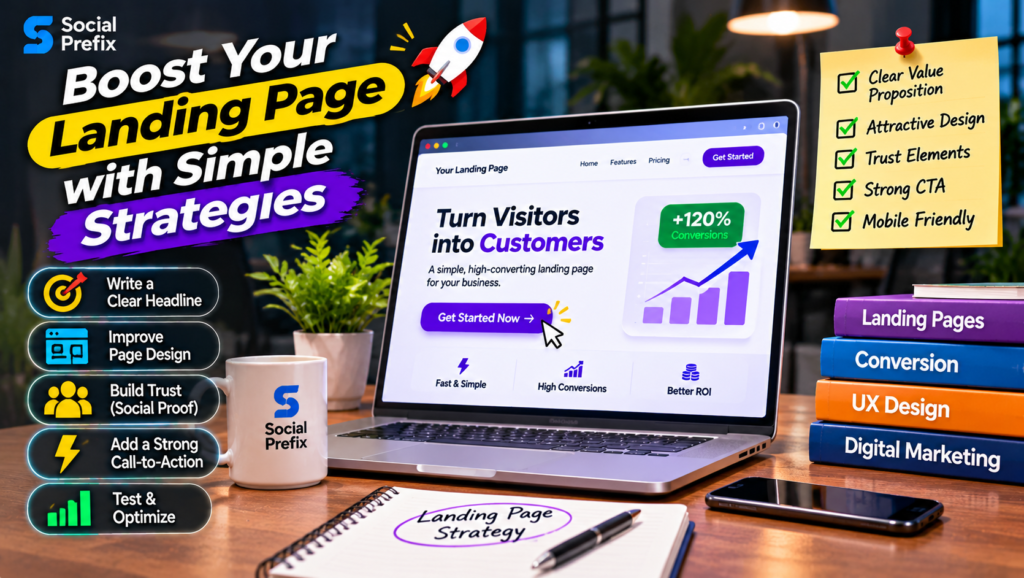
Boost Your Landing Page With Simple Strategies

You spend money on online ads every day. Therefore, you want every click to count. However, many businesses drive traffic to poor landing pages. Consequently, they waste their money easily. The key to high success is Landing Page Optimization (LPO). Truly, LPO is the process of improving your landing page. This improvement helps increase the number of visitors who take action. Some people think a good ad is enough. But, this is not true. A great ad gets the click. Yet, the landing page gets the conversion. If the landing page is confusing, visitors leave fast. Furthermore, this raises your advertising cost. Always remember, a well-optimized landing page matches the ad message perfectly. Thus, by focusing on clear design and strong messaging, you can turn more clicks into customers. Also, this lowers your cost. Moreover, it grows your business faster. The Conversion Gap: Why Clicks Fail to Convert First, let’s understand why so many ad clicks fail to convert. This difference between clicks and conversions is the conversion gap. Furthermore, it is often a big problem. Clearly, fixing this gap is vital for campaign success. Therefore, you must look closely at what happens after a visitor arrives on your page. Common Landing Page Mistakes Mistakes on the landing page are often the reason for low conversions: Landing Page Optimization fixes these issues. It simplifies the experience. It also builds trust. Moreover, it makes the next step very clear. What is Landing Page Optimization (LPO)? Your Conversion Engine So, what exactly is Landing Page Optimization (LPO)? It is a continuous process of testing and improving elements on your page. The goal is to increase the page’s conversion rate. Truly, LPO is about making the visitor’s journey as smooth as possible. It removes friction. It also builds desire. Key Principles of an Optimized Landing Page Here are the four key principles of LPO: Truly, LPO turns your landing page into a dedicated conversion engine. It focuses the visitor’s attention only on the single desired action. Pillar 1: Message Match – Closing the Consistency Loop The first and most important step in LPO is message match. This means the message on your landing page must be the same as the message in your ad. Clearly, this creates a sense of continuity. Therefore, it assures the visitor they are in the right place. Matching Ad Text to Landing Page Copy Firstly, use the exact same headline on the landing page that you used in the ad. If the ad says “50% Off Software,” the page headline must say “Get 50% Off Our Software Today.” Secondly, match the visuals. Use the same colors, logos, and product images from the ad on the landing page. This helps create instant recognition. Furthermore, match the tone and value proposition. If the ad promised a free guide, the landing page must focus only on downloading that guide. Do not mention other products. Also, eliminate all distractions. Remove the main navigation menu, footer links, and external links. Consequently, the only clickable button should be the main Call to Action (CTA). Lastly, highlight the benefit. Quickly tell the visitor what they will gain by converting. Use short, bulleted lists for easy reading. Truly, perfect message match instantly reduces visitor confusion. This keeps them engaged. It also makes them ready to complete the conversion. Pillar 2: Technical Speed and Trust Signals The second pillar focuses on the technical side of LPO. This includes page speed and trust elements. Clearly, a slow page loses visitors instantly. Trust is also non-negotiable for online conversions. Therefore, optimizing these elements is crucial. Improving Load Times and Building Confidence Firstly, test your page speed. Use tools like Google PageSpeed Insights. Focus on making your page load in under three seconds. Furthermore, every second lost means fewer conversions. Secondly, optimize images. Compress all images on the page. Use the right file format (like WebP) to ensure fast loading times. Furthermore, use trust seals and badges. Include security seals like McAfee or Norton. Also, show payment logos if you are selling a product. This builds immediate confidence. Also, add social proof. Include customer testimonials, client logos, or product ratings. Show real people getting real results. Lastly, ensure your page is mobile-friendly. Most ad traffic comes from phones. The page must look perfect. It must also load fast on small screens. Truly, a fast-loading page combined with strong trust signals convinces visitors easily. It shows your offer is legitimate and reliable. Pillar 3: Optimizing the Call to Action (CTA) The third pillar is the Call to Action (CTA). This is the single most important element on your page. The CTA tells the visitor what to do next. Clearly, a weak or unclear CTA will cause conversion failure. Therefore, you must make the CTA stand out. You must also use persuasive language. Making the Next Step Unmistakable Firstly, make the CTA button prominent. Use a contrasting color (like green or orange) that jumps off the page. Make it large enough to click easily. Secondly, use specific, action-oriented text on the button. Instead of “Submit,” use phrases like “Get My Free Ebook Now” or “Start My Free Trial.” This increases desire. Furthermore, place the CTA above the fold. Visitors should see the main button without having to scroll down. Repeat the CTA at the bottom of the page for long-form content. Also, simplify the conversion form. Ask only for the essential information. If you only need an email address, do not ask for a phone number or company size. Every extra field reduces conversions. Lastly, use directional cues. Use arrows or visual elements that point the visitor’s eye directly to the CTA button or the form. Truly, by making your CTA specific, visible, and easy to use, you guide the visitor toward the desired outcome effortlessly. Best Practices: Testing and Iterating Your Landing Page Landing Page Optimization is a continuous cycle. It does not end after the first launch. You must always test and improve. Clearly, small changes can lead to […]
Brand Markeing, Branding, Engagement, Google, Instagram, Leads Generation, Marketing, SEO, SEO Marketing, Strategies

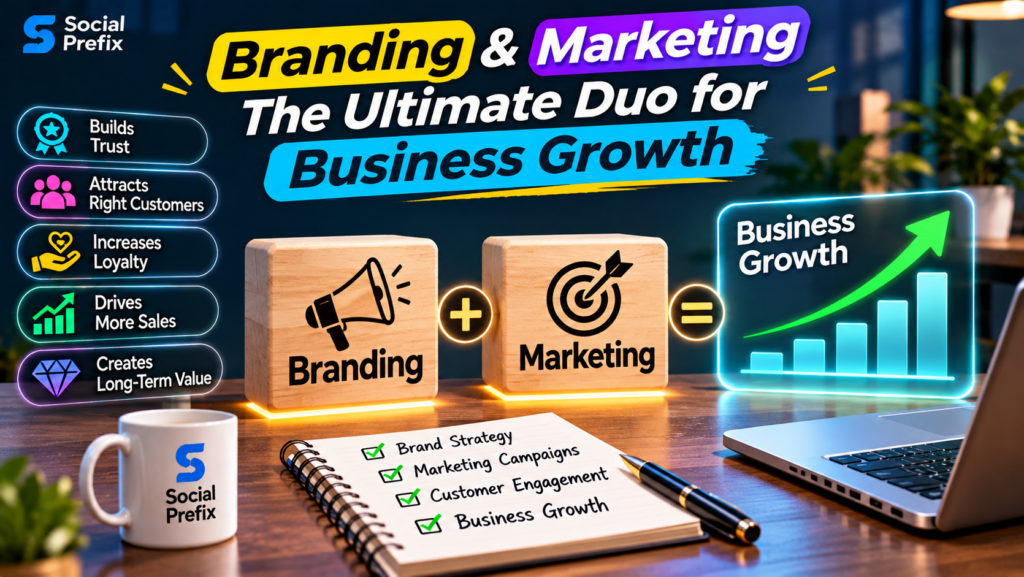
Branding & Marketing: The Ultimate Duo for Business Growth

Every business wants to grow. Thus, it needs customers. Many people think “branding” and “marketing” mean the same thing. However, they are very different. They work together. Truly, one cannot reach its full potential without the other. Therefore, understanding their roles is key for any company that wants to scale big. Some businesses focus only on marketing. They run ads. They try to get quick sales. But, they forget to build a strong brand. Consequently, their customers might buy once. Yet, they do not stay loyal. Other businesses focus only on branding. They create a nice logo. They also have a good story. However, they do not tell anyone about it. Always remember, both branding and marketing are vital. Branding builds your identity. Marketing tells your story. By using both wisely, your business can attract more customers. Furthermore, it can also keep them. This leads to lasting growth. The Core Difference: Who You Are vs. How You Tell It First, let’s clearly define each term. Branding is about who your business is. It is its soul. Marketing is about how you tell people about who you are. It is the actions you take. Clearly, they are partners, not rivals. Therefore, knowing their distinct roles helps you use each one better. What is Branding? Your Business’s Identity and Promise Branding is much more than a logo. It is the overall feeling people get about your company. It is what makes you different from others. Here are the key parts of branding: Think of branding as building a person’s character. It is their personality. It is how others see them and what they expect. A strong brand creates trust. It also makes people feel connected. What is Marketing? Telling Your Story to the Right People Marketing is the active process of promoting your business. It is about reaching out. It is about getting customers to buy. Here are the key parts of marketing: Think of marketing as telling that person’s story. It is using different ways to share their best qualities with others. Marketing pushes your message out. It aims for direct action. Why Branding Comes First: The Foundation of Trust While both are important, branding usually comes before marketing. It sets the stage. It provides the meaning. Truly, without a clear brand, marketing efforts often fall flat. A strong brand is like the sturdy foundation of a house. Building Trust and Recognition Firstly, branding creates recognition. Your logo, colors, and voice make you easy to spot. This helps people remember you. When they see your ad, they know it is you. Secondly, branding builds trust. A consistent message and look show you are reliable. People trust what they recognize. This trust is vital before they even think about buying. Furthermore, branding sets expectations. Your brand promise tells customers what to expect. If you promise high quality, they expect high quality. Marketing then shows how you deliver on that promise. Also, branding attracts the right customers. Your brand’s values draw people who share those values. This creates a stronger connection. They are more likely to become loyal. Truly, a solid brand makes all your marketing efforts much more effective. It gives your marketing a clear direction and a strong message to share. How Marketing Brings Your Brand to Life: Reaching the World Once you have a strong brand, marketing takes over. It uses the brand’s identity and message. Then, it spreads it to the world. Clearly, marketing is the engine that drives awareness and sales. Therefore, even the best brand needs active marketing to grow. Spreading Your Message and Driving Sales Firstly, marketing communicates your brand story. You have a mission and values. Marketing finds the best ways to tell people about them. It uses ads, social posts, and videos to share your unique message. Secondly, marketing reaches your target audience. You know who your ideal customer is. Marketing uses specific channels (like Facebook ads or industry blogs) to find and connect with those people directly. Furthermore, marketing drives traffic and leads. It encourages people to visit your website and makes them sign up for your emails. It gets them to call you. These actions turn interested people into potential customers. Also, marketing generates sales. Ultimately, all marketing efforts aim to convert interest into purchases. It uses special offers, clear calls to action, and persuasive content to move people to buy. Truly, marketing is the active arm of your business. It takes the strong character built by branding and introduces it to everyone who needs to know. Why You Need Both to Scale: The Power of Synergy Successful growth, or scaling, demands both branding and marketing working together. They create a powerful synergy. They build a cycle of recognition, trust, and sales. Clearly, relying on just one side will always limit your growth. Therefore, a balanced approach is key to reaching new heights. The Cycle of Growth: Brand Fuels Marketing, Marketing Builds Brand Firstly, branding provides the consistent message for marketing. Imagine running ads with a different look and message every time. This would confuse people. A strong brand gives marketing a clear, unified voice. This makes every marketing dollar work harder. Secondly, marketing amplifies your brand. Every ad, every social post, every email spreads your brand’s name and message. The more people see your marketing, the more they become familiar with your brand. This builds reputation and recognition even further. Furthermore, strong branding leads to higher marketing ROI (Return on Investment). When people trust your brand, they are more likely to respond to your ads. They convert more easily. This means your marketing campaigns get better results for the same cost. Also, marketing helps you reach new audiences. Your existing brand might be known by some. However, marketing pushes your message to new groups of people who might not know you yet. This expands your reach. Lastly, a great brand supports customer loyalty. Customers who feel connected to your brand are more likely to stay. They will buy again. They […]

Brand Markeing, content strategy, Digital Marketing, E-commerce, Engagement, Influencer Marketing, Leads Generation, Search Engines, SEO Marketing, Strategies

How to Master Voice Search Optimization Today

Voice search is no longer a futuristic concept; it is happening now. More and more people are using voice assistants like Siri, Google Assistant, and Alexa to find information, shop, and interact with the world. This shift means businesses must adapt their online strategies. Voice Search Optimization is key to staying visible and relevant. If your business isn’t prepared, you risk being left behind in this next wave of digital interaction. Understanding how voice search works and how to optimize for it is crucial for future success. The Rise of Voice Search Voice search has grown rapidly. Smart speakers are everywhere. Smartphones offer voice commands. This makes voice search a part of daily life. People use it for quick answers. They ask about weather, directions, and local businesses. This trend will only get stronger. As technology improves, so will voice assistant accuracy. This means more users will rely on their voices. Businesses must recognize this shift. They need to understand how people speak when searching. This is vital for effective Voice Search Optimization. It ensures your business can be found. How Voice Search Differs from Text Search Voice search is different from typing. When people type, they use short keywords. “Best pizza,” for example. When they speak, they use natural language. “Where is the best pizza near me?” This difference is huge. Voice searches are often longer. They are more like questions. They include natural phrases. This affects how you optimize. You need to think about how people talk. Your content must answer specific questions. This natural language focus is central to Voice Search Optimization. It moves beyond simple keywords. Voice Search Optimization for Conversational Queries To optimize for voice search, focus on natural language. Think about common questions related to your business. Create content that directly answers these. Use a conversational tone in your writing. Include long-tail keywords. These are longer, more specific phrases. For example, instead of just “car repair,” use “where can I get my car repaired quickly in my area?” Structure your content with headings. Use FAQs (Frequently Asked Questions) sections. This makes it easier for voice assistants to find answers. This approach is fundamental for successful Voice Search Optimization. It helps your content be heard. Local SEO and Voice Search Optimization Local search is extremely important for voice queries. Many people use voice search to find businesses nearby. “Find a coffee shop near me.” “What’s the best barber in town?” This means your local SEO needs to be perfect. Ensure your Google My Business profile is complete. Verify your address, phone number, and opening hours. Get positive customer reviews. These details are vital for voice assistants. They use this information to recommend local businesses. Strong local SEO is a critical component of Voice Search Optimization. It connects spoken queries to your physical location. The Future of Voice and Your Business Voice search is still evolving. It will become even more sophisticated. Voice assistants will integrate deeper into daily tasks. They will handle complex transactions. They will manage appointments. This means businesses must stay current. Continually update your website. Adapt to new voice search trends. Consider integrating voice commands into your own apps or services. Preparing now gives you a competitive edge. It positions your business for future growth. Embracing Voice Search Optimization today means you are ready for tomorrow’s digital landscape. Frequently Asked Questions (FAQs) 1 What is the main difference in how people use voice search versus text search? People use natural, conversational language for voice search. They use shorter, more fragmented keywords for text search. 2 Why is local SEO so important for voice search? Many voice searches are for nearby businesses and services. Voice assistants rely on accurate local data to provide relevant results. 3 Should I create content that answers specific questions for voice search? Yes, creating content that directly answers common questions is highly effective. This helps voice assistants find and use your information. 4 Will voice search replace traditional text search entirely? No, voice search is likely to complement text search. It will not fully replace it. Both will coexist, serving different user needs. 5 How can I check if my business is ready for voice search? Check your Google My Business profile for accuracy. Also, review your website content for natural language and long-tail question answers. Also Read: How Will AI Change Paid Advertising Forever: Complete Guide

affiliate marketing, AI Advertising, Blogging, Brand Markeing, content strategy, Digital Marketing, Engagement, Leads Generation, Search Engines

How Will AI Change Paid Advertising Forever: Complete Guide

The landscape of paid advertising has always been driven by technology, but the pace of change today is truly unprecedented. For years, automation simply helped marketers perform manual tasks faster. Now, however, Artificial Intelligence (AI) is fundamentally redefining the entire structure of advertising. It is transforming campaigns from reactive, set-and-optimize processes into autonomous, real-time systems. This shift is not just about better analytics; moreover, it is about AI taking over complex strategic decisions. Consequently, marketers must adapt their skills and workflows to thrive in this new ecosystem. Today, we will explore the core ways AI is changing the future of paid advertising. We will be focusing on the rise of autonomous agents, predictive strategies, and scaled creativity. The Rise of Agentic AI: From Tools to Teammates The biggest change in paid advertising is the move from basic automation to agentic AI. Agentic AI refers to autonomous, goal-driven systems that can act, learn, and collaborate without constant human input. In the past, AI tools required a marketer to set the budget and goals, and then the tool would optimize. Now, AI agents are becoming co-strategists. For example, systems like Google’s Performance Max or Meta’s Advantage+ campaigns are prime examples. These systems do not just adjust bids; moreover, they handle full-funnel automation, deciding on sequencing, placement, and budget allocation across multiple channels instantly. Therefore, the human role shifts from monitoring data to setting high-level ethical boundaries and brand storytelling, allowing the AI to manage the real-time execution of all paid advertising campaigns. Predictive Bidding: Anticipating the Customer Journey The era of manual or even simple rule-based bidding is over. AI is changing the future of paid advertising through highly advanced predictive analytics. Specifically, modern AI algorithms can analyze massive datasets of historical behavior, real-time signals, and market trends in milliseconds. Consequently, they can accurately predict the likelihood of a conversion from a user in a specific auction. Therefore, smart bidding algorithms adjust bids at auction-time, rather than hourly or daily. They tailor the bid based on factors like the user’s device, location, time of day, and predicted Customer Lifetime Value (CLV). This level of precision ensures that ad spend is aggressively focused on high-value users and efficiently conserved on low-value traffic. This targeted, data-driven approach dramatically improves Return on Ad Spend (ROAS) for every paid advertising dollar spent. Dynamic Creative Optimization and Generative AI Creative assets are the lifeblood of paid advertising, but testing thousands of variations was historically impossible. Now, Generative AI (GenAI) is automating creative production at scale. Specifically, marketers can upload a few core assets (images, headlines, calls-to-action) to a platform. Then, the AI instantly tests hundreds of combinations in real time across different audience segments. Furthermore, GenAI is capable of creating entirely new assets. For example, tools in Meta can transform a single product image into dynamic video ads or generate customized backgrounds that adhere to brand guidelines. Consequently, the winning combination is served to each user, ensuring maximum relevance and click-through rates. This ability to instantly create and optimize personalized ad creative is a foundational way AI is changing the future of paid advertising. Hyper-Personalization at Scale Personalization used to mean inserting a first name into an email. Today, AI is changing the future of paid advertising by delivering hyper-personalized experiences for millions of people simultaneously. Specifically, AI systems use an intricate web of behavioral signals, real-time intent, and contextual triggers to tailor the entire ad journey. For instance, a user might see an ad with a different color scheme, a localized offer, or even a unique product highlight based on their recent online activity. Furthermore, AI-driven platforms are excelling at “in-the-moment” personalization, adjusting ad copy based on factors like weather, local events, or nearby inventory levels. This deep level of customization ensures the ad feels less like an advertisement and more like a helpful, tailored recommendation, which drives higher engagement and conversion rates. The Evolution of Ad Formats: Conversational and Immersive The formats for paid advertising are evolving rapidly due to AI. As voice search and conversational AI assistants like Google’s Gemini become more common, ads must adapt to answer spoken queries directly. Therefore, AI helps optimize ad copy to be conversational and answer natural language questions (e.g., “Where is the nearest vegan restaurant?”). Additionally, Augmented Reality (AR) ads, especially on social platforms, are becoming prevalent. AI enables features like virtual try-ons for clothing or makeup, allowing users to interact with a product digitally before buying. Consequently, these immersive experiences generate higher engagement and provide valuable user interaction data. This fusion of AI with new formats is a clear indicator of how AI is changing the future of paid advertising. Challenges: Privacy, Transparency, and the Human Element Despite the overwhelming benefits, the rapid advancement of AI in paid advertising introduces key challenges. Firstly, privacy regulations (like GDPR and CCPA) are tightening, which limits third-party data access. Therefore, marketers must pivot to using first-party data and AI-powered audience modeling for segmentation. Secondly, the complexity of these algorithms can create a “black box” effect, making it difficult for marketers to fully understand why the AI made a specific bidding or placement decision. This lack of transparency requires a focus on Explainable AI (XAI) models. Finally, the human element—strategic vision, brand storytelling, and ethical oversight—remains irreplaceable. AI handles the numbers, but humans provide the creativity, cultural nuance, and empathy that truly make paid advertising campaigns connect authentically with consumers. Conclusion The future of paid advertising is deeply intertwined with AI. It is a future defined by autonomous systems that handle real-time optimization, generative tools that create personalized content at scale, and predictive models that allocate budgets with pinpoint accuracy. The era of manual campaign management is ending. Therefore, marketers who embrace this technology—learning to co-pilot with AI, focus on strategic oversight, and master brand storytelling—will gain an undeniable competitive advantage. The change is not just about adopting a new tool; moreover, it is about fundamentally restructuring the marketing workflow to unlock unprecedented speed, precision, and return on investment […]

Brand Markeing, E-commerce, Engagement, Leads Generation

Retargeting 101: How to Convert Lost Visitors into Loyal Customers

You invest significant time and money to drive traffic to your website. However, data shows that around 98% of first-time visitors leave without making a purchase or completing a desired action. This high exit rate is a major pain point for all marketers. Therefore, if you are not actively trying to win these people back, you are losing a massive amount of potential revenue. You have already paid to gain their initial interest. Now, the goal is to remind them why they came to your site in the first place. The solution is retargeting 101. This powerful advertising strategy transforms those “lost visitors” into high-value, loyal customers by strategically following them across the web with personalized messages. The Mechanism: How Retargeting Works To successfully bring back these valuable visitors, you must first understand the underlying mechanism. Retargeting works by placing a small, anonymous piece of code, often called a pixel or tag, on your website. When a user visits any page on your site, this pixel drops a cookie onto their browser. This process is anonymous and compliant with privacy regulations. Consequently, when that user leaves your site and browses other websites, social media platforms, or even checks their email, the advertising network recognizes the cookie. Therefore, this recognition allows the network to serve your targeted ad specifically to that user. This ensures your advertising budget is focused only on a warm audience that has already shown interest in your brand, which is the core principle of effective retargeting 101. The Crucial Step: Segmenting Your Lost Visitors Not all lost visitors are the same. A person who only briefly visited your homepage needs a different message than someone who filled a cart and left. Therefore, effective retargeting requires precise audience segmentation. You should create separate audiences based on specific actions, which makes your message highly relevant. For example: By tailoring your message to where they dropped off in the funnel, you maximize the chance of a click-through and eventual conversion. This level of personalization is the key to unlocking success with any retargeting 101 campaign. Dynamic Product Retargeting: Personalization at Scale Generic ads are easy to ignore. Conversely, dynamic product retargeting campaigns are extremely effective because they offer hyper-personalization at scale. Specifically, this strategy automatically generates ads that feature the exact products a user viewed on your site. Therefore, if a visitor looked at a blue sweater and a pair of boots, the dynamic ad they see later will show those exact items, perhaps with current pricing or a limited-time offer. Furthermore, this dynamic approach can suggest complementary products. For example, it might show a matching scarf to the person who viewed the blue sweater. Consequently, the user feels recognized and remembered. This high degree of personalization is extremely effective at reminding the visitor of their intent, which dramatically boosts the conversion rate of your retargeting 101 efforts. The Power of Sequential Retargeting Retargeting should not be a single ad impression; instead, it should be a sequence of carefully planned touches. This sequential approach guides the user through the consideration phase. For example, your first ad to an abandoned cart user might simply remind them of the items they left behind. Then, the second ad, shown a day later, could offer free shipping to remove a common barrier. Finally, the third ad, shown a few days after that, might introduce a limited-time 10% discount, creating urgency. Furthermore, sequential retargeting can also be used for awareness. You could first show a blog-reading audience an educational video, and then follow up with an ad promoting a relevant e-book download. This planned journey maintains brand recall and nurtures the prospect toward the ultimate goal of conversion. Essential Best Practices: Frequency, Exclusion, and Urgency To ensure your retargeting 101 campaign works and does not annoy your potential customers, you must follow best practices. First, implement frequency capping. This means limiting the number of times a user sees your ad per day. Consequently, you avoid “stalking” them, which leads to ad fatigue. Second, always use exclusion lists. You must exclude users who have already converted (made a purchase or filled a form). This prevents wasted ad spend and avoids annoying loyal customers with irrelevant ads. Third, incorporate a sense of urgency. Use limited-time offers, countdown timers, or low stock warnings in your ad copy. Therefore, you create a compelling reason for the visitor to return now rather than later. These three practices are non-negotiable for running a successful and ethical retargeting strategy. Turning Visitors into Loyal Customers and Advocates Retargeting is not just about the first sale; moreover, it is also a powerful tool for cultivating customer loyalty. Your most valuable audience is your existing customer base. Therefore, you can retarget past purchasers with ads showcasing complementary products, exclusive loyalty program benefits, or seasonal offers before they are released to the general public. Furthermore, after a customer purchases a product, you can retarget them with a brief video asking for feedback or a review. This makes them feel valued and enhances the post-purchase experience. Consequently, you strengthen the customer relationship and encourage repeat business. This strategic use of retargeting ensures lost visitors are not just converted once but become reliable, long-term advocates for your brand. Conclusion The challenge of losing 98% of your website traffic is a universal marketing problem. However, retargeting 101 offers a direct, highly effective solution. By implementing the fundamentals—installing the pixel, segmenting your audience precisely, and deploying dynamic and sequential ads—you dramatically increase your chances of conversion. Remember to always prioritize user experience by managing frequency and excluding converted users. Ultimately, mastering retargeting means you are no longer passively letting valuable traffic slip away. Instead, you are actively engaging warm prospects with personalized messages at the exact moment they are ready to buy, transforming them from lost visitors into your most loyal and profitable customers. Frequently Asked Questions (FAQs) 1. What is the single most important action to start a retargeting campaign? The single most important action is installing the […]

affiliate marketing, Blogging, Brand Markeing, content strategy, content strategy, Digital Marketing, E-commerce, Engagement, Instagram, Leads Generation, SEO Marketing, Strategies, Youtube shorts

The Ultimate Social Media Content Calendar for Business Growth

In today’s crowded digital landscape, trying to “wing it” on social media is a surefire way to fail. Without a plan, you end up posting inconsistently, chasing fleeting trends without context, and wasting hours scrambling for content ideas. This leads to low engagement and zero real business results. A well-structured social media content calendar changes everything. It’s not simply a scheduling tool; it’s a strategic blueprint that aligns every single post with your overarching business goals, ensuring consistency and maximizing your return on time invested. Consequently, a great calendar helps you see the bigger picture, allowing you to strategically balance promotional, educational, and entertaining content to build a loyal audience. Therefore, creating a powerful content calendar is the first, most crucial step toward sustainable business growth. Step 1: Defining Your Content Pillars and Goals Before you plug in a single date, you must define the strategic foundation of your content. Start by setting clear, measurable KPIs (Key Performance Indicators) that tie directly back to your business objectives. For instance, if your business goal is increasing product sales, your social media goal might be boosting website click-through rates (CTR). Then, define your Content Pillars. These are the 3–5 overarching themes your content will consistently revolve around. Because these pillars prevent you from posting randomly, they provide structure. For example, a skincare brand’s pillars might be: Furthermore, adopt the 80/20 Rule: let 80% of your content inform, engage, or entertain, and reserve just 20% for direct promotion. This ratio builds the trust necessary for your promotional posts to truly resonate. Clearly defining these pillars ensures every post contributes directly to your brand’s content strategy and audience building efforts. Step 2: Platform Customization and Cadence It is vital to recognize that what works on one platform rarely works on another. Therefore, your calendar must be customized for each channel. Do not simply cross-post the same content everywhere; instead, repurpose the core message. For example, a lengthy blog post can be a short, professional summary on LinkedIn, a series of engaging Instagram Stories, and a quick, attention-grabbing TikTok video or YouTube Short. Next, determine an optimal posting cadence for each platform. This frequency should be both realistic for your team and effective for the platform’s algorithm. For instance, Instagram Reels and TikTok often require daily or near-daily posting for maximum reach, while LinkedIn thrives on 3–5 high-quality posts per week. Consequently, dedicate a section of your calendar to detailing the required asset type (e.g., vertical video, carousel image, short-form text), ensuring your social media strategy is perfectly tailored to each channel. Step 3: Planning, Batching, and Scheduling Effective content creation is built on batching. Instead of struggling every day to create a post, dedicate one day each week (or month) to planning and content creation. Start by populating your calendar with all major fixed dates: holidays, product launch dates, company events, and relevant national days (like National Coffee Day for a café). This process creates a stable content backbone. Next, draft all your content, including captions, relevant hashtags, and calls-to-action (CTAs). By batching, you maintain a consistent tone and look across all posts. Finally, use a dedicated social media management tool (like Buffer, Hootsuite, or CoSchedule) to schedule everything weeks in advance. This automation ensures your posts go live at the optimal time for your audience, freeing up your team to focus on the most important part of social media: real-time community engagement and responding to customer comments. This streamlined workflow is key to generating consistent business growth. Step 4: Analyze, Refine, and Optimize The work doesn’t end when a post goes live; in fact, the most valuable part of the content calendar is the optimization phase. Therefore, regularly review your social media analytics to understand what truly resonates with your audience. Look past vanity metrics like ‘likes’ and focus instead on engagement rate, CTR, and conversion rates. Ask yourself: Consequently, use these data-driven insights to refine your next planning cycle. Adjust your content pillars, increase the frequency of your best-performing formats, and swap out underperforming content topics. Social media algorithms and trends are constantly changing. Therefore, the ability to stay agile and adjust your content calendar based on performance data is the ultimate factor that separates casual posters from brands that achieve meaningful business growth. Frequently Asked Questions (FAQs) 1. How long should I plan my social media content calendar in advance? It is generally recommended to plan at least two to four weeks in advance. Many successful teams batch content creation one month ahead, allowing time for approvals, design work, and unexpected real-time content opportunities. 2. What are Content Pillars and why are they important? Content Pillars are the main themes (3–5 topics) that guide your posts. They are important because they ensure every piece of content is relevant to your brand, prevents random posting, and helps you demonstrate topical authority to your audience. 3. What is the biggest mistake businesses make with their content calendars? The biggest mistake is treating all platforms the same and cross-posting identical content. Each platform requires different formats (vertical video, text-heavy, high-res photos) and a unique posting cadence to succeed. 4. What is content batching, and how does it save time? Content batching means grouping similar tasks together, such as dedicating one block of time to brainstorming and outlining, another to design, and a third to writing captions and scheduling. It saves time by minimizing context switching, improving efficiency. 5. Which metrics should I track to measure business growth from the calendar? Focus on metrics beyond likes, such as website clicks/traffic (CTR), conversion rate (how many clicks became sales/leads), engagement rate, and audience growth across your priority channels. Also Read: Local SEO in 2025: How Small Businesses Can Beat Big Brands in Search Instagram vs TikTok vs YouTube shorts which drives better leads Why social commerce is the future Instagram TikTok sales Diversifying your social media presence beyond Facebook and Instagram How to improve companys social media strategy

Brand Markeing, content strategy, Digital Marketing, E-commerce, Engagement, Google Ads, logo design, PPC Ads, Search Engines, SEO Marketing, Strategies

Local SEO in 2025: How Small Businesses Can Beat Big Brands in Search

In 2025, the digital marketing battlefield is fiercer than ever. For small businesses, competing with the massive budgets and brand recognition of big corporations in general SEO can feel like an impossible task. However, there’s a powerful arena where local businesses not only compete but frequently dominate: Local SEO. As search engines become increasingly sophisticated and personalized, the intent behind “near me” searches, voice queries, and mobile searches continues to prioritize proximity and relevance above all else. This trend creates a unique opportunity for small businesses to shine by connecting directly with customers in their immediate geographic area. Therefore, understanding and mastering Local SEO in 2025 is not just an advantage; it is absolutely essential for survival and growth. This focused approach allows you to directly target customers ready to make a purchase right now. Mastering Google Business Profile (GBP) in 2025 Your Google Business Profile (formerly Google My Business) remains the cornerstone of Local SEO in 2025. This free tool is often the first interaction a potential local customer has with your business. Therefore, optimizing your GBP is paramount. Start by ensuring every single detail is meticulously accurate and comprehensive: your business name, address, phone number (NAP), website, operating hours, and service areas. Go further by adding high-quality photos of your storefront, products, and team. Because visual content significantly boosts engagement, keep your GBP photos fresh and inviting. Furthermore, leverage all available features. Use the “Posts” feature regularly to announce specials, events, and updates. Answer customer questions promptly in the Q&A section, preempting common queries. Most importantly, actively manage and solicit customer reviews. Positive reviews are gold for Local SEO, acting as powerful social proof and a direct ranking factor. Respond to every review, positive or negative, with professionalism and gratitude, as this shows excellent customer service. This proactive and comprehensive management of your Google Business Profile is a clear signal to Google that your business is active, reputable, and relevant to local searchers. Hyper-Local Content Strategy: Speak to Your Neighbors While big brands craft national campaigns, small businesses can win by creating hyper-local content that resonates deeply with their community. In 2025, Local SEO demands content that directly addresses the unique needs, events, and culture of your specific locale. For example, instead of just “Best coffee shop,” think “Best artisan coffee in [Your Neighborhood] near [Local Landmark].” Blog posts can cover local events, partnerships with other local businesses, or solutions to common problems faced by residents. Consider creating landing pages optimized for specific services in specific neighborhoods or towns you serve. Use local keywords naturally throughout your website copy, blog posts, and service descriptions. Incorporate local landmarks, street names, and community events. Furthermore, if your business is involved in local sponsorships or charity work, highlight these efforts on your website. This not only builds trust and goodwill within the community but also provides fantastic local content opportunities that Google’s algorithms increasingly favor. Therefore, hyper-local content shows both Google and your potential customers that you are an integral part of their community. Building a Robust Local Backlink Profile Backlinks remain a critical ranking factor in 2025, and for Local SEO, the quality and relevance of those links matter immensely. Focus on acquiring backlinks from other reputable local businesses, community organizations, local news sites, and industry-specific directories. Think about partnering with non-competing local businesses for cross-promotional content or reciprocal links. Sponsoring local sports teams, events, or charities can also provide valuable local backlinks and community engagement. Beyond traditional backlinks, ensure your business is listed in relevant niche directories (e.g., Yelp, TripAdvisor for hospitality, specific legal directories for law firms). While some directories may offer “dofollow” links, even “nofollow” links from trusted local sources can signal relevance to Google. The key is to demonstrate to search engines that your business is a well-known and respected entity within its local ecosystem. Building this local backlink profile takes time and effort, but it is a sustainable strategy that big brands often struggle to replicate at a hyper-local level, giving small businesses a significant Local SEO advantage. Leveraging Reviews and User-Generated Content Customer reviews are more influential than ever in 2025, especially for Local SEO. They are a primary trust signal for both search engines and potential customers. Actively encourage satisfied customers to leave reviews on your Google Business Profile, Yelp, Facebook, and industry-specific review sites. Make the process easy by providing direct links or QR codes. Beyond just soliciting reviews, actively respond to every single one. Thank customers for positive feedback and address negative reviews professionally and constructively. This demonstrates excellent customer service and transparency. Furthermore, user-generated content (UGC), such as customer photos or social media posts featuring your business, can significantly amplify your Local SEO efforts. Encourage customers to tag your business in their posts. Repost and share this UGC (with permission) on your own social media channels and even embed it on your website. This content acts as authentic social proof and signals to search engines that your business is highly engaging and valued by its customers. Embracing and managing reviews and UGC is a powerful, cost-effective way for small businesses to build online authority and beat bigger brands in local search. Optimizing for Voice Search and Mobile in 2025 Voice search and mobile usage continue to surge in 2025, profoundly impacting Local SEO. People often use voice assistants to ask very specific, conversational questions like “Hey Google, where’s the closest Italian restaurant open now?” or “Siri, find a reliable plumber near me.” Therefore, your website and GBP content must be optimized to answer these natural language queries. Think about the questions your customers might ask and ensure your content provides direct, concise answers. Furthermore, mobile optimization is non-negotiable. Google’s mobile-first indexing means your website’s mobile experience dictates its search ranking. Ensure your website is fully responsive, loads quickly on mobile devices, and offers an excellent user experience for those on the go. Local searches are predominantly performed on mobile devices by users looking for immediate solutions. A fast, user-friendly […]

Scroll to Top