Google Ads

affiliate marketing, Brand Markeing, content strategy, content strategy, Digital Marketing, E-commerce, Google Ads, Search Engines, SEO Marketing

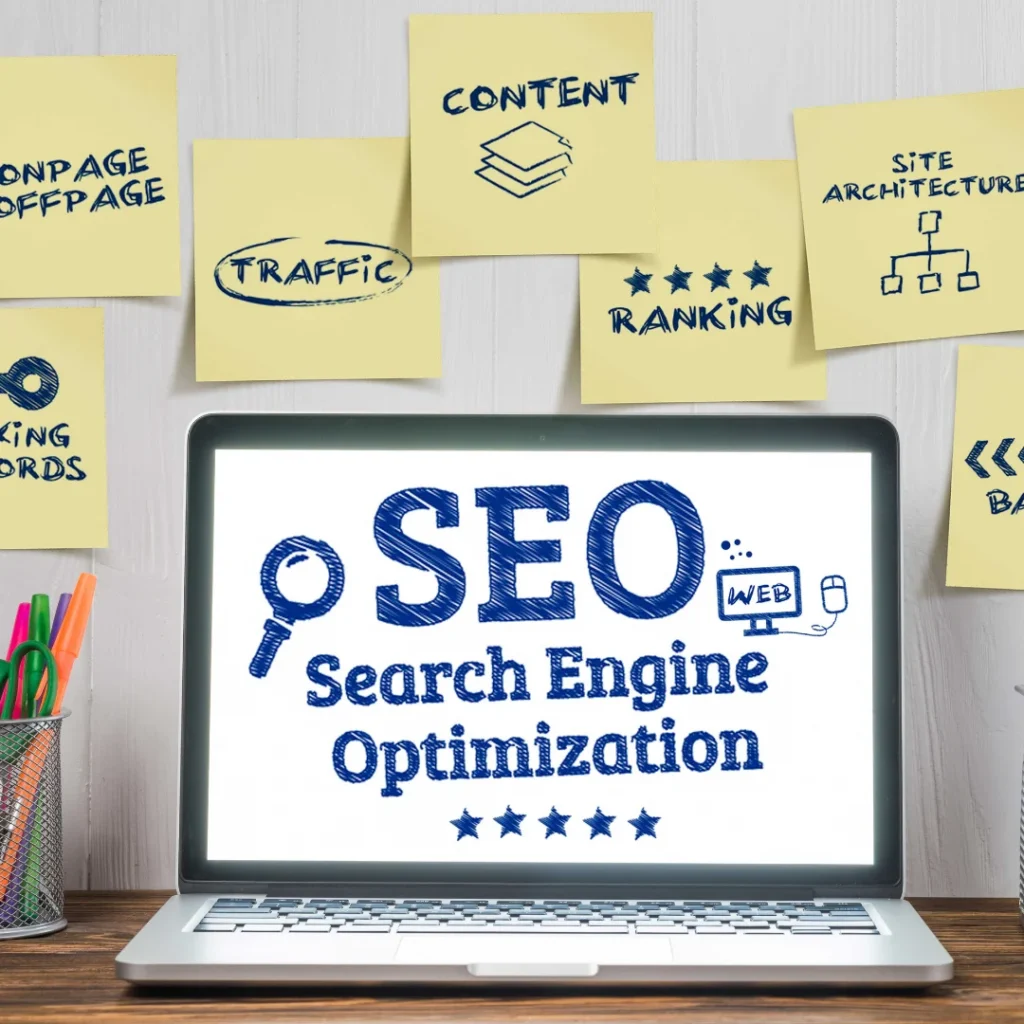
SEO Is Still the #1 Business Growth Driver in 2025

The digital world changes fast. New platforms pop up daily. Social media trends come and go. People often ask if Search Engine Optimization (SEO) is still a priority. In fact, is it still the best way to grow your business? The simple answer is a definite yes. In 2025, SEO is not just a useful tool; it is the most essential, powerful, and sustainable growth driver for every business. Therefore, you must make it your number one focus. SEO Provides Consistent, Cost-Effective Traffic First, let’s talk about traffic. Most online journeys start with a search. Actually, over 68% of all online experiences begin on a search engine. Consequently, if your business isn’t there, you lose a massive chunk of potential customers. Moreover, SEO is vastly more cost-effective than paid advertising. To clarify, pay-per-click (PPC) ads stop driving traffic the moment your budget runs out. Conversely, an investment in a strong SEO strategy builds a lasting asset. This asset keeps attracting qualified leads for months, even years. Thus, you get a continuous flow of visitors without ongoing ad expenses. This is true long-term growth. Because of this, organic search traffic is often seen as having the highest return on investment (ROI) compared to other marketing channels. Consequently, building your organic presence saves you money over time. Building Trust and Authority with the SEO Focus Secondly, SEO builds immense trust and brand authority. Think about your own search habits. Do you trust the first result on Google? People naturally trust websites that rank highly. They assume that if Google recommends a business, that business must be credible and reliable. Hence, a high search rank acts like a third-party endorsement. Furthermore, a key part of modern SEO is the E-E-A-T concept (Experience, Expertise, Authority, Trustworthiness). This means Google actively looks for real-world experience and deep expertise. Therefore, simply stuffing keywords into a page will not work anymore. Instead, you need to create truly helpful, high-quality content. This content must clearly demonstrate your brand’s knowledge. As a result, when you earn a top spot, you also earn the customer’s trust. Trust, after all, is the foundation of every purchase. Optimizing for the Modern User Experience Beyond rankings, SEO dramatically improves the user experience (UX) on your site. This is crucial. Today’s search engines use UX signals as major ranking factors. For example, a slow-loading website is penalized. Similarly, a site that is hard to use on a phone will not rank well. Therefore, optimizing for speed, mobile-friendliness, and simple navigation is part of any good SEO plan. Consequently, when you make your website easy for Google to read, you automatically make it easier for people to use. Ultimately, a faster, more intuitive site keeps visitors engaged. Engaged visitors are more likely to convert into paying customers. Moreover, better UX leads to lower bounce rates. This, in turn, sends a positive signal back to search engines. Thus, focusing on SEO creates a better experience for everyone. The Role of AI and New Search Trends in SEO Clearly, the rise of AI Overviews and generative AI tools is changing the search landscape. Still, this does not mean SEO is dead. Quite the opposite! It means SEO is simply evolving. For instance, AI Overviews still pull answers from the most authoritative, well-optimized websites. Thus, your content must be structured to be easily understood and cited by AI. This is often called Generative Engine Optimization (GEO). In essence, it is the new frontier of SEO. Furthermore, with the growth of voice search and visual search, optimizing images and using natural, conversational language is now more vital than ever. Consequently, businesses that adapt their SEO strategies to these new forms of search will gain a significant competitive edge. Certainly, the core principles—creating valuable, relevant, and authoritative content—remain the same. Local SEO Drives Real-World Sales Finally, for brick-and-mortar stores, local SEO is an absolute powerhouse. In fact, nearly half of all Google searches have local intent. For example, a search like “best coffee near me” is a clear sign of intent to buy. Furthermore, a high percentage of local searches on mobile devices lead to a store visit within one day. Therefore, optimizing your Google Business Profile (GBP) is non-negotiable. You must keep your name, address, and phone number (NAP) consistent everywhere. You should also encourage customer reviews. As a result, a strong local SEO strategy connects your digital presence directly to real-world revenue. In conclusion, it is a critical growth driver for any business with a physical location. Ultimately, local search has an incredible conversion rate, making it a powerful channel for growth. Conclusion: SEO Is Your Long-Term Strategy In conclusion, the facts are clear. SEO continues to be the single most important growth driver for modern businesses in 2025. This is true because it offers sustainable, cost-effective traffic. Furthermore, it builds essential brand trust and improves the user experience. Moreover, it is the pathway to visibility in an AI-driven search world. Therefore, you should prioritize a robust, adaptable SEO strategy. Do not think of it as a separate task; instead, view it as the foundation of your entire digital marketing plan. Certainly, by investing in SEO today, you are truly investing in the long-term, reliable growth of your business. Start now. FAQs Q1: Is SEO still effective now that AI Overviews are common? A1: Yes, SEO is still highly effective. Actually, it is more important than ever. AI Overviews still source their answers from the most credible, high-ranking websites. Consequently, you must focus on creating content that is clear, authoritative, and structured for AI to easily cite. Q2: How does SEO compare to paid advertising in 2025? A2: SEO is much more sustainable. While paid ads give instant results, they stop when your budget ends. Conversely, a good SEO strategy is a long-term asset. It delivers free, consistent traffic and a better ROI over time. Therefore, use both, but build your growth foundation with SEO. Q3: What is the most important part of SEO for small businesses […]
Google Ads

Google Ads – 7 Effective strategies for lead generation

Are you looking to boost your lead generation efforts through Google Ads? If so, you’ve come to the right place. In this article, we will provide you with valuable insights and strategies on how to generate leads effectively using Google Ads. Google Ads is a powerful tool that can help you reach a vast audience and drive quality traffic to your website. By targeting specific keywords and demographics, you can attract potential customers who are actively searching for products or services like yours. Let’s explore various techniques to optimize your Google Ads campaigns for lead generation.  Here are some of the best practices to consider for maximizing lead generation: 1. Compelling Ad Copy: Craft compelling ad copy that resonates with your target audience and compels them to take action. Highlight unique selling propositions, benefits, and incentives to encourage clicks. A/B testing different ad copies can help identify the most effective messaging 2. Landing Page Optimization: A well-optimized landing page plays a critical role in converting clicks into leads. Ensure that your landing page is relevant to the ad content, easy to navigate, and features a clear call-to-action (CTA). Test different landing page elements such as headlines, images, and CTAs to maximize conversions. 3. Optimize your campaigns: Regularly review and optimize your Google Ads campaigns so as to ensure that they are performing at their best. Test different ad variations, keywords, and landing page designs to find the winning combination that generates the most leads. 4. Use ad extensions: Take advantage of ad extensions such as call extensions, sitelink extensions, and location extensions to provide additional information and options to users. Ad extensions can improve the visibility and click-through rate of your ads, leading to more leads. 5. Optimize for mobile: Since majority of searches now happening on mobile devices, it’s crucial to optimize your Google Ads campaigns for mobile users. Ensure that your landing pages are mobile-friendly and that your ads are optimized for smaller screens. 6. Test different bidding strategies: Experiment with different bidding strategies, such as manual CPC bidding, automated bidding, or target CPA bidding, to find the strategy that works best for your lead generation goals. 7. Conversion Tracking: Tracking conversions is essential for measuring the effectiveness of your Google Ads campaigns. Set up conversion tracking to monitor actions such as form submissions, purchases, or sign-ups. Analyse conversion data to optimize campaigns and allocate budget effectively.  You need to continuously test and optimize your campaigns so that you can stay engaged with your leads through retargeting. Also leverage the available tools and resources to drive high-quality leads to your business. By following these strategies and best practices, you can unlock the full potential of lead generation with Google Ads and achieve significant results for your business. Start implementing these techniques today and watch your leads soar!

Google Ads, PPC Ads

Future of PPC Advertising: AI & Automation Trends

The future of PPC (pay-per-click) advertising is poised to be an exciting mix of new user interfaces, automation and enhanced targeting capabilities. Some predictions and trends are on Here’s a look at the future of PPC advertising, with a focus on AI and automation: AI-Driven Campaign Optimization: Artificial intelligence plays an important role in optimizing PPC campaigns. An advanced algorithm will analyze big data in real-time to make data-driven decisions, ensuring ads are served to the right audience at the right time for maximum ROI. Hyper-personalization: AI will enable advertisers to create hyper-personalized ad experiences. Ads will be tailored not only to demographics but also based on user behavior, preferences and opinions, resulting in higher conversion rates. Voice and visual search: With the rise of voice assistants and visual search technology, PPC ads will need to be optimized. Advertisers will need to optimize voice queries and visual searches to ensure their ads show up on platforms like Alexa and Google Lens. Automation of routine tasks: Routine tasks such as keyword research, bid management, and ad counter testing will be automated, freeing up marketers to focus on the planning and creative aspects of PPC campaigns. Cross-channel integration: PPC advertising will become increasingly integrated with other digital marketing channels, such as social media and email marketing. AI will help create cross-channel campaigns for a seamless user experience. Video and interactive advertising: Video and interactive advertising will gain popularity. AI will help create interactive ad systems that better engage users, increasing ad performance. Dynamic Ads: Dynamic ad design becomes more sophisticated. AI will change ads on the fly, adjusting to user behavior and website content, and delivering higher relevance and click-through rates. Predictive Analytics: Predictive analytics will enable advertisers to predict market trends and user behavior. This will help in making prompt adjustments to promotions to achieve better results. In conclusion, the future of PPC advertising will be marked by the use of AI and automation. Advertisers who use these tools to create highly personalized, dynamic and multichannel campaigns will stand out in an increasingly competitive digital landscape. Keeping up with these trends will be critical to succeeding in the booming world of PPC advertising.

Google Ads

Google Ads for Lead Generation: Tips for generating leads through Google Ads.

Google Ads is a game changer for the first generation in the digital landscape. This guide offers seven essential tips to help you make the most of this powerful platform. From keyword selection to A/B testing, find out how to maximize your lead generation power with Google Ads and how to boost performance. Benefits of targeted keywords: Effective user generation begins with extensive keyword research. Identify keywords relevant to your business and build ad campaigns around them. Use Google’s keyword planner tool to find high-converting keywords and long-tail terms that potential leads can use in their searches. Craft compelling ad copy: Your ad copy is the first point of contact with potential leads. Create persuasive, concise, and relevant advertising imagery that highlights the unique value of your product or service. Use action-oriented language and include a clear call-to-action (CTA) to encourage clicks. Optimize landing pages: Make sure your landing pages match the keywords and ad copy used in your campaigns. Landing pages should be user-friendly, load fast, and provide visitors with valuable information. Include lead capture forms with fewer locations to reduce friction and encourage turnover. Use ad extensions: Google Ads offers a variety of extensions such as callout, site link, and structured snippet extensions that allow you to provide additional information about your business. Use this extension to display your offers, special sales and contact information, making it easier for potential leads to engage with your ads. Use targeting strategies: Google Ads offers various targeting strategies to reach your ideal audience. Use geographic targeting, demographics, and even new marketing to better analyze the possibilities that are likely to change. Experiment with different targeting systems to find the sweet spot in your campaigns. Monitor and optimize: Check the performance of your Google Ads campaigns regularly. Look for key metrics like click-through rates (CTR), conversion rates, and cost-per-click (CPC). Use this data to identify underperforming ads or keywords and make the necessary adjustments to improve lead generation results. A/B testing: Always test ad variations to see which one best resonates with your target audience. Experiment with different headlines, ad images, CTA buttons, and even images to customize your campaigns for the first generation. A/B testing can help you optimize your strategy over time. Adding these tips to your Google Ads lead generation strategy can help you attract and convert high-quality leads. Remember that successful successful generation campaigns often require constant optimization and adaptation to stay ahead in a competitive digital environment.

Scroll to Top